

How to Stand on the Tennis Court
April 15, 2026To stand correctly on the tennis court, you need a solid stance for balance and quick movement. Keep your feet shoulder-width apart, toes slightly out, and maintain a slight crouch. Stay on the balls of your feet with knees bent to lower your center of gravity. This position allows for better agility and shot execution. Keep your grip firm, and remember to adjust your stance based on the shot. You’ll discover more tips to enhance your game ahead.
The Importance of Proper Stance in Tennis

When you step onto the tennis court, your stance plays an essential role in your overall performance. A solid foundation helps you maintain balance and react quickly to your opponent’s shots.
By mastering stability techniques, you can enhance your footwork and positioning. Experimenting with stance variations—like the open, closed, or neutral stance—allows you to adapt to different situations and shot types.
Each variation offers unique benefits, so don’t hesitate to practice them all. Focus on how your body feels in each position; this will help you discover what works best for you.
Ultimately, a proper stance not only boosts your confidence but also sets the stage for improved shot execution and overall game performance. Additionally, understanding soccer field dimensions can help you appreciate the importance of space and positioning in any sport.
Understanding the Basic Tennis Stance

A solid basic tennis stance is essential for any player looking to enhance their game. You need to find a position that allows you to react quickly and maintain balance.
Start with a comfortable, slightly crouched posture, keeping your feet shoulder-width apart. You can experiment with stance variations, like the open or closed stance, depending on your shot.
As you adjust your stance, don’t forget about grip adjustments; they’re vital for executing your shots effectively. A proper grip can influence your control and power. Additionally, a solid understanding of defensive strategies can help you anticipate your opponent’s moves and position yourself effectively.
How to Position Your Feet for Maximum Stability
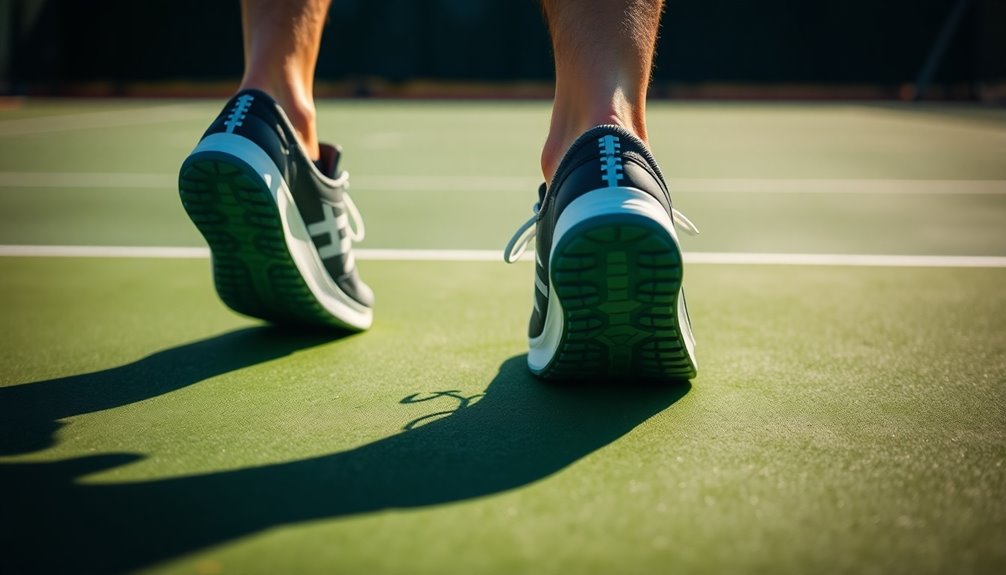
To achieve maximum stability on the tennis court, positioning your feet correctly is essential. Proper foot alignment not only enhances your balance but also supports effective movement.
Here’s how you can position your feet for peak performance:
- Keep feet shoulder-width apart for a stable base.
- Angle your toes slightly outward to improve grip and prevent slipping.
- Stay on the balls of your feet to react quickly to the ball.
- Bend your knees slightly to lower your center of gravity and enhance stability.
- Maintain consistent grip pressure on your racket to guarantee control during shots.
Additionally, understanding defensive skills can enhance your overall court awareness and positioning during play.
Balancing Your Weight: Key Techniques
To play your best on the tennis court, mastering your weight balance is vital.
You’ll want to focus on your stance fundamentals, how you distribute your weight, and your footwork.
With the right techniques, you’ll find it easier to move and react to your opponent’s shots. Additionally, incorporating core strength exercises into your training can significantly enhance your stability and performance on the court.
Proper Stance Fundamentals
While mastering your stance on the tennis court, balancing your weight is essential for peak performance. A well-balanced stance enhances your ability to react quickly and execute shots effectively.
Here are some key techniques to contemplate:
- Feet shoulder-width apart: This provides stability and allows for quick movement.
- Knees slightly bent: Flexibility in your legs helps you adjust your weight.
- Weight on the balls of your feet: This position keeps you ready to pivot or sprint.
- Racket grip adjusted: Verify your grip complements your stance variations for better control.
- Engage your core: A strong core supports your balance and overall stance.
Weight Distribution Techniques
Mastering your stance is just the beginning; how you distribute your weight plays a pivotal role in your performance.
Focus on weight transfer as you move, ensuring your lower body supports your upper body. Experiment with stance variations to find what feels comfortable, paying attention to pressure points on your feet.
Proper foot alignment is essential; your stance adjustments should allow for quick pivots. Use pivot techniques to shift your weight effectively during shots.
Incorporate balance drills to enhance stability, reinforcing your grip influence on the racket.
Footwork and Mobility Tips
Enhancing your footwork is essential for balancing your weight effectively on the court.
To improve your mobility and overall performance, focus on these key techniques:
- Court positioning: Always position yourself to make effective shots.
- Lateral movement: Develop quick side-to-side movements to cover the court.
- Foot speed: Work on drills that boost your foot speed for faster reactions.
- Directional changes: Practice sharp pivots to adapt to your opponent’s shots.
- Weight transfer: Master the art of shifting weight smoothly during strokes.
The Role of Knee Flexion in Your Stance
Knee flexion is essential for establishing a solid stance on the tennis court. It not only enhances your balance and stability but also boosts your agility for quick movements. Additionally, mastering your field dimensions can help you understand optimal positioning during gameplay.
Importance of Knee Flexion
Balance and stability are essential when it comes to your stance on the tennis court, and knee flexion plays an important role in achieving both. By bending your knees, you enhance your ability to react quickly and make necessary stance adjustments.
Here’s how knee flexibility contributes to your performance:
- Lower Center of Gravity: This improves stability during movement.
- Quicker Reaction Times: Flexed knees allow for faster lateral movements.
- Better Weight Distribution: You can shift your weight more effectively.
- Reduced Injury Risk: Proper knee flexion helps absorb impact.
- Enhanced Shot Power: You generate more force through your legs.
Embracing knee flexion in your stance can greatly improve your overall game and responsiveness on the court.
Balance and Stability Benefits
When you maintain proper knee flexion during your stance, you naturally enhance your balance and stability on the court. This slight bend in your knees allows you to stay grounded, giving you a solid base from which to react.
Incorporating effective balance techniques, like focusing on your weight distribution, helps you stay centered. Engaging in stability exercises off the court can also improve your performance. Activities such as single-leg stands or balance boards train your body to adapt to sudden movements.
The combination of knee flexion and these exercises keeps you poised and ready to respond to your opponent’s shots, ensuring you can move fluidly without losing your footing. Consistent practice will lead to improved confidence during matches.
Enhancing Agility and Movement
Proper knee flexion not only boosts your balance but also plays a significant role in enhancing your agility and movement on the court.
By bending your knees slightly, you prepare your body to respond quickly to the game’s demands. This position allows for better foot speed and explosive starts, essential for effective gameplay.
To improve your agility and movement patterns, consider incorporating these exercises:
- Agility drills for quick footwork
- Lateral quickness exercises to enhance side movements
- Coordination exercises for improved reaction time
- Dynamic stretching to increase flexibility and spatial awareness
- Strength training to support overall stability
Adjusting Your Stance for Different Shots
Adjust your stance based on the shot you’re about to make for peak performance on the court. Different shot variations require specific stance adjustments; for example, a forehand demands a wider base, while a serve benefits from a more open stance.
Your grip influence plays an essential role—adjust your grip to match your stance. Consider surface differences, too; a firmer stance on clay helps with stability, while grass may require quicker changes.
Tailor your stance to your player style, ensuring mental focus and shot anticipation. Effective stance changes enhance your timing strategies, allowing for smoother execution. Additionally, consistent training frequency is crucial for improving your footwork and overall agility on the court.
How to Maintain Agility While Standing
To stay agile on the court, focus on your foot placement and engage your core. Proper foot positioning allows you to pivot quickly, while a strong core helps maintain balance. Incorporating dynamic stretches into your warm-up routine can enhance muscle readiness and improve agility.
Foot Placement Techniques
Mastering foot placement is crucial for maintaining agility on the tennis court. Your foot alignment directly impacts your stance variations and overall performance.
Focus on these techniques to enhance your game:
- Grip positioning: Make sure your grip complements your stance for better control.
- Surface adaptation: Adjust your foot placement based on court surface for maximum traction.
- Body orientation: Keep your shoulders aligned with the net for improved shot readiness.
- Lateral movement: Maintain a low center of gravity to enhance quick side-to-side movement.
- Recovery positioning: Always be ready to pivot, allowing for swift stance adjustments after each shot.
Core Engagement Strategies
While you may focus on foot placement, engaging your core is essential for maintaining agility on the tennis court. Core stability enhances muscle engagement, allowing for better posture alignment and dynamic balance.
Start by practicing breath control; deep breaths help release tension, keeping your body relaxed yet ready. Maintain visual focus on the ball while being mentally aware of your surroundings.
Efficient energy transfer from your core to limbs improves your shots and movement. Pay attention to your body mechanics; each movement should feel fluid, minimizing unnecessary strain.
Common Stance Mistakes to Avoid
Here are some common pitfalls to watch out for:
- Improper foot placement: Position your feet to maintain a solid base.
- Balance issues: Keep your weight evenly distributed to react quickly.
- Posture mistakes: Stay upright to enhance your reach and mobility.
- Alignment errors: Make sure your body faces the net for better shot execution.
- Weight shifts: Practice shifting your weight properly to generate power and control.
In addition, maintaining proper posture can also improve your overall performance, similar to how it aids in soccer training.
Drills to Practice Your Stance
Practicing your stance is essential for improving your tennis game, and incorporating specific drills can make a significant difference.
Start with stance drills that focus on foot alignment and effective positioning. Try stance variations, like the open and closed stances, to enhance your adaptability.
Use practice routines that include dynamic movements, allowing you to adjust quickly during play. Implement stance analysis by recording yourself and reviewing your footwork and body positioning.
Seek stance feedback from a coach or partner to identify areas for improvement. Regular stance adjustments during practice will increase your stance effectiveness, helping you become more agile on the court.
Incorporating pain shuttles drill into your training can also enhance your overall agility and endurance, making your stance even more effective during match play.
Consistency in these drills will lead to a solid foundation for your overall game.
How to Evaluate Your Stance During Matches
Evaluating your stance during matches can help you make real-time adjustments that enhance your performance.
Regular stance evaluation allows you to identify areas for improvement, ensuring you stay agile and ready to respond to your opponent.
Here are some key points to reflect on:
- Foot Placement: Are your feet shoulder-width apart for balance?
- Knee Bend: Is your knees slightly bent to maintain readiness?
- Weight Distribution: Are you evenly distributing weight on both feet?
- Body Alignment: Are your shoulders and hips aligned with your target?
- Movement Readiness: Can you quickly shift your weight to move in any direction?
Incorporating quick decision-making can also enhance your ability to adapt your stance effectively during play.
Tips for Adapting Your Stance to Opponents
Adapting your stance to counter your opponent’s style can greatly enhance your effectiveness on the court.
Start with thorough opponent analysis—study their tendencies and how they respond to different shots. Make stance adjustments based on their strengths; if they’re aggressive, adopt tactical positioning to defend effectively.
Consider psychological factors, too; a lower stance can project confidence and disrupt their rhythm.
Don’t forget environmental considerations like wind or sun direction, which can influence your stance.
Your game strategy should evolve with match dynamics, so remain flexible. If your opponent changes tactics, be ready to shift your positioning to maintain an advantage.
Conclusion
Standing on the tennis court is like setting the foundation for a house; without a solid base, everything else can crumble. By mastering your stance, you’ll not only enhance your stability but also boost your overall performance. Remember, even the best players had to start somewhere. Like Roger Federer, who once struggled with his footwork, you can refine your stance and elevate your game. So, get out there, practice, and watch your confidence soar!