

Tennis Court Lines Explained
April 15, 2026Tennis court lines are vital for defining play areas and guiding your strategy. The baseline sets your back boundary, while the service line helps you serve effectively. Sidelines determine scoring limits, and the center mark guides your positioning during plays. Understanding these markings can elevate your game and improve your tactics. Encountering common misconceptions about court lines could also impact your performance. If you want to sharpen your knowledge even further, there’s more to discover about these fundamental elements.
What Are the Key Lines on a Tennis Court?
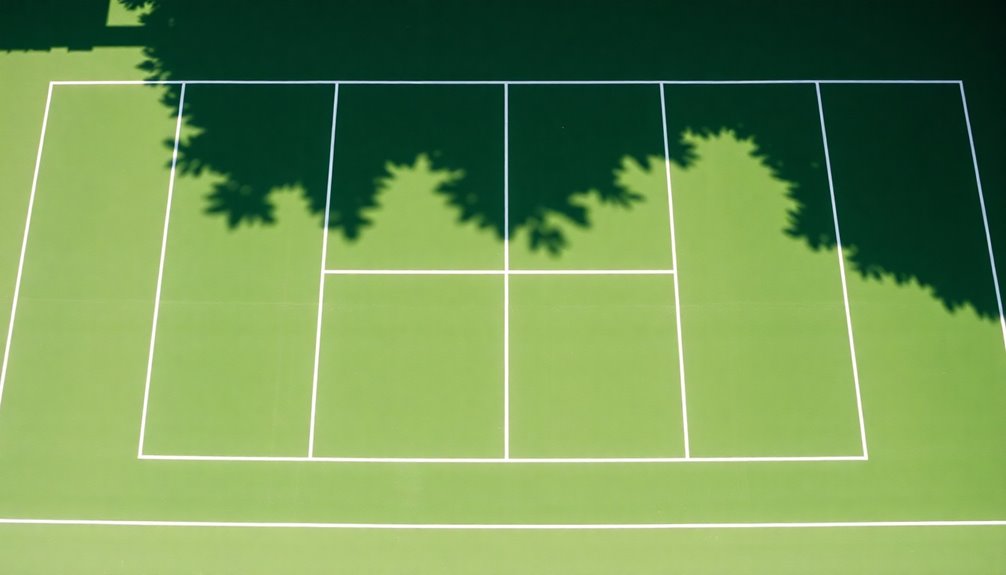
When stepping onto a tennis court, you’ll notice several key lines that define the playing area. The most prominent lines include the baseline, service lines, and sidelines. Each line plays a vital role in the game, dictating where you can serve and how points are scored.
The court dimensions are standardized: a singles court measures 78 feet long and 27 feet wide, while a doubles court expands to 36 feet in width. You’ll see these lines marked in distinct colors, typically white, to guarantee visibility against the court surface.
Understanding these lines helps you navigate the court effectively and enhances your overall game strategy. Additionally, knowing the standardized dimensions of the court is fundamental for any aspiring player. Familiarizing yourself with their significance is fundamental for any aspiring player.
Understanding the Baseline and Its Importance
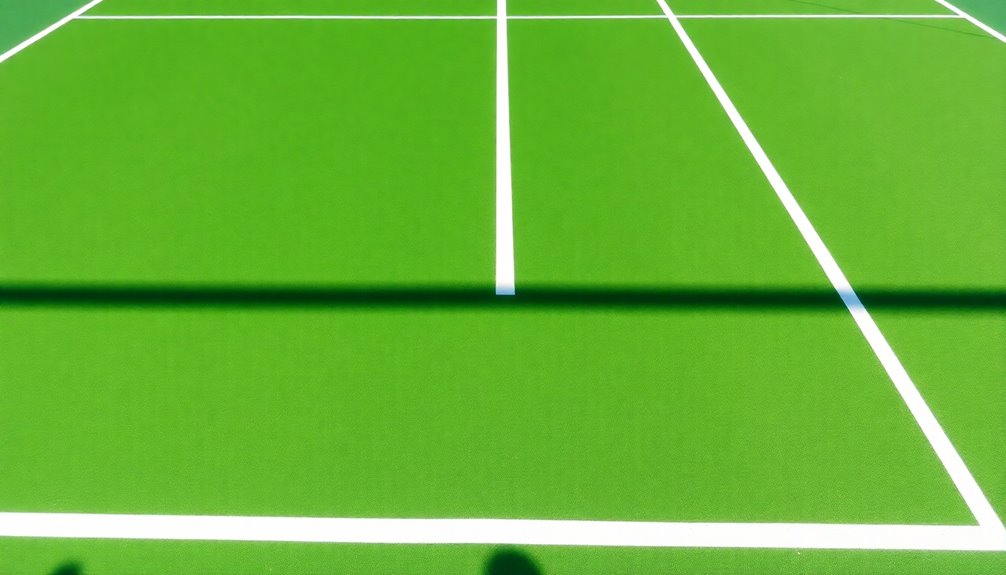
The baseline is essential for your game strategy, as it dictates how you position yourself during rallies.
When serving from the baseline, you can maximize your power and control, setting the tone for each point.
Understanding its role will help you make smarter decisions on the court. Additionally, knowing the importance of accurate field markings can enhance your awareness of positioning in relation to the boundaries.
Baseline’s Role in Strategy
Understanding the baseline’s strategic role is essential for any tennis player. Your baseline positioning can dictate the flow of the match. By standing a few steps behind the baseline, you give yourself more time to react to your opponent’s shots, which is vital for implementing effective baseline tactics.
This positioning allows you to hit powerful groundstrokes while maintaining control over the court.
When you move inside the baseline, you can pressure your opponent and take the initiative, but be cautious; it can be riskier. Balancing your position based on your opponent’s strengths and weaknesses is key.
Mastering these tactics not only improves your game but also enhances your ability to outmaneuver your opponents strategically.
Serving From the Baseline
Incorporating effective baseline footwork tips can enhance your serve’s power and placement. Always position yourself behind the baseline, using small steps to adjust as needed. This way, you can maintain momentum and prepare for the next shot.
Remember to visualize your serve’s trajectory; a confident mindset can make all the difference. With practice, you’ll find that serving from the baseline not only boosts your game but also puts pressure on your opponent right from the outset.
The Role of the Service Line Explained
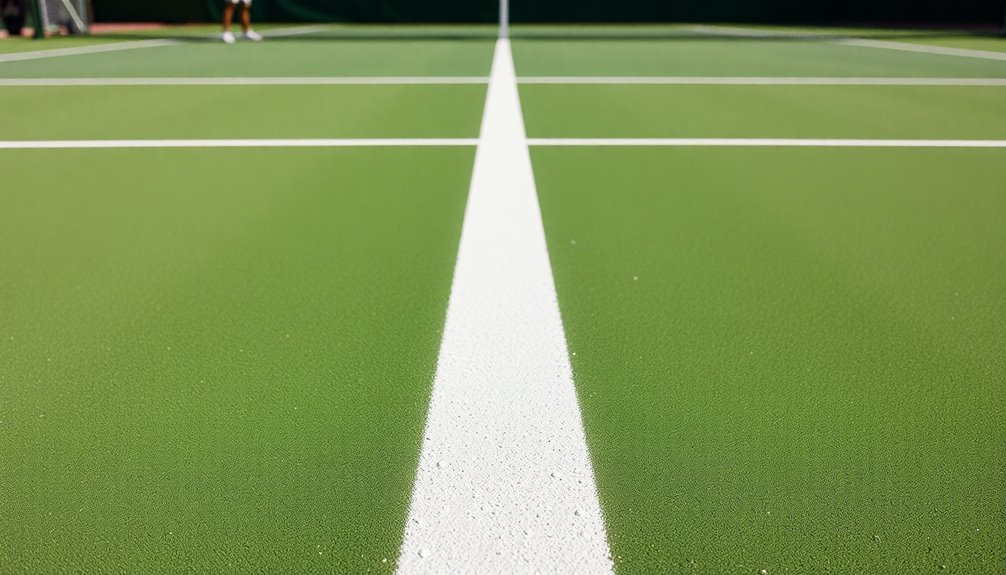
Serving in tennis isn’t just about power; it’s also about precision, and that’s where the service line plays an essential role. Your service line positioning can greatly influence your serve’s effectiveness.
When you stand too far back, you risk giving your opponent time to react, while standing too close may limit your serve’s power.
Utilizing effective service line strategies can help you place your serve in areas that challenge your opponent. Aim for the corners or body serves to keep them guessing.
Remember, the service line is your guide for where to direct your serves, ensuring you stay within the rules while maximizing your chances of winning the point. Mastering this line can make a big difference in your game. Additionally, understanding the concept of stoppage time can help you appreciate the moments in tennis where strategy and timing are crucial to gaining an advantage.
How the Center Mark Influences Play?
The center mark plays a vital role in your positioning on the court. It helps you gauge where to stand during serves and rallies, affecting your ability to respond effectively. Understanding its strategic importance can give you an edge in your game. Additionally, just as in soccer, effective communication during halftime can influence tactical changes and improve overall performance.
Center Mark’s Strategic Importance
While you may not notice it at first glance, the center mark on a tennis court plays a critical role in shaping gameplay. This small but essential line helps establish a center mark strategy that can influence how you serve and return shots.
By positioning yourself relative to this mark, you can create angles and dictate play, making it important for your overall game plan. The center mark significance extends beyond just aesthetics; it serves as a visual guide for targeting your opponent’s weaknesses.
When you aim your serves or groundstrokes toward the center, you can force your opponent into uncomfortable positions, ultimately giving you a strategic advantage on the court. Understanding this element can elevate your game considerably.
Impact on Player Positioning
Understanding the center mark‘s role also sheds light on how it affects player positioning during matches.
This small but significant line enhances your court awareness, guiding your movement patterns and foot positioning.
When you recognize the center mark, it provides essential visual cues that help with spatial understanding.
Why Do the Sidelines Matter in Scoring?
Sidelines play an essential role in scoring, as they define the boundaries of the court. When you hit the ball, your aim is to keep it within these lines to earn points.
Understanding the sidelines helps you develop effective scoring strategies, allowing you to place shots that challenge your opponent. Line calls become vital in these moments; if the ball lands outside the sidelines, the point goes to your opponent.
You must be confident in your shots and aware of your positioning to avoid unforced errors. By mastering the significance of the sidelines, you enhance your game, making precise shots that not only secure points but also put pressure on your rival, increasing your chances of winning the match. Additionally, successful players often control game flow through strategic shot placement, much like midfielders in soccer.
The Function of the Doubles Lines in Matches
When playing doubles, knowing the function of the doubles lines is essential for effective teamwork and strategy. The outer lines define the court’s boundaries for your match, allowing you to utilize the entire space. This expands your doubles strategy, letting you hit wider shots and force opponents into difficult positions.
Court awareness becomes vital as you navigate these lines; you’ll need to communicate with your partner about positioning and shot selection. Understanding where you can play balls—whether in or out—helps minimize errors and keeps the pressure on your opponents. Additionally, having strong team communication can enhance your ability to execute plays and respond to your opponents’ movements effectively.
Breaking Down the Net and Its Height Regulations
Here are three key points to remember about net height and tension:
- Net Height: The official height at the center of the net is 3 feet (0.914 meters), and it measures 3 feet 6 inches (1.07 meters) at the posts.
- Net Tension: Proper tension guarantees the net remains taut, allowing for accurate ball interactions. A loose net can lead to inconsistent bounces.
- Regulation Compliance: Always check that the net meets these standards before matches to avoid any unfair advantages. Additionally, ensuring that all equipment adheres to specific regulations can help maintain fairness in gameplay.
The Significance of the Alley in Doubles Play
In doubles play, the alley can be a game-changer for scoring and strategy. It gives you extra space to place your shots, creating opportunities for your team. Effective communication with your partner is key to utilizing this area and maximizing your chances of winning points. Additionally, understanding the importance of representation in coaching can enhance your team’s overall strategy and performance on the court.
Alley’s Role in Scoring
Understanding the significance of the alley in doubles play can enhance your strategy on the court. The alley, with its dimensions measuring 1.37 meters wide, provides essential opportunities for scoring.
Here’s how you can leverage it:
- Wider Target: Utilize the alley to hit deep serves and volleys, making it harder for opponents to return.
- Angles: Create sharp angles by targeting the alley, forcing your opponents to stretch and move out of position.
- Confusion: Use the alley to confuse your opponents, making them question whether they should play the ball or let it go.
Strategic Positioning for Teams
When you’re on the doubles court, strategic positioning can make all the difference, especially with the alley in play. Understanding how to utilize the alley effectively can enhance your team formations and give you a competitive edge. By positioning yourself close to the alley, you can cover more ground and intercept shots that your opponents might think are safe.
Court awareness is essential; always be aware of your partner’s position and adjust accordingly. If one player shifts toward the net, the other should stay back, ready to defend against lobs or angled shots.
This dynamic positioning not only maximizes your coverage but also puts pressure on your opponents, forcing them to hit more challenging shots. Use the alley to your advantage!
Communication Between Doubles Partners
Effective communication between doubles partners can elevate your game, especially when the alley comes into play. Understanding how to effectively use this area is vital for your success.
Here’s how to enhance your communication:
- Partner Signals: Develop clear verbal and non-verbal cues to indicate your intentions, ensuring role clarity and strategic alignment during points.
- Court Awareness: Maintain awareness of your partner’s position and movements. This’ll help you anticipate their needs and improve match dynamics.
- Trust Building: Foster trust through consistent communication cues. The more you communicate, the stronger your partnership becomes, allowing for better decision-making under pressure.
With these strategies, you’ll not only improve your gameplay but also create a more cohesive team on the court.
How to Use the Court’s Markings for Strategy
Utilizing the court’s markings can greatly enhance your strategy during a match. Pay attention to the baseline and service boxes; they’re essential for effective court positioning.
When you’re near the net, aim for your shots to land within the service boxes to pressure your opponent. Use the sidelines to create angles that pull them off balance, opening up the court for your next shot.
Incorporate these markings into your shot selection. For example, hitting deep shots near the baseline can push your opponent back, while a well-placed drop shot can exploit their positioning. Additionally, communication on the field is crucial as it helps you coordinate with your partner, similar to how tennis players must anticipate their opponent’s movements.
Common Misconceptions About Tennis Court Lines
Many players misunderstand the significance of tennis court lines, leading to confusion during matches. It’s essential to grasp a few common misconceptions to improve your game and uphold court etiquette.
- Doubles Lines vs. Singles Lines: Some players think the outer lines are only for doubles. Remember, singles players must still know where the lines are for proper line judgment.
- Foot Faults: Many believe foot faults are only about stepping on the baseline. In reality, it’s also about not crossing the center mark before serving.
- Ball In or Out: Players often assume any part of the ball touching the line is out. In fact, if it touches the line, it’s considered in! Understanding the importance of court lines can enhance your gameplay and guarantee fair play.
Tips for Beginners: Navigating the Court
Maneuvering the tennis court can seem overwhelming at first, but with a few key tips, you’ll feel more confident in no time.
Start by developing your court awareness; know where you’re at all times. This helps you anticipate your opponent’s shots and position yourself effectively.
Developing court awareness is crucial; staying aware enhances your anticipation of shots and helps position you effectively.
Practice line recognition, so you can easily identify which lines mark the boundaries for singles and doubles play. Understanding these distinctions keeps you from making costly mistakes during matches.
As you play, focus on your footwork; quick, precise movements will improve your overall game.
Finally, don’t hesitate to communicate with your partner in doubles, ensuring everyone’s on the same page.
With practice, maneuvering the court becomes second nature.
Frequently Asked Questions About Tennis Court Lines
Have you ever wondered about the significance of the different lines on a tennis court? Understanding these line markings can enhance your game and grasp of tennis.
Here are some common questions:
1. What’s the purpose of the service line?
It defines where players must stand to serve, essential for scoring systems.
2. How do line markings affect referee decisions?
Accurate markings help referees call points correctly, ensuring fairness.
3. Do surface types influence court maintenance?
Yes, different surfaces require specific care to keep line visibility and court dimensions intact.
Knowing these aspects not only improves your player etiquette but also deepens your appreciation for the game’s historical evolution.
Stay informed, and you’ll play smarter!
Conclusion
Now that you’ve unraveled the mystery of tennis court lines, think of them as a map guiding your game. Each line’s a whisper of strategy, urging you to find your rhythm. Embrace the boundaries—they’re not just markings; they’re your partners on the court. So, as you step onto the green canvas, let these lines inspire your every serve and volley. With a little practice, you’ll dance across the court with confidence, painting your own path to victory.