
The Ultimate Beginner’s Guide to Flag Football
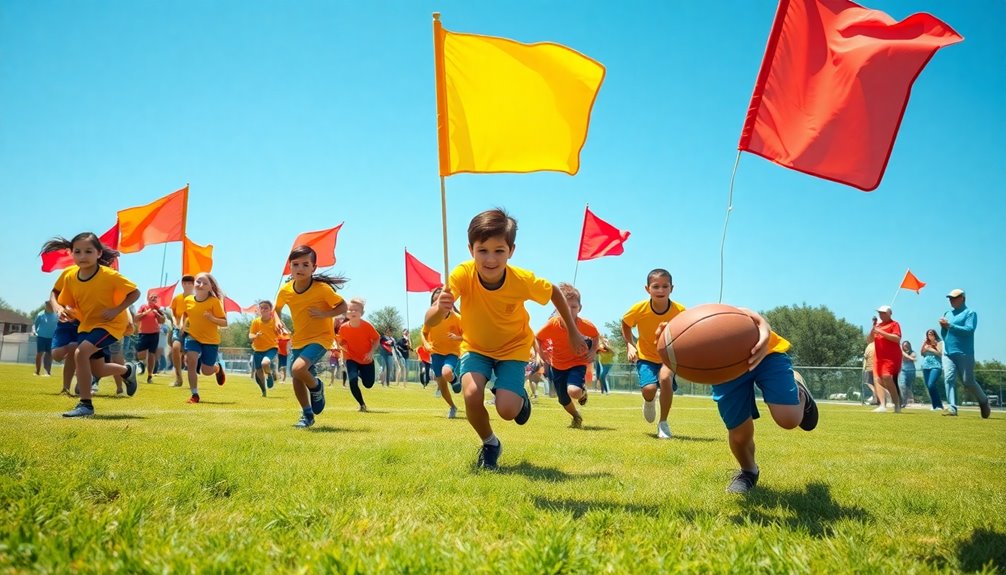
March 22, 2026Flag football’s a fun, non-contact sport perfect for beginners. It’s growing fast, especially among kids aged 6-12, focusing on teamwork and sportsmanship. You’ll typically play 5-on-5 or 7-on-7, aiming to score touchdowns and pull flags. The game runs two 20-minute halves, and you’ll need some basic gear like flags, mouthguards, and a suitable football. Plus, learning key positions and skills will set you up for success. Stick around to discover even more about getting started!
What Is Flag Football and Why Is It Growing in Popularity?
Flag football is revolutionizing the way people experience the game. This non-contact sport is rapidly gaining popularity, especially among youth and families. Its appeal lies in the accessibility it offers, allowing players of all skill levels to participate without the fear of injury.
With around 38% growth in participation among kids aged 6-12 since 2015, flag football serves as a safe introduction to football fundamentals. The game is typically played in 5-on-5 or 7-on-7 formats on smaller fields, emphasizing speed and agility.
Plus, it’s affordable—equipment costs average just $50—making it easier for families to get involved. The focus on teamwork and sportsmanship fosters an inclusive environment, encouraging both boys and girls to join in the fun. Additionally, understanding player roles enhances the overall enjoyment and participation in the game.
Key Rules You Need to Know Before Playing

Before you step onto the field, it’s essential to familiarize yourself with the key rules that govern flag football. Each game consists of two 20-minute halves, giving you 40 minutes of fast-paced football action.
Flag football players have four downs to advance the ball past midfield, followed by three additional downs to score touchdowns. Remember, touchdowns are worth six points, and you can earn extra points afterward.
In this non-contact game, players must pull flags from opponents’ belts to stop the play, ensuring safety.
Specific rules of flag football, like no blocking and designated no-run zones, help maintain that non-contact nature. Understanding these core rules will enhance your experience and prepare you for a successful game. Additionally, players must wear flag belts with flags to ensure safety and compliance with the rules.
Understanding the Field Layout and Team Structure
Knowing the rules sets the stage for understanding the field layout and team structure in flag football.
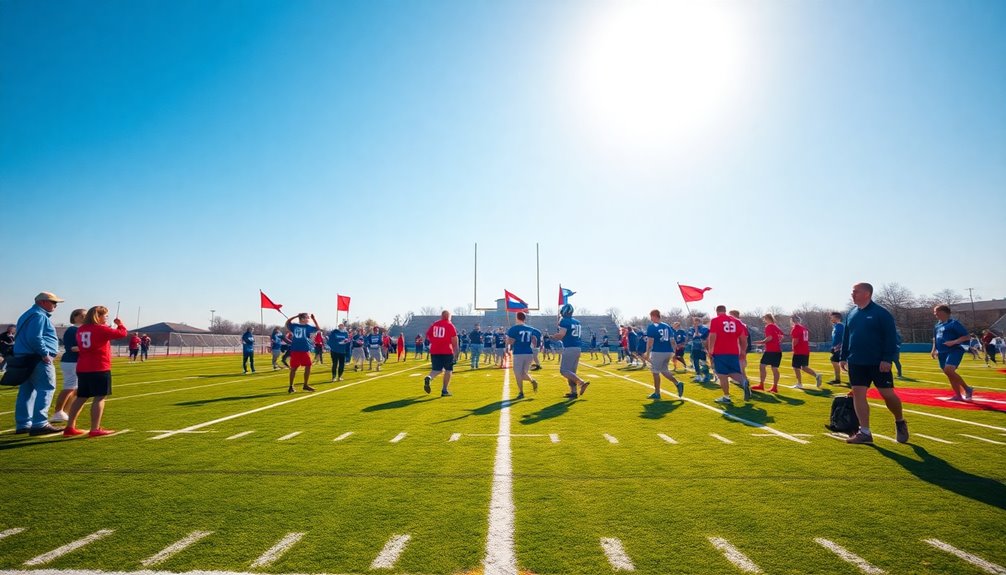
Flag football fields typically measure 25-30 yards wide and 70 yards long, with two 10-yard end zones. Teams usually compete in a 5-on-5 format, allowing for maximum player engagement.
The offense starts each drive on the 5-yard line, needing to cross midfield within four downs, followed by three more to score. The field layout includes no-run zones 5 yards before midfield and in front of each end zone, promoting passing plays.
Defensive players can blitz from a 10-yard mark, adding strategy to the game. Understanding these elements is vital for effective gameplay and teamwork. Additionally, the use of quick passing techniques can significantly enhance offensive strategy and execution.
Essential Flag Football Equipment for Beginners
Getting started in flag football requires the right equipment to guarantee safety and enhance performance. Essential flag football gear includes flags and belts, which are usually provided during registration.
You’ll also need a mouthguard for safety—having a backup is a smart idea. Athletic shoes or cleats designed for your playing surface will improve your speed and traction, but avoid metal spikes.
Pocketless shorts are preferred, as they promote clear visibility of your flags, reducing accidental pulls. Finally, a regulation football is necessary; younger players should use peewee-sized balls, while adults should stick with standard-sized ones. Additionally, consider using non-metal football cleats to minimize ankle injury risks and ensure a safe playing experience.
With this gear, you’ll be ready to hit the field confidently and safely!
The Main Positions and Their Responsibilities Explained
Now that you’ve got your gear, it’s time to understand the key positions on the field. Each player, from the quarterback to the rusher, has unique responsibilities that drive the game.
Let’s break down these roles so you can see how they all work together for both offense and defense. Understanding player roles enhances play design and execution, contributing to overall team performance.
Key Offensive Positions
In flag football, understanding key offensive positions is essential for effective gameplay. The Center snaps the ball to the Quarterback, who makes pivotal decisions about whether to pass or hand off, driving the team’s offensive strategy.
Wide Receivers run routes, using their speed and agility to catch passes and advance the ball. Running Backs primarily receive handoffs, but they also act as additional targets for the quarterback, making them versatile assets on the field.
Finally, the Rusher, positioned 7 feet behind the line of scrimmage, seeks to pressure the quarterback while adhering to blitzing rules. Mastering these positions will enhance your team’s performance and scoring potential in games.
Key Defensive Positions
Understanding offensive positions is just part of the game; knowing key defensive positions is equally important for a well-rounded flag football strategy.
The Rusher, positioned 7 feet behind the line of scrimmage, aims to pressure the quarterback and disrupt passing plays.
Defensive Backs cover wide receivers, focusing on preventing passes and intercepting thrown balls.
The Safety, stationed deeper in the field, acts as the final line of defense against long passes and supports run defense.
While not always formal, the Linebacker plays a significant role in defending against runs and short passes, reacting quickly to the play.
Finally, any defensive player can be a Flag Puller, responsible for removing flags from ball carriers to stop the play.
How to Teach Basic Skills: Throwing, Catching, and Running
To teach your players the fundamentals of flag football, focus on key techniques for throwing, catching, and running.
Emphasizing grip and wrist flick in throwing, along with effective catching methods, will enhance their skills considerably.
Incorporate running drills to improve their agility and speed, setting them up for success on the field. Additionally, mastering proper body alignment will ensure players are prepared to catch effectively in various situations.
Key Throwing Techniques
Mastering key throwing techniques is essential for anyone looking to excel in flag football. Focus on these fundamentals to enhance your game:
- Grip the Ball: Hold it with your fingertips, placing your index finger along the laces for control.
- Body Positioning: Stand shoulder-width apart, pivot your non-throwing shoulder toward your target, and keep your eyes locked on your aim.
- Throwing Motion: Rotate your hips and shoulders, bring the ball back to your ear, and follow through for accuracy.
- Footwork: Step forward with your leading foot, transferring weight from your back to front foot for power.
Incorporate practice drills with a partner to refine these skills and boost your throwing accuracy!
Effective Catching Methods
Catching the ball effectively sets the foundation for a successful play in flag football.
To master effective catching methods, teach players to form a triangle with their hands, using thumbs and index fingers to secure the ball. Encourage them to watch the ball all the way into their hands, reducing drops, especially when on the run.
Practice catching with both hands extended, helping build confidence and accuracy in various scenarios. Incorporate Football Drills that include catching while stationary, on the move, and after quick turns to enhance adaptability.
Reinforce the importance of soft hands; players should absorb the ball upon contact rather than let it bounce off, ensuring better control during gameplay in football leagues.
Running Fundamentals and Drills
Effective catching lays the groundwork for a player’s overall performance, and running fundamentals are just as important in flag football. To excel, focus on these key skills:
- Running Posture: Maintain a low center of gravity with quick, short strides to enhance speed and agility.
- Drills for Throwing: Practice partner drills at various distances to reinforce throwing technique and build confidence.
- Catching Skills: Use your hands, not your body, to catch the ball while keeping your eyes focused and forming a “triangle” with your hands.
- Running Drills: Implement cone drills with zig-zag patterns to improve your footwork and ability to evade defenders.
Master these fundamentals, and you’ll elevate your game markedly!
Fun Drills to Boost Your Team’s Performance
For route running, focus on cone drills that teach sharp cuts while maintaining speed, vital for getting open.
Don’t forget the flag-pulling drill; it’s a fun way to practice flag retrieval by having players chase opponents, boosting agility and reaction time.
These quick, competitive drills not only sharpen individual skills but also foster teamwork, creating a more cohesive unit on the field. Additionally, incorporating effective flag-pulling techniques into practice can significantly enhance your team’s defensive capabilities.
Creating a Positive Coaching Mindset for Young Players
Creating a positive coaching mindset is essential for nurturing young players’ love for the game. By focusing on enjoyment and engagement, you’ll keep them motivated and enthusiastic.
Here are some key aspects to emphasize:
- Encourage player participation to foster ownership and boost confidence.
- Highlight teamwork and sportsmanship to build strong relationships on and off the field.
- Practice patience, providing supportive feedback as players develop fundamental skills.
- Incorporate fun drills that maintain high energy levels and willingness to learn.
- Emphasize the importance of hydration and energy levels to support optimal performance during practice.
Tips for Structuring Effective Practices
Structuring your flag football practices is key to developing players’ skills and keeping them engaged.
Start each practice session with a dynamic warm-up, focusing on flexibility and injury prevention through exercises like shuffles and high knees for 10-15 minutes.
Next, dedicate 20-30 minutes to skill development drills, emphasizing passing, catching, and flag-pulling in a low-pressure environment.
Dedicate 20-30 minutes to skill drills, focusing on passing, catching, and flag-pulling in a supportive atmosphere.
Follow this with 15-20 minutes of situational scrimmages, allowing players to apply what they’ve learned in game-like scenarios.
Keep practice sessions lively by rotating through quick, engaging drills that maximize repetitions.
Additionally, incorporating hydration strategies throughout practice helps maintain energy and focus.
Conclude with a team huddle to reinforce positive feedback, discuss takeaways, and set goals, fostering a strong team culture that encourages growth and camaraderie.
Navigating the Transition: From Flag to Tackle Football
As you shift from flag to tackle football, it’s essential to understand how your skills will carry over. The physical differences in the game can be significant, so you’ll need to adapt your techniques accordingly. Embracing these changes now will set you up for success on the field. Additionally, mastering defensive formations will enhance your ability to read and react to opposing offenses effectively.
Skills Transfer Process
While shifting from flag to tackle football may seem intimidating, the skills you’ve developed in flag play a significant role in easing that process. Your experience with passing, catching, and footwork will serve you well as you make the change. The non-contact nature of flag football has helped you build confidence without the fear of injury.
Consider these key skills that transfer smoothly:
- Agility: Your quick movements give you an edge.
- Tactical Understanding: Route running and positioning are essential in both formats.
- Decision-Making: Fast thinking is important in tackle football.
- Teamwork: The collaborative spirit of flag football enhances your play in tackle.
Youth athletes adapting will find these skills invaluable in meeting the physical demands of tackle football.
Understanding Physical Differences
Shifting from flag to tackle football involves understanding several physical differences that impact gameplay and safety.
In flag football, you focus on speed and agility without physical contact, allowing you to hone essential fundamentals like passing and route running.
As you move to tackle football, usually around age 14, your body becomes more prepared for physical contact.
However, it’s important to recognize the increased injury risk, especially concerning concussions.
Tackle football has strict contact limits to address these safety concerns, making it essential for young athletes to have a strong foundation from flag football.
This preparation guarantees you’re ready to tackle the challenges of a more physical game while prioritizing your safety on the field.
Safety Considerations: Injury Prevention in Youth Football
Safety is paramount in youth football, and flag football offers a unique advantage by greatly reducing injury risks compared to tackle football.
To guarantee a safe environment, focus on these safety considerations:
- Concussion Awareness: Coaches should be trained to recognize and prevent concussions during practices and games.
- Proper Equipment: Always wear mouthguards and suitable footwear to minimize injuries.
- Warm-Up Routines: Regular stretching and warm-ups enhance flexibility, reducing strains and sprains.
- Player Fatigue Monitoring: Keep an eye on player fatigue and provide breaks to prevent overexertion.
How to Find Local Flag Football Leagues and Teams
Are you enthusiastic to get your child involved in flag football? Start your search for local leagues by checking online platforms like Google Maps or social media groups dedicated to youth sports.
Websites such as USA Football and your local recreation department often list sanctioned teams by region. Many community centers and schools host flag football programs, so don’t forget to look at their bulletin boards or websites for registration details and schedules.
Youth sports organizations like Pop Warner or AYF can also guide you to nearby teams.
Finally, visit local sports complexes or parks, as they often run seasonal leagues. Contacting these establishments directly can provide you with valuable information to kick off your child’s flag football journey!
Frequently Asked Questions for New Flag Football Players?
Curious about what to expect as a new flag football player? Here are some common questions you might have:
- What’s the age range? Flag football is perfect for young athletes, starting as young as 5 years old.
- What are the team sizes? Teams typically consist of 5 to 7 players, promoting teamwork and strategy.
- What’s needed regarding equipment? The essential equipment includes flags, belts, a mouthguard, and athletic shoes—costing around $50.
- How long are the games? Each game lasts 40 minutes, split into two 20-minute halves.
As a non-contact sport, flag football focuses on developing fundamental skills while keeping the game safe and enjoyable for everyone involved.
Conclusion
Flag football’s like a thrilling dance on the field, blending strategy and teamwork in a fast-paced game. As you lace up your cleats and grab your flags, remember you’re not just playing; you’re joining a community that celebrates fun and sportsmanship. Whether you’re a rookie or refining your skills, the camaraderie and excitement await you. So jump in, embrace the challenge, and let the game light up your weekends!