What Does a Safety Do in Football and Why It Matters
March 17, 2026In football, safeties are essential defenders positioned 10 to 15 yards from the line of scrimmage. They consist of free safeties, who focus on deep coverage, and strong safeties, who support the run defense. You’ll find them coordinating defensive strategies, anticipating plays, and ensuring clear communication among teammates. By preventing big plays and creating turnovers, safeties impact the game’s momentum. If you’re curious about their specific roles and remarkable players, stick around for more insights.
What Is the Safety Position in Football?
In football, understanding the safety position is vital for grasping defensive strategies. The safety position consists of two main types: free safety (FS) and strong safety (SS).
Typically, safeties line up 10 to 15 yards from the line of scrimmage, acting as the last line of defense against big plays. The free safety focuses on deep coverage, helping cornerbacks during pass plays, and sometimes blitzing to pressure the quarterback.
On the other hand, the strong safety plays closer to the line, emphasizing run defense and covering offensive players, blending the responsibilities of linebackers and defensive backs. Effective defensive strategies can enhance a team’s ability to thwart the opponent’s scoring opportunities.
Understanding the Roles of Free Safety and Strong Safety
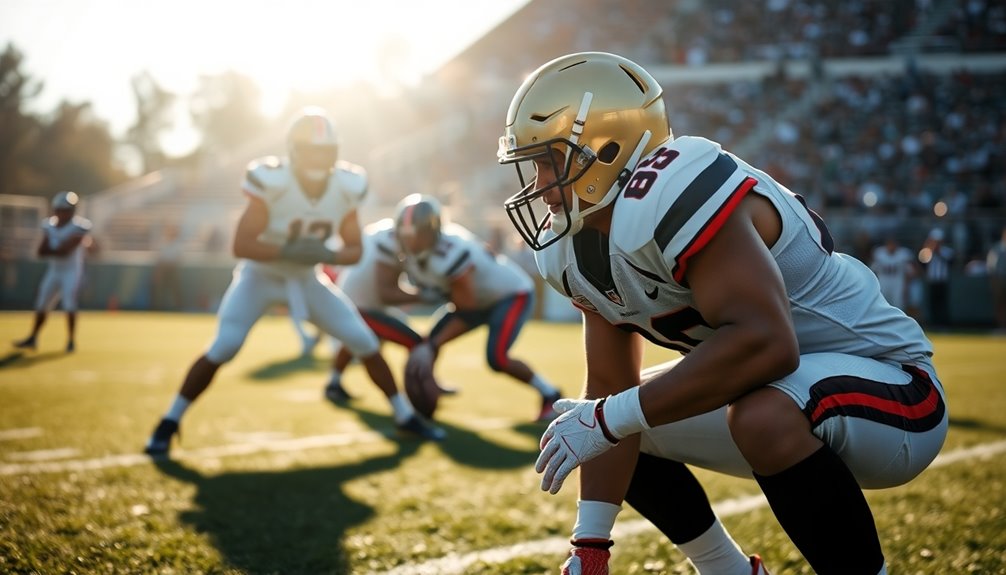
In football, understanding the roles of free safety and strong safety is essential for grasping defensive strategies.
The free safety roams deeper, looking to intercept passes, while the strong safety gets more involved in tackling and stopping runs.
Each position plays an important role in allowing cornerbacks to take risks, knowing they’ve strong support behind them. Additionally, effective communication among teammates ensures role clarity within formations, enhancing overall defensive execution.
Key Responsibilities of Free Safety
Taking on the role of the “defensive quarterback,” the free safety (FS) is vital in orchestrating the defense. Positioned 10 to 15 yards behind the line of scrimmage, you’re tasked with reading the offense and ensuring proper coverage.
Your key responsibilities include:
- Cover the pass: Assist cornerbacks in preventing deep throws and securing interceptions.
- Communicate effectively: Coordinate defensive strategies based on the offense’s formation.
- Provide deep coverage: Safeguard against passing threats by maintaining a keen awareness of the field.
- Blitz when necessary: Apply pressure on the quarterback to disrupt offensive plays.
Your versatility and leadership are essential for the overall success of the defense, making the free safety a pivotal player on the field.
Strong Safety Contributions Explained
Understanding the dynamics of a football defense requires a closer look at the strong safety’s role, which complements the free safety’s responsibilities. The strong safety would typically line up near the line of scrimmage, enhancing run support and covering tight ends and running backs.
This defensive player plays a hybrid role, blending the duties of linebackers in run defense with those of defensive backs in pass coverage. By focusing on the strong side of the offense, strong safeties adapt their positioning for maximum effectiveness.
They often excel in blitz packages, using speed and agility to pressure quarterbacks. Notable strong safeties like Derwin James and Budda Baker highlight the position’s significance through their tackling skills and ability to force turnovers, impacting games immensely.
Key Responsibilities of a Free Safety
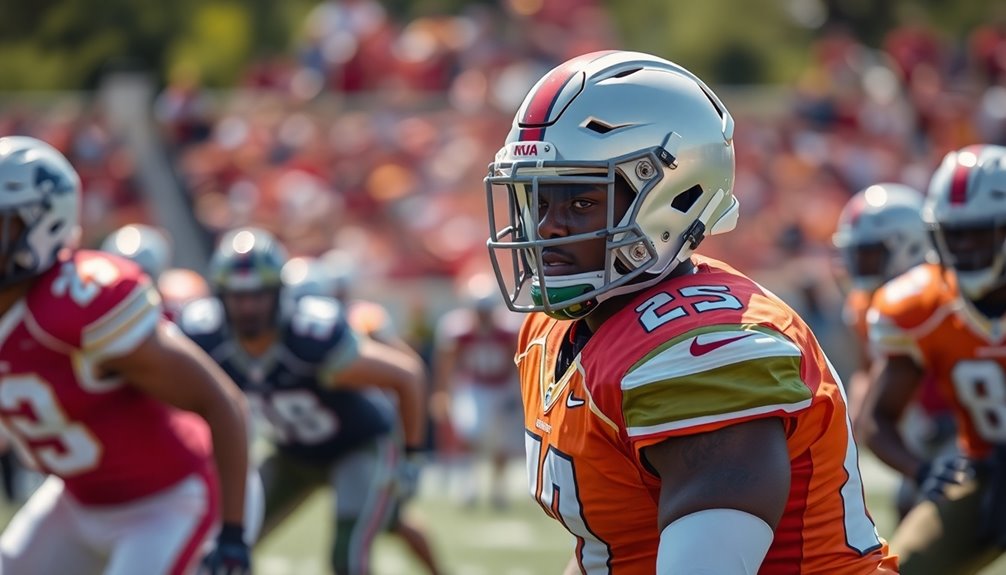
Positioned 10 to 15 yards behind the line of scrimmage, the free safety (FS) commands a unique vantage point on the field. As the “defensive quarterback,” you read the offense and relay adjustments to your teammates.
In man coverage situations, you often step in to cover the quarterback, providing essential support to the cornerbacks. Here are your key responsibilities:
- Anticipate plays based on offensive formations.
- Make significant interceptions by capitalizing on errant throws.
- Execute unexpected blitzes to apply pressure on the quarterback.
- Communicate effectively with teammates to guarantee defensive alignment.
Your role is critical in disrupting offensive plays and safeguarding against big gains, making you a key asset on the field. Additionally, mastering defensive strategies can enhance your effectiveness in reading opponent formations and adapting to their tactics.
Key Responsibilities of a Strong Safety
As the strong safety (SS), you play an essential role in defending against both the run and the pass, often lining up closer to the line of scrimmage. Your responsibilities include supporting run defense by tackling ball carriers and reading the offense for quick decision-making.
A strong safety tends to cover tight ends and running backs in pass protection, acting similarly to a linebacker. You must be agile and quick, often blitzing the quarterback to create pressure and force turnovers. This hybrid position demands physicality for effective tackling and the coverage skills needed to defend against passing threats, making you a versatile defender who can adapt to various game situations. Incorporating agility drills into your training regimen will enhance your quickness and footwork, essential for excelling in this role.
Historical Evolution of the Safety Position
- The free safety emerged to cover deeper areas and intercept passes.
- Historically, the strong safety was called a defensive halfback, focusing on stopping runs.
- Many modern safeties are converted cornerbacks, adapting to offensive strategies.
- This evolution highlights the increasing need for speed, versatility, and communication skills.
- As the game evolves, safeties must also understand advanced football routes to effectively counteract offensive plays.
As the safety position continues to develop, it showcases how the demands on players have changed, requiring them to be more dynamic and responsive to the evolving game.
Skills Needed to Excel as a Safety
To excel as a safety, players need a unique blend of skills that set them apart on the field. Exceptional speed and agility are critical; they allow you to cover ground quickly and defend against both wide receivers and tight ends effectively.
Strong tackling skills are essential, as you often serve as the final line of defense against offensive plays, needing to stop ball carriers decisively. Effective communication and leadership enable you to organize the defensive backfield and adjust coverage based on offensive formations.
A keen understanding of offensive strategies and quarterback tendencies helps you anticipate plays and create turnovers. Ultimately, adaptability is significant, allowing you to adjust your skills to counter the increasingly pass-heavy nature of the game. Additionally, mastering key defensive formations can significantly enhance your effectiveness in coverage and tackling situations.
Physical Attributes of a Successful Safety Player
Successful safeties typically showcase a blend of key physical attributes that enhance their performance on the field. As a defensive halfback, you need to excel in various areas to make impactful plays.
Here are some essential physical attributes:
- Speed: Clocking in under 4.5 seconds for 40 yards allows quick coverage.
- Agility: Sideline-to-sideline movement is vital for reacting to plays.
- Frame: Strong safeties weigh between 215-230 pounds for tackling, while free safeties are lighter (200-210 pounds) for speed.
- Athleticism: Explosive jumping ability helps in contesting passes and making tackles.
These attributes not only improve your game but also enable you to adapt to the evolving demands of football. Additionally, consistent training frequency is essential for developing the strength and agility needed to excel at the safety position.
Importance of Communication in the Safety Role
While playing the safety position, your ability to communicate effectively can make or break your defense. You serve as the defensive quarterback, coordinating coverage schemes and alignment adjustments among defensive backs and linebackers.
Quick, clear communication is essential, especially when facing complex offensive formations that can shift rapidly. By relaying information about offensive personnel, you help prevent misalignments that could lead to big plays.
Your strong communication skills enable you to lead the secondary, making real-time decisions that enhance overall defensive cohesion. When everyone’s on the same page, the defense becomes more formidable, allowing you to counter potential threats effectively. Ultimately, your role in communication is crucial to the success of your team’s defensive strategy, as effective training techniques can significantly improve your team’s preparedness for game situations.
How Do Safeties Impact Defensive Strategies?
Safeties greatly shape defensive strategies by providing essential deep coverage that allows cornerbacks to play more aggressively. Their presence enables a more dynamic defense, which can effectively counteract various offensive threats.
- Free safeties act as the defensive quarterback, reading formations and adjusting the secondary.
- Strong safeties excel in run support, bridging the gap between linebackers and defensive backs.
- They create turnovers through interceptions and forced fumbles, shifting momentum.
- Safeties cover tight ends and running backs, forcing quarterbacks into riskier throws.
- Their role is crucial in maintaining field dimensions and equipment requirements, ensuring the defense can adapt to offensive formations effectively.
Notable NFL Safeties and Their Contributions
Defensive strategies are often shaped by the standout performances of notable safeties throughout NFL history.
Take Troy Polamalu, for example. His instinctive play and ability to read offenses earned him the NFL Defensive Player of the Year in 2010 and two Super Bowl titles.
Ed Reed, another remarkable safety, is known for his impressive ball-hawking skills, accumulating 64 interceptions and securing a Super Bowl win.
Ken Houston’s record 12 Pro Bowl appearances highlight his consistent excellence.
Meanwhile, Sean Taylor, despite his tragic passing, showcased immense potential with his powerful hits.
Furthermore, Ronnie Lott, a four-time Super Bowl champion, redefined the position with his versatility and leadership.
Each of these notable NFL safeties has greatly impacted defensive strategies. Their contributions parallel the importance of stoppage time in soccer, as both highlight the critical moments that can shift the dynamics of a game.
Why Does the Safety Position Matter for Team Success?
The safety position is essential for your team’s success, acting as the last line of defense against big plays.
With their ability to create turnovers and provide versatile coverage, safeties can shift momentum and boost your entire defense.
Their leadership and communication also help coordinate strategies, ensuring everyone stays on the same page.
Key Defensive Role
In football, having a strong safety can make all the difference in a team’s success. The safety position serves as the last line of defense, essential for executing effective defensive strategies.
Here’s why safeties matter:
- They cover deep routes, limiting big plays and forcing quarterbacks to hesitate.
- Their quickness and agility help adapt to modern, pass-heavy offenses.
- Effective communication allows for coordinated efforts among the defensive unit.
- They create turnover opportunities, impacting the game’s outcome.
Turnover Creation Ability
Turnovers can be game-changers in football, and safeties play an essential role in creating these pivotal moments. Their turnover creation ability often shines through interceptions, especially for free safeties who excel at deep coverage and reading quarterbacks.
Players like Ed Reed and Troy Polamalu showcased this skill, leading their teams to defensive success. Safeties empower defensive backs to be more aggressive, knowing they’re there to cover deep threats. This confidence can lead to rushed throws from opposing quarterbacks, increasing turnover chances.
Additionally, safeties can force fumbles by combining solid tackling with strategic positioning. Overall, a skilled safety not only disrupts offensive plays but also creates valuable opportunities for the defense, making their role critical to team success.
Coverage Versatility Importance
While many positions on the field specialize in specific roles, safeties stand out for their coverage versatility, which is essential for team success. Their ability to adapt to various offensive formations enhances defensive strategies.
Here’s why coverage versatility matters:
- Coverage Adaptability: Safeties can effectively cover wide receivers, tight ends, and running backs.
- Deep Coverage: The free safety prevents big plays, allowing cornerbacks to play more aggressively.
- Run Support: Strong safeties assist in run defense while remaining effective in pass coverage.
- Leadership: They help coordinate the defensive backfield, ensuring alignment in coverage responsibilities.
This blend of skills not only bolsters the defense but can also turn the tide of a game, making safeties critical for overall team success.
Conclusion
To summarize, the safety position is essential for a football team’s success. With safeties averaging over 60 tackles per season, they play a pivotal role in both stopping the run and defending against the pass. Their ability to read the game and communicate effectively can shift the momentum in any matchup. As you watch the next game, keep an eye on those safeties; their impact often makes the difference between victory and defeat.