
What Does a Center Do in Football? A Complete Guide
March 17, 2026As a center in football, you’re the heartbeat of the offensive line. You snap the ball to the quarterback, direct blocking assignments, and call out adjustments based on defensive formations. Your clear communication is crucial for coordination and preventing breakdowns. You’ll need strong mechanics for various snaps, like shotgun and under center, and effective blocking techniques for both run and pass protection. Stick around to discover essential skills that make a great center and their historical evolution.
Understanding the Role of the Center in Football
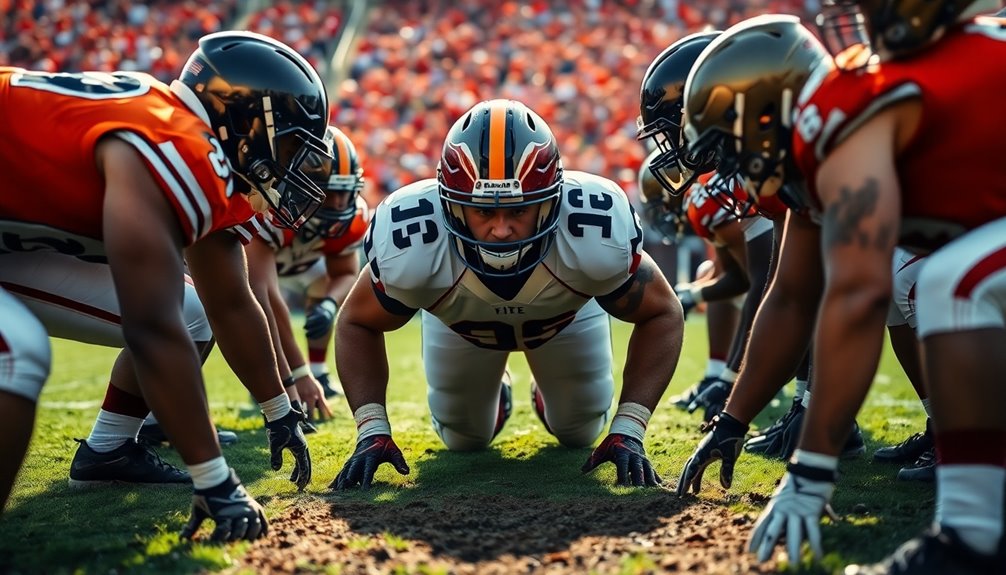
In football, the center acts as the heartbeat of the offensive line. Positioned as the innermost lineman, you’re responsible for snapping the ball to the quarterback, kicking off each play.
Your role goes beyond just snapping; you make the first line call based on defensive formations, showcasing your intelligence on the field. You direct the offensive line’s blocking assignments, ensuring everyone knows their responsibilities.
Your intelligence shapes the play; you direct blocking assignments and ensure the offensive line executes flawlessly.
Identifying the middle linebacker is essential, as it helps in run blocking and pass protection. You’ll assist guards in double-teaming and pick up blitzing defenders, all while aiming to execute successful plays.
With teams averaging 55 to 66 snaps per game, your snap sets the tone for the entire offensive execution. Moreover, understanding defensive line formations is crucial for making strategic adjustments during the game.
Key Responsibilities of a Center During Plays
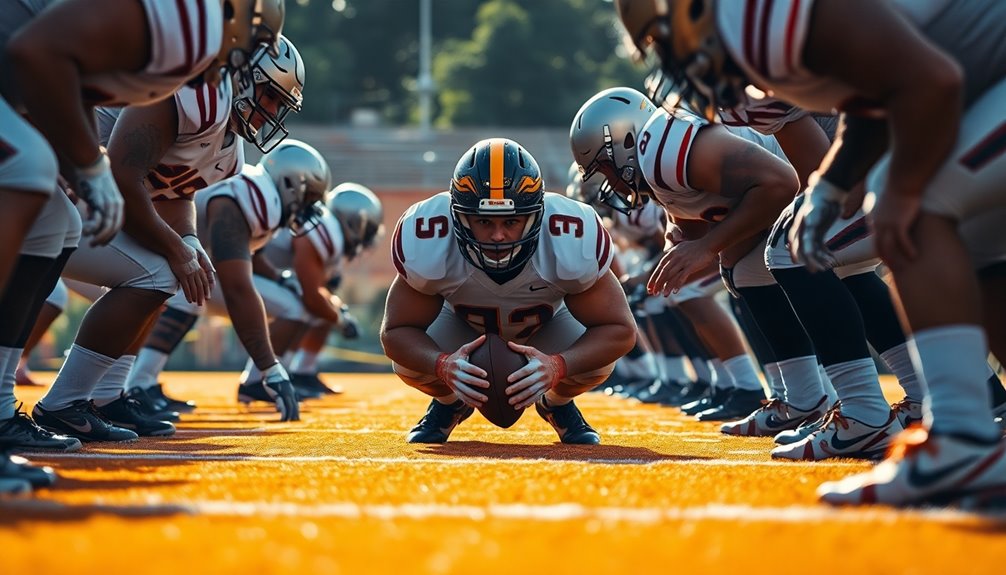
Executing your role during plays, the center is pivotal in orchestrating the offensive line’s movements. You must snap the football with precision, as a bad snap can derail the entire play.
At the line of scrimmage, the center directs the offensive linemen by calling out blocking assignments and identifying the middle linebacker based on the defense.
During run plays, you block linebackers and assist guards in creating effective double-team blocks. In pass protection, the center helps guards position against defensive linemen and is responsible for picking up blitzing linebackers or secondary players.
Communication is key; the center must clearly convey adjustments and protections to guarantee successful execution throughout the play. Additionally, understanding offensive penalties is crucial for maintaining the team’s momentum and avoiding setbacks.
The Mechanics of Snapping the Football

Snapping the football requires precision and technique, as it sets the tone for the entire play. The center is responsible for delivering the ball to the quarterback of the offensive team, ensuring a smooth start.
Here’s how to effectively snap the ball:
- Grip the football with your dominant hand on top and non-dominant underneath, laces facing upward.
- Maintain a balanced three-point stance with feet shoulder-width apart.
- Use a quick wrist motion to push the ball between your legs, aiming for accuracy.
- Keep the ball slightly forward of your head for ideal snapping and blocking angles.
Additionally, a strong understanding of blocking angles is crucial for the center to protect the quarterback after the snap.
Run Blocking Techniques for Centers
When it comes to run blocking, you play an essential role in identifying key assignments, like targeting middle linebackers or supporting guards in double-team techniques.
You also need to engage at the secondary level when necessary, ensuring running backs have clear lanes to advance.
Mastering these techniques will greatly enhance your effectiveness on the field. Additionally, understanding defensive formations will help you better anticipate the opposing team’s strategy and adjust your blocks accordingly.
Key Blocking Assignments
Centers play a pivotal role in run blocking, focusing on key assignments that can make or break a play. Your primary tasks involve ensuring that defensive linemen are neutralized and running lanes are created.
Here are some essential blocking assignments to remember:
- Block middle or backside linebackers to clear paths for the running back.
- Assist guards in double-team blocks to overpower defensive linemen and secure the line of scrimmage.
- Move to secondary levels when linebackers are absent, targeting safeties or cornerbacks.
- Communicate effectively with offensive linemen to identify defensive alignments and adjust blocking assignments.
Double-Team Techniques
Mastering double-team techniques is essential for any center aiming to enhance run blocking. In this approach, you’ll collaborate with the guard to effectively neutralize a defensive lineman.
Start by establishing a strong base, using your weight to engage the defender, while your guard comes in to assist. Communication is vital—signal when to initiate the double-team based on the defensive alignment.
Timing is key; coordinate your movements to execute the double-team simultaneously, maximizing your combined strength. Once you make initial contact, maintain your balance and footwork, allowing for pivots or redirects as needed.
If the defender is successfully blocked, be ready to move upfield and support the play. This teamwork can greatly impact your offensive success.
Secondary Level Engagement
Effective secondary level engagement is essential for maximizing your impact in run blocking. As a center, you need to read the defensive formation and identify targets, typically middle or backside linebackers.
Here are key aspects to take into account:
- Assist guards in double-teams to neutralize defenders
- Provide backside support when guards pull
- Move upfield to engage secondary defenders if no linebackers are present
- Adapt quickly to dynamic defensive movements
Your agility and quick decision-making are fundamental in ensuring effective blocking.
Pass Protection Strategies for Centers
In pass protection, your key responsibilities include identifying the middle linebacker and communicating blocking assignments to your teammates.
You need to recognize defensive fronts quickly, as this helps you anticipate and counter their strategies.
Mastering these skills keeps the pocket secure and gives your quarterback the time to make plays. Additionally, effective communication with your guards is crucial to ensure everyone is aligned on blocking strategies.
Key Responsibilities Overview
A center plays an essential role in ensuring the offensive line’s pass protection is solid and effective. You’re at the heart of the action, making vital decisions that impact the play.
Here are your key responsibilities:
- Communicate pass protection schemes to the offensive line based on defensive alignment.
- Stay agile and balanced, shifting quickly from the snap to engage defenders.
- Assist guards with blocking assignments, especially against stunts and twists.
- Read defensive fronts and make real-time adjustments to protection schemes.
Recognizing Defensive Fronts
How can you quickly recognize defensive fronts to enhance your pass protection strategies? Start by analyzing the alignment of the defensive linemen and linebackers. This recognition allows you to make swift and effective blocking assignments.
Always call out the middle linebacker to guarantee the offensive line understands the primary target for pass protection. Effective strategies require you to identify defensive stunts and blitzes, enabling you to adjust blocking schemes and protect the quarterback from pressure.
Remember, communication is crucial; clearly convey any changes in blocking assignments based on real-time observations. Don’t hesitate to assist your guards against interior rushers and alert them to any impending blitzes from linebackers or secondary defenders.
Your awareness and communication can make all the difference.
The Importance of Communication on the Offensive Line
Communication serves as the backbone of a successful offensive line in football. As the center, you’re essential in directing the line and ensuring everyone understands their blocking assignments. Your clear and loud communication is critical for identifying defensive formations and calling out adjustments.
Here are some key roles you play:
- Directing the offensive line in response to the defense
- Establishing pass protections to safeguard the quarterback
- Translating complex plays into actionable instructions
- Ensuring synchronization for effective run and pass plays
When you communicate effectively, the entire line works cohesively, reducing the risk of breakdowns that can lead to failed plays. Additionally, understanding the offside rule is crucial, as it helps prevent penalties that could disrupt offensive strategies.
Your role is fundamental in maintaining the rhythm and efficiency of the offensive line.
Types of Snaps and Their Applications
In football, the snap is the foundation of every play, and as the center, you’re responsible for delivering it accurately.
There are several types of snaps you need to master. The shotgun snap positions the quarterback 5-7 yards behind you, allowing for quicker plays and better defensive reads.
The under center snap is essential for play action and immediate handoffs, especially in short-yardage situations.
For punting, the punt snap travels 15 yards to the punter, requiring precision to guarantee a timely kick.
Finally, the field goal snap must reach the holder quickly and accurately to maximize scoring chances.
Each snap type plays an important role in executing your team’s strategy effectively. Additionally, analyzing defensive setups before executing these snaps helps in identifying exploitable weaknesses.
Historical Evolution of the Center Position
As the game of football evolved, so did the role of the center, shaping it into a crucial position on the field. Originally influenced by rugby, the center position started with a “snap-back” method where the ball was rolled.
Significant changes occurred over time, including:
- The 1892 rule change allowing hand snapping
- Walter Camp’s influence in defining center responsibilities
- The standardization of the direct snap by 1940
- Shifting from multiple backfield players to a unique line of scrimmage position
The design of the football also shifted to a prolate spheroid, improving aerodynamics and changing snapping techniques. This evolution mirrors the changes in soccer field dimensions that have shaped gameplay across various sports.
These developments illustrate the historical evolution of the center, highlighting its significance in modern football.
Essential Skills and Physical Attributes for Centers?
To excel as a center in football, players need a unique blend of physical attributes and essential skills. Typically standing between 6’1″ and 6’4″ and weighing 310 to 325 pounds, centers must combine strength with agility for effective blocking.
A high football IQ is essential; it helps you read defenses, make quick decisions, and communicate adjustments to your teammates. Mastering both shotgun and under-center snapping techniques guarantees you deliver the ball accurately and swiftly, setting up successful plays.
Agility allows you to shift rapidly from snapping to blocking, adapting to defensive shifts. Finally, strong leadership skills are critical, as you often direct the offensive line, maintaining communication and making sure everyone is on the same page during important moments on the field. Additionally, understanding quick passing techniques enhances your ability to support plays effectively.
Conclusion
So, there you have it—the center’s not just a glorified snapper; they’re the unsung heroes of the offensive line, ensuring your favorite quarterback doesn’t end up as a human piñata. With their communication skills and formidable blocking techniques, they make chaos look easy. Who knew the key to a successful play was a person who spends most of their time crouching in an awkward position? Next time you watch a game, give a nod to the center—football’s true MVP!