
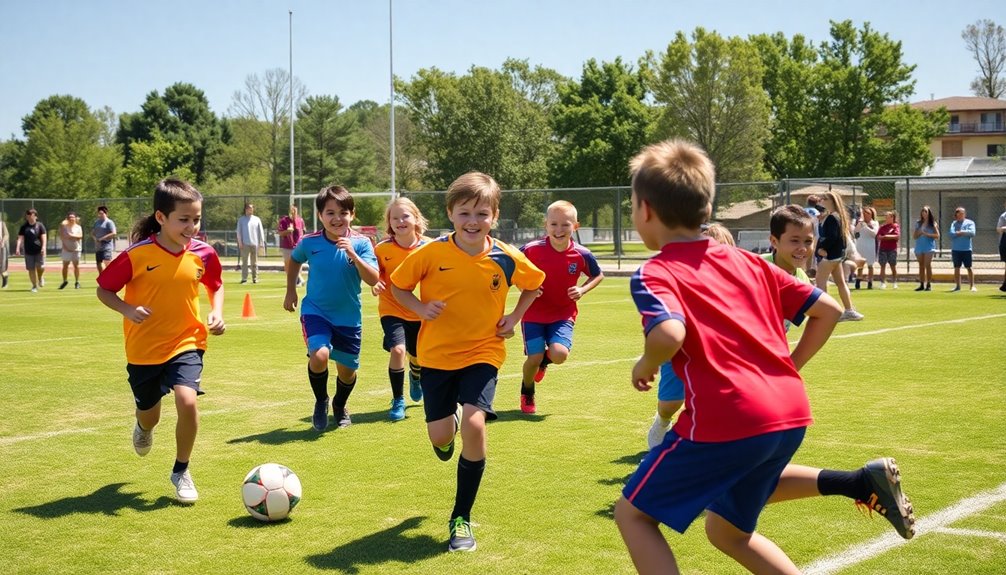
Building a Winning Team: Fun and Effective Football Drills for Kids and Youth Players
March 14, 2026Building a winning youth football team means prioritizing team bonding and fun while developing skills. Start with engaging warm-up games like Simon Says and Football Golf to energize players and enhance coordination. Incorporate small-sided games for more ball touches and quick decision-making, fostering teamwork. Celebrate achievements, from small wins to big milestones, to boost morale. By listening to player feedback, you can create an inclusive environment. Stick around to discover even more effective drills and strategies!
Why Team Building Matters in Youth Football
Team building is essential in youth football because it cultivates a strong sense of unity among players. When you engage in team-building activities, you enhance teamwork and improve communication skills. This is vital for effective play and decision-making during games.
As players bond through these exercises, they develop a sense of belonging that boosts morale and resilience, especially after tough losses. You’ll notice that youth players who connect well often perform better in subsequent matches.
Strong relationships fostered through team bonding also enhance social skills, creating a positive and inclusive team culture. Ultimately, effective team-building initiatives lead to higher participation rates, making everyone feel more connected and committed to the team’s goals. Additionally, effective teamwork is crucial for on-field performance and play execution.
Setting the Right Mindset for Young Players
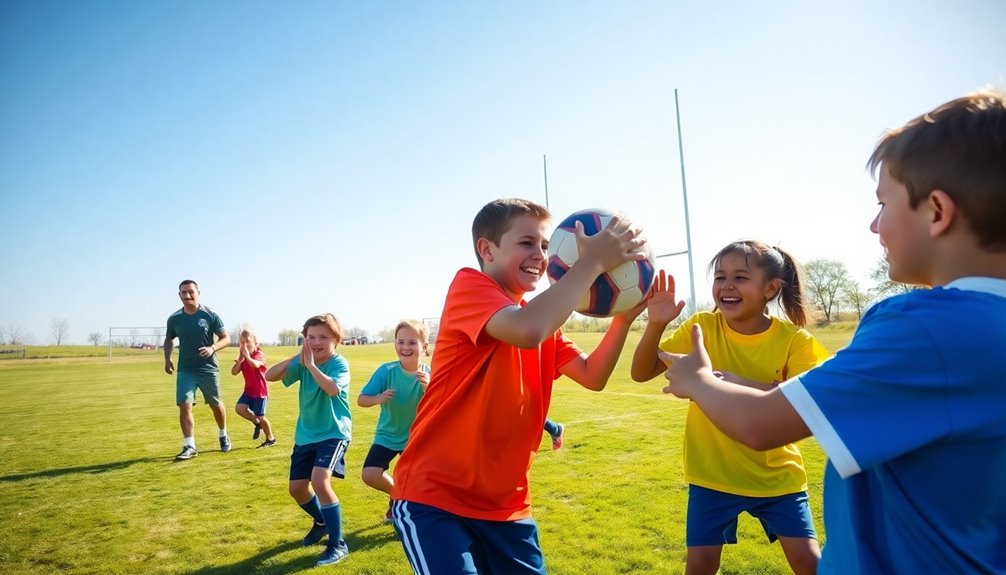
To help young players thrive, focus on setting shared goals that give everyone a sense of purpose. Celebrating team achievements, no matter how small, can boost morale and keep everyone motivated. Incorporating a structured warm-up routine not only enhances performance but also sets a focused mindset for practice.
Shared Goals Importance
Creating shared goals in youth football not only unifies the players but also enhances their focus on collective success rather than individual recognition.
When you set specific, measurable, achievable, relevant, and time-bound (SMART) goals, it helps young players understand their roles and the significance of teamwork.
Being invested in shared objectives fosters a deeper sense of belonging and commitment, ensuring everyone works toward the same vision.
Plus, addressing individual frustrations early keeps the team united and boosts overall performance.
By nurturing this environment, you’ll encourage collaboration and strengthen the team dynamic, making each player feel valued as part of a greater mission.
Ultimately, shared goals lay the foundation for success, both on and off the field.
Celebrating Team Achievements
While you might think celebrations are just about having fun, they play an essential role in building a positive mindset among young players. Celebrating team achievements, no matter how small, boosts morale and fosters belonging.
Here are three ways to keep players engaged:
- Recognize Individual Contributions: Acknowledge each player’s effort during celebrations to make them feel valued.
- Acknowledge Milestones: Celebrate wins and skill improvements to cultivate a growth-focused mindset.
- Create Memorable Events: Organize fun celebrations, like team parties, to reinforce teamwork and camaraderie.
The Role of Communication in Team Success
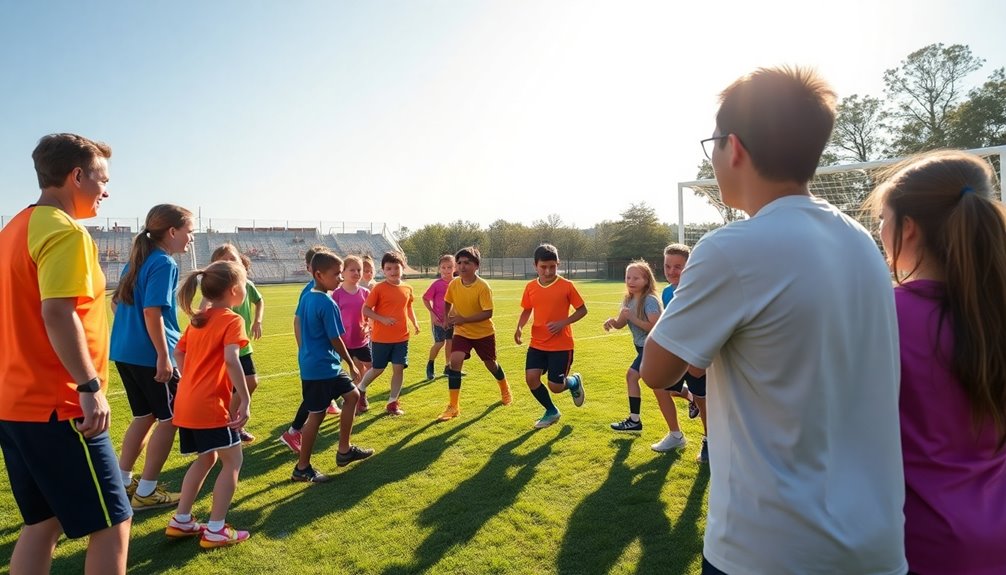
Effective communication is key to a team’s success, and that starts with active listening.
When you practice clear messaging techniques, everyone on the field can respond faster and work together more smoothly. Additionally, effective communication strengthens defensive lines and enhances teamwork, ensuring that players are aware of their roles and responsibilities.
Active Listening Practices
How can active listening transform a team’s dynamics on the football field? By fostering better communication, active listening guarantees that players fully grasp each other’s perspectives, leading to improved teamwork and performance.
Here are three ways to incorporate active listening practices:
- Reflective Listening Exercises: Regular drills where players repeat back what they heard can enhance understanding and build respect.
- Feedback Loops: Encourage players to summarize teammates’ points, reinforcing comprehension and promoting open dialogue.
- Cues During Gameplay: Players who actively listen respond better to on-field signals, improving coordination and decision-making.
Teams that practice active listening cultivate trust and collaboration, essential ingredients for competitive success.
When everyone listens, the whole team grows stronger and more cohesive.
Clear Messaging Techniques
In youth sports, effective communication fosters cohesion and builds a supportive environment that enhances performance, especially under pressure. Incorporating regular communication drills into your team building activities can greatly improve how players work together, making roles and expectations clear.
Using specific calls or signals during practices helps players react quickly and accurately during games, reducing confusion when it counts. Open dialogue among teammates not only addresses individual frustrations but nurtures a culture of shared responsibility.
When teams prioritize communication, they boost morale and unity, with studies showing that effective communication can increase overall team success by up to 25%.
Fun Warm-Up Games to Kick Off Practice
As you kick off practice, incorporating fun warm-up games can set a positive tone for the session. These games not only get players moving but also enhance teamwork and communication.
Here are three engaging options to contemplate:
- Simon Says: This game encourages dynamic movement while reinforcing football fundamentals, preparing everyone physically and mentally.
- Football Golf: A fun twist that warms up muscles and boosts energy levels, creating an exciting atmosphere.
- Snacks in the Grass: Focus on agility and ball control while keeping the environment enjoyable and inclusive for all skill levels. Additionally, incorporating structured warm-ups can further enhance player focus and readiness for practice.
Engaging Skill Development Drills for All Levels
Incorporating engaging skill development drills is key to helping players of all levels improve their game.
You’ll find that activities like the “Simon Says Drill” not only teach essential techniques but also keep practice enjoyable. Additionally, focusing on flag pulling techniques can significantly enhance players’ defensive skills and overall game performance.
Essential Skill Techniques
While developing essential skills in young football players, engaging drills can make a significant difference in their growth and enjoyment of the game.
Here are three effective drills to enhance players’ skills:
- Simon Shows: This drill teaches players to read and react to on-field situations based on the coach’s ball position, promoting quick decision-making.
- Ready, Set, Hut: Focus on establishing proper pre-snap stances, helping players practice energy and timing during repetitions.
- Ride the Pads: This drill encourages players to embrace contact, reducing fear and building confidence in their tackling skills.
Incorporating these drills into your practice not only improves players’ abilities but also sets a fun and positive tone for skill development.
Fun Drills for Engagement
Engaging young players in skill development is essential for their growth and enjoyment of football. Fun drills for engagement, like “Football Golf,” enhance coordination while introducing a competitive edge with tackling wheels.
The “Simon Shows” drill helps players improve movement and reaction skills, allowing them to read the game better while mastering fundamental techniques.
For ball handling, “Hot Potato” passing games challenge players to maintain accuracy as they spread apart, fostering teamwork.
Incorporating small-sided games increases ball touches and simulates real-game scenarios, enhancing quick decision-making.
Don’t forget fun warm-up games to set a positive tone, preparing players both physically and mentally, and encouraging enthusiastic participation from the moment practice begins.
Small-Sided Games for Enhanced Teamplay
Small-sided games, like 3v3 or 4v4 formats, not only boost player involvement but also sharpen essential skills.
These small groups create a dynamic environment where players get more touches on the ball, enhancing their decision-making under pressure.
Here are three key benefits of small-sided games:
- Enhanced Teamwork: Players must communicate and collaborate closely, fostering a better understanding of each other’s strengths.
- Increased Engagement: With more scoring opportunities, players find greater enjoyment and motivation during matches.
- Quick Adaptation: These formats allow for faster shifts and tactical adjustments, helping players learn to adjust to changing game situations in real-time. Incorporating flag football drills enhances individual skills, further improving overall team dynamics.
Creative Competitive Activities to Boost Morale
To boost morale and foster a sense of camaraderie among young players, incorporating creative competitive activities can make practices more enjoyable.
Organizing NCAA tournament-style brackets for various football drills ignites healthy rivalry, enhancing engagement. You can also introduce fun games like “Snacks in the Grass,” allowing players to compete lightly while honing their skills.
Activities such as a slip-and-slide water bucket relay promote teamwork and make sessions memorable. Tug-of-war with a dog toy rope builds strength and encourages strategic communication.
Finally, football trivia sessions with varying difficulty levels can improve players’ game knowledge, fostering a supportive yet competitive environment. Additionally, incorporating quick passing techniques into these activities can further develop players’ skills and understanding of the game.
These engaging activities guarantee that players not only develop skills but also enjoy every moment on the field.
Incorporating Strength and Conditioning Challenges
Incorporating strength and conditioning challenges into your practice not only enhances physical fitness but also fosters team bonding. Activities like Towel Wars and Tire Wars push players to work together, building both strength and agility. Additionally, these challenges promote cardiovascular endurance, which is essential for maintaining energy levels during games.
Engaging Physical Competitions
While traditional drills are important, engaging physical competitions can take your kids’ football training to the next level.
These activities not only enhance strength and conditioning but also build teamwork and camaraderie.
Here are three great competitions to try:
- Towel Wars – Players compete to gain control of a towel, developing grip strength and agility.
- Car Wars – Teams push a car for time, fostering a fun, competitive atmosphere while building strength.
- Tire Wars – Relay races involving flipping tractor tires improve coordination and endurance, essential for on-field performance.
Incorporating these engaging physical competitions into your training routine will keep your kids motivated and remarkably boost their physical capabilities.
Plus, they’ll have a blast doing it!
2. Team Bonding Through Challenges
Building on the excitement of engaging competitions, incorporating strength and conditioning challenges can greatly enhance team bonding. Activities like Towel Wars and Tire Wars require players to lean on each other’s strengths, promoting teamwork in a fun, high-energy environment.
These challenges not only boost physical fitness but also foster effective communication and collaboration, essential elements in team sports. Engaging in relays, like pushing cars or carrying water buckets, encourages problem-solving and builds a sense of shared responsibility.
Strength challenges such as Mat Wars add competitive fun, helping players develop resilience and camaraderie. Regular participation in these conditioning activities strengthens overall team dynamics, allowing players to trust and support one another, especially under physical stress.
3. Enhancing Strength and Agility
To enhance strength and agility in young athletes, integrating conditioning challenges is key. These fun activities not only improve physical resilience but also boost overall performance on the field.
Here are three effective drills to evaluate:
- Towel Wars: Players compete to pull a towel from each other, building grip strength and core stability.
- Tire Flips: This relay race enhances strength and coordination, while promoting teamwork and communication.
- Car Wars: Engaging in this competition increases power and explosiveness, critical for football success.
Regular participation in these strength-based activities can greatly boost players’ confidence and enjoyment, ensuring inclusivity while fostering a competitive spirit.
Tailoring challenges to their skill levels keeps everyone engaged and motivated!
Team Bonding Through Off-Field Activities
When you engage in off-field activities, you not only strengthen team bonds but also enhance relationships among players. Volunteering together fosters a shared purpose, creating a sense of responsibility that translates to better teamwork on the field.
Organizing informal gatherings, like trivia nights or recreational outings, encourages camaraderie and breaks down barriers, promoting inclusivity. These consistent interactions greatly improve team morale, making communication during games more effective.
Tailoring activities to your team’s dynamics guarantees everyone feels valued and involved, boosting overall participation and unity. By investing time in these off-field experiences, you cultivate a cohesive team environment that benefits both individual players and the entire squad, ultimately leading to success on the field. Moreover, participating in community events strengthens local partnerships that enhance youth development and engagement in the sport.
Effective Conflict Resolution Strategies on the Field
Strong team bonds off the field can lead to smoother interactions during games, especially when conflict arises. To guarantee effective conflict resolution, consider these strategies:
- Address Issues Immediately: Tackle conflicts as they happen to prevent escalation. This proactive approach fosters a culture of open communication among players.
- Hold Regular Team Meetings: Encourage dialogue where everyone can express frustrations and collaboratively seek solutions, reinforcing team unity.
- Implement Symbolic Labeling: Help players clarify conflicts by articulating their feelings. This technique promotes empathy and understanding, creating a supportive environment.
- Utilize Team Drills: Incorporating creative team names and drills can enhance teamwork, making it easier to resolve conflicts as players work together more effectively.
Celebrating Team Achievements to Foster Unity
Celebrating team achievements not only recognizes hard work but also builds a sense of unity among players. Whether it’s a small victory or a major milestone, acknowledging these successes reinforces a culture of accomplishment that motivates everyone.
When you highlight individual contributions during these celebrations, it fosters a sense of belonging and promotes a team-first mentality. Regularly celebrating team achievements boosts morale, creating a supportive environment where players feel valued and connected.
Plus, these moments provide excellent opportunities for team bonding, enhancing relationships and improving communication. By incorporating celebrations into practice routines, you can cultivate a positive atmosphere, making training sessions more enjoyable and engaging for young athletes.
Embrace the power of celebration to strengthen your team’s unity!
Listening to Player Feedback for Continuous Improvement
Listening to player feedback is essential for creating a dynamic and effective training environment. By regularly soliciting insights from your players, you not only discover what they enjoy but also identify areas for improvement.
Here are three ways to effectively gather player feedback:
- Conduct anonymous surveys to get honest opinions about practice effectiveness and team dynamics.
- Encourage open discussions during post-match reflection circles, allowing players to express their thoughts and fostering transparency.
- Implement changes based on their suggestions; this increases motivation and commitment as players feel valued.
Adapting Drills for Diverse Skill Levels
When you adapt drills for diverse skill levels, you create an inclusive training environment that boosts confidence and skill development.
Make sure to tailor drills by breaking them into smaller tasks focusing on fundamental techniques. This way, all players can participate effectively.
Start with basic passing before progressing to more complex scenarios like passing under pressure.
Using small-sided games increases individual involvement, allowing less experienced players to learn from skilled teammates.
Small-sided games enhance player engagement, enabling beginners to learn directly from their more skilled teammates.
Regularly assess players’ skill levels to adjust drill complexity, ensuring everyone stays engaged.
Encourage peer mentoring during practices, where skilled players guide beginners.
This collaborative atmosphere not only enhances individual skills but also fosters overall team development, ensuring every player gets the support they need.
Maintaining Engagement Throughout the Season
To keep players engaged throughout the season, it’s vital to blend fun with skill development. Incorporating enjoyable activities might greatly boost enthusiasm and attendance.
Here are three effective strategies:
- Warm-Up Games: Start each practice with warm-up games to energize players and set a positive tone.
- Small-Sided Games: Use small-sided games to increase player involvement and touches on the ball, fostering a more interactive environment.
- Off-Field Activities: Organize team outings or community service events to strengthen bonds and improve teamwork.
Additionally, regularly seek player feedback on drills and activities. This guarantees practices align with their interests, keeping engagement high and making the season enjoyable for everyone involved.
Conclusion
Building a winning team isn’t just about skills; it’s about hearts beating as one. When you foster communication, celebrate achievements, and adapt drills, you create a vibrant atmosphere where every player shines. Remember, each practice is a chance to grow together, turning individual dreams into a powerful collective journey. So, keep the fun alive and watch your team transform into a tight-knit family that stands tall on and off the field.