
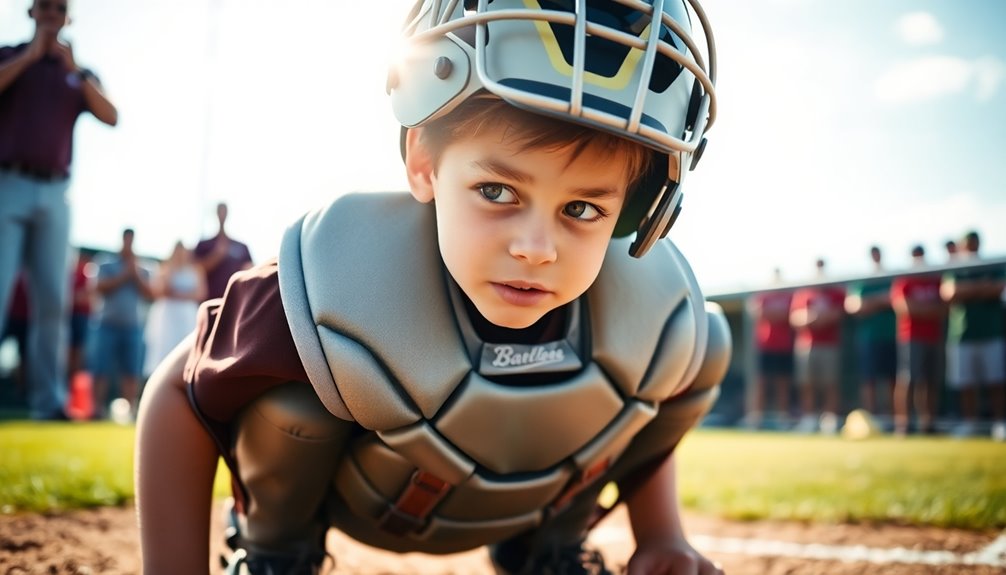
The Catcher’s Position Explained: Is Your Child Ready for This Role?
February 27, 2026If your child shows strong understanding of the game, communicates well, and exhibits quick reactions, they might be ready for the catcher’s role. This position requires mastering catching techniques and mental toughness to handle pressure. Look for a willingness to learn and a passion for being involved in every play. Supporting their development with fun drills and proper equipment can enhance performance. Discover more about the essential skills and responsibilities that come with being a catcher.
The Essential Skills Every Young Catcher Needs
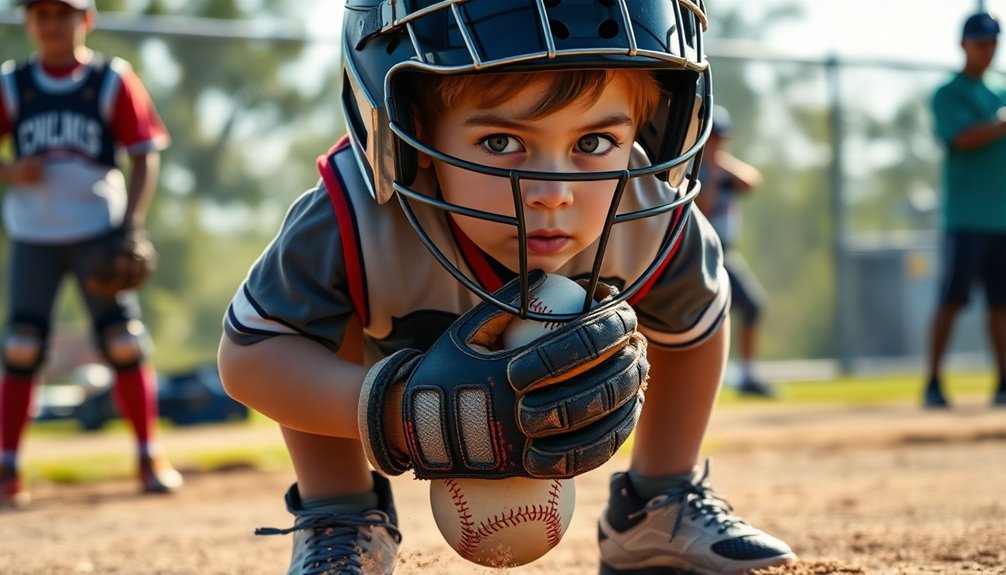
As you step behind the plate, you mightn’t realize just how essential your role is to the game. Mastering catching techniques is important; you need to frame pitches, block wild throws, and throw out base runners. Every play starts with you, so honing your skills through practice is significant.
But it’s not just about physical ability. Mental toughness plays a notable role, too. You’ll face pressure situations, and maintaining focus is key to making those game-changing plays. Stay composed, read the game, and communicate effectively with your pitcher and teammates. Implementing strategies that capitalize on team strengths will also enhance your ability to support your defense.
These skills will elevate your performance and instill confidence in your team. Embrace the challenge, and you’ll not only grow as a catcher but also as a player.
Understanding the Responsibilities of a Catcher
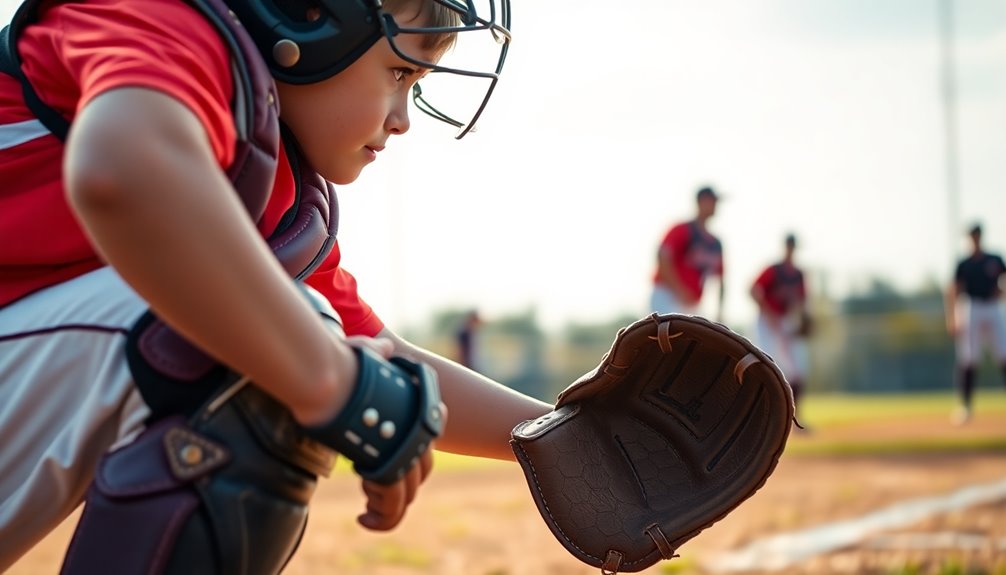
Behind the plate, your responsibilities extend far beyond just catching the ball. As a catcher, you’re the backbone of the team’s defense. You’ll need to master various catching techniques, ensuring you can handle pitches of all types, whether they’re fastballs or curveballs.
Your ability to communicate effectively with your teammates is essential; you’ll call for pitches, signal plays, and guide infielders. This player communication helps maintain team cohesion and strategy during the game.
You’ll also need to monitor the game closely, reading the opposing batters and anticipating their actions. Remember, being a catcher means being a leader on the field, taking charge, and supporting your pitchers while keeping everyone engaged in the game. Additionally, understanding the offside rule will help you anticipate plays and make strategic decisions during crucial moments.
Signs Your Child May Be Ready for the Catcher’s Role?
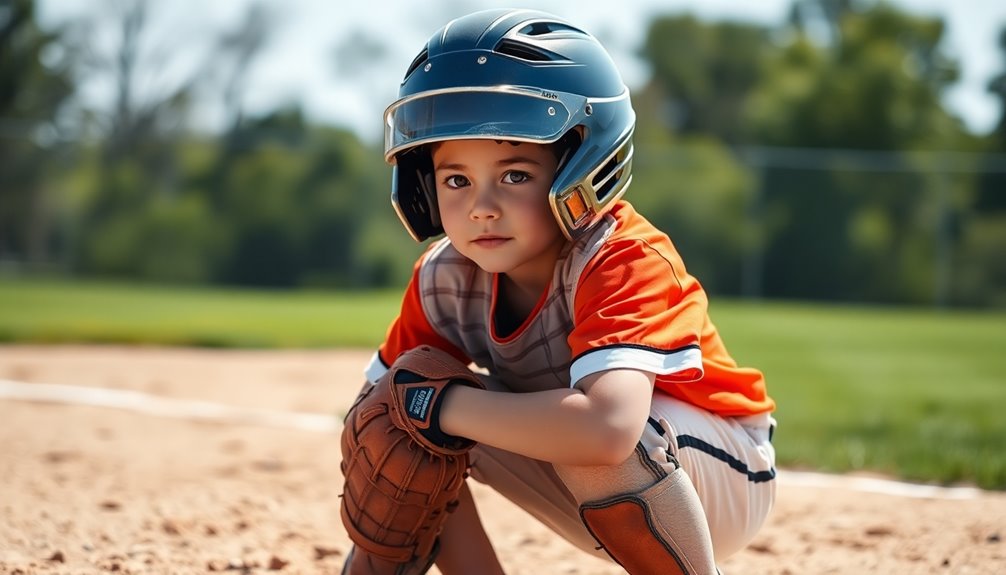
How can you tell if your child is ready to take on the catcher’s role? Look for specific readiness indicators that highlight essential catcher characteristics.
If your child shows a strong understanding of the game and can communicate effectively with teammates, they’re on the right track. A good catcher is also physically agile, able to react quickly to pitches and potential plays at home plate.
If your child enjoys being involved in every play and exhibits confidence under pressure, that’s a strong sign they’re prepared. Additionally, if they display a willingness to learn and accept feedback, it shows they’re ready to embrace the challenges and responsibilities that come with being a catcher. A solid foundation in game mechanics can enhance their performance and understanding of the role.
How to Support Your Child’s Development as a Catcher
To effectively support your child’s development as a catcher, focus on creating a positive and encouraging environment that fosters their skills and confidence.
Start by incorporating fun catching drills into their practice routine. These drills can enhance their hand-eye coordination and reaction time, making them more effective behind the plate.
Incorporate engaging catching drills to boost your child’s hand-eye coordination and reaction time for better performance behind the plate.
Pay attention to equipment selection, ensuring they’ve the right gear that fits properly and is comfortable to wear. A well-fitting mask and chest protector can boost their confidence while providing necessary protection.
Encourage your child to communicate with teammates during practice, helping them develop leadership skills. Regularly attending games and celebrating their progress will also motivate them and reinforce their love for the position. Additionally, integrating teamwork and communication practices into their training can significantly enhance their overall performance and confidence behind the plate.
Preparing for Challenges: What to Expect Behind the Plate
As your child develops their catching skills, they’ll soon face unique challenges on the field that require resilience and quick thinking.
Behind the plate, they’ll need mental toughness to handle the pressure of calling pitches and managing the game. Every play demands focus as they anticipate the batter’s actions and react swiftly.
Physical endurance is also essential; catching can be physically taxing, especially during long games. Your child will need to stay alert and ready to spring into action, whether blocking wild pitches or throwing out base runners.
Encourage them to practice regularly, building both their strength and stamina. By preparing for these challenges, your child won’t only improve as a player but also grow in confidence and character. Additionally, understanding the importance of field dimensions will help them better anticipate the game dynamics and make quicker decisions.
Conclusion
To sum up, if your child shows interest in becoming a catcher, embrace their passion like a warm embrace on a chilly day. Equip them with the essential skills and support their growth, while understanding the unique challenges they’ll face. With your encouragement, they’ll not only learn the game but also develop resilience and leadership. So, if they’re ready to step behind the plate, help them immerse themselves and discover the joy of being a catcher.