
Swimming Success: 10 Essential Techniques for Young Athletes
February 13, 2026To achieve swimming success, mastering essential techniques is key for young athletes. Focus on refining your body position, kicking strength, and breathing efficiency. Mastering strokes like front crawl and backstroke enhances speed and control. Practicing turns and finishes can help maximize your race strategy, while setting specific goals keeps you motivated. With consistent feedback and practice, you’ll see continuous improvement. Discover more strategies to elevate your swimming journey and achieve your athletic goals.
Understanding the Importance of Technique in Swimming
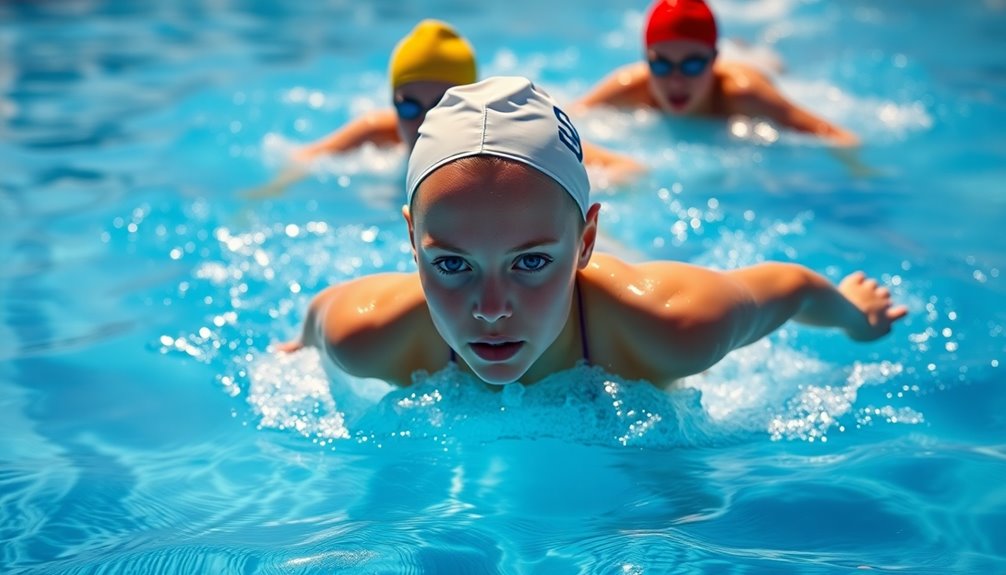
Mastering swimming techniques is essential for young athletes aiming to excel in the sport. Understanding the technique fundamentals helps you build a solid foundation.
Focus on the basics like body position, breathing, and arm movement; these elements directly impact your stroke efficiency. When you refine these skills, you’ll notice improved speed and power in the water.
It’s vital to practice consistently and seek feedback from coaches or experienced swimmers. They can provide insights that enhance your performance.
Remember, technique isn’t just about looking good; it’s about maximizing your energy and minimizing drag. By focusing on these fundamentals, you set yourself up for success and create a pathway for continuous improvement in your swimming journey. Additionally, incorporating agility techniques can further enhance your overall performance in the water.
Embrace the process, and you’ll thrive.
Mastering the Front Crawl: The Foundation of Speed
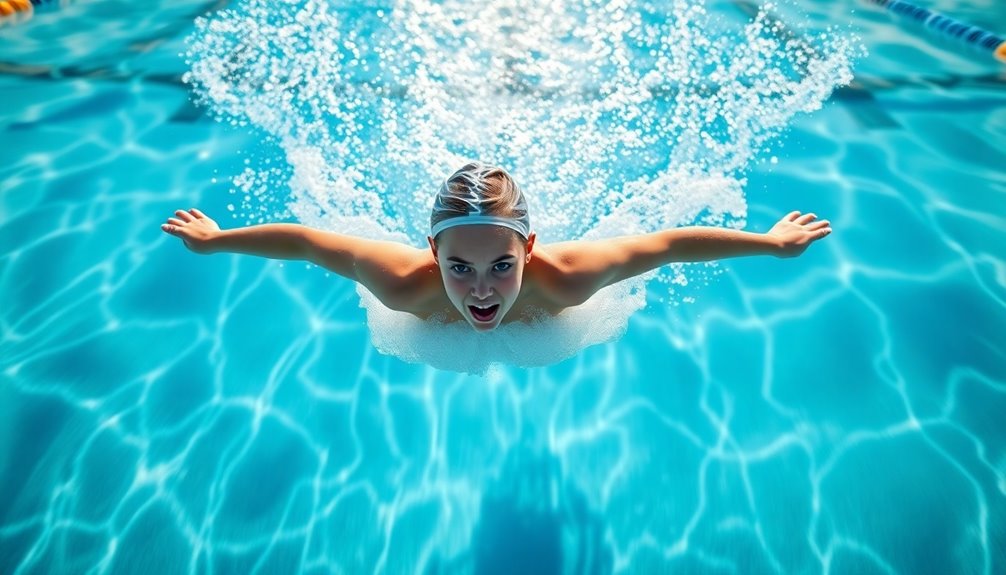
While many swimming strokes have their own unique benefits, the front crawl stands out as the fastest and most efficient method for covering distances in the water.
To master this technique, focus on front crawl drills that emphasize body position and stroke rhythm. Start with a strong kick, keeping your legs straight but relaxed.
As you pull with one arm, guarantee a smooth arm recovery over the water, minimizing drag. Rotate your hips and shoulders to engage your core, which will help propel you forward.
Practice alternating your arms to build coordination and speed. By honing these elements, you’ll greatly improve your front crawl performance, making it the foundation of your swimming success as a young athlete. Additionally, understanding field dimensions and equipment requirements can help you ensure that you are training effectively in the pool environment.
Perfecting Your Breathing: Tips for Efficient Gas Exchange
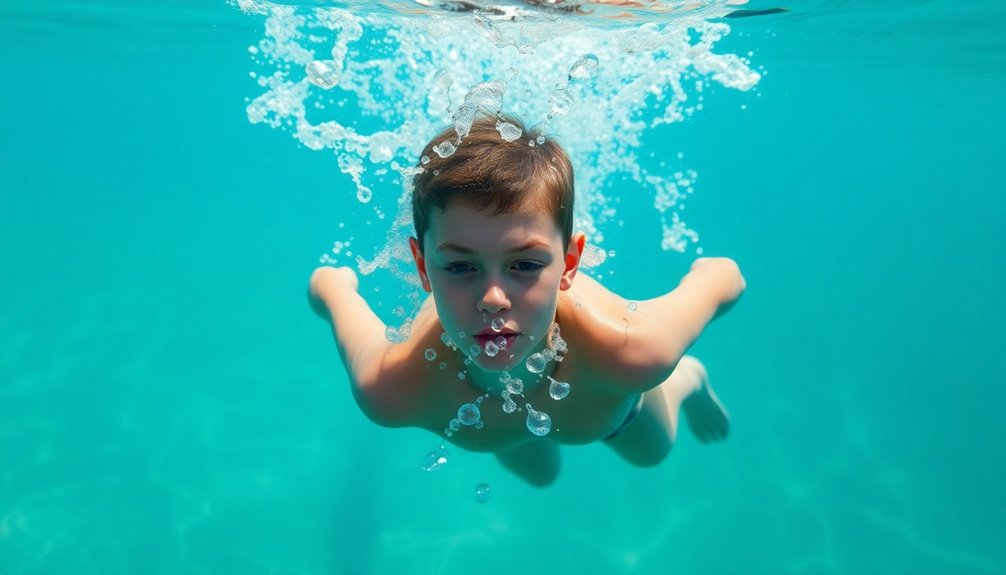
Breathing efficiently is essential for young athletes looking to enhance their swimming performance. To improve your oxygen efficiency, practice specific breathing exercises tailored for swimmers.
Start by timing your breaths with your strokes; this rhythm will help you maintain speed while ensuring you get enough air. When you turn your head to breathe, do it quickly to minimize drag, and focus on inhaling through your mouth and exhaling through your nose underwater.
Incorporate drills that emphasize bilateral breathing to develop comfort on both sides. Finally, remember to stay relaxed; tension can hinder your ability to take in oxygen effectively. Additionally, practicing passing accuracy can improve overall body coordination and fluidity in movements, benefiting your swimming technique.
The Backstroke: Key Elements for Balance and Control
The backstroke is a unique and challenging swimming style that requires balance and control to excel. To master the backstroke fundamentals, focus on maintaining a streamlined body position. Keep your head in a neutral position, eyes looking up, while engaging your core for stability.
Balance techniques, like kicking from your hips instead of your knees, can help you maintain a consistent rhythm. As you rotate your shoulders, remember to alternate your arm movements smoothly, ensuring one arm enters the water as the other exits. This coordination is essential for propulsion.
Finally, practice breathing rhythmically, allowing your head to stay still while you inhale. Incorporating effective communication into your practice sessions can also enhance your overall performance in the water. With dedication and attention to these key elements, you’ll enhance your backstroke and improve your overall performance in the water.
Improving Your Breaststroke: Timing and Coordination
To excel in breaststroke, mastering timing and coordination is essential for young athletes.
Focus on your breaststroke timing by synchronizing your arm movements with your kick. When your hands enter the water, your legs should be preparing to push back, creating a fluid motion.
Practice coordination drills, like the “3-2-1” drill, where you alternate between three arm strokes, two kicks, and one glide. This helps you feel the rhythm of the stroke.
Also, pay attention to your breathing; inhale quickly as your arms sweep back, then exhale during the glide phase.
Regularly incorporating these techniques into your practice will enhance your efficiency and speed in the water, setting you up for success in competitions. In addition, understanding the roles and strategies of athletes in team sports can further improve your overall athletic performance.
The Butterfly Stroke: Techniques for Power and Rhythm
To master the butterfly stroke, you need to focus on your body position and alignment. Getting your timing right, especially with your breathing, is essential for maintaining rhythm and power. Additionally, understanding stoppage time can help swimmers recognize the importance of pacing themselves during races. Let’s explore how these elements can elevate your performance in the water.
Body Position and Alignment
While mastering the butterfly stroke, maintaining the right body position and alignment is essential for maximizing power and rhythm.
You need to focus on your body balance, keeping your hips and legs at the water’s surface to reduce drag. To achieve this, practice alignment drills that emphasize a streamlined posture.
Keep your head in line with your spine, and avoid excessive movement. As you glide through the water, engage your core to stabilize your body and create a powerful undulating motion.
Your arms should enter the water in line with your shoulders, maintaining a solid position. By prioritizing these elements, you’ll enhance your efficiency and strength in the butterfly stroke, making your swimming experience more effective and enjoyable.
Timing and Breathing Coordination
Mastering the timing and breathing coordination in the butterfly stroke is essential for achieving a powerful and rhythmic swim. To start, focus on your body’s movement: as your arms exit the water, your hips should begin to rise. This creates a natural wave motion that you can harness for speed. Incorporate timing drills into your practice to perfect this synchronization.
When it comes to breathing patterns, aim to breathe quickly as your arms pull back, keeping your head low to maintain momentum. Try to inhale through your mouth and exhale underwater, ensuring you’re not disrupting your stroke rhythm.
Practicing these elements consistently will help you build strength and fluidity in your butterfly technique, leading to improved performance in the water.
Streamlining Your Body Position for Reduced Drag
Achieving an ideal body position in the water is essential for reducing drag and enhancing your speed. Proper body alignment allows you to slice through the water more efficiently, improving your overall performance.
Here are some techniques to help you streamline your position:
- Keep your head in line with your spine.
- Engage your core to maintain stability.
- Extend your arms fully in front of you.
- Position your hips at the water’s surface.
- Relax your legs and point your toes.
Incorporating individual drills focusing on your body alignment can further enhance your swimming technique.
The Role of Kicking: Strengthening Your Legs for Better Performance
A streamlined body position sets the foundation for effective swimming, but your legs play a vital role in propelling you through the water. To enhance your performance, focus on strengthening your leg muscles through targeted kicking drills. These drills not only help you develop the power needed for strong kicks but also improve your overall technique and efficiency in the water. Incorporate various kicking drills like vertical kicking, dolphin kicks, and flutter kicks into your training routine. You’ll find that building leg strength translates into faster sprints and increased endurance. Additionally, core strengthening exercises are essential for improving stability and power, which can further enhance your kicking technique.
Practicing Turns and Finishes: Maximizing Your Race Strategy
When it comes to racing, mastering your turns and finishes can make all the difference. Focus on developing efficient flip turns that save time and momentum, and practice powerful finishing techniques to guarantee you touch the wall strong. Additionally, enhancing your endurance through specific drills can significantly improve your overall race performance.
Efficient Flip Turns
Although mastering efficient flip turns may seem intimidating, they can considerably enhance your overall race strategy. To get started, focus on the flip turn fundamentals to guarantee a smooth shift.
Here are some tips to help you avoid common mistakes:
- Keep your body streamlined during the turn.
- Tuck your chin to your chest to initiate the roll.
- Use your legs to push off the wall powerfully.
- Spot the water before surfacing for a seamless return to swimming.
- Practice consistently to build confidence and speed.
Powerful Finishing Techniques
Mastering powerful finishing techniques can make all the difference in your race performance. To maximize your race strategies, focus on your turns and finishes.
Practice your flip turns to guarantee you maintain speed as you shift. As you approach the wall, begin your last stroke early, making sure you’ve got momentum. During the turn, keep your body streamlined, and don’t forget to kick hard off the wall.
When you’re finishing the race, use those finishing touches to your advantage. Drive your arms forward and increase your kick to propel yourself through the final meters.
Setting Goals and Tracking Progress: The Path to Continuous Improvement
Setting clear goals is essential for young athletes looking to improve their swimming skills, as it provides direction and motivation. By setting specific, achievable goals, you can enhance your performance and stay focused.
Setting clear, achievable goals empowers young swimmers to enhance their skills and maintain focus on their journey.
Here are some effective strategies to contemplate:
- Utilize goal visualization to imagine your success and boost your confidence.
- Keep a progress journal to track your training sessions, noting improvements and challenges.
- Set short-term and long-term goals to maintain motivation and celebrate milestones.
- Regularly review your goals to adjust them based on your progress and aspirations.
- Involve your coach or teammates for support and accountability on your journey.
Additionally, remember that teamwork and resilience can significantly contribute to your growth as an athlete.
Conclusion
In summary, mastering these essential techniques can greatly elevate your swimming performance. Did you know that swimmers with proper technique can reduce drag by up to 30%? By focusing on your form, breathing, and turns, you not only enhance your speed but also build endurance and efficiency. Remember, consistent practice and goal-setting are key to your growth in the pool. So plunge into, refine your skills, and watch your swimming success soar!