

Tennis Made Easy: 8 Beginner Lessons Every Young Player Needs
February 13, 2026Tennis is all about mastering the basics! Start with understanding the court layout and getting the right equipment. Next, work on your grip—it’s essential for control. Don’t overlook footwork; moving efficiently can make all the difference. Learn the key serving techniques and how to rally effectively. Positioning on the court is critical for your game strategy, and knowing the scoring rules will enhance your enjoyment. Keep a growth mindset, and you’ll keep improving. There’s so much more to explore!
Understanding the Basics: Tennis Court Layout and Equipment
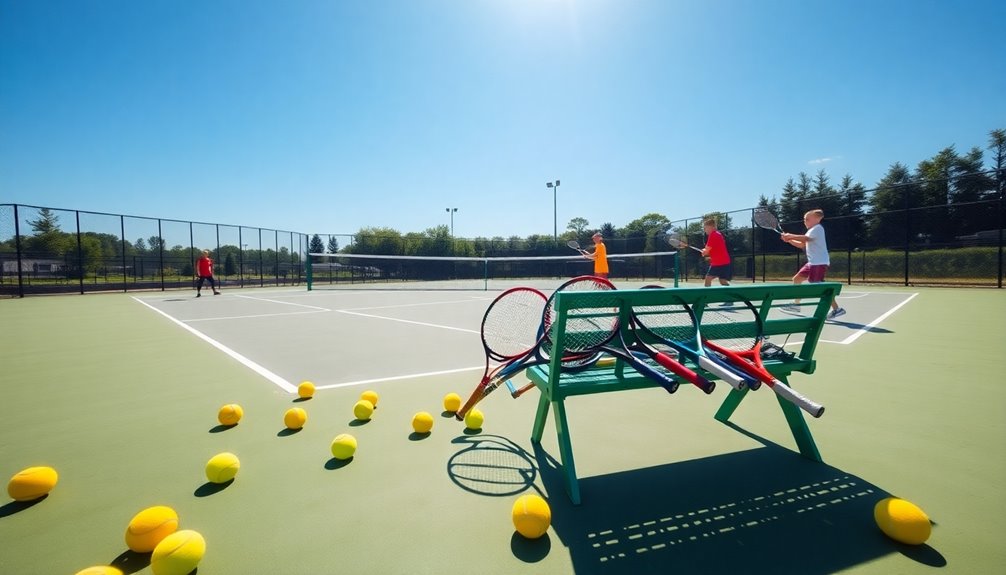
To play tennis effectively, it’s essential to understand the court layout and the equipment involved. A standard tennis court measures 78 feet long and 27 feet wide for singles matches, with a net dividing the two sides.
Familiarize yourself with the baseline, service boxes, and sidelines, as these areas dictate where you can serve and rally.
As for essential equipment, you’ll need a tennis racket and appropriate shoes designed for court play. Rackets come in various sizes and weights, so choose one that feels comfortable in your hand.
Don’t forget to wear a good pair of tennis shoes that provide support and grip on the court. Understanding these basics will set you up for success as you start your tennis journey. Additionally, being aware of court dimensions can help you strategize your positioning during matches.
Mastering the Grip: How to Hold Your Racket Like a Pro
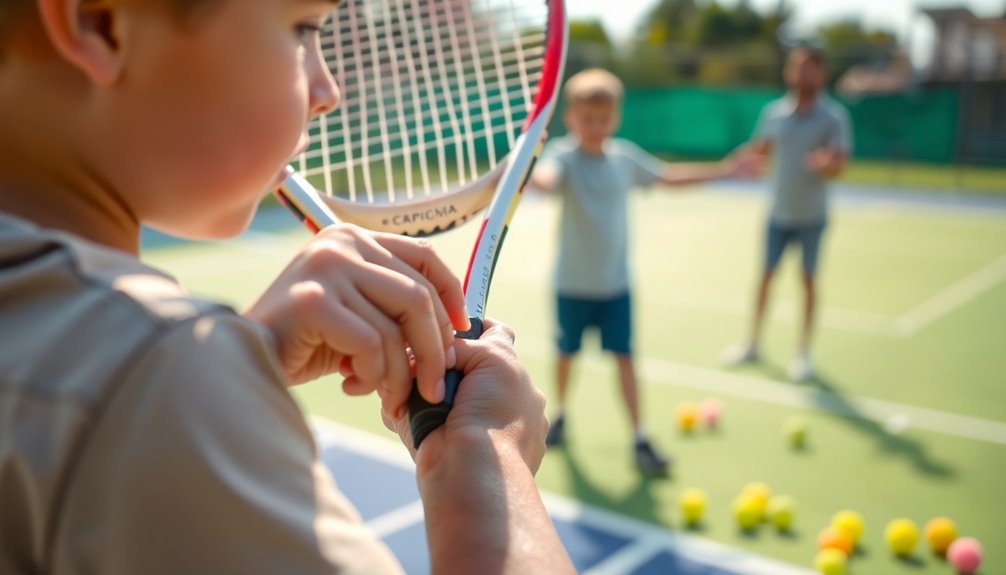
To play your best game, mastering your grip is essential.
You’ll learn about different types of grips, how to apply the right pressure, and common mistakes to watch out for.
Let’s get started on holding your racket like a pro! Remember, just as in soccer where player conduct emphasizes respect and teamwork, your attitude on the court can greatly impact your performance and enjoyment of the game.
Types Of Grips Explained
Although mastering your grip may seem like a small detail, it can greatly impact your performance on the court.
There are several types of grips to choose from: the Eastern grip, which offers a balanced blend of power and control; the Western grip, designed for topspin and aggressive shots; the Continental grip, perfect for serving and volleys; and the Semi-Western grip, which is a popular middle ground.
Your grip preference will affect how you hit the ball, so explore these options. As you grow, you may need to make grip adjustments and changes based on your playing style.
Understanding the grip impact on your game will help you become a more versatile player.
Grip Pressure Techniques
While your grip type lays the foundation for your strokes, mastering grip pressure is equally essential for ideal performance.
Finding the right grip tension helps you respond effectively to different situations on the court. You should practice adjustable pressure to maintain control and power during your shots.
Here are some techniques to help:
- Light Grip: Use a relaxed grip for finesse shots, allowing for better touch and spin.
- Firm Grip: Apply more tension during powerful strokes, ensuring stability and control.
- Variable Pressure: Adjust your grip pressure based on the shot type and opponent’s speed, enhancing your adaptability.
Common Grip Mistakes
Even with a solid understanding of grip pressure, beginners often make common grip mistakes that can hinder their game.
One frequent issue is improper grip alignment. If your racket’s handle isn’t aligned with your palm, it can lead to inconsistent strokes and poor ball control.
Another common misconception is that a firmer grip equals more power, but that can actually decrease your control. Instead, focus on a relaxed grip that allows for fluid movement.
Additionally, many players neglect the importance of switching grips for different shots, which can limit your versatility on the court.
The Importance of Footwork: Moving Efficiently on the Court

Good footwork is essential for your success on the court. It helps you maintain balance and stability while allowing for quick direction changes during play. When you master your movement, you’ll find it easier to reach the ball and make accurate shots. Additionally, incorporating dynamic stretches into your warm-up routine can significantly enhance your footwork skills and overall agility on the court.
Balance and Stability
To excel in tennis, mastering balance and stability is essential for your footwork on the court. When you’re able to maintain your balance, you can move efficiently and hit powerful shots.
Incorporating balance drills and stability exercises into your training routine will enhance your performance considerably. Here are some key practices to focus on:
- Single-leg stands: Improve your balance by practicing stands on one leg.
- Lateral lunges: Build stability and strength in your legs while mimicking on-court movements.
- Medicine ball throws: Engage your core and enhance coordination, vital for maintaining balance during play.
Quick Direction Changes
Maintaining balance and stability sets the foundation for effective footwork, especially when it comes to making quick direction changes on the court.
To excel in tennis, you need to develop quick footwork that allows you to move swiftly in any direction. Focus on practicing lateral movement, which involves shifting your weight efficiently from side to side. This skill helps you respond to your opponent’s shots faster and reach the ball with ease.
When you anticipate the play, push off with your legs to create explosive movements. Remember, your footwork can make or break your game. So, keep your knees slightly bent, stay light on your feet, and always be ready to pivot.
With practice, quick direction changes will become second nature.
Serving 101: The Key Techniques for a Successful Serve
While mastering the serve may seem intimidating at first, it’s one of the most crucial skills in tennis that can set the tone for the entire match.
To develop a successful serve, focus on these key serve techniques:
- Grip: Find a comfortable grip that allows for control and power.
- Stance: Position your feet shoulder-width apart for balance and stability.
- Follow-through: Guarantee a complete follow-through to enhance power and accuracy.
Incorporate these techniques into your practice with targeted serve drills.
Start with slow, deliberate motions to build muscle memory, then gradually increase your speed and power. Regular practice allows for tracking of progress in your serving technique.
Rallying Skills: How to Keep the Ball in Play
Rallying is essential in tennis, as it helps you develop a rhythm and keeps the ball in play. To improve your rallying skills, incorporate rally drills into your practice routine.
Start with a partner, focusing on consistent ball placement and timing. Aim for specific targets on your opponent’s side of the court—this is your target practice. By keeping your focus on these targets, you’ll enhance your accuracy while maintaining a steady rhythm.
Don’t rush the rallies; instead, allow yourself to build confidence with each shot. As you practice, remember to communicate with your partner, adjusting your pace and strategy as needed. Consistent rallying won’t only sharpen your skills but also make your matches more enjoyable. Additionally, practicing small-sided games can improve your overall performance by enhancing your ability to maintain control under pressure.
Court Positioning: Where to Stand for Optimal Play
To play effectively, understanding court positioning is essential, as it directly influences your ability to respond to your opponent’s shots.
Mastering the different court zones helps you maintain ideal spacing, allowing you to cover the necessary ground.
- Baseline: Stand here for deep shots, preparing to return powerful serves.
- Mid-court: Move here to intercept balls and set up your next shot.
- Net: Position yourself closer for volleys and quick reactions.
Maintaining proper positioning is crucial, as stoppage time in soccer highlights how even brief moments can influence the outcome of a game.
Scoring Made Simple: Understanding Tennis Scoring Rules
Understanding tennis scoring rules can seem intimidating at first, but once you grasp the basics, it becomes much easier to follow the game.
In tennis, matches typically use different game formats, such as singles or doubles, but the scoring systems remain consistent. Each game starts at zero, called “love,” and points are scored as 15, 30, 40, and then game point.
If both players reach 40, it’s called “deuce.” From there, one player must win two consecutive points to win the game.
Sets are won by the first player to reach six games, with at least a two-game lead. Familiarizing yourself with these rules will enhance your enjoyment and understanding of the game. Additionally, understanding team strategies in soccer can provide valuable insights into competitive sports dynamics.
Developing a Growth Mindset: Tips for Young Players to Enjoy the Game
While tennis can be challenging, embracing a growth mindset can make the journey enjoyable for young players. By shifting your perspective, you’ll learn to see obstacles as opportunities for growth.
Here are some tips to help you cultivate this mindset:
- Use positive affirmations: Remind yourself that improvement takes time and effort. Encourage yourself with phrases like “I’m learning and improving every day.”
- Embrace challenges: View difficult matches as valuable experiences. Each setback is a chance to develop your skills and resilience.
- Celebrate progress: Recognize and appreciate your achievements, no matter how small. This reinforces your motivation and commitment to the game.
- Focus on communication: Effective communication with teammates can enhance your understanding of the game and improve your overall performance.
With these strategies, you’ll foster a love for tennis that lasts a lifetime!
Conclusion
As you step onto the court, remember that every great player started just where you are now. By mastering the basics, honing your skills, and embracing a growth mindset, you’ll not only improve but also find joy in the game. Coincidentally, the more you practice, the more you’ll discover your love for tennis. So grab your racket, lace up your shoes, and let each match remind you that every swing brings you closer to your goals!