
The DB’s Handbook: A Guide to Playing Defensive Back and Shutting Down Receivers
December 1, 2025As a defensive back, you’ve got the vital role of shutting down receivers and stopping the passing game. You need to master footwork, foot speed, and coverage techniques like man and zone. Analyzing the quarterback’s movements and maintaining communication with teammates are essential. Perfect tackling techniques keep you effective on the field, while mental preparation will enhance your gameplay. Stick around to discover drills and game-day tips that’ll elevate your performance even further.
Understanding the Role of a Defensive Back
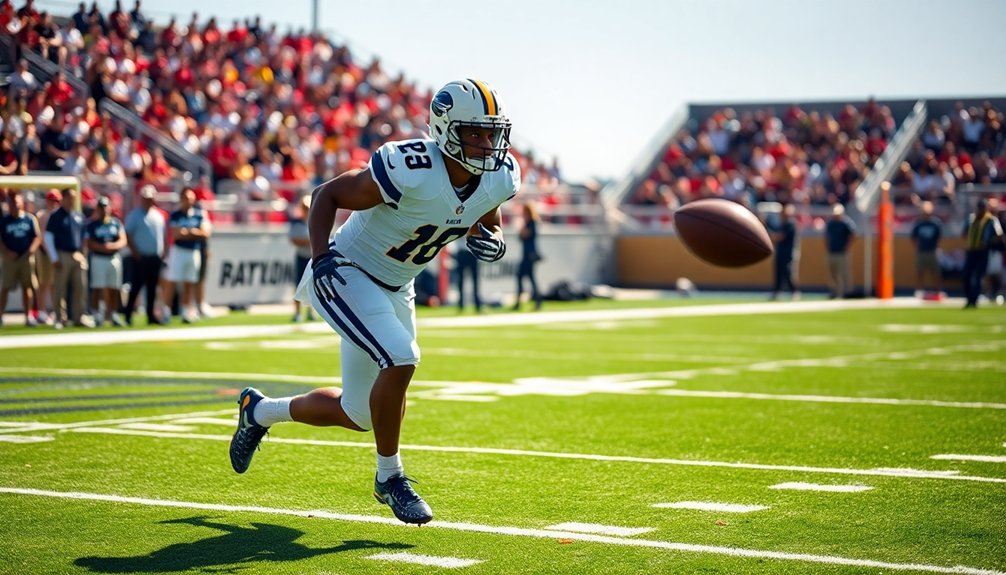
The defensive back is your last line of defense against the opposing team’s passing game. Your primary duties include reading the quarterback’s eyes and anticipating the receiver’s movements.
You’ve got to stay alert, as your coverage responsibilities can change on every play. Whether you’re in man-to-man or zone coverage, positioning is key.
You’ll need to communicate with your teammates, ensuring everyone’s on the same page. When the ball’s in the air, you must be ready to make a play, whether it’s intercepting the pass or breaking it up. Emphasizing team coordination in your movements not only helps you excel individually, but it strengthens the entire defense. Embrace these responsibilities, and you’ll become an essential asset to your team.
Key Skills Every DB Should Master
As a defensive back, mastering footwork and agility is essential for staying with your opponent. You also need to sharpen your ball skills and awareness to make game-changing plays. Let’s break down these key skills that can elevate your performance on the field. Additionally, understanding effective communication can enhance your coordination with teammates during critical defensive situations.
Footwork and Agility
Mastering footwork and agility is essential for any defensive back aiming to excel on the field. Your ability to execute precise lateral movement allows you to mirror receivers and anticipate their routes effectively.
Focus on keeping your hips low and maintaining a balanced stance; this will help you change directions swiftly. Practicing quick shifts between forward, lateral, and backward movements will enhance your responsiveness during plays.
Incorporate drills like cone drills and ladder exercises to improve your foot speed and coordination. Remember, the more agile you are, the better you can react to offensive maneuvers.
Consistent practice in these areas will elevate your game, making you a formidable opponent on the field.
Ball Skills and Awareness
Footwork and agility lay the groundwork for effective play, but ball skills and awareness can elevate your performance as a defensive back.
Mastering these skills helps you anticipate plays and make game-changing decisions. Here’s what you should focus on:
- Ball tracking: Stay focused on the quarterback and the ball’s trajectory.
- Situational awareness: Read the game flow, knowing when to press or back off.
- Hands technique: Develop your ability to deflect or intercept passes.
- Timing: Learn to judge when to jump or extend for the catch.
Footwork: The Foundation of Coverage
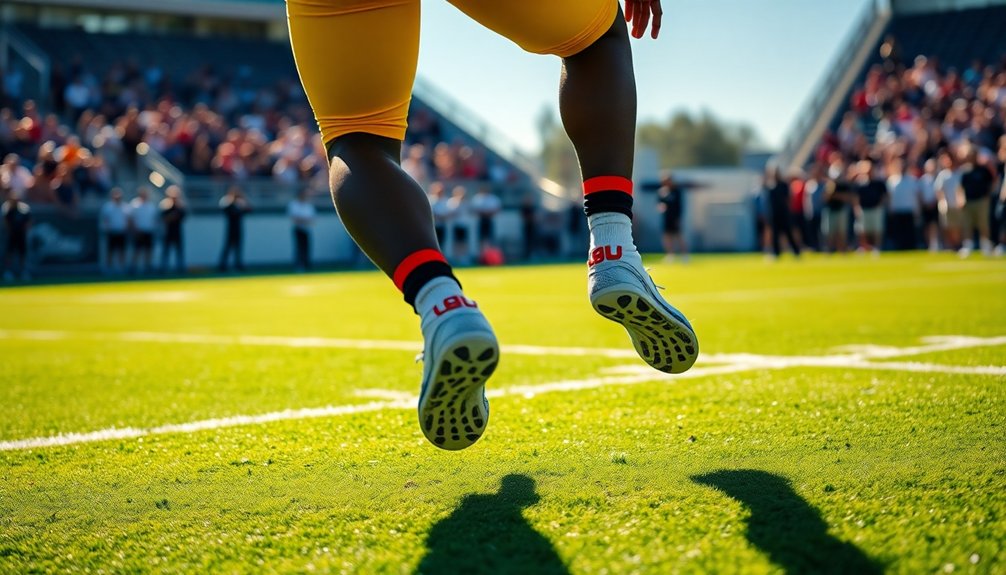
While you might be tempted to focus solely on technique and strategy, mastering your footwork is vital for effective coverage. Your footwork sets the tone for your performance on the field. Start by practicing the heel toe technique, which helps you maintain balance and agility. This method allows you to pivot quickly without losing speed.
Additionally, work on your lateral movement; it’s essential for shadowing receivers and responding to their cuts. When you can move side to side with ease, you’ll find it much easier to stay in position. Moreover, a strong defensive stance enhances your readiness to engage and react to offensive plays.
Coverage Techniques: Man vs. Zone
When it comes to coverage techniques, you’ve got two main options: man and zone.
In man coverage, you focus on your assigned receiver, while zone coverage requires you to guard a specific area of the field.
Understanding the fundamentals of both techniques will enhance your effectiveness as a defensive back. Additionally, effective teamwork and strategy in defensive formations can significantly impact your overall performance on the field.
Man Coverage Fundamentals
In man coverage, defenders are assigned to cover specific offensive players, making it essential for you to understand the fundamentals that set this technique apart from zone coverage.
Mastering man coverage techniques will enhance your ability to shut down receivers effectively. Here are some key points to keep in mind:
- Stay close: Maintain tight coverage to limit the receiver’s space.
- Use press coverage fundamentals: Engage the receiver at the line to disrupt their route.
- Watch the hips: Focus on the receiver’s hips for clues about their next move.
- Anticipate breaks: Be ready to react quickly as they change direction.
Zone Coverage Principles
Zone coverage principles are essential for defenders looking to effectively protect specific areas of the field rather than individual players. In this system, your zone responsibilities dictate how you react to offensive players entering your area.
You’ll need to communicate with teammates, ensuring everyone understands their roles to avoid confusion. As plays develop, be ready to make coverage adjustments based on offensive formations or personnel shifts. This adaptability is vital for successful zone coverage.
When the quarterback targets a receiver, your focus should be on maintaining proper spacing and depth, allowing you to break on the ball effectively. Mastering these principles will enhance your ability to read plays, anticipate routes, and ultimately shut down receivers in your assigned zone.
Analyzing Offenses: Reading the Quarterback

Here are some key factors to take into account:
- Eye Movement: Watch where the quarterback looks; it often indicates their target.
- Footwork: Notice his drops; quick steps may signal a quick pass.
- Body Language: Pay attention to his posture; it can reveal confidence or hesitation.
- Pre-snap Reads: Analyze how he interacts with the offensive line; it can hint at the play.
- Understanding the offside rule is also crucial as it can affect offensive strategies and your defensive positioning.
Tackling Fundamentals for Defensive Backs
While tackling might seem straightforward, mastering the fundamentals is essential for defensive backs to effectively bring down ball carriers.
Start by focusing on proper tackling techniques; keep your head up, eyes on the target, and aim for the midsection of the ball carrier. This helps avoid dangerous helmet-to-helmet contact.
Next, work on your tackling angles. Anticipating the runner’s path allows you to position yourself better and engage effectively. Use your speed and agility to close the gap, ensuring you arrive at the right moment.
Remember to wrap your arms around the ball carrier, using your body weight to bring them down. Practicing these skills consistently will improve your tackling and help you become a more reliable defender on the field. Additionally, always aim to make clean contact with the ball, as this enhances your control during tackles.
Mental Strategies: Staying One Step Ahead
How can you stay one step ahead of the offense? It’s all about sharpening your mental game. Here are some strategies to enhance your performance:
- Anticipating routes: Study game film to predict receiver movements.
- Situational awareness: Know down and distance to anticipate plays.
- Focus techniques: Use visualization to stay mentally sharp during games.
- Mental toughness: Embrace pressure management to keep your composure.
- Developing mental strength is crucial for overcoming challenges and maintaining focus during high-pressure situations.
Drills to Enhance Your Skills
Staying ahead of the offense requires not just mental acuity but also practical skills. To sharpen your abilities, focus on drill variations that challenge different aspects of your game.
Start with basic footwork drills to enhance your agility, then progress to more complex scenarios like one-on-one coverage. Mix in reaction drills to improve your ability to read the quarterback’s intentions.
Begin with footwork drills to boost agility, then advance to one-on-one coverage and reaction drills for better quarterback reading.
Incorporate skill progression by gradually increasing the intensity and speed of each drill. For example, begin with stationary drills and move to dynamic situations where receivers can change direction unexpectedly.
Consistent practice with these variations will build your confidence and refine your techniques, making you a formidable opponent on the field. Remember to prioritize passing accuracy to further enhance your ability to anticipate and respond to the offense effectively.
Preparing for Game Day: Tips for Success
As you gear up for game day, it’s crucial to establish a routine that sets you up for success. Your pre-game preparation can make all the difference in your performance.
Here are some effective game day rituals to contemplate:
- Visualize Success: Spend time picturing yourself making key plays and shutting down receivers.
- Stay Hydrated: Drink plenty of water throughout the day to keep your energy levels high.
- Warm-Up Properly: Engage in dynamic stretches and drills to get your body ready for action.
- Listen to Music: Create a playlist that pumps you up and puts you in the right mindset.
Additionally, consider incorporating dynamic exercises into your warm-up to elevate your heart rate and prepare your muscles for action.
Conclusion
To sum up, mastering the art of being a defensive back isn’t just about physical skills; it’s also about mental acuity. The theory that a DB can predict a receiver’s move based on subtle cues holds true. By honing your footwork, understanding coverage techniques, and analyzing the quarterback, you can anticipate plays before they unfold. So, trust your instincts and stay a step ahead—after all, shutting down receivers is as much about the mind as it is about the body.