
What to Learn in Your First Tennis Lesson
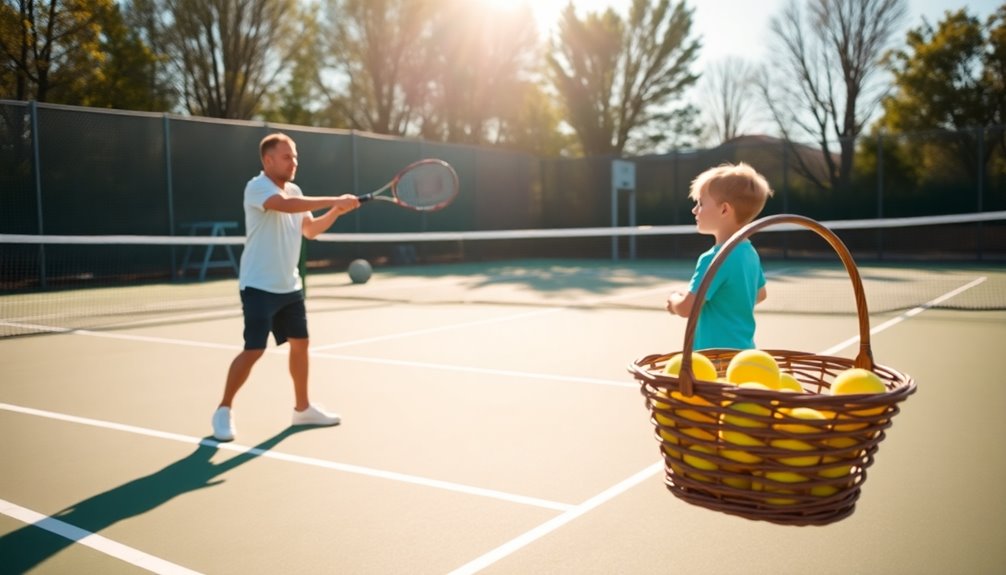
April 13, 2026In your first tennis lesson, you’ll focus on mastering the basics: different grips and stances. You’ll learn how to hold the racket properly, which affects your shot control and power. Next, you’ll work on your serve, honing techniques for placement and smooth motion. Footwork will also be key, helping you position yourself to respond effectively during play. By grasping these fundamentals, you set the stage for your growth as a player and what comes next may surprise you.
Understanding the Basics: Grips and Stances
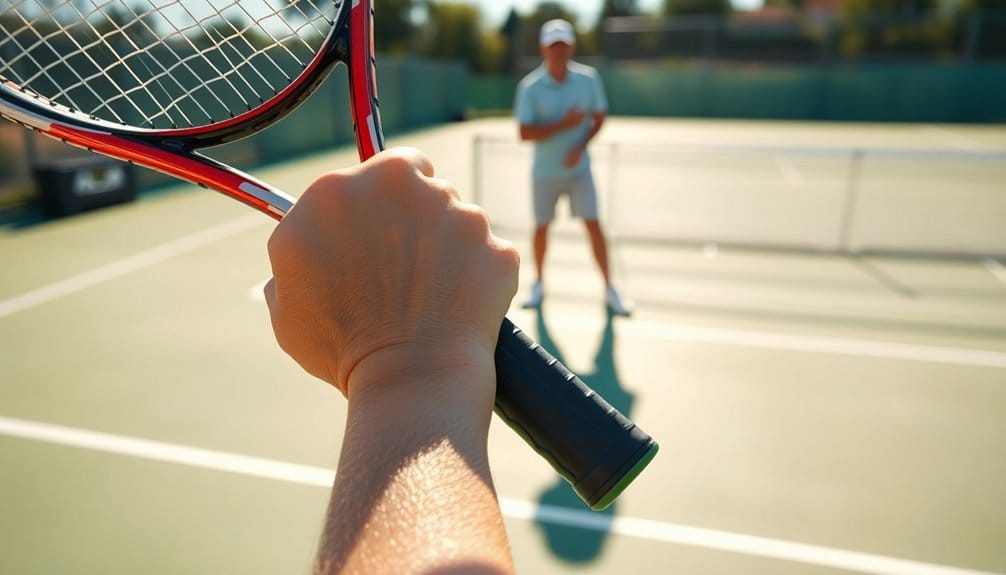
When you step onto the court for your first tennis lesson, grasping the basics of grips and stances is essential. Understanding grip types is crucial, as it influences your control and power. You’ll likely start with the Eastern grip, which suits beginners well, allowing for easy shots.
As you progress, you might explore the Western grip for topspin.
Next, focus on stance variations. You can choose between an open stance for quick shots or a closed stance for more power and stability. Each stance has its advantages, depending on the shot you want to execute. Additionally, incorporating effective communication during practice can enhance your understanding of positioning and shot selection.
Mastering Your First Serve: Techniques to Try
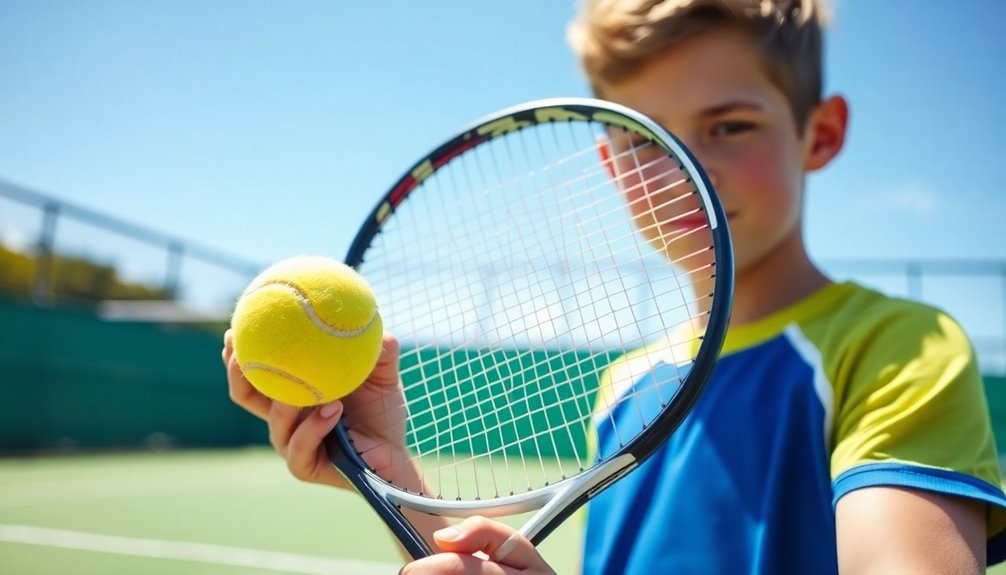
Once you’ve got a handle on grips and stances, it’s time to tackle your first serve. Start by focusing on serve placement; aim for specific target areas in the service box. This’ll help you develop accuracy and keep your opponent guessing.
Next, work on power generation. Use your legs to push off the ground, transferring that energy through your core and into your arm. A smooth, fluid motion is key—don’t rush it.
Focus on generating power by using your legs and core for a smooth, fluid serve. Don’t rush the motion.
Practice tossing the ball high enough to give yourself time to swing and connect. Remember, a well-placed serve can be more effective than sheer power alone. Incorporating structured tools to enhance team communication can also benefit your overall game strategy.
As you refine these techniques, you’ll find your confidence growing on the court. Enjoy the process and keep experimenting!
Footwork Fundamentals: Moving on the Court
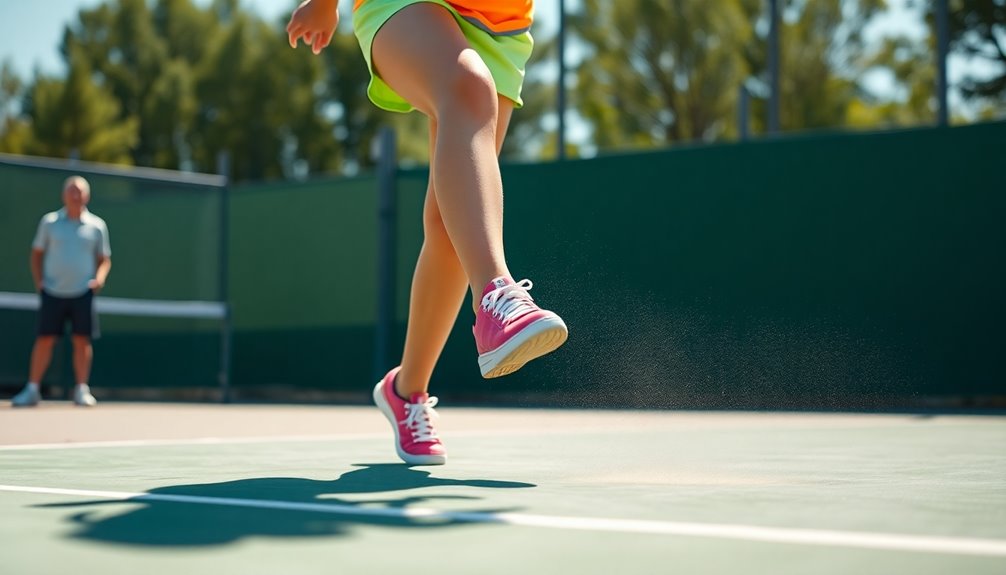
Mastering your footwork is essential for becoming a successful tennis player. Good court positioning allows you to respond quickly and effectively to your opponent’s shots.
Focus on lateral movement; it’s key to getting into the right place for each stroke. Practice balance techniques to guarantee you’re stable while hitting the ball. Strong balance helps maintain control and accuracy in your shots.
Incorporate agility drills into your training routine to improve your speed and responsiveness on the court. Simple exercises like ladder drills or cone sprints can make a big difference. Additionally, practicing quick decision-making can enhance your ability to react swiftly during matches.
Essential Drills to Enhance Your Skills
Building on your footwork fundamentals, incorporating specific drills can greatly enhance your skills on the court.
Enhancing your footwork fundamentals with targeted drills is key to improving your court skills.
Here are three essential drills to focus on:
- Rally Drills: Pair up with a partner and hit the ball back and forth. This improves your timing and consistency while reinforcing footwork.
- Stroke Repetition: Practice your forehand and backhand strokes in isolation. Repeat each stroke 20 times to build muscle memory and refine your technique.
- Target Practice: Set up targets on the court and aim for them during your rallies. This sharpens your accuracy and helps you develop a strategic mindset. Additionally, practicing your strokes with passing accuracy can enhance your overall performance on the court.
Setting Goals: What’s Next After Your First Lesson?
As you wrap up your first tennis lesson, it’s important to shift your focus to setting realistic goals that will guide your progress. Start by identifying what you want to achieve—whether it’s improving your serve or mastering footwork. This clarity will help in finding motivation as you practice.
Break down your goals into smaller, manageable steps; this way, you’ll celebrate each achievement along the way.
Consider keeping a journal to track your progress. Record your practice sessions, noting what worked and what didn’t. This reflection not only helps you see improvement but also keeps you committed. Additionally, incorporating regular practice can enhance your skills and build confidence as you advance.
Conclusion
As you wrap up your first tennis lesson, remember that “practice makes perfect.” You’ve laid the groundwork by learning grips, footwork, and serve techniques. Keep honing these skills and stay committed to your goals. Each session brings you closer to becoming the player you aspire to be. So, grab your racket, hit the court, and enjoy the journey ahead—every swing and step is a step towards improvement!