

What Is a Field Goal? Understanding the Most Basic Scoring Play in Basketball
January 27, 2026A field goal in basketball is any shot taken from the court that counts for points. Shots made inside the three-point line are worth two points, while those beyond the line earn three points. Mastering various techniques, like jump shots and layups, can greatly enhance your scoring ability. Understanding the role field goals play in a team’s strategy can give you an edge. There’s a lot more to discover about effective shooting and its impact on the game.
What Is a Field Goal in Basketball?

A field goal in basketball is any shot taken from the court that results in points for the team. Understanding this basic scoring technique is essential in grasping basketball terminology.
When you shoot from inside the three-point line, it counts as two points, while a shot beyond that line earns you three points. Players often utilize various scoring techniques, like jump shots, layups, or hook shots, to increase their chances of making a field goal. Mastery of these techniques can greatly impact your game, allowing you to contribute effectively to your team’s success. As you practice, focus on your shooting form and decision-making to elevate your performance on the court.
Embrace the art of field goals, and you’ll see your skills improve. Additionally, improving your field goal percentage can significantly enhance your overall effectiveness as a scorer.
The Importance of Field Goals in Scoring
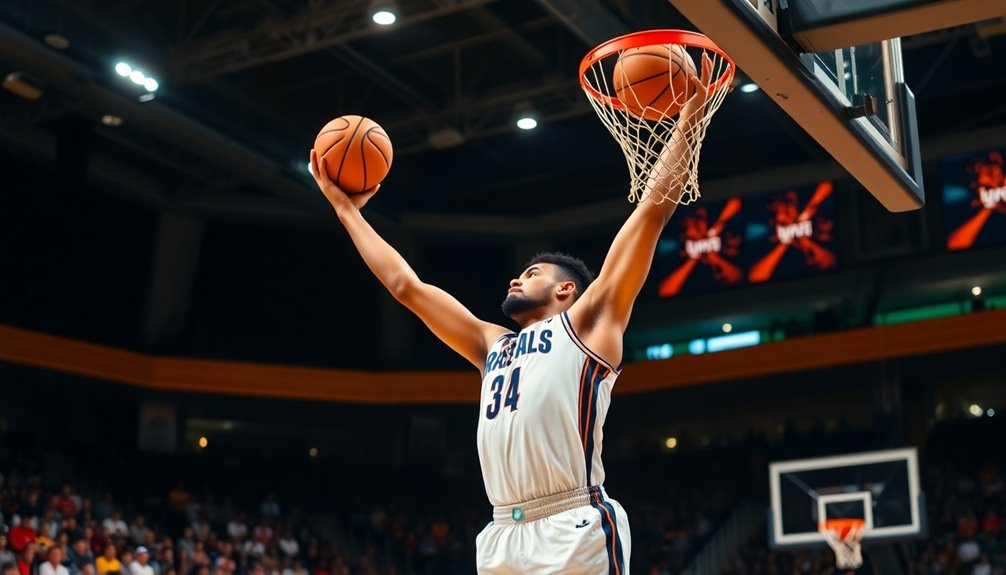
While many aspects contribute to a team’s success, field goals play an essential role in scoring and can greatly influence the game’s outcome. Understanding the field goal significance is vital for developing effective scoring strategies.
When you focus on making quality shots, you not only increase your team’s points but also boost morale and momentum. A well-executed field goal can shift the game’s dynamics, providing your team with the confidence needed to push through tough moments.
Additionally, integrating field goals into your overall strategy helps create a balanced offense, forcing the defense to adapt. This approach also complements your team’s ball handling skills, as proficient dribbling allows for better shot opportunities. So, whether you’re shooting from inside or outside the arc, remember that every field goal counts in your quest for victory.
Different Types of Field Goals: Inside vs. Outside
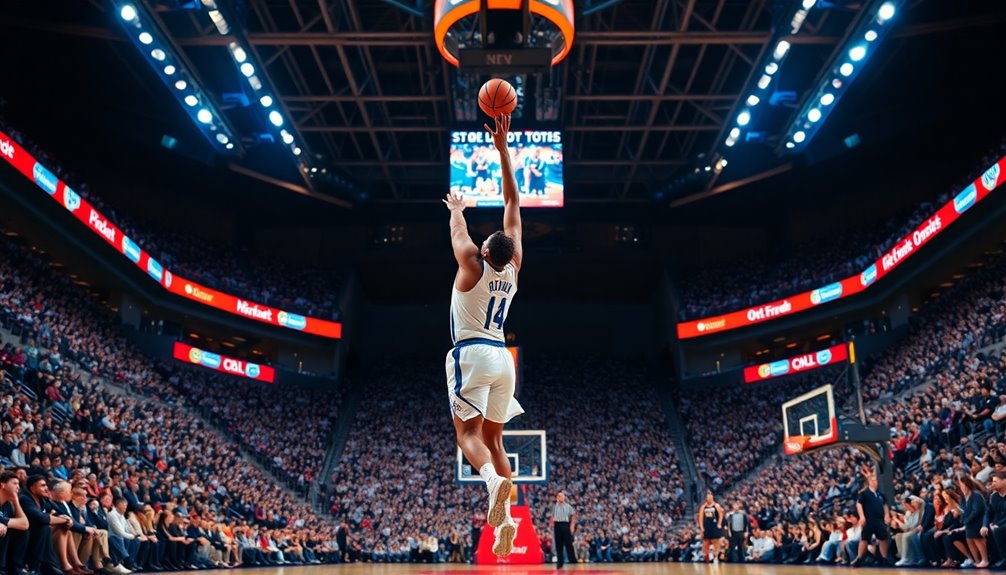
When you’re on the court, understanding the difference between inside and outside field goals can really elevate your game.
Inside field goals usually come from close range, while outside field goals require a bit more distance and precision.
Let’s break down what each type entails and how they can impact your scoring strategy. Additionally, mastering the pick and roll can create scoring opportunities for both inside and outside field goals.
Inside Field Goals Explained
Understanding inside field goals is essential for grasping the dynamics of basketball, as these shots often come from close range and require a different skill set than outside attempts.
Mastering inside field goals involves specific field goal techniques and focused shooting drills.
Here are key aspects to improve your inside shooting:
- Footwork: Proper positioning sets you up for success.
- Finishing Moves: Learn layups, floaters, and bank shots.
- Body Control: Maintain balance while maneuvering around defenders.
- Quick Release: Practice shooting quickly to avoid blocks.
- Shot Selection: Know when to go for a layup versus a jump shot.
Outside Field Goals Explained
Outside field goals are essential for stretching the defense and creating scoring opportunities from a distance. When you shoot from beyond the arc, you’re not just aiming for points; you’re also implementing three point strategies that can shift the momentum of the game.
Players who possess a strong shooting range can effectively keep defenders on their toes, forcing them to choose between guarding the perimeter or collapsing into the paint. This dynamic opens up driving lanes and can lead to easy baskets inside.
To master outside field goals, you’ll want to refine your shooting mechanics and find your sweet spot on the court. Ultimately, being a threat from distance enhances your overall game and helps your team thrive.
How to Execute a Successful Field Goal
To execute a successful field goal in basketball, focus on your shooting technique and body positioning. Proper preparation can make a significant difference, so incorporate shooting drills and mental preparation into your routine.
Focus on your shooting technique and body positioning for successful field goals; preparation is key.
Here are some key elements to reflect on:
- Balance: Keep your feet shoulder-width apart for stability.
- Grip: Hold the ball with your fingertips, not your palms.
- Follow-through: Extend your arm fully and snap your wrist upon release.
- Aim: Focus on the back of the rim to improve accuracy.
- Practice: Regularly engage in shooting drills to build muscle memory. Additionally, commitment to fundamentals is crucial for developing shooting abilities and enhancing overall performance.
The Role of Shooting Form in Making Field Goals
Your shooting form plays an essential role in making successful field goals. By mastering proper mechanics and employing effective shooting techniques, you can greatly improve your accuracy. Consistent follow-through is crucial for reinforcing good shooting habits and achieving better results. Let’s explore how these elements work together to enhance your game.
Importance Of Proper Mechanics
Proper mechanics are essential for mastering the art of shooting in basketball, as they directly impact your ability to make field goals. When you focus on your shooting form, you’re not just aiming; you’re creating a reliable routine that builds muscle memory. This can greatly improve your shooting percentage during games.
Here are some key aspects to contemplate:
- Balance: Keep your feet shoulder-width apart for stability.
- Grip: Hold the ball securely with your shooting hand.
- Elbow Alignment: Confirm your elbow is directly under the ball.
- Follow-Through: Extend your arm fully and snap your wrist.
- Repetition: Regular shooting drills reinforce proper mechanics.
Mastering these elements will elevate your game and enhance your confidence on the court.
Common Shooting Techniques
While mastering shooting techniques, understanding the role of shooting form in making field goals is essential. Your shooting form impacts accuracy, power, and consistency.
Focus on key elements like foot placement, hand positioning, and follow-through. A solid foundation will enhance your shooting ability and help you make more field goals during games.
Incorporate shooting drills into your practice routine to refine your technique. These drills can help you develop muscle memory, allowing you to replicate your form under pressure.
As you progress in your player development, pay attention to any adjustments needed in your form. Consistent practice, combined with a well-structured approach to shooting techniques, can greatly elevate your performance on the court.
Understanding Field Goal Percentages
Understanding field goal percentages is essential for evaluating a player’s shooting efficiency and overall contribution to the game. By analyzing field goal statistics, you can gain insights into a player’s performance.
Here are some key points to reflect on:
- Field goal percentage reflects the ratio of successful shots to total attempts.
- Higher percentages indicate better shooting efficiency.
- Different positions on the court may yield varying field goal percentages.
- Comparing a player’s percentage to league averages can highlight strengths and weaknesses.
- Players often aim to improve their percentages through practice and strategy.
- Consistent practice of fundamental skills like shooting and dribbling can significantly enhance a player’s field goal percentage.
Common Mistakes to Avoid When Shooting Field Goals
When shooting field goals, it’s easy to fall into common traps that can hurt your accuracy.
You might overlook your shooting form, neglect your foot placement, or forget to follow through.
Avoiding these mistakes will help you become a more consistent and effective shooter. Incorporating proper shooting techniques can enhance your shooting skills and mechanics.
Poor Shooting Form
Mastering your shooting form is essential for consistently making field goals in basketball. Poor shooting form can lead to missed shots and frustration.
Here are some common mistakes to avoid:
- Not using your legs for power
- Holding the ball too far from your body
- Overextending your shooting arm
- Failing to follow through with your shot
- Rushing your release
To improve your shooting, practice shooting drills that focus on correcting these issues.
Make technique adjustments as needed and pay attention to your body mechanics. By refining your form, you’ll increase your shooting accuracy and confidence on the court.
Ignoring Foot Placement
Although it might seem minor, foot placement plays an essential role in your shooting success. Proper player positioning guarantees you maintain shooting balance, which is fundamental for accuracy.
When you shoot, your feet should be shoulder-width apart, with your shooting foot slightly ahead. This stance provides stability and helps you generate power through your legs. Ignoring foot placement can lead to inconsistent shots and poor follow-through.
You might find yourself leaning or twisting, which throws off your aim. To improve your shooting game, focus on how you position your feet before taking a shot. By doing this, you’ll enhance your overall performance and increase your chances of making that field goal.
Lack of Follow-Through
A common mistake many players make is neglecting their follow-through after shooting a field goal. This lack of follow-through can stem from a lack of confidence or mental focus, impacting your shooting accuracy.
Here’s what to keep in mind:
- Extend your shooting arm fully after releasing the ball.
- Keep your eyes on the target until the ball reaches the hoop.
- Maintain a relaxed wrist to guarantee a smooth release.
- Practice your follow-through consistently during drills.
- Visualize successful shots to boost your confidence.
The Impact of Defense on Field Goal Success
When players face tight defense, their chances of making a successful field goal diminish considerably.
Defensive pressure can force you to rush your shot or alter your form, leading to missed opportunities. When defenders are actively shot contesting, they’re not just closing out; they’re also creating doubt in your mind. You might feel compelled to adjust your shooting angle or speed, which can negatively impact your accuracy.
The effectiveness of any field goal attempt heavily relies on how well you handle this pressure. To improve your shooting under these conditions, practice shooting while being closely guarded. Developing your ability to remain calm and composed can make all the difference when facing intense defensive scenarios in games. Effective closeout fundamentals can significantly lower your shooting percentage under pressure.
How Do Field Goals Fit Into a Team’s Strategy?
Successful field goals aren’t just about individual skill; they play a pivotal role in a team’s overall strategy. You need to understand how they fit within your offensive strategy and how they can force defensive adjustments from your opponents.
- Field goals help establish rhythm and momentum.
- They create spacing, allowing for better passing and cutting opportunities.
- Successful shots can demoralize opposing defenses.
- Consistent scoring from field goals pressures the defense to adapt, opening up new plays.
- An effective field goal strategy can lead to higher overall team performance.
- Utilizing analytics to gauge shot selection accuracy can further enhance a team’s scoring effectiveness.
Famous Players Known for Their Field Goal Skills
Throughout basketball history, certain players have stood out for their remarkable field goal skills, transforming games with their shooting precision.
You can’t talk about iconic scorers without mentioning Kobe Bryant. Known for his killer instinct and footwork, he could hit tough shots from anywhere on the court. His clutch performances often left fans in awe.
Then there’s Stephen Curry, whose three-point shooting has redefined the game. His quick release and deep range make him a nightmare for defenders. Curry’s ability to shoot off the dribble and create his own shot sets him apart. Additionally, players like Russell Westbrook have shown that scoring can be complemented by achieving a triple-double, making their impact on the game even more significant.
Both players haven’t only amassed impressive statistics but have also inspired a new generation of shooters through their unique styles and relentless work ethic.
The Evolution of Field Goals in Basketball History
The evolution of field goals in basketball reflects the sport’s dynamic nature and changing strategies. Over the years, the approach to scoring has transformed considerably, influenced by historical milestones that have shaped how the game is played.
You’ve seen this evolution firsthand, from early jump shots to today’s three-point line.
- Introduction of the three-point line in 1979
- Increased emphasis on perimeter shooting
- The rise of analytics in shot selection
- Development of specialized shooting techniques
- Influence of legendary shooters on style and strategy
These factors haven’t only enhanced the scoring evolution but also enriched the overall excitement of the game.
Understanding this history helps you appreciate the artistry behind every field goal attempt.
Conclusion
In basketball, mastering the art of the field goal is essential for creating engaging court moments. By honing your shooting skills and understanding the dynamics of defense, you can transform a simple shot into a spectacular score. Remember, practice makes perfect, and every field goal can forge a fierce foundation for team triumph. So, keep shooting, stay sharp, and aim for success—your field goal finesse could make all the difference in the game!