
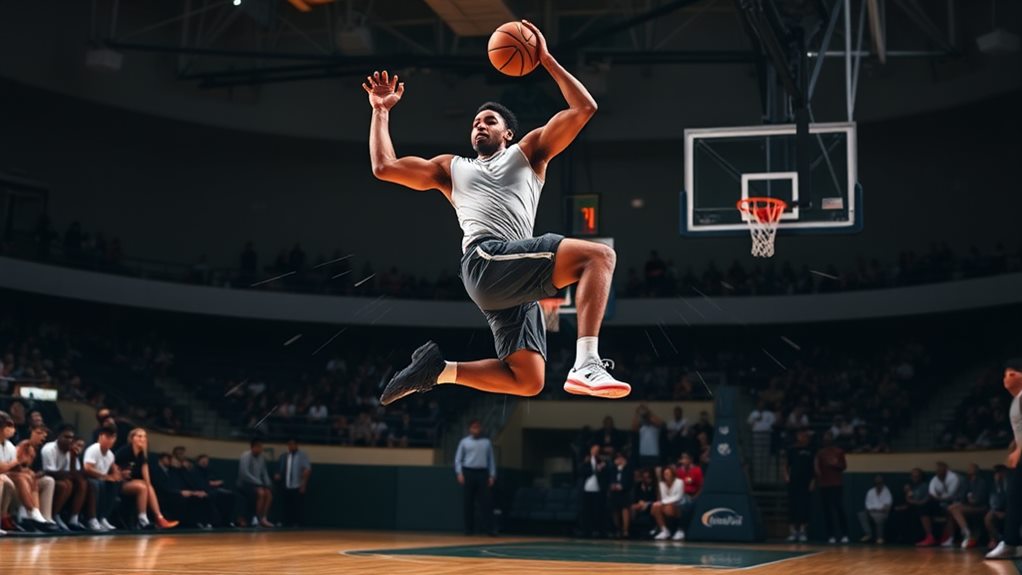
Vertical Jump Training: Tips to Improve Your Basketball Game
December 2, 2024To improve your vertical jump for basketball, focus on plyometric exercises like jump squats and box jumps, which enhance explosive strength. Pay attention to your ankle mobility; incorporating exercises like ankle rocker pops can optimize your jumping mechanics. Aim for a balanced arm-leg coordination during jumps to maximize height. Track your progress consistently with jump measurements and maintain a daily workout journal for motivation. Setting clear, measurable goals will keep you accountable. By applying these strategies, you'll see improvements not just in your vertical jump, but also in your overall game performance—there's plenty more to explore to elevate your training!
Understanding Vertical Jump Importance
When it comes to basketball, your vertical jump is a game-changer. It directly impacts your ability to score, block shots, and secure rebounds, making it a crucial skill on the court.
Enhancing your vertical jump not only boosts your jumping ability but also greatly improves your overall agility and acceleration. This explosive power is essential for effective gameplay, allowing you to outmaneuver opponents and make those key plays.
Additionally, data-driven strategies can help identify key success attributes that correlate with improved vertical jump performance, providing players with a thorough approach to training.
Historical athletes like Spud Webb have shown just how important a strong vertical jump can be, inspiring countless players to prioritize this aspect of their training.
In fact, the vertical jump is often evaluated in athletic assessments, such as the NFL combine, highlighting its significance in measuring overall athleticism and potential.
Common Issues Affecting Performance
When it comes to your vertical jump, ankle mobility can make or break your performance.
Enhanced evolution of equipment and player gear can also play a significant role in how effectively you can utilize your legs during jumps.
If you rely too much on your arms instead of engaging your legs, you'll find your jump height suffers.
Addressing these issues is essential for maximizing your potential on the court.
Ankle Mobility Challenges
Ankle mobility challenges can greatly hinder your vertical jump performance, as limited ankle flexion restricts effective jumping mechanics and power generation.
When your ankle mobility is poor, you may rely more on your upper body strength instead of properly engaging your lower body during jumps. This reliance can lead to inefficient jump mechanics, ultimately diminishing your explosive ability on the court.
Athletes with restricted ankle dorsiflexion often experience decreased lateral stability, which negatively impacts agility and overall jumping ability.
To combat these issues, it's essential to enhance your ankle mobility through targeted exercises. Incorporating movements like the ankle rocker pop into your training routine can considerably improve your vertical jump height.
Additionally, regularly evaluating your ankle flexibility and mobility should be part of your training regimen. Identifying and addressing any limitations will help you develop a more effective jump.
By prioritizing ankle mobility, you can improve your vertical jump and become a more dynamic player on the court.
Don't underestimate the importance of strong, flexible ankles in maximizing your athletic performance.
Arm Movement Dependency
Jumping high isn't just about leg strength; it also hinges on how well you use your arms. Many athletes fall into the trap of arm movement dependency, relying too much on their arms during jumps. This reliance can detract from the power generated by your legs, ultimately leading to a suboptimal vertical leap performance.
To truly maximize your explosive ability, you need to achieve a balanced coordination between your arm drive and lower body strength.
Research shows that athletes who focus on integrating proper leg engagement techniques—rather than depending solely on arm swings—can greatly improve their jump height. If your arm movement is improper, you might be missing out on utilizing those fast-twitch muscle fibers in your legs that are essential for vertical jumps.
To address this issue, consider training programs that emphasize enhancing your leg strength while refining your jumping technique. By reducing arm dependency, you can jump higher and achieve a more powerful vertical leap.
Effective Training Techniques
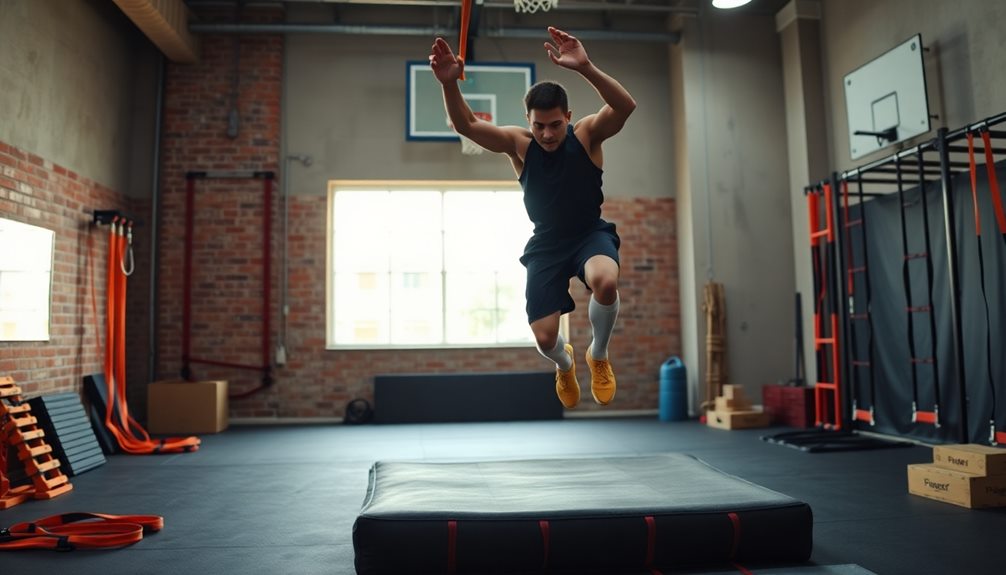
To boost your vertical jump, you should focus on integrating plyometric exercises like jump squats and box jumps into your routine.
Additionally, incorporating speed training can enhance your overall athleticism, allowing for more explosive jumps.
Don't overlook ankle mobility; exercises that enhance this area can greatly improve your jump mechanics.
Plyometric Exercise Integration
Incorporating plyometric exercises into your training routine can greatly boost your vertical jump and overall athletic performance. These exercises harness maximum muscle energy in short bursts, enhancing your explosive ability on the court.
Here are three effective plyometric exercises to integrate:
- Box Jumps: This exercise improves coordination and reaction time, fundamental for jumping and landing techniques.
- Depth Jumps: By increasing reactive strength, depth jumps help you absorb and convert force rapidly, essential for quick vertical movements.
- Lateral Box Jumps: This lateral movement strengthens your hip flexors and enhances side-to-side agility, important for defensive plays.
To maximize your gains, consider circuit training that includes a variety of plyometric exercises like wall touches and broad jumps.
Regularly integrating these movements will promote overall muscle engagement, leading to significant improvements in your vertical jump performance.
Keep in mind that focusing on these plyometric exercises not only enhances your jumping ability but also contributes to your overall athletic prowess on the court.
Start incorporating them into your routine, and watch your game elevate to new heights!
Ankle Mobility Focus
Ankle mobility plays an essential role in optimizing your jumping mechanics, allowing for efficient force transfer and vertical lift during jumps. To improve your ankle mobility, consider incorporating ankle rocker pop exercises into your routine. These exercises help enhance ankle positioning, which directly boosts your explosive ability and overall jumping performance.
Regularly stretching your calf and Achilles tendons is important too. By enhancing flexibility in these areas, you can greatly improve your ankle mobility, allowing for more effective jumps.
Don't underestimate the power of stair climbing drills; they engage your shins and glutes while promoting better ankle mobility, which is critical for developing a strong vertical jump.
Additionally, pay attention to how you're progressing. Keeping track of your ankle mobility can help you identify specific areas that need improvement and adjust your training plan accordingly.
Focusing on these effective training techniques won't only enhance your jumps but also reduce your risk of injury. By prioritizing ankle mobility, you're setting a solid foundation for your vertical jump training, ultimately elevating your basketball game.
Consistent Progress Tracking
Tracking your progress consistently is essential for maximizing your vertical jump training effectiveness. By measuring your jump height regularly, you can gain valuable insights into how well your training regimen is working.
Here are three key techniques to help you with consistent progress tracking:
- Use Tools: Invest in jump mats or tape to quantify your jump height. Regular measurements provide clear data, making it easier to see improvements over time.
- Daily Workout Journal: Keep a journal to document your exercises, sets, reps, and any improvements. This helps identify effective training techniques and areas that need adjustment.
- Set Specific Goals: Establish measurable goals, like increasing your vertical jump by a certain number of inches within a set timeframe. This keeps you motivated and focused during your training sessions.
Additionally, utilize video analysis to review your jumping technique, and periodically assess your ankle mobility and strength.
This highlights foundational issues that may impact your vertical jump and guides you to targeted exercises to improve overall performance. Consistent progress tracking won't only motivate you, but also guarantee you're on the right path to success.
Notable Results From Training
When you commit to vertical jump training, the results can be impressive. Many athletes have experienced significant improvements in their explosive ability and overall game performance. Incorporating endurance training methods into your regimen can further enhance your stamina and explosiveness.
One athlete improved their vertical jump from 24 inches to 36.5 inches by focusing on ankle mobility and explosive strength exercises. Another athlete saw their jump increase from 25 inches to 31 inches in just three weeks with dedicated plyometric drills and consistent practice.
These results highlight that specific techniques, such as depth jumps and focused jump drills, play a vital role in helping you improve vertical height. Testimonials from various athletes emphasize how unique training exercises led to measurable progress, not just in vertical jump, but also in overall athletic performance.
Moreover, athletes report enhanced game-day performance, including better rebounds and blocks, as a direct result of their jump training.
It's clear that committing to a structured vertical jump training regimen can yield remarkable outcomes. By integrating targeted exercises into your routine, you can achieve similar gains and elevate your game to new heights.
Ready to see what you can achieve? Start training today!
Coaching and Equipment Recommendations
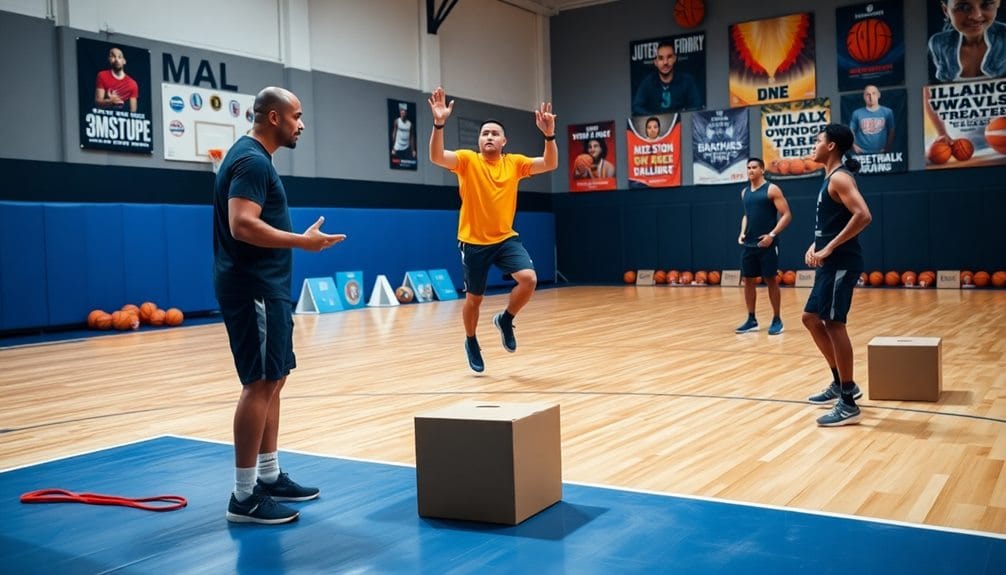
To boost your vertical jump training effectively, it's essential to tap into the right coaching resources and equipment. Incorporating structured training programs, such as skill enhancement strategies, can help you develop the specific techniques needed for improving your vertical jump.
Here are three recommendations to enhance your training experience:
- Coaching Resources: Consider programs like Chris Korfist's Slow Guy Speed School, which tailor their training to improve vertical jump performance. These targeted strategies can markedly elevate your skills.
- Vertical Jump Training Equipment: Invest in essential gear like plyometric boxes and resistance bands. These tools can add variety and intensity to your workouts, pushing your limits further.
- Online Platforms: Access expert blogs and instructional videos to refine your techniques. Engaging with community forums allows you to share experiences and gather innovative training methods from fellow athletes.
Don't forget the importance of a proper warm-up. Regularly incorporating structured warm-up and stretching routines is crucial to prevent injuries and enhance flexibility.
This flexibility is fundamental for maximizing your vertical jump potential. By leveraging the right coaching resources and training equipment, you'll be on your way to achieving impressive results in your vertical jump training for basketball.
Setting Goals for Improvement
Setting clear, measurable goals is vital for anyone looking to improve their vertical jump. Start by establishing specific targets, like increasing your jump height by 2 inches within 8 weeks. These measurable goals give you a clear direction and purpose in your training.
Understanding your strengths and weaknesses, much like how formation selection impacts execution in soccer, is important in identifying areas for improvement. It's essential to set short-term and long-term benchmarks; for instance, aim to achieve a personal best each month while working towards a seasonal goal.
To maintain accountability, utilize a daily workout journal. Track your exercises, document your progress, and note any changes in your jump height. This won't only keep you motivated but also help you see which techniques are working.
Regularly review and adjust your training plan based on your results to guarantee you're always challenged.
Incorporate a vision board to visualize your goals and keep your aspirations at the forefront of your mind. This visual reminder can enhance your commitment to your training routine.
Conclusion
Improving your vertical jump can elevate your basketball game like a rocket shooting into the sky. By understanding its importance and addressing common issues, you can implement effective training techniques tailored to your needs. With dedication and the right coaching, you'll see remarkable results that enhance your performance on the court. Remember, setting clear goals will keep you motivated and focused on your journey to greatness. So lace up your shoes and get ready to jump higher than ever!