
Understanding NFL Offensive Line Positions
April 5, 2026The NFL offensive line is essential to a team’s success, consisting of the center, guards, and tackles. You’ll find the center calling plays and snapping the ball, while guards protect the quarterback and help create running lanes. Tackles shield the quarterback’s blind side from defenders. Each position requires teamwork, communication, and specialized blocking techniques. By grasping these roles, you can appreciate how they impact the game, revealing even more insights about their strategies and formations.
What Is the Role of the Offensive Line in Football?
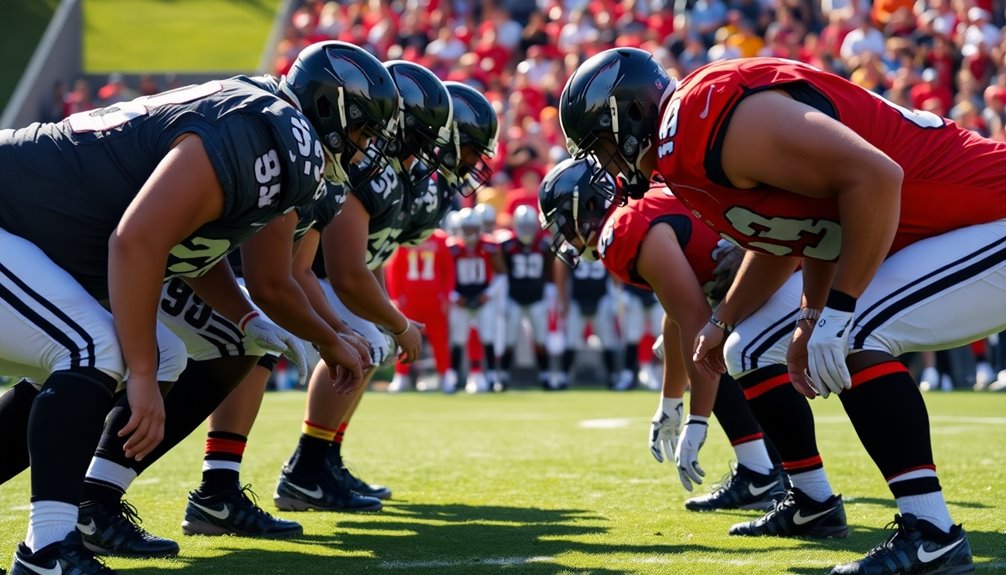
The offensive line is the backbone of any football offense. It consists of five players: one center, two guards, and two tackles, all focused on protecting the quarterback and creating running lanes for the backs.
The center plays an essential role, snapping the ball to the quarterback while calling blocking assignments, ensuring communication and coordination. Guards, positioned on either side of the center, often pull to lead block during running plays or provide extra protection during passing plays.
Tackles, located on the outer edges, primarily block defensive ends, safeguarding the quarterback’s blind side. When the offensive line works in unison, they execute various blocking schemes, adapting to defensive alignments and greatly impacting the team’s offensive success. Effective teamwork in flag football is crucial for maximizing the offensive line’s effectiveness.
Overview of Offensive Line Positions: Center, Guards, and Tackles
Understanding the specific roles within the offensive line can deepen your appreciation for their importance in a football game.
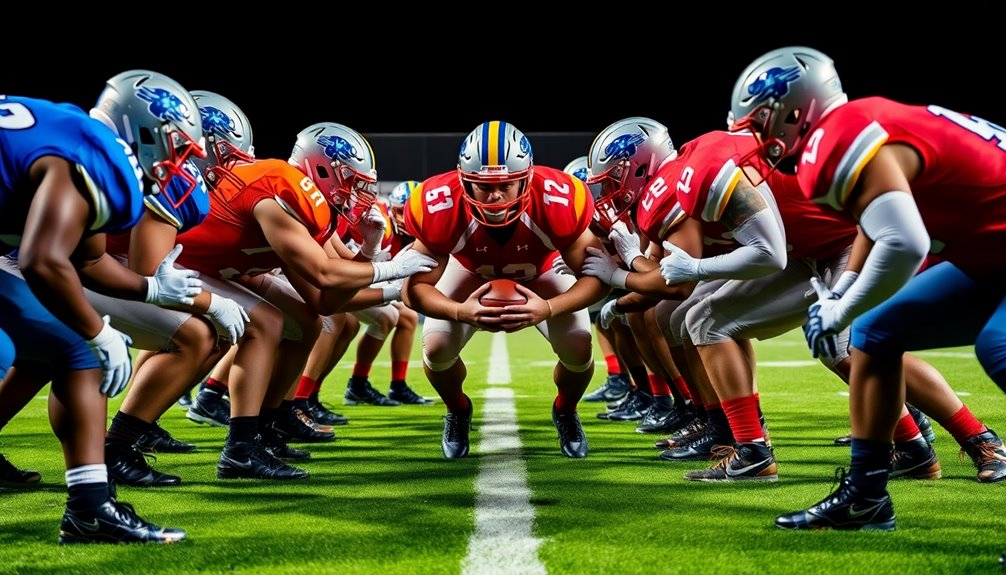
The offensive line consists of five key positions: one center, two guards, and two tackles. The center snaps the ball to the quarterback and calls blocking assignments, ensuring everyone’s on the same page.
Guards are vital for both blocking for the quarterback and creating running lanes for running backs, often executing pull blocks to engage defenders effectively.
Tackles, positioned on the outer edges, protect the quarterback’s blind side and fend off outside pass rushes.
Together, these players form the backbone of the offensive line, essential for maintaining control at the line of scrimmage and facilitating successful plays. A well-prepared defensive strategy can significantly impact the effectiveness of offensive line maneuvers.
Responsibilities of the Center: The Key Playmaker on the Line
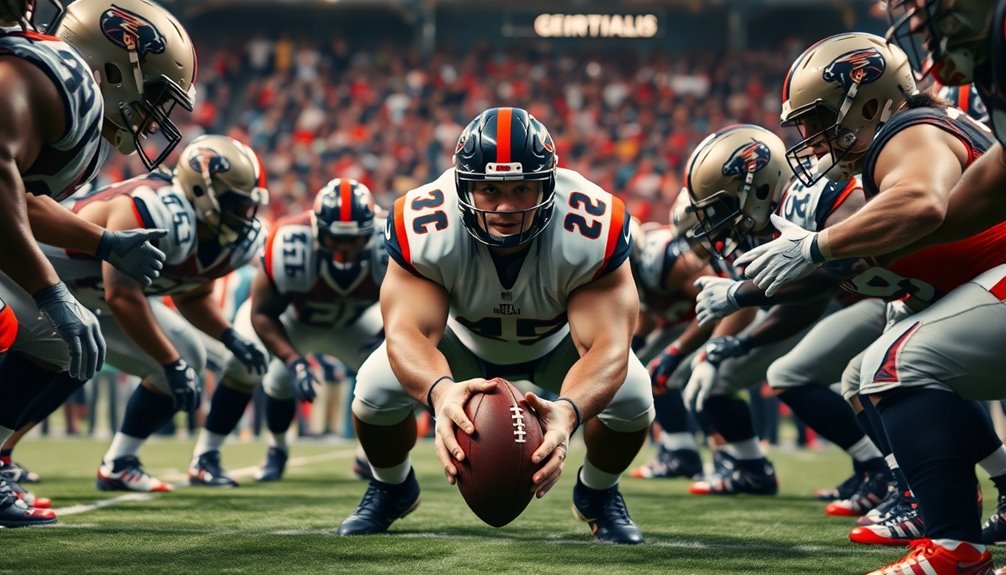
As the center, you’re the heartbeat of the offensive line, ensuring the snap count is precise to kick off each play.
You lead the line in communication, calling out blocking assignments and adjusting to defensive formations.
Your awareness of protection schemes is essential, helping to keep the quarterback safe while executing the game plan. Additionally, your ability to understand defensive line formations allows for better adjustments against opposing defenses.
Snap Count Precision
While you might think the quarterback is the playmaker on offense, the center’s role is just as crucial, especially when it comes to snap count precision. The center not only snaps the ball but also sets the tone for the offensive line.
Here are key responsibilities:
- Call Blocking Assignments: You must analyze defensive alignment and communicate adjustments to your teammates.
- Minimize Penalties: Precise snap count timing reduces the risk of false starts, ensuring smoother execution.
- Engage in Running Plays: Your blocking skills are critical, as you often face defensive tackles and linebackers head-on.
Strong communication skills are essential for coordinating with both the offensive line and the quarterback, making you a linchpin in offensive strategy.
Line Communication Leader
The center acts as the pivotal communication leader on the offensive line, ensuring everyone is on the same page before the snap. As the only offensive lineman who touches the ball, you initiate the play and set the tone.
Your strong communication skills are essential for calling out blocking assignments and adjustments based on the defensive alignment. You relay critical information to both your fellow offensive linemen and the quarterback, helping everyone understand the offensive strategy.
Whether executing running plays or passing plays, your decisions directly impact the success of the offense. With the ability to handle defensive tackles, you combine size, strength, and agility to effectively protect the quarterback and create opportunities for your team.
Protection Scheme Awareness
Your role as a center goes beyond just snapping the ball; it involves a keen awareness of the protection scheme. You’re the leader of the offensive line, and your ability to read defensive alignments is essential.
Here are some key responsibilities you must embrace:
- Call Blocking Assignments: Communicate with teammates to guarantee everyone understands their role against strong opponents.
- Make Pre-Snap Adjustments: Adjust the protection scheme based on the defense’s setup to maximize your line’s effectiveness.
- Engage in Blocking: Use your agility and strength to directly confront defensive linemen during both running and passing plays.
Understanding the Guards: Protectors of the Quarterback
In the intricate dance of the offensive line, guards play a pivotal role as protectors of the quarterback. Positioned on either side of the center, you’ll find these linemen vital for both run blocking and pass protection.
They use their strength and agility to fend off defensive tackles, especially when dealing with interior pressure. The left guard typically shields the quarterback’s blind side, while the right guard focuses more on creating lanes for the running back.
Often, they perform “pull” blocks, moving across the formation to open up plays. With a blend of size, strength, and quickness, guards are essential in executing blocking schemes and ensuring the quarterback remains upright and ready to make a play. Additionally, their role in conditioning drills significantly improves their endurance and ability to maintain performance throughout the game.
The Role of Offensive Tackles: Shielding the Blind Side
As an offensive tackle, you play an essential role in protecting the quarterback’s safety, especially during passing plays.
Your main responsibility is to shield the blind side, preventing defensive players from landing potentially dangerous hits. Effective blocking requires clear communication between you and the quarterback to ensure successful plays.
Key Responsibilities of Tackles
While the offensive line is essential to any football team, tackles play a particularly important role in protecting the quarterback, especially during passing plays.
Offensive tackles are positioned on the outer edges, tasked with blocking defensive players, particularly defensive ends. Their responsibilities include:
- Pass Protection: Safeguarding the quarterback’s blind side, especially for right-handed QBs.
- Run Blocking: Executing blocks to create running lanes for running backs, effectively engaging defensive linemen and linebackers.
- Size and Strength: Utilizing their physical attributes to effectively handle faster defensive players and maintain blocking efficiency.
With a combination of size, strength, and agility, tackles are vital in ensuring both the quarterback’s safety and the offense’s overall success.
Protecting Quarterback’s Safety
Tackles not only engage in run blocking and pass protection but also play a vital role in safeguarding the quarterback’s safety, particularly from blind-side threats.
For right-handed quarterbacks, the left tackle is important, as they must fend off speedy pass rushers with agility and strength. Their size allows them to create separation from fast defenders, ensuring that the quarterback has a clean pocket to operate in.
Effective blocking gives the quarterback approximately three seconds to make decisions, significant for executing plays. The left tackle’s performance can directly influence a quarterback’s confidence; pressure from the blind side can lead to hurried throws or even sacks.
Hence, offensive tackles are essential in maintaining the quarterback’s safety and overall offensive success.
How Do Offensive Linemen Block: Techniques and Strategies?
Understanding how offensive linemen block is essential for grasping the dynamics of football. They use various techniques to create space for ball carriers and protect the quarterback, including:
- Drive Blocking: Pushing defenders backward to secure a path for the running back.
- Zone Blocking: Targeting specific areas on the field to create openings.
- Pulling Techniques: Guards move laterally to lead block, enhancing running plays.
Tackles, especially on the quarterback’s blind side, utilize kick slides to maintain position against edge rushers.
The center anchors the line, communicating blocking assignments while ensuring alignment.
Offensive linemen must maintain a low center of gravity and leverage their weight effectively at the line of scrimmage to control defensive players. Additionally, understanding energy systems is vital for optimizing their conditioning and performance on the field.
The Importance of Communication Among Offensive Linemen
Communication among offensive linemen is essential for executing plays effectively. You’ll notice that they rely on key signals and adjustments to coordinate their movements, especially when facing different defensive setups. When everyone’s on the same page, it not only boosts performance but also minimizes mistakes on the field. This is particularly crucial during quick passing techniques that require precise timing and execution.
Key Communication Signals
Effective communication is essential for offensive linemen, as it enables them to identify defensive alignments and coordinate their blocking schemes. The center leads this effort, calling out blocking assignments and adjustments based on the defense’s formation.
Here are three key elements of communication among offensive linemen:
- Verbal Signals: Quick calls alert linemen to changes in blocking schemes, ensuring everyone is on the same page.
- Hand Gestures: Visual cues help convey complex adjustments without relying on noise, especially in loud stadiums.
- Practice Routine: Regular practice fosters a shared understanding of signals and cues, minimizing misalignments and penalties during games.
Offensive Line Coordination
While offensive linemen often work individually in their roles, their success hinges on seamless coordination and communication. The offensive line consists of five players, with the center leading the charge by calling out blocking assignments and adjusting to defensive alignments.
This pre-snap communication is essential for countering blitzes and stunts effectively. When linemen work together, they can execute complex blocking schemes that are critical for successful running plays.
Effective communication also reduces the risk of penalties like false starts, helping maintain offensive flow and momentum. By understanding their roles and maintaining constant dialogue, linemen can guarantee that their blocking assignments align, creating a cohesive unit that protects the quarterback and paves the way for big gains.
Adjustments During Plays
As the play unfolds, offensive linemen must swiftly adapt to any unexpected movements from the defense. Effective communication is key, as it helps everyone understand their blocking assignments and respond to changes. The center leads this effort, calling out adjustments based on the defensive setup.
Here are three essential aspects of this communication:
- Hand Signals: Linemen often use quick hand signals to convey adjustments, ensuring everyone stays in sync.
- Coded Terminology: Using specific terms allows for rapid communication without disrupting the flow of the play.
- Play Call Clarity: Ensuring all linemen clearly understand the play call can prevent costly penalties, like false starts or holding.
How Does Offensive Line Play Affect Overall Team Performance?
Offensive line play is essential to a team’s overall performance, directly impacting both the passing and rushing game. A strong offensive line protects quarterbacks, allowing them time to execute plays without pressure.
When linemen excel at blocking, quarterbacks enjoy higher completion rates, especially when given at least 2.5 seconds to throw. Additionally, effective offensive line play enhances the rushing attack, creating running lanes for running backs that boost yardage and offensive efficiency.
Good communication among linemen minimizes penalties that can disrupt scoring drives. Ultimately, a well-performing offensive line not only contributes to successful drives but also helps maintain possession, tiring opposing defenses and controlling the game’s tempo, which is vital for overall team performance. Incorporating explosive speed and power into training for linemen can further enhance their blocking effectiveness.
Common Offensive Line Formations and Their Functions
A strong offensive line is key to executing various formations that enhance both the running and passing game. Here are three common offensive line formations and their functions:
- I-formation: This setup has a fullback and running back directly behind the quarterback, boosting running options and pass protection.
- Pro Set formation: Featuring two running backs and two wide receivers, it offers flexibility for rushing and passing while maintaining solid blocking.
- Spread formation: The offensive line spreads out, creating wider passing lanes for quick, short passes to exploit defensive weaknesses.
Additionally, Single Back formations focus on pass protection with one running back, while the Zone Blocking scheme emphasizes lateral movement to create running lanes, relying on running backs’ vision. Understanding throwing techniques can further enhance the effectiveness of an offensive line in protecting the quarterback during various plays.
The Evolution of Offensive Line Play: Trends Over the Years
While the fundamentals of offensive line play remain essential, the game has undergone significant changes over the years. You’ve likely noticed a shift from brute strength to agility, allowing offensive linemen to counter faster defensive players effectively.
The introduction of zone blocking schemes in the 1990s emphasized movement and leverage over static power. Analytics now play a vital role, helping teams optimize blocking schemes based on defensive alignments and assess player performance.
As the NFL has become more pass-heavy, the focus on pass protection techniques has intensified. Today’s offensive linemen are expected to be versatile, adapting to various blocking schemes and formations, ensuring they meet the evolving demands of modern football. Additionally, strength and conditioning training has become crucial for linemen to enhance their performance and resilience on the field.
Challenges Faced by Offensive Linemen in Modern Football
In today’s fast-paced NFL, linemen face a myriad of challenges that test their skills and resilience. Here are three key challenges offensive linemen encounter:
- Complex Defensive Schemes: You have to quickly adapt to exotic blitzes and stunts, often requiring swift communication with teammates to adjust blocking schemes on the fly.
- Physical Demands: Maintaining peak conditioning is vital, as you engage in frequent collisions, needing endurance to sustain performance throughout the game.
- Blocking for Mobile Quarterbacks: Modern offenses emphasize speed, pushing you to move effectively in space while protecting agile quarterbacks and dynamic running backs.
Injuries also loom large, with knee, ankle, and shoulder issues common due to the constant physical strain.
Overcoming these hurdles is essential for success.
Tips for Aspiring Offensive Linemen: Skills and Training
Mastering the position of an offensive lineman requires dedication and a well-rounded skill set. Start with strength training, focusing on lower body exercises like squats and deadlifts to enhance your blocking power and balance.
Incorporate footwork drills and agility drills, such as ladder and cone exercises, to improve your quickness and reaction time. Hone your hand techniques by practicing proper hand placement and punch techniques, ensuring you maintain leverage against defenders.
Don’t overlook film study; analyzing game footage helps you anticipate defensive moves and improves your decision-making. Finally, develop strong communication skills with your teammates, using vocal commands and signals to execute blocking schemes effectively.
Each of these elements will elevate your performance on the field.
Conclusion
In the game of football, the offensive line is the unsung hero, holding the fort while the quarterback launches plays. Understanding these positions not only deepens your appreciation of the sport but also highlights the teamwork essential for success. Just like a well-oiled machine, each player plays a crucial role in driving the offense forward. So, whether you’re a fan or an aspiring lineman, remember: great plays start in the trenches.