
U8 Soccer Tips and Tricks for Young Athletes
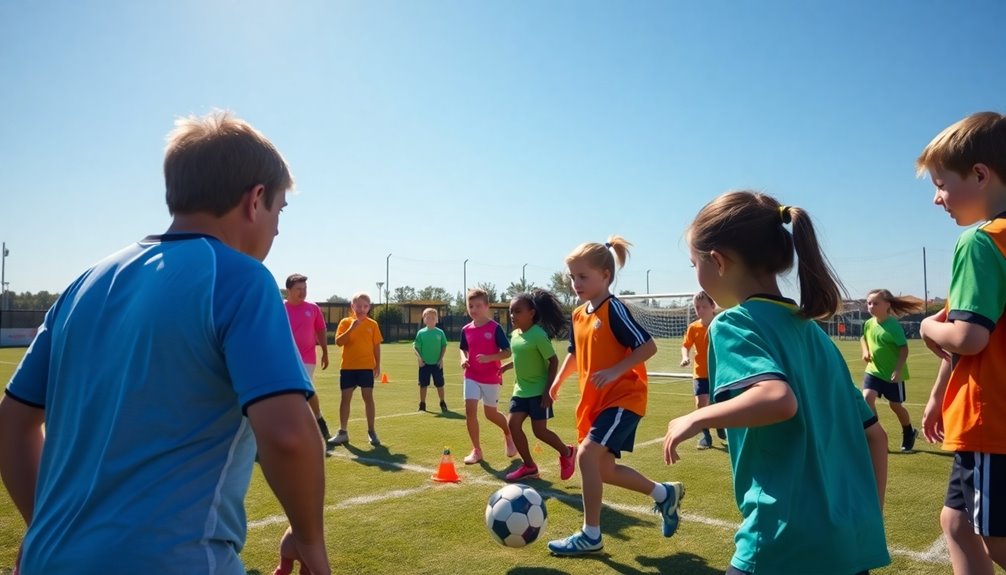
February 17, 2025To help your young athlete excel in U8 soccer, focus on fun and skill development. Encourage them to enjoy practice with engaging drills that promote creativity and teamwork. Key skills like dribbling, passing, and shooting are essential, so incorporate drills that enhance accuracy and agility. Make sure to celebrate their small successes to keep enthusiasm high. Remember, maintaining a supportive environment and emphasizing teamwork will foster their love for the game. By prioritizing these aspects, you'll set a strong foundation for their long-term development. Keep going—there's much more to explore on this exciting soccer journey!
Importance of Fun in U8 Soccer
Why is fun so essential in U8 soccer? It's the primary reason kids join sports, and it's important for keeping their interest alive. When players enjoy their practice sessions, they're more likely to stay engaged long-term. Fun-centered activities not only make the game enjoyable but also help reduce anxiety that can come with competition, creating a positive environment for everyone involved. Additionally, mental toughness gained through enjoying the game can help young athletes handle future challenges both on and off the field. Incorporating quality training sessions into fun practices ensures that skill development doesn't take a backseat while still prioritizing enjoyment.
US Soccer guidelines underscore the importance of incorporating fun into practices for U8 players. Engaging drills that prioritize enjoyment enhance creativity and allow players to express themselves freely. In this supportive atmosphere, young athletes can explore their skills without the pressure to perform perfectly. Furthermore, focusing on essential skills like dribbling and passing during fun activities helps build a strong foundation for future development in the sport.
Moreover, fostering a love for the game through fun activities improves teamwork and social interactions among peers. When players share joyful experiences, they build camaraderie that extends beyond the field. This sense of belonging encourages them to develop their skills while enjoying the process.
Key Skills for Young Players
To excel in U8 soccer, you should focus on key skills like dribbling, passing, and shooting. Practicing close ball control and accurate passes will help you work better with your teammates on the field. Additionally, honing your shooting techniques will guarantee you're ready to score when the opportunity arises. Mastering passing accuracy is essential for effective teamwork and creating scoring opportunities during the game. Incorporating skills like the step-over move can also enhance your dribbling abilities and make you more unpredictable to defenders. Furthermore, developing close ball control will allow you to navigate through tight spaces and evade defenders more effectively.
Dribbling and Ball Control
Mastering dribbling and ball control is essential for young soccer players, as it sets the stage for their overall development on the field. Close ball control is fundamental for U8 players, enhancing agility and the ability to maneuver in tight spaces. This skill is vital for developing individual techniques that set you apart.
To improve your dribbling, incorporate cone dribbling courses into your practice. These drills will help you practice changes in speed and direction, fostering better footwork and spatial awareness.
Engage in one-on-one challenges to promote competition and build confidence when dribbling against defenders. Participating in fun drills like "Controlled Craziness" can also sharpen your skills. In this exercise, you aim to hit others' balls while dribbling, encouraging accountability and honing your dribbling abilities.
Regular practice of various dribbling techniques and ball control exercises is key to cultivating a strong foundation for future skills and gameplay.
Passing Accuracy and Timing
Accurate passing and timing are essential skills for young soccer players, greatly impacting their ability to contribute effectively during games. To improve your passing accuracy, focus on your foot placement and body positioning. Proper technique guarantees that your passes reach their intended targets with precision.
Engaging in small-sided games like 3v3 or 4v4 can also enhance your timing, as these formats encourage quick passing and provide immediate feedback.
Incorporating target practice drills into your training sessions will further develop your passing accuracy. Aim for specific targets to reinforce the importance of hitting your mark in game situations.
Additionally, effective communication with your teammates during drills is vital. It helps everyone understand passing angles and timing, leading to better ball movement on the field.
Don't forget to rotate players during practice. This encourages adaptive passing skills and teaches you how to time your passes based on different scenarios and your teammates' movements.
Shooting Techniques and Strategies
When it comes to scoring goals, mastering shooting techniques is essential for young players. Start by focusing on your body positioning and follow-through. Striking the ball with the laces of your shoes not only enhances your shooting accuracy but also adds power to your shots.
Incorporate various shooting techniques like volleys, half-volleys, and driven shots during practice. This variety helps you adapt to different game situations and enhances your overall skill set.
Setting up shooting stations with targets can greatly improve your shooting accuracy, encouraging you to aim for specific areas of the goal rather than just shooting at the net.
Engaging in competitive shooting drills, like shooting competitions or timed challenges, can keep you motivated while making practice fun.
Don't forget the importance of quick decision-making and situational awareness; during shooting exercises, assess your options and choose the best opportunity to strike.
Effective Dribbling Techniques
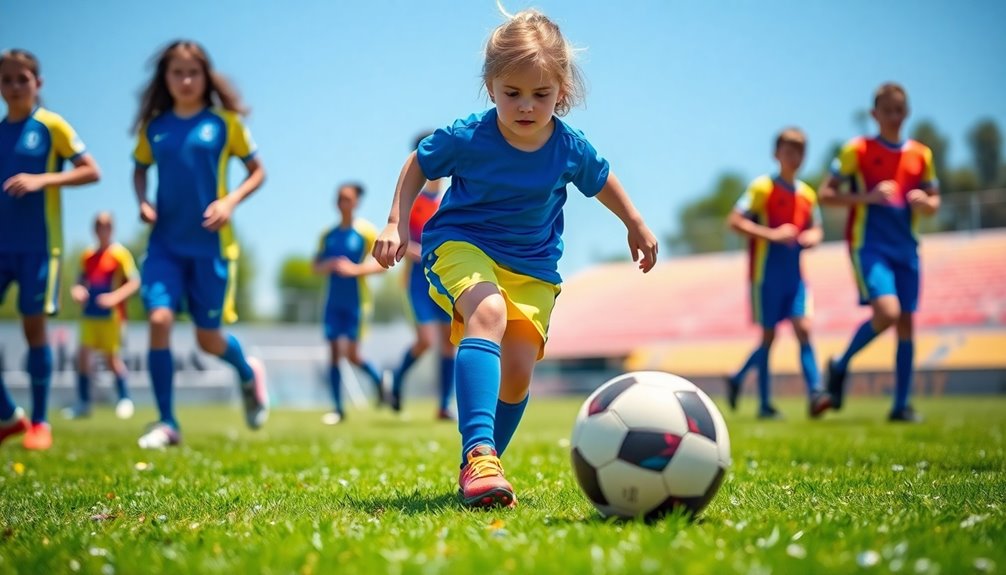
When you dribble, keep the ball close to your feet with small touches to enhance your control and agility. Mastering key skills is essential for young athletes to develop effective dribbling techniques. Changing your speed and direction can confuse defenders and help you adapt during games. Practicing these techniques will boost your confidence and effectiveness on the field. Incorporating advanced moves like the step-over technique can further enhance your dribbling skills and outmaneuver opponents. Additionally, focusing on maintaining possession will ensure you can navigate through tight spaces effectively.
Close Ball Control
Close ball control is a game-changer for U8 players, allowing them to navigate tight spaces and evade defenders with ease. Mastering close ball control is essential for developing confidence in your soccer dribbling skills.
To enhance your abilities, try using cone drills to create dribbling courses. These drills will help you practice changes in speed and direction, boosting your overall control on the ball.
Engaging in one-on-one challenges is another great way to apply your close ball control in competitive situations. This will reinforce your capacity to maintain possession under pressure, which is critical during games.
Remember, it's important to use both feet during your dribbling exercises. This promotes balanced skill development and adaptability, giving you an edge on the field.
Lastly, don't forget to practice controlled craziness! Aim to hit others' balls while dribbling. This fun exercise fosters accountability and sharpens your spatial awareness, fundamental for effective soccer dribbling.
Agility and Speed
Agility and speed are essential for U8 players looking to elevate their dribbling skills on the soccer field. By enhancing these qualities, you'll not only improve your footwork but also gain better control of the ball while maneuvering around defenders.
Here are some effective techniques to incorporate into your practice:
- Agility drills: Use ladder exercises and cone weaving to boost your quickness and foot coordination.
- Speed changes: Practice varying your speed and direction while dribbling, which helps you evade defenders and maintain possession.
- Close control: Keep the ball within a step's reach to respond quickly under defensive pressure and maintain control.
- One-on-one challenges: Engage in competitive scenarios with teammates, utilizing agility and body feints to outmaneuver opponents.
Regularly practicing dribbling courses with cones will enhance your spatial awareness and ability to navigate tight spaces.
Passing Drills for Accuracy
Improving passing accuracy is essential for young soccer players, and incorporating specific drills can make a significant difference. Start with target practice drills where players aim to hit designated targets within a specific area. This helps enhance precision over various distances while focusing on passing the ball accurately. Additionally, understanding the role of wing-backs can inspire players to improve their passing in wider areas of the field. Utilizing a formation like the 2-3-1 formation can also provide structure to passing drills, allowing players to practice their roles within a balanced team setup.
Next, use small-sided games that encourage quick passing and movement. These setups create a pressure-filled environment, allowing players to practice accurate passes while fostering teamwork and communication.
Reinforce passing angles by designing drills that require players to position themselves correctly to receive and deliver passes effectively. Incorporate timing drills where players practice passing in rhythm with their teammates. This helps develop a better understanding of when and how to deliver the ball accurately.
Finally, add fun competitive elements, like relay races that require accurate passing to advance. This keeps players engaged while honing their skills. Additionally, emphasizing effective player selection ensures that young athletes are trained in roles that suit their strengths.
Through these drills, players learn the importance of accuracy and teamwork, making them more effective on the field. By focusing on these aspects, you'll see improvement in your team's overall performance and confidence in passing the ball.
Shooting Drills for Success
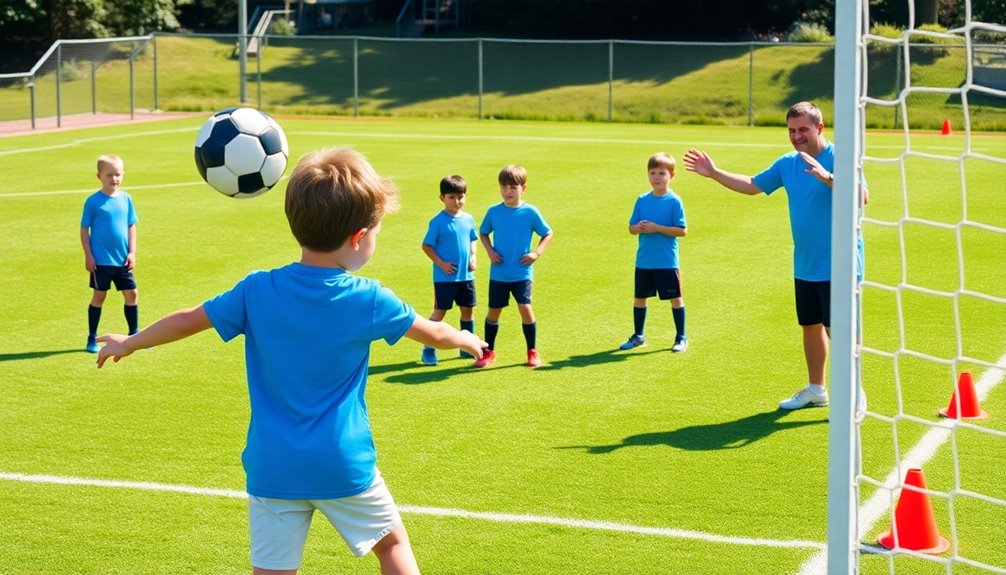
During practice sessions, focusing on shooting drills is essential for developing young players' confidence and technique. By incorporating various shooting techniques like volleys, half-volleys, and shots from different angles, you'll help players build a well-rounded skill set. Additionally, integrating core strength exercises can significantly improve players' shooting power and stability. Engaging in a dynamic warm-up routine before practice can also enhance players' readiness for shooting drills.
Consider implementing shooting stations during training to emphasize accuracy and power. This approach allows players to grasp the mechanics of effective shooting while having fun.
Here are some engaging activities to enhance your shooting drills:
- Create fun shooting competitions: Activities like "Four Goals" encourage teamwork and friendly competition.
- Emphasize proper follow-through: Teach players the importance of body positioning to improve accuracy.
- Utilize small-sided games: These games put players under pressure, reinforcing quick decision-making and execution.
- Encourage creativity: Allow players to experiment with different shots to develop a love for the game. Additionally, integrating agility and speed training into shooting drills can enhance players' overall performance on the field.
Defensive Skills for Beginners
In soccer, mastering basic defensive techniques is essential for your success on the field.
You'll need to focus on positioning, staying between the attacker and the goal, and communicating effectively with your teammates.
Basic Defensive Techniques
Mastering basic defensive techniques is essential for U8 players looking to enhance their skills on the soccer field. As a young defender, you'll want to focus on a few key areas to improve your game and effectively support your team.
- Maintain a low stance to boost your balance and agility.
- Use proper body positioning to keep yourself between the ball and the goal.
- Practice safe tackling techniques, prioritizing your feet to dispossess the ball.
- Engage in small-sided games that mimic defensive scenarios for practical experience.
These defensive techniques will help you intercept passes and block opponents effectively. By practicing these skills, you'll become a more confident and capable young defender.
Remember, mastering these basics lays the foundation for stronger defensive play as you progress in the sport. Emphasizing these techniques won't only improve your individual performance but also contribute to your team's overall success on the field.
Always be ready to adapt and learn, as each game presents new challenges. Keep honing these skills, and watch how your defensive game transforms!
Communication and Teamwork
Effective communication and teamwork are essential for young defenders in soccer. When you communicate clearly with your teammates, you help coordinate your efforts and guarantee everyone knows their roles. It's important to call out for support or signal when you're marking an opponent. This practice not only enhances teamwork but also prevents confusion on the field.
Establishing basic defensive strategies, like maintaining a compact shape and working together to close down space, encourages you to rely on one another for support. Verbalizing your intentions, such as shouting "man on" when an opponent approaches, fosters awareness and helps your team make quick decisions.
To develop these skills, engage in small-sided games, like 2v2 scenarios. These situations allow you to practice your defensive techniques while emphasizing the importance of communication and teamwork in real-game contexts.
By working closely with your teammates, you'll find that defense becomes more effective and enjoyable. Remember, good defenders aren't just skilled players; they're also great communicators who understand the value of teamwork.
Positioning and Marking
Building on the importance of communication and teamwork, positioning and marking are essential skills for young defenders. As a defender, your primary goal is to stay between the ball and your own goal. This positioning allows you to react quickly to attackers while preventing easy scoring opportunities.
When marking an opponent, focus on staying close to them. Use your body positioning to limit their options, forcing them towards the sidelines or into less favorable areas of the field.
Here are some key tips to enhance your skills:
- Maintain a low center of gravity for better balance.
- Communicate with teammates; let them know when you're marking someone.
- Practice shadowing drills to mirror opponents' movements.
- Always be ready to pivot and react quickly.
Goalkeeping Fundamentals
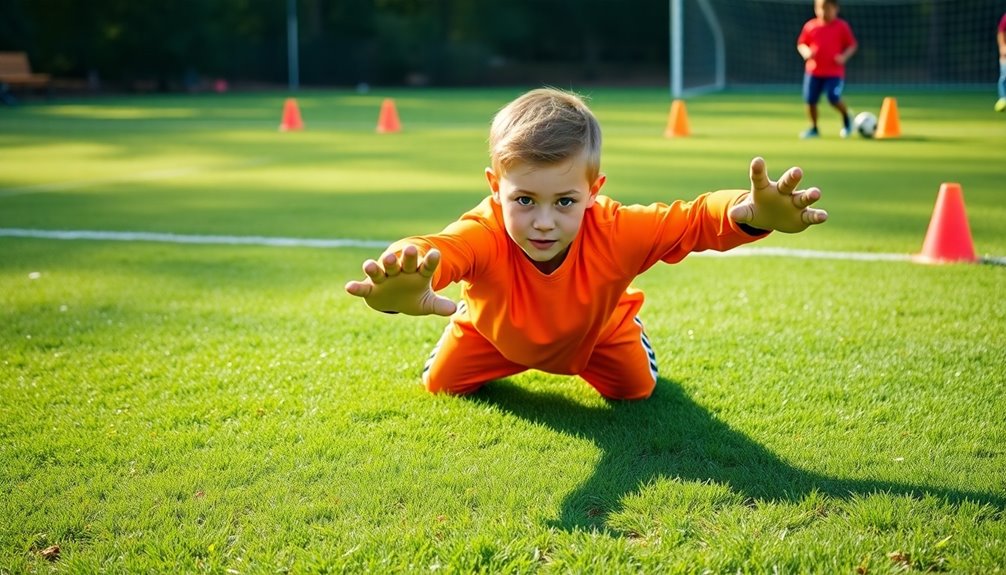
In the heart of the game, goalkeeping plays a significant role that demands precision and skill. As a goalkeeper, you should focus on mastering fundamental techniques like catching and diving. This mastery guarantees you can confidently respond to various shot types during a game.
Proper positioning is essential; align yourself with the ball's trajectory to effectively make saves and reduce angles for shooters. Regularly incorporate reaction drills into your practice plans to improve your reflexes. These drills should simulate game scenarios that require quick decision-making and swift movements.
Communication with your defenders is important, too. Actively directing your teammates helps maintain defensive organization and minimizes scoring opportunities for the opposition.
Additionally, incorporating game-like scenarios during training will sharpen your decision-making skills, allowing you to assess threats and choose appropriate responses quickly.
Engaging Fun Games
As players develop their skills on the field, incorporating engaging fun games can considerably enhance their experience. These games not only make practices enjoyable but also foster teamwork, communication, and skill development.
Here are some great options to include in your training sessions:
- Capture the Balls: Encourage teamwork and strategic thinking as players collect and retain balls while maneuvering around opponents' bases.
- Protect Your Base: Promote communication and collaboration by having players defend their balls from the opposing team.
- Team Handball: Use this unique game to allow players to pass within three steps while using their hands, enhancing teamwork and spatial awareness.
- Small-Sided Games (2v2 to Small Goals): Offer players more touches on the ball in game-like scenarios, making fun soccer practices both engaging and skill-focused.
Incorporating games like "British Bulldog" and "Freeze Tag" can also enhance agility and ball control, creating a fun environment that reduces anxiety and encourages creativity.
Common Coaching Mistakes
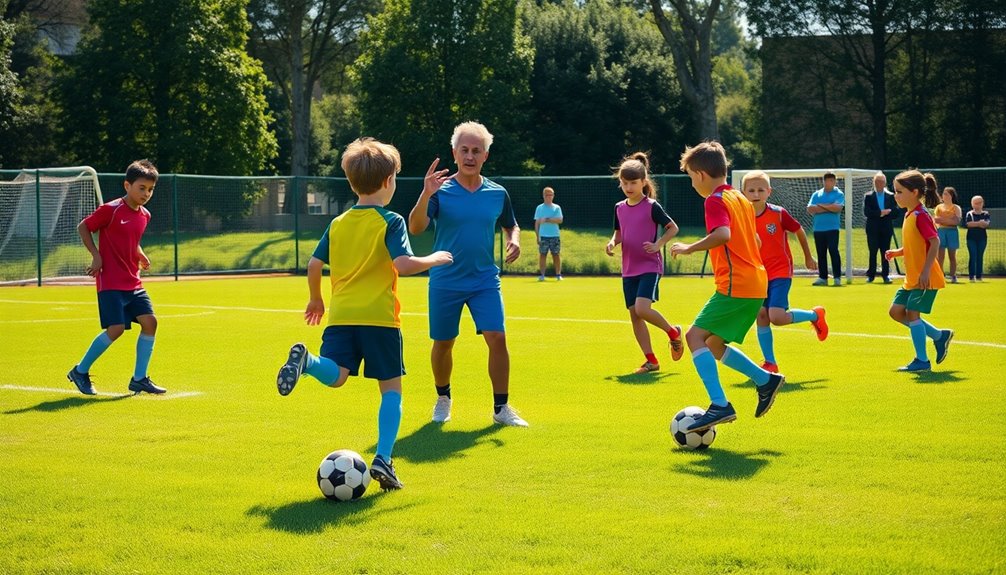
Coaching young soccer players comes with its share of challenges, and avoiding common mistakes can make a big difference in their development. One major error is equating a team's success solely with wins. This focus on the scoreboard can overshadow individual player development, stifling skill acquisition and preventing children from growing as athletes.
Creating a pressure-cooker environment might seem motivating, but it can lead to anxiety and burnout, ultimately detracting from their love for the game. Instead, emphasize skill development and encourage players to enjoy the process.
Another mistake is relying too heavily on a few athletic players for team success, which neglects the diverse talents and skills of all your young athletes. Every player should have the opportunity to grow and contribute, fostering a sense of inclusion and teamwork.
Lastly, never underestimate the importance of nurturing a love for the game. When players feel supported and engaged, they're more likely to stay involved in soccer long term.
Long-term Player Development
Fostering a love for soccer lays the groundwork for long-term player development. When young athletes enjoy the game, they're more likely to stay engaged and motivated. To support this, focus on skill acquisition rather than immediate results. Building a solid foundation of technical and tactical abilities will help them grow as players throughout their soccer journey.
Here are some tips to enhance long-term player development:
- Prioritize fun in every practice to keep players enthusiastic.
- Incorporate a variety of drills that promote skill development and enjoyment.
- Encourage social interaction among teammates to build camaraderie.
- Adapt your coaching methods to fit the developmental needs of each age group.
Taking a holistic approach is key. This means nurturing not just the physical aspects of the game but also the emotional, social, and psychological growth of your players.
Role of Parents in Soccer
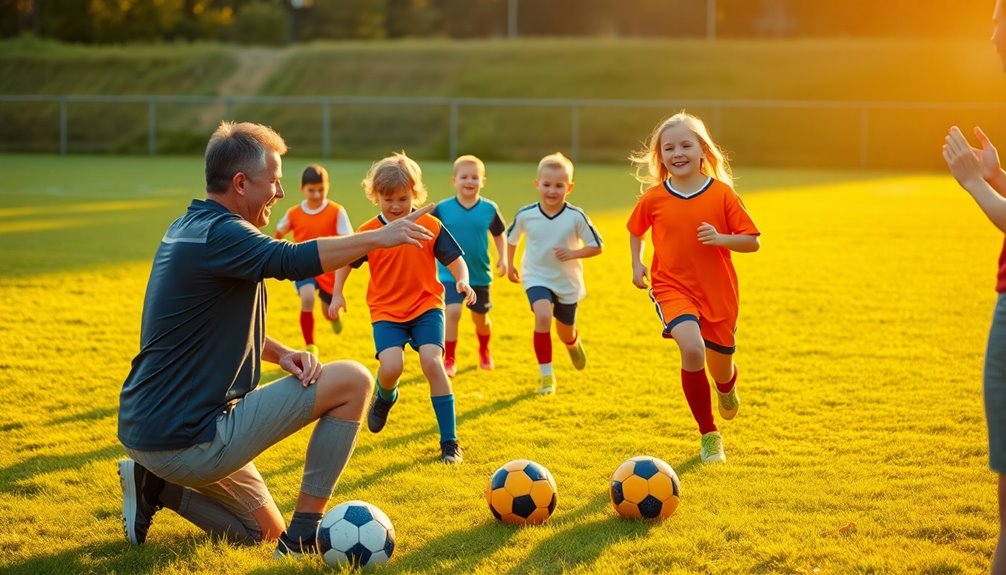
While you mightn't be on the field, your influence as a parent is crucial in shaping your child's soccer experience. By fostering a supportive environment that prioritizes enjoyment and development, you help your young athlete thrive.
It's important to educate yourself about skill acquisition and long-term player development to manage expectations and reduce pressure on your child during soccer practice.
Encourage positive sideline behavior by cheering and providing constructive feedback during games and practices. This creates a more enjoyable and less stressful atmosphere for your young athlete.
Your involvement goes beyond just watching from the sidelines; actively participate in team events and volunteer whenever possible. Showing interest in your child's progress and love for the game can greatly enhance their experience.
Open communication with coaches is essential. Discuss your child's goals, progress, and areas of focus. This collaboration creates a cohesive support system that benefits your young athlete immensely.
Session Planning Strategies
Effective session planning is essential for keeping U8 players engaged and excited about soccer. You'll want to focus on enjoyment by incorporating fun U8 soccer drills that foster a love for the game. Start by utilizing small-sided games, like 4v4, to maximize player involvement and guarantee everyone gets plenty of touches on the ball.
Consider these strategies for effective session planning:
- Emphasize fundamental skills: Prioritize dribbling, passing, and shooting without getting bogged down by complex team concepts.
- Be adaptable: Use player feedback to tweak drills, guaranteeing they stay relevant and enjoyable.
- Variety is key: Incorporate a mix of drills and competitive games to keep interest high.
- Promote teamwork: Design activities that encourage communication and strategic thinking among players.
Encouragement and Motivation Techniques
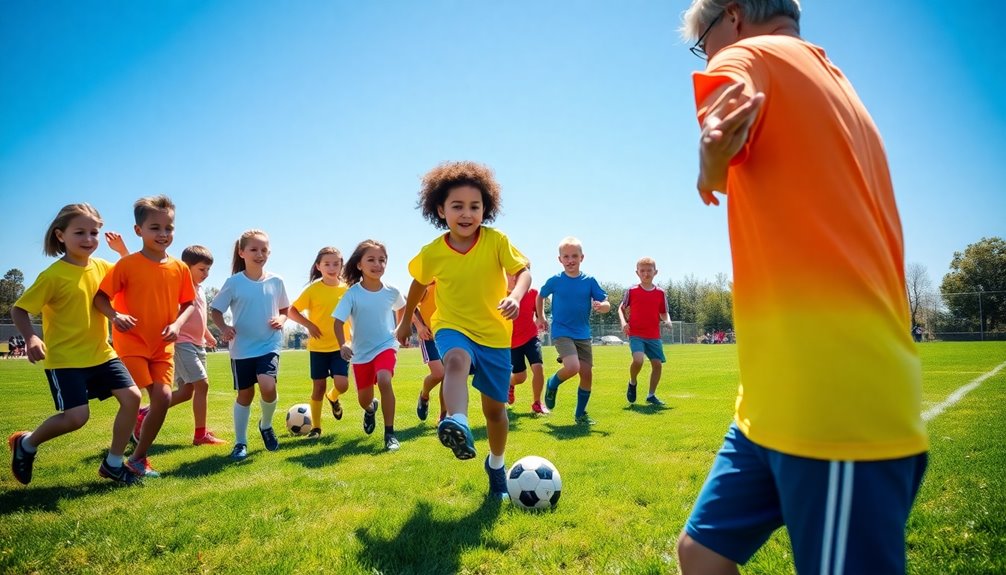
How can you keep U8 players motivated and enthusiastic about soccer? It starts with encouragement. Positive reinforcement is essential for player development; kids thrive on approval and support from coaches. Celebrate their efforts, even the small wins, to foster a long-term interest in the game.
Creating an engaging practice environment is important. Prioritize fun and enjoyment to enhance their overall experience and keep them keen to participate. Incorporate fun games and competitive drills that maintain enthusiasm without the pressure of rigid performance expectations. This approach helps build a healthy competitive spirit.
When you provide specific praise—like recognizing improved techniques or teamwork—you boost their confidence and motivation. Kids want to feel valued, so regularly seek their feedback and adapt practices accordingly. This empowers young athletes and makes them more invested in their own development.
Ultimately, a combination of encouragement, fun, and tailored practice can keep U8 players enthusiastic about soccer. By focusing on these techniques, you'll help them not only improve their skills but also cultivate a lifelong love for the game.
Conclusion
In the world of U8 soccer, the theory that fun fuels success holds true. When young athletes enjoy the game, they're more likely to develop essential skills and a lifelong passion for soccer. By focusing on key techniques and fostering a positive environment, you can help your child thrive on and off the field. Remember, it's not just about winning—it's about growth, teamwork, and building confidence. Keep the joy alive, and watch them flourish!