
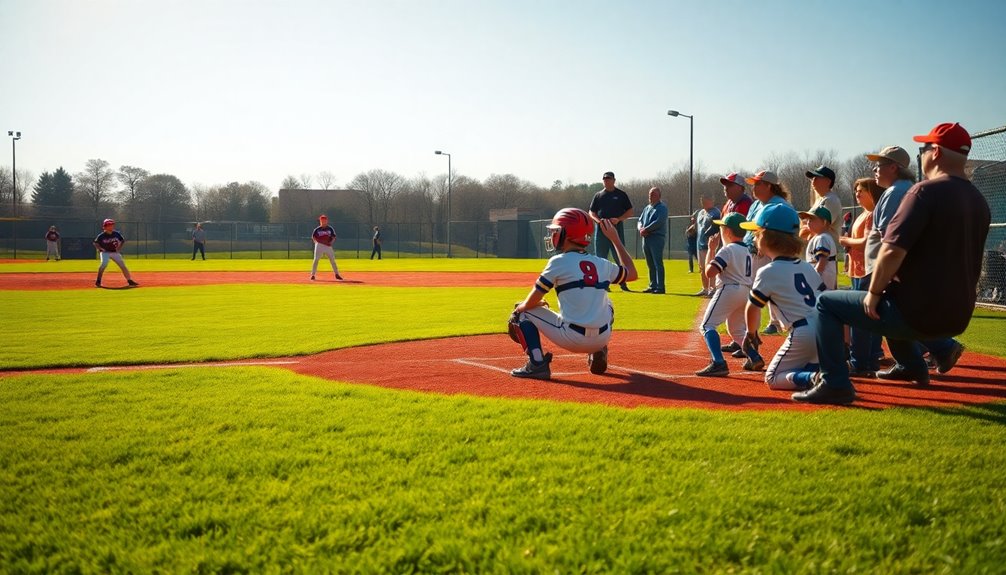
The Complete Guide to Baseball Positions: What Every Parent Should Know
February 11, 2026Understanding baseball positions is key for guiding your child in the sport. Each player has a specific role, from the pitcher’s leadership on the mound to the catcher’s defensive strategies. Positions like shortstop, second baseman, and first baseman each require unique skills. Misconceptions about who should play what position often hinder development. With the right support, you can help your child thrive in their chosen role and discover the fascinating dynamics of the game.
Understanding the Basics of Baseball Positions
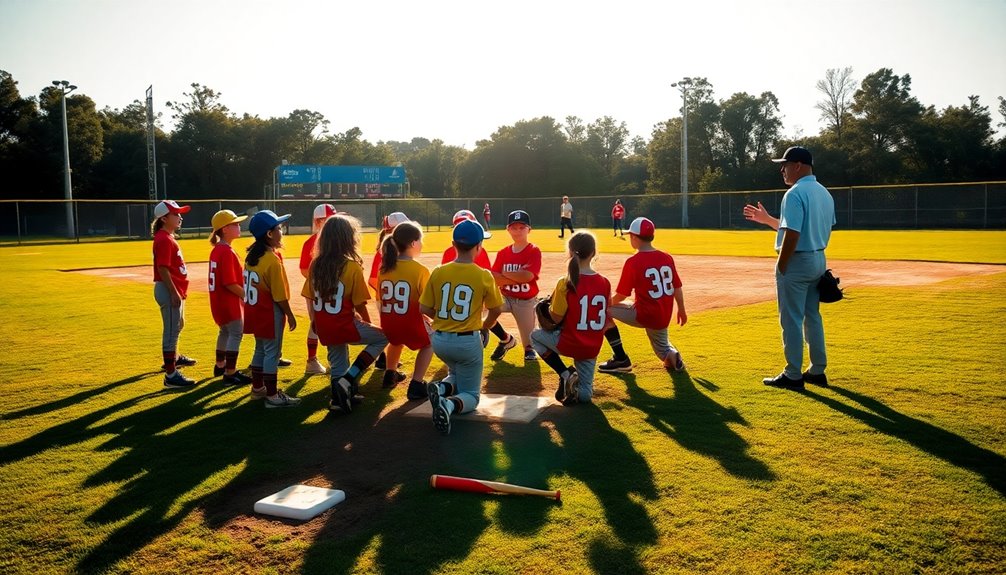
Baseball features nine distinct positions, each playing an essential role in the game. To help your child excel, it’s vital to understand the position fundamentals.
Each player’s role is defined by specific baseball terminology that reflects their responsibilities on the field. For example, the catcher calls pitches and guards home plate, while the shortstop is key in fielding ground balls and making quick throws.
Each position in baseball has unique terminology that highlights player responsibilities, from the catcher’s pitch-calling to the shortstop’s quick throws.
Outfielders track fly balls, and infielders work together to turn double plays. Knowing these basics not only boosts your child’s confidence but also enhances their teamwork skills. Effective teamwork is crucial in both baseball and soccer, enabling players to anticipate each other’s actions and improve overall performance.
Encourage them to learn the unique demands of each position, so they can appreciate the game’s strategy and develop a well-rounded understanding of baseball.
The Role of the Pitcher: The Team’s Leader on the Mound

As the pitcher, your child takes on an essential leadership role on the mound. They need to master pitching mechanics, develop mental toughness, and communicate effectively with the catcher. Understanding these elements will help your young athlete excel and contribute to the team’s success. Additionally, field dimensions play a crucial role in how a pitcher strategizes their throws and positions themselves during a game.
Pitching Mechanics Fundamentals
The pitcher is often considered the team’s leader on the mound, and for good reason. You set the tone for the game and influence your teammates’ performance.
To excel, mastering pitching mechanics is vital. Focus on your grip, stance, and delivery to guarantee consistent throws. Regular pitching drills will help you refine these skills and build muscle memory.
Mechanics coaching can provide personalized feedback, highlighting areas for improvement. Pay attention to your follow-through, as it can affect your pitch’s speed and accuracy.
Mental Toughness Required
While every player faces pressure during a game, pitchers endure a unique level of mental strain that demands exceptional toughness. You’re not just throwing a ball; you’re leading your team and influencing the game’s outcome.
To thrive on the mound, you need mental resilience and a competitive mindset. Here are key points to remember:
- Focus: Stay locked in, ignoring distractions from the crowd or opposing team.
- Confidence: Trust your abilities, even after a tough pitch or inning.
- Adaptability: Adjust your strategy quickly in response to batters.
- Calmness: Maintain composure under pressure, especially in high-stakes moments.
Embrace these traits, and you’ll not only excel as a pitcher but also inspire your teammates.
Communication With Catcher
Pitchers not only face mental challenges but also have an essential role in shaping the game’s direction. One of your key responsibilities is effective communication with your catcher. Understanding catcher signals is vital for executing the game plan. When your catcher flashes a sign, respond promptly and confidently. This helps establish trust and keeps the game flowing smoothly.
Make eye contact and encourage open dialogue during the game; it can help adjust strategies based on the batter’s tendencies or the game situation. If you’re unsure about a signal, don’t hesitate to shake it off.
Catcher’s Duties: The Backbone of the Defense

As a catcher, your child plays an essential role in the team’s defense. They need to master key responsibilities like blocking pitches and calling plays, while also communicating effectively with the pitcher and infielders. Understanding these duties will help you support their development on the field. Proper equipment, including size-appropriate gear, enhances safety and performance, ensuring your child can focus on their skills and teamwork.
Key Responsibilities of Catcher
The catcher plays an essential role in the game, serving as the backbone of the defense. Your child’s catcher skills are fundamental for executing effective game strategies.
Here are the key responsibilities they’ll need to master:
- Receiving Pitches: They must catch every pitch with precision, ensuring no wild throws get past them.
- Calling Plays: Your child directs the team by signaling the type of pitch or play to execute, guiding the defense.
- Blocking the Plate: They protect home plate from runners, using their body to prevent scoring.
- Catching Stealers: Quick reflexes are important for throwing out base stealers, keeping the opposing team on their toes.
Importance of Communication Skills
While catching may seem like a solitary position, effective communication is essential to a team’s success. As a catcher, you’re the backbone of the defense, guiding your teammates and ensuring everyone’s on the same page.
You need to provide effective feedback to your pitcher, letting them know how to adjust their strategy based on the game situation. Use nonverbal cues, like hand signals or body language, to convey plays quickly and efficiently without alerting the opposing team.
Infield Positions: The Shortstop, Second Baseman, and Third Baseman Explained
Infield positions play an essential role in baseball, especially for young players enthusiastic to learn the game. The shortstop, second baseman, and third baseman each contribute unique skills and strategies that enhance infield dynamics.
- Shortstop Skills: Quick reflexes and strong throwing abilities are critical for this player, often the team’s defensive leader.
- Second Baseman Strategies: This player must communicate effectively and master double plays to support the infield.
- Third Baseman Responsibilities: Positioned near the foul line, they need a powerful arm and the ability to react swiftly to hard-hit balls.
- Teamwork: Each position relies on the others for seamless coordination, making unity essential in executing plays. Understanding field dynamics can further enhance a player’s effectiveness in these critical roles.
The Importance of the First Baseman: The Anchor of the Infield
Every infield needs a solid first baseman to complete its defensive puzzle. This player plays an important role, often becoming the anchor that holds the infield together.
A first baseman’s skills, like quick reflexes and strong hand-eye coordination, are critical for fielding ground balls and catching throws from other infielders. Additionally, their ability to stretch and scoop low throws can prevent costly errors.
Implementing effective first baseman’s strategies, such as positioning themselves correctly and anticipating plays, enhances the team’s defense. Communication with teammates is essential, as it helps maintain organization during fast-paced situations. A well-prepared defense can intimidate opponents and improve the overall performance of the team.
Outfield Positions: Left, Center, and Right Field Roles
When it comes to outfield positions, understanding the distinct roles of left field, center field, and right field is crucial for your young player’s development.
Each position plays a significant role in your team’s outfield strategy and requires strong outfield communication. Here’s a quick breakdown:
- Left Field: Often handles line drives and plays a key role in throwing out runners at third base.
- Center Field: The leader of the outfield, responsible for covering the most ground and coordinating plays.
- Right Field: Typically deals with fly balls and has a strong arm for long throws to the infield.
- Teamwork: Players must communicate effectively to avoid collisions and guarantee proper coverage.
Additionally, understanding positional awareness can further enhance how players execute their roles on the field.
Equipping your child with this knowledge will enhance their performance on the field!
Designated Hitter: What It Means for the Game
The designated hitter (DH) plays a unique role in the game, allowing teams to focus on offense while keeping pitchers fresh.
This strategy can shift the dynamics of a game, influencing how teams approach each inning.
Understanding the impact of the DH can also help you appreciate player development and the importance of specialized skills in baseball. Additionally, like the stoppage time in soccer, the designated hitter rule can dramatically alter the flow and outcome of the game.
Role of Designated Hitter
While traditionalists often debate its merits, the role of the designated hitter (DH) has become a pivotal aspect of modern baseball. The DH allows teams to maximize offensive potential without sacrificing a fielder’s position.
Here are some key designated hitter advantages:
- Specialization: Teams can choose a power hitter specifically for batting.
- Injury Management: A designated hitter can reduce strain on pitchers and players recovering from injuries.
- Strategic Flexibility: Coaches can manipulate lineups for better matchups against opposing pitchers.
- Increased Scoring: By focusing on offensive talent, teams often see higher run totals.
Understanding these designated hitter strategies can enhance your appreciation of the game and its evolving dynamics.
Strategy Implications in Games
In modern baseball, teams rely heavily on the designated hitter to shape their strategies during games. By using a DH, managers can enhance their game strategy, focusing on maximizing offensive potential without sacrificing defensive capabilities.
This allows teams to prioritize hitting skills over positional importance, giving sluggers a chance to contribute considerably without needing to field.
You’ll often see teams stacking their lineup with powerful hitters, which can alter pitching strategies, too. Opposing teams may adjust their approach, knowing a strong DH could change the game’s outcome.
Ultimately, the designated hitter’s role transcends traditional batting; it impacts how teams construct their rosters and develop game plans, making it an essential element in modern baseball dynamics.
Impact on Player Development
As teams embrace the designated hitter role, player development takes on new dimensions, allowing younger talent to focus on honing their batting skills without the pressure of fielding.
This shift promotes player growth and skill development in several ways:
- Increased At-Bats: More opportunities lead to better hitting techniques.
- Focused Training: Players can dedicate time to batting drills and mental preparation.
- Reduced Injury Risk: Less time in the field minimizes wear and tear on younger players.
- Confidence Building: A consistent batting role helps players gain confidence in their abilities.
The Utility Player: Versatility on the Diamond
If you want your child to shine on the baseball field, encouraging them to become a utility player could be a great choice. Utility players possess valuable versatility, allowing them to fill different positions as needed. This can enhance their utility player skills, such as adaptability, quick decision-making, and a strong understanding of the game.
The advantages of being a utility player are numerous. They often get more playing time, which boosts confidence and experience. Plus, coaches appreciate their ability to step in wherever needed, making them indispensable to the team. By developing utility player skills, your child can become a well-rounded athlete who stands out on the diamond, making them an essential asset in any game situation. Additionally, the influx of diverse athletes in sports today highlights the importance of versatility and adaptability in achieving success on the field.
How Each Position Contributes to Team Strategy
Every position on the field plays a vital role in shaping your team’s strategy.
From the offensive contributions that drive runs to the defensive responsibilities that secure outs, understanding each role can enhance your appreciation of the game.
Don’t forget the impact a strong pitcher can have on the entire flow of play. Additionally, just as in soccer, where the development of a strong youth system has been crucial for nurturing talent, the same principle applies in baseball for building a successful team.
Offensive Contributions To Strategy
Understanding how each baseball position contributes to offensive strategy can greatly enhance a team’s performance. Each role plays a crucial part in run production and executing offensive strategies. Here’s how:
- Lead-off Hitter: Sets the tone and gets on base to create scoring opportunities.
- Power Hitter: Drives in runs with strong hits, often targeting the gaps or fences.
- Contact Hitter: Focuses on getting on base consistently, moving runners, and avoiding strikeouts.
- Speedster: Uses speed to steal bases, putting pressure on the defense and creating scoring chances.
Defensive Roles And Responsibilities
While each player on the field has a specific defensive role, their contributions collectively shape the team’s overall strategy and effectiveness. Understanding defensive alignments is essential for optimizing position strategies.
For instance, the infielders work together to cut off ground balls and execute double plays, while outfielders track fly balls and prevent extra-base hits. The catcher coordinates the defense, calling pitches and positioning players according to the opposing team’s strengths.
Each position impacts how the team adapts to various offensive threats, ensuring a solid defense. By knowing their roles and communicating effectively, players enhance their defensive efforts, keeping the opposing team from scoring and ultimately contributing to the team’s success on the field.
Pitching’s Impact On Game
The effectiveness of a team’s defense heavily relies on the pitching performance, as the pitcher sets the tone for the entire game. Your team’s success hinges on smart pitching strategies and effective pitch selection.
Here are four key ways the pitcher impacts the game:
- Controlling the pace: A confident pitcher can dictate the game’s rhythm, keeping batters off balance.
- Setting up fielders: Strategic pitch selection allows fielders to anticipate plays, improving defensive positioning.
- Frustrating hitters: By mixing pitches, the pitcher can disrupt a batter’s timing, leading to easier outs.
- Leading by example: A strong pitcher inspires confidence in teammates, fostering a cohesive team dynamic.
Ultimately, a solid pitching performance can elevate your team’s entire game strategy.
Skills Needed for Every Baseball Position
Each baseball position demands a unique set of skills that players must master to contribute effectively to their team.
For instance, infielders need quick reflexes and strong throwing arms, while outfielders benefit from speed and excellent catching ability. Catchers require strong leadership and blocking skills, while pitchers must focus on accuracy and strategy.
To hone these skills, players should engage in position-specific drills that target their role’s unique demands. Incorporating position-specific drills can significantly enhance a player’s performance by developing muscle memory and improving technique.
It’s also essential to be aware of position-related injuries—like shoulder strains for pitchers or ankle sprains for outfielders—that can occur during practice or games.
The Evolution of Baseball Positions Over Time
As baseball evolved, so did the roles and responsibilities of its positions, reflecting changes in gameplay and strategy. Historical changes led to increased position specialization, enhancing team dynamics.
You might notice how these transformations shaped the game:
- Pitchers: Once expected to bat and field, now they focus solely on pitching.
- Catchers: Evolved from just receiving pitches to strategizing plays and managing pitchers.
- Infielders: Specialized roles emerged, with shortstops and second basemen honing distinct skills.
- Outfielders: Divided into left, center, and right, each with unique defensive responsibilities.
These shifts haven’t only influenced player training but also how you can support your child in mastering specific positions, fostering their growth in the game.
Understanding Positioning and Defensive Alignments
Understanding how players position themselves on the field can considerably impact a team’s defensive strategy.
Effective defensive alignments rely on positioning strategies that adapt to the opposing team’s strengths. You’ll want to pay attention to how players adjust their spots based on the batter’s tendencies and the game’s situation.
For instance, shifting infielders can help counteract a pull hitter, while outfielders may move deeper against a power hitter.
Encourage your young players to communicate and work together, as this enhances their ability to cover gaps and prevent runs.
Watching how positioning impacts the game can deepen your appreciation for baseball and help your child develop essential skills on the field.
Common Misconceptions About Youth Baseball Positions
What misconceptions do parents often hold about youth baseball positions? Many parents fall prey to youth misconceptions and position stereotypes that can limit their child’s experience.
Here are four common beliefs:
- Only the Best Players Pitch: Every kid should have the chance to try pitching, regardless of skill level.
- Girls Can’t Play Certain Positions: Baseball is for everyone—gender shouldn’t dictate position choice.
- Defensive Positions Are More Important: Every role matters; even outfielders can influence the game notably.
- Age Defines Ability: Kids evolve at different rates; some may shine in unexpected positions despite their age.
Recognizing these misconceptions helps you support your child’s growth and enjoyment in the game.
Tips for Parents: Supporting Your Child in Their Chosen Position
Supporting your child in their chosen baseball position can make a significant difference in their enjoyment of the game. Encourage them to explore different positions during practice to help with position selection, ensuring they find what feels right for them.
Listen to their preferences and support their decisions, emphasizing that it’s their journey. As a parent, you can enhance their experience through positive reinforcement and constructive feedback, stepping back from parent coaching when needed.
Support your child’s journey by listening to their preferences and providing encouragement without overwhelming them with coaching.
Celebrate their successes and help them learn from mistakes without pressure. Attend games and practices to show your support, but remember to keep the focus on fun rather than competition.
Your encouragement will foster their love for the game and boost their confidence on the field.
Conclusion
In the grand tapestry of baseball, every position plays a crucial role, weaving together teamwork and strategy. By understanding these roles, you’re not just cheering from the sidelines; you’re nurturing your child’s journey in the game. Embrace their chosen position, celebrate their efforts, and remember, whether they’re on the mound or in the outfield, every player contributes to the magic of baseball. So, let’s help our little athletes shine and enjoy every moment of the game!

