
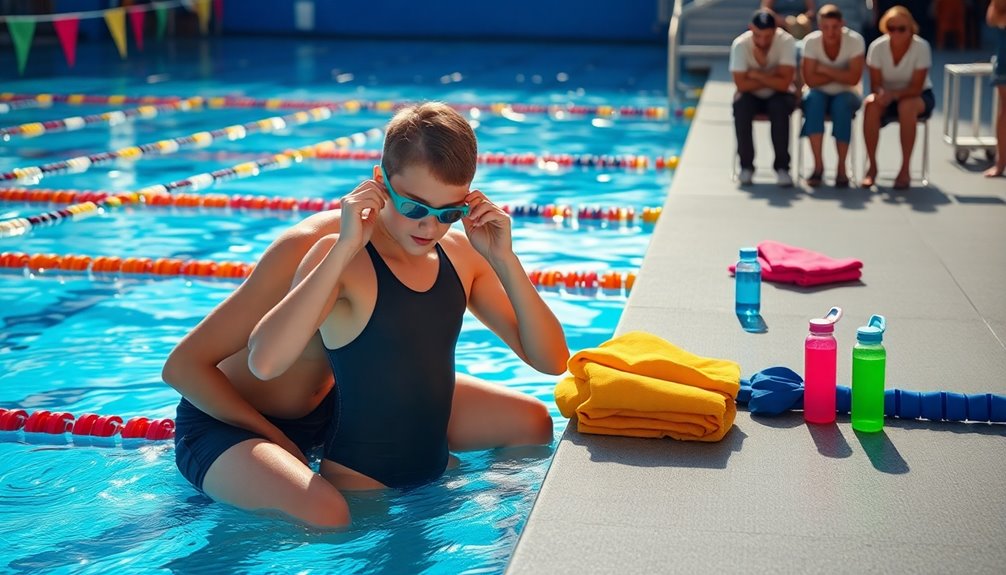
Swim Meet Preparation: Getting Your Young Athlete Competition-Ready
March 6, 2026Getting your young athlete competition-ready for a swim meet involves understanding the environment, emphasizing mental preparation, and establishing routines. Help them set realistic goals based on their training and skills. A solid pre-competition routine, including proper nutrition and hydration, is essential. Encourage positive self-talk to manage anxiety and foster confidence. Support from coaches and parents can make a big difference. There’s more to learn that can enhance your athlete’s experience and performance.
Understanding the Swim Meet Environment
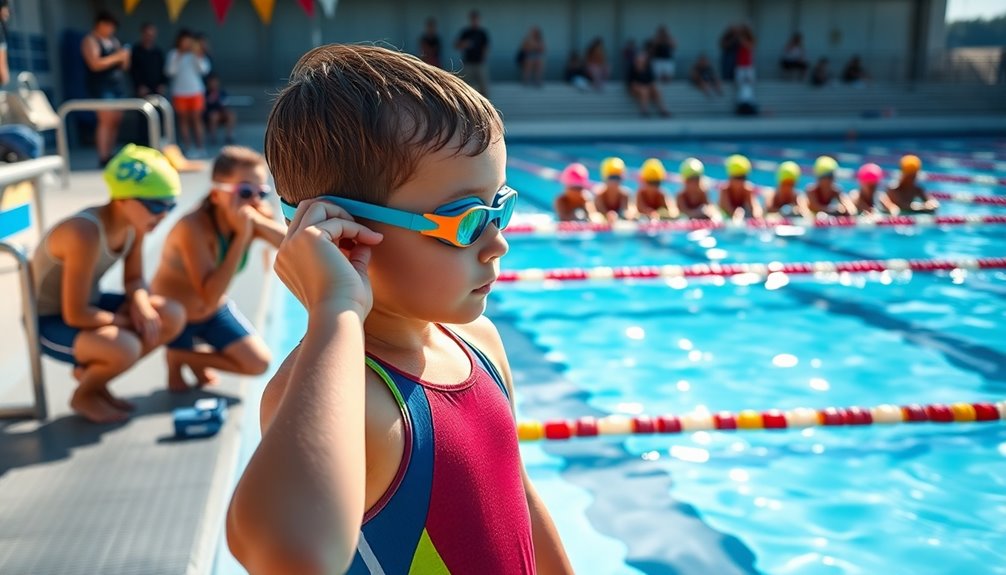
When you step onto the pool deck, the atmosphere buzzes with excitement and anticipation. You can feel the energy of swimmers warming up, coaches shouting encouragement, and families cheering from the stands.
Understanding this swim meet environment is essential for your young athlete’s success. It’s not just about racing; it’s also about embracing competition etiquette. A respectful demeanor sets the tone, whether you’re congratulating opponents or cheering for teammates.
Encourage your athlete to be mindful of their surroundings, from the starting blocks to the lanes. Acknowledging the hard work of others fosters camaraderie and respect within the sport. Additionally, teaching them about sportsmanship and respect will help them navigate the competitive landscape effectively.
Importance of Mental Preparation for Young Athletes
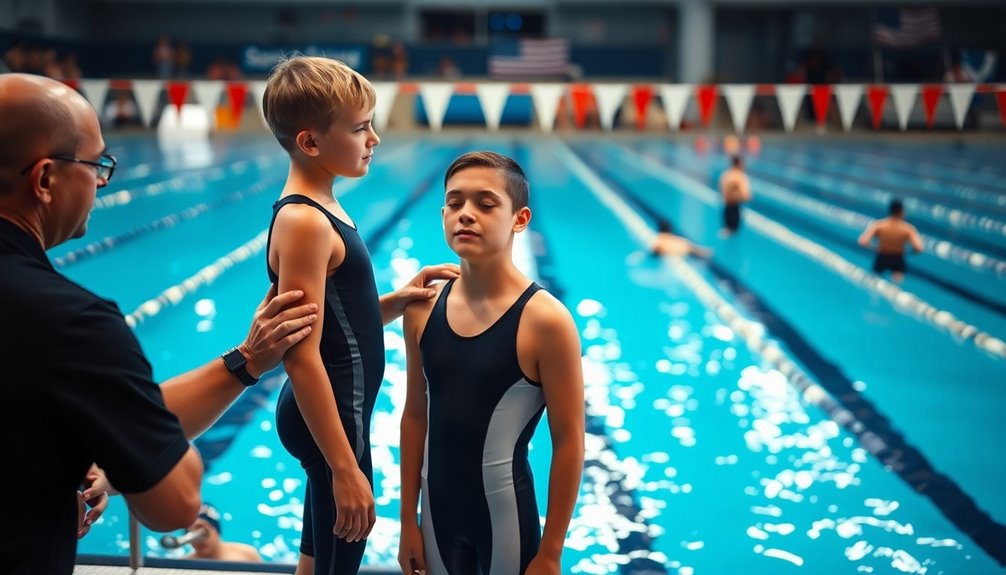
Mental preparation is just as essential as physical training for young athletes.
When you practice visualization techniques, maintain positive self-talk, and manage stress effectively, you set yourself up for success. Research suggests that self-discipline is crucial for achieving greatness in sports, helping athletes stay focused and committed to their goals.
Let’s explore how these strategies can enhance your performance and mindset at swim meets.
Visualization Techniques For Success
Although physical training is essential for young athletes, incorporating visualization techniques can greatly enhance their performance.
By engaging in visualization exercises, you can help your young athlete mentally prepare for swim meets. Encourage them to close their eyes and imagine themselves swimming smoothly and confidently through the water. They should focus on their strokes, breathing, and the feeling of success as they touch the wall.
This mental imagery not only boosts confidence but also reinforces muscle memory, making it easier to execute their skills during competition. Regularly practicing these techniques can create a strong mental game, enabling your athlete to visualize overcoming challenges and excelling in their performance.
Emphasizing visualization techniques can be a game-changer in their athletic journey.
Building Positive Self-Talk
Positive self-talk is a powerful tool that can considerably impact a young athlete’s performance and mindset. By practicing self-affirmation techniques, you can help your athlete build confidence and resilience.
Encourage them to repeat motivational phrases like “I am strong” or “I can do this” before races. These affirmations create a positive mental environment, allowing them to focus on their strengths rather than their fears.
Make it a routine to incorporate these phrases during training sessions, so they become second nature. Remind your athlete that their thoughts shape their experience; positive self-talk can transform anxiety into excitement.
Ultimately, instilling this habit will boost their self-esteem and foster a winning mentality as they approach any competition.
Stress Management Strategies
As young athletes prepare for competitions, managing stress effectively can greatly enhance their performance. Incorporating mindfulness practices into their routine helps athletes stay present and focused.
Encourage them to use breathing strategies, such as deep inhalations and slow exhalations, to calm their nerves before races. Coping techniques, like visualizing success or positive affirmations, can boost confidence and reduce anxiety.
Additionally, relaxation exercises, such as progressive muscle relaxation, help release tension in the body. These strategies not only improve focus but also build mental resilience, equipping young athletes to face challenges head-on.
Setting Realistic Goals for Competition Day
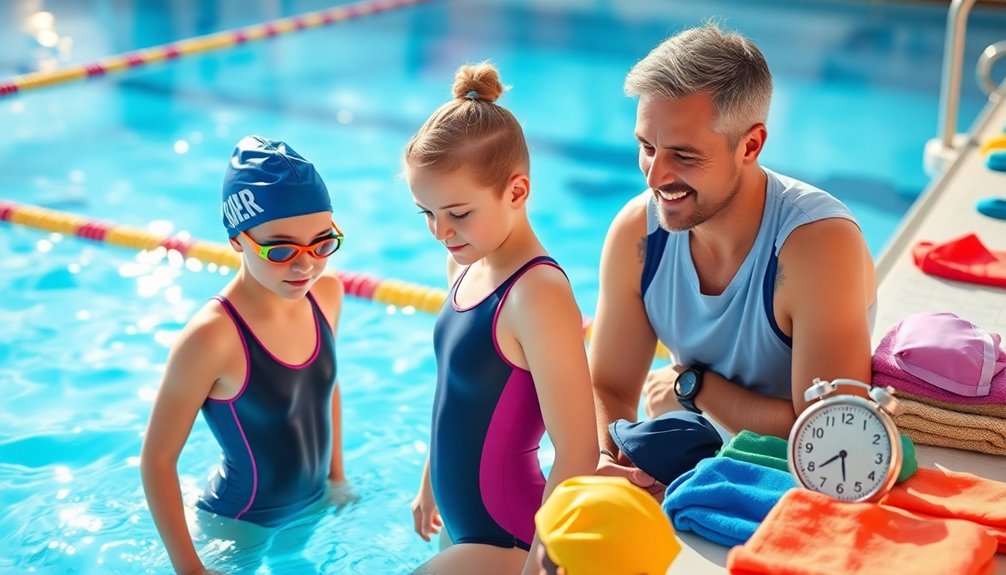
Setting realistic goals for competition day can greatly enhance your performance and overall experience.
When you engage in goal setting, it’s essential to contemplate what’s achievable based on your training and current skill level. Instead of aiming for a perfect race, focus on specific aspects, like improving your start time or maintaining your stroke technique.
Setting these performance expectations gives you clear targets to work towards, reducing anxiety and boosting confidence. Remember, the goal is to challenge yourself without overwhelming your mind or body.
Celebrate small victories, whether it’s a personal best or simply enjoying the race atmosphere. By keeping your goals realistic, you’ll set yourself up for a more fulfilling and rewarding competition day. Additionally, fostering individual growth through personalized coaching can enhance your overall performance.
Creating a Pre-Competition Routine
Creating a pre-competition routine is essential for your success in the pool.
By establishing consistency, using mental visualization techniques, and following a solid pre-race warm-up, you’ll set yourself up for a strong performance. Additionally, like in soccer, the importance of managing stoppage time during your warm-up can help you stay focused and ready for the competition.
Let’s explore how each of these elements can enhance your competition day readiness.
Importance Of Consistency
When you establish a consistent pre-competition routine, you set the stage for success in the pool.
Consistency benefits your young athlete by creating a sense of familiarity and comfort that helps reduce anxiety. By aligning their routine with their training schedules, they’ll feel more prepared and confident heading into competition.
This consistency allows them to focus on performance rather than last-minute adjustments. Encourage your swimmer to follow the same warm-up, nutrition, and mental preparation steps before each meet.
The repetition builds muscle memory and reinforces positive habits. Ultimately, a consistent routine not only boosts their confidence but also enhances their overall performance.
Mental Visualization Techniques
Mental visualization techniques can greatly enhance your pre-competition routine and boost your swimmer’s confidence. By using mental imagery, you create a vivid picture of successful performances in their mind.
Encourage your swimmer to visualize every aspect of their race, from the starting block to the finish line. This process not only prepares them mentally but also reinforces their skills, leading to performance enhancement.
Set aside time before each meet for focused visualization sessions, where they can imagine executing perfect strokes and turns. Remind them to incorporate positive affirmations to strengthen their mindset.
With consistent practice, mental imagery can transform anxiety into excitement, helping your young athlete approach competition with a clear, confident mindset.
Pre-Race Warm-Up Routine
Visualization sets the stage for a successful competition, but a solid pre-race warm-up routine is just as important.
To maximize your young athlete’s performance, start with dynamic stretches to engage their muscles and improve flexibility. Incorporate race day strategies like practicing starts and turns to build confidence.
Focus on movements specific to swimming, such as arm swings and leg kicks. Ascertain they gradually increase their heart rate with light swimming or drills, emphasizing the warm-up’s importance in preventing injuries.
Encourage them to stay mentally focused during this time, as it sets a positive tone for the race.
Ultimately, a well-structured warm-up routine can enhance performance and help your athlete feel ready to tackle the competition.
Nutrition Tips for Best Performance
To achieve peak performance at a swim meet, you can’t underestimate the power of proper nutrition. Start by focusing on meal timing; eat a balanced meal a few hours before the event to guarantee ideal energy levels.
Aim for a nutrient balance that includes carbohydrates, lean proteins, and healthy fats. Don’t forget healthy snack options like bananas or energy bars for a quick boost.
Cater to your young athlete’s food preferences, encouraging them to eat what they enjoy while still being mindful of performance foods. These meals help fuel their bodies effectively.
Finally, remember to emphasize hydration foods, as they can support overall performance and recovery. Incorporating proper hydration strategies ensures your swimmer will be ready to shine!
Hydration Strategies Leading Up to the Meet
As you prepare for your upcoming swim meet, staying properly hydrated is vital for ideal performance.
You’ll want to focus on your fluid intake and the importance of electrolytes to keep your body in peak condition.
Let’s explore some effective hydration strategies to guarantee you’re ready to excel in the pool. Additionally, proper hydration contributes to your overall fitness and can enhance your stamina during intense competitions.
Pre-Meet Hydration Guidelines
While preparing for a swim meet, proper hydration is essential for ideal performance. Start your hydration timing at least 24 hours before the event. During this period, aim to drink water consistently, focusing on fluid types that suit your athlete’s preferences, such as plain water, coconut water, or diluted sports drinks.
Avoid caffeinated beverages, as they can lead to dehydration. On the day of the meet, encourage your young athlete to sip water regularly, aiming for about 16-20 ounces in the two hours leading up to their warm-up.
Importance Of Electrolytes
Electrolytes play an essential role in your young athlete’s hydration strategy as they prepare for a swim meet.
Maintaining electrolyte balance helps support muscle function and prevents cramping during competition. Here are some effective hydration sources to take into account:
- Sports Drinks: These contain essential electrolytes like sodium and potassium, helping replenish what’s lost during practice.
- Coconut Water: A natural alternative, it’s rich in potassium and offers a light, invigorating taste.
- Fruits and Vegetables: Foods like bananas and spinach provide crucial electrolytes along with hydration.
Incorporating these hydration sources into your athlete’s routine guarantees they remain energized and focused, setting them up for success on race day.
Prioritize their electrolyte intake to keep them performing at their best!
Monitoring Fluid Intake
To guarantee your young athlete stays properly hydrated leading up to the swim meet, monitoring fluid intake is essential.
Start by establishing a hydration frequency; encourage them to drink water consistently throughout the day. Consider incorporating various fluid types, such as electrolyte drinks, to help maintain balance and energy levels.
Aim for at least 16-20 ounces of water a couple of hours before the meet, and remind them to sip frequently, rather than gulping large amounts at once.
Post-practice hydration is just as important; offer them fluids right after workouts to replenish lost fluids.
Choosing the Right Swim Gear and Equipment
How do you choose the right swim gear and equipment to enhance your performance? Selecting the right items can make a significant difference in your competition readiness. Here’s a quick list to guide you:
Choosing the right swim gear is crucial for boosting your performance and ensuring you’re competition-ready.
- Swim Caps & Goggles: Guarantee a snug fit to reduce drag and improve visibility.
- Competition Suits & Training Fins: Choose suits that enhance speed and fins that aid in kick drills.
- Swim Bags & Towels: Use bags for easy transport and quick-drying towels for convenience.
Don’t forget essentials like water bottles to stay hydrated and race timers to track your progress. Incorporating injury prevention strategies into your training routine can further enhance your overall performance.
Utilizing kickboards and swim paddles during practice can also enhance your technique.
With the right gear, you’ll feel confident and ready to compete!
Warm-Up Techniques to Enhance Performance
Before you hit the water, warming up properly can make all the difference in your performance.
Incorporating dynamic stretching routines, sport-specific drills, and effective breathing techniques will prepare your body for the race ahead. Engaging in dynamic warm-up techniques enhances muscle elasticity and improves overall performance, setting the stage for a successful competition.
Let’s explore how each of these warm-up methods can boost your readiness and enhance your results.
Dynamic Stretching Routines
Dynamic stretching routines play an essential role in preparing your body for ideal performance during swim meets.
These routines enhance dynamic mobility and improve overall flexibility, ensuring your muscles are ready for action.
Here are three effective dynamic stretching exercises to incorporate into your warm-up:
- Arm Circles: Stand tall and extend your arms out to the sides. Make small circles and gradually increase the size. This drill warms up your shoulders and upper body.
- Leg Swings: Hold onto a wall or railing for balance. Swing one leg forward and backward, focusing on your hip flexibility.
- Torso Twists: Stand with your feet shoulder-width apart. Rotate your torso side to side, warming up your core and improving range of motion.
Incorporating these flexibility drills will optimize your performance!
Sport-Specific Drills
After warming up with dynamic stretching routines, it’s time to focus on sport-specific drills that can enhance your performance in the pool.
Incorporate drill variations that target different strokes, allowing you to refine your technique and build muscle memory. For instance, practice catch-up drills for freestyle or vertical kicking for improved kick strength.
These drills not only enhance your skills but also serve as valuable skill assessments to identify areas for improvement. You’ll want to evaluate your performance regularly, adjusting your focus based on your strengths and weaknesses.
By consistently incorporating these targeted drills into your warm-up, you’ll feel more prepared and confident when it’s time to compete.
Get ready to make a splash!
Breathing Techniques
Mastering breathing techniques is essential for optimizing your performance in the pool. Proper breath control and diaphragmatic breathing can greatly enhance your swimming efficiency and stamina.
Here are three effective warm-up techniques to practice:
- Diaphragmatic Breathing: Before you start swimming, lie on your back and focus on deep belly breathing. Inhale through your nose, allowing your diaphragm to expand, then exhale through your mouth. This helps improve lung capacity.
- Controlled Exhalation: While swimming, practice exhaling slowly and steadily underwater. This will help you maintain rhythm and prevent panic.
- Breath Timing Drills: Incorporate drills that require you to breathe every third or fifth stroke. This builds endurance and guarantees you’re comfortable with breath control during races.
Reviewing Stroke Techniques and Starts
When preparing for a swim meet, it’s essential to take a close look at your stroke techniques and starts. Focus on stroke refinement to enhance your efficiency in the water. Break down each stroke and practice the key elements, like body position, arm movement, and kick timing. Use drills to target specific areas for improvement.
Next, pay attention to your start techniques. A strong start can set the tone for your race. Work on your reaction time, entry angle, and streamline position off the blocks.
Practice explosive starts and find the rhythm that works best for you. By refining both your strokes and starts, you’ll boost your overall performance and feel more prepared for the competition ahead. Additionally, incorporating essential drills for improving flag pulling skills can enhance your overall athletic performance and competitiveness.
Building Confidence Through Positive Visualization
Refining your stroke techniques and starts lays a solid foundation, but building mental confidence is just as important for swim meet success.
Positive visualization through imagery exercises can greatly enhance your performance. By incorporating these techniques, you’ll foster a winning mindset.
Here are three confidence-boosting strategies to try:
- Visualize Success: Picture yourself executing perfect strokes and touching the wall first.
- Create a Pre-Race Routine: Develop a consistent, calming routine that includes imagery exercises to prepare your mind.
- Focus on Strengths: Remind yourself of past achievements and the hard work you’ve put in.
Utilizing these approaches won’t only boost your confidence but also help you approach the competition with a positive mindset. Remember that teamwork and collaboration can significantly amplify your performance and enhance your overall experience.
Managing Pre-Race Jitters and Anxiety
How can you transform pre-race jitters into focused energy? Start by embracing those feelings as a natural part of competition.
Use pre-race affirmations to shift your mindset. Phrases like “I’m prepared” and “I’ll give my best” can ground you and reduce anxiety.
Pre-race affirmations, like “I’m prepared,” help ground you and transform anxiety into confidence.
Visualize your race, focusing on each stroke and your breathing, to channel nervous energy into excitement.
Practice deep breathing techniques just before your event to calm your mind and body.
Remember, it’s all about turning that anxiety into motivation. Staying positive and reminding yourself of your hard work will help you feel more in control.
What Is the Role of Support From Coaches and Parents?
Support from coaches and parents plays an essential role in your swim meet preparation, as they provide guidance, encouragement, and reassurance. Their involvement enhances your confidence and performance.
Here are three key ways they can help:
- Coach Communication: Effective communication from your coach fosters trust and clarity, allowing you to receive valuable feedback mechanisms for improvement.
- Parent Involvement: Engaging parents in your journey creates a supportive environment, where emotional support and encouragement strategies boost your morale.
- Relationship Dynamics: Strong relationships with coaches and parents facilitate performance analysis, helping you understand your strengths and areas for growth.
Together, they create a foundation of support that can empower you to excel in competitions.
Post-Competition Reflection and Learning
After your swim meet, taking time for reflection can greatly enhance your future performance. Begin with a post-competition analysis, evaluating your race times, techniques, and overall strategy.
Think about what went well and where you can improve. Were there specific moments that stood out? Identify the lessons learned from both successes and challenges.
Consider your successes and areas for growth, and pinpoint the key lessons from both triumphs and setbacks.
Discuss your experience with coaches or teammates to gain different perspectives. This collaborative approach can deepen your understanding and help you set realistic goals for the future.
Remember, every competition is a step in your journey, offering valuable insights. Embrace this opportunity to grow and adapt, ensuring you’re better prepared for the next meet.
Reflecting thoughtfully now lays the foundation for your continued development as an athlete.
Celebrating Achievements Regardless of Outcomes
Reflecting on your performance is important, but it’s equally essential to celebrate your achievements, no matter the outcome.
Celebrating progress helps you recognize growth, while embracing resilience builds character. Here are three ways to celebrate:
- Acknowledge Small Wins: Focus on personal bests, improved techniques, or even the effort put into training. Every step forward counts!
- Share with Family and Friends: Let your loved ones know about your journey, and enjoy their support. Their encouragement can make your achievements feel even more significant.
- Create a Reward System: Treat yourself after meets, whether it’s a favorite meal or a fun outing. This reinforces positive experiences and motivates you for future competitions.
Embrace every achievement, as they all contribute to your development as an athlete!
Conclusion
As your young athlete steps onto the starting block, remember they’re not just diving into water; they’re plunging into a journey of self-discovery. Each stroke they take is a brushstroke on the canvas of their growth, revealing resilience, courage, and joy. Whether they touch the wall first or last, celebrate their artistry in the pool. Like a painter, they’ll learn from every splash, transforming each experience into a masterpiece of achievement, ready to tackle the next race ahead.