
How to Become an NFL Referee Step-by-Step
April 3, 2026To become an NFL referee, start by mastering the NFL rulebook and gaining experience officiating at lower levels, like youth or high school games. You’ll need to be in great physical shape and pass certification exams. Engage in the NFL Officiating Development Program for exposure and mentorship. Strong communication and quick decision-making skills are essential. Keep refining your abilities and building professional relationships. Want to learn more about advancing in this career?
Understanding the Role of an NFL Referee
Being an NFL referee is both challenging and rewarding. You’re not just enforcing rules; you’re actively managing the game flow and ensuring player safety.
Each officiating crew has seven distinct positions, including the referee, umpire, and various judges, each with specific responsibilities. You’ll make precise calls on about 153 plays per game, demanding an extensive understanding of the NFL rulebook.
Staying updated on rule changes and officiating techniques is vital, as the role requires continuous learning and adaptation. Plus, you’ll uphold the integrity of the sport under intense scrutiny, especially during high-stakes games. Understanding field dimensions and equipment requirements is crucial for effective officiating and player safety.
Embracing this responsibility means you’re committed to the game and its players, making your role essential to the NFL experience.
Why Officiating Is Essential in Football
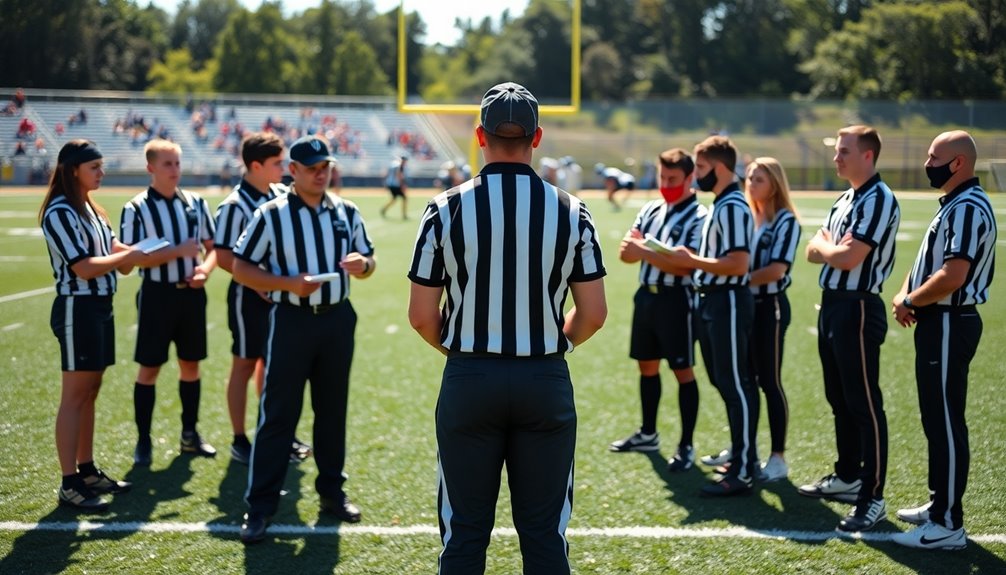
Officiating plays an essential role in football, as it guarantees the game is fair and rules are upheld. Every game, including high school games, relies on officials to enforce the NFL rulebook and maintain integrity.
As the third team on the field, referees manage game flow and ascertain player safety, making split-second decisions that can change the outcome. Their commitment to clarity, consistency, and credibility fosters trust among players, coaches, and fans alike.
This trust enhances the overall experience, making each game more enjoyable. Continuous development programs, like the NFL Mackie Development Program, guarantee a pipeline of qualified officials, preserving high standards in officiating and allowing the sport to thrive at all levels. Additionally, the influx of diverse athletes in sports has highlighted the importance of representation in officiating roles, further enriching the game.
Basic Requirements to Become an NFL Referee
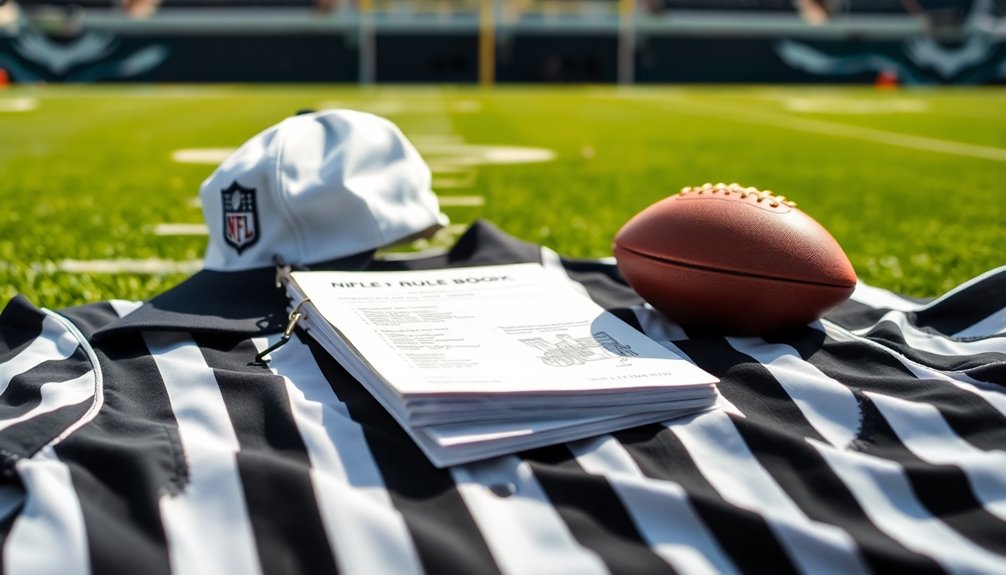
To become an NFL referee, you need to meet several basic requirements that guarantee you’re prepared for the demands of the job.
First, you must be at least 21 years old and maintain exceptional physical condition to keep pace with the game. A profound knowledge of football is essential, particularly the NFL rulebook, which requires thorough study for quick recall during games.
You’ll need experience officiating at lower levels, like high school or college, to build a solid foundation. Certification through accredited football organizations is a prerequisite, ensuring you meet the necessary standards.
Finally, continuous education through clinics and workshops is crucial for staying updated on rule changes and honing your officiating skills. Additionally, understanding communication among defenders can enhance your officiating decisions during games.
The Importance of Physical Fitness for Officials
While many might focus solely on rules and regulations, physical fitness is essential for NFL referees to effectively manage the game.
You need to maintain exceptional cardiovascular endurance and stamina since officials typically run an average of 6-7 miles during a game. This level of fitness not only helps you keep pace with fast-moving players but also enhances your reaction times, allowing for quick decision-making under pressure.
Regular fitness training, including strength training and conditioning programs, boosts your overall performance and reduces the risk of injury. Incorporating conditioning drills into your routine is crucial for maintaining peak performance throughout the season.
Staying in top shape means you can perform at your best throughout the demanding NFL season, ensuring that you’re always ready to make those critical calls when it counts.
Mastering the NFL Rulebook: Your Key to Success
Physical fitness lays the groundwork for a successful officiating career, but mastering the NFL rulebook is where you truly sharpen your skills.
With around 153 calls made per game, quick recall of rules is essential. Use note cards to memorize complex rules and enhance your decision-making on the field.
Continuous study of the rulebook, combined with game analysis, will deepen your understanding of calls and their implications.
Continuous rulebook study and game analysis enhance your understanding of calls, enriching your officiating skills and judgment.
Attend officiating clinics to reinforce your rule knowledge and stay updated on any changes to regulations.
This ongoing education not only boosts your confidence but also fosters empathy for players, allowing you to make fair judgments and maintain the game’s integrity. Additionally, data analytics can provide insights into the nuances of officiating, helping you understand the implications of your calls better.
Embrace this journey, and you’ll excel as an NFL official.
Starting Your Officiating Journey: First Steps
To kick off your officiating journey, start by attending local clinics to grasp the basics of the game and its rules. Focus on mastering one position to build your confidence and skills. Once you’re ready, aim for certification by passing exams and gaining experience through officiating games at various levels. Additionally, consider exploring youth flag football opportunities to enhance your understanding of teamwork and sportsmanship on the field.
Initial Requirements
Getting started as an NFL referee requires you to meet certain initial requirements that set the foundation for your officiating journey.
First, you need to be at least 21 years old and in excellent physical condition to keep up with the game’s pace.
While you can gain initial experience officiating lower-level games, like youth or high school, you’ll want to focus on mastering a specific position, such as line judge or back judge.
To officiate regular-season games, you’ll also need to obtain certification by passing a rules exam and completing any state-required training.
Aim to officiate 15-25 games per season to gather valuable feedback and evaluations from assigners and experienced officials, helping you refine your skills.
Gaining Early Experience
Starting your officiating journey can be both exciting and rewarding. Gaining early experience is essential, and you can kick things off at the youth or high school level through local officiating clinics.
Here are some steps to help you along the way:
- Master one specific position, like line judge or back judge.
- Officiate 15-25 games per season, from freshman to varsity.
- Pass a rules exam and complete state-required training modules for certification.
- Seek feedback after each game to improve your skills.
- Connect with collegiate officiating coordinators in lower divisions to explore advancement opportunities.
Seeking Certification Opportunities
As you commence your officiating journey, seeking certification opportunities is vital for establishing your credibility and advancing your career.
Start by attending local officiating clinics, usually open to individuals aged 16 and older, to learn the basics of football officiating. To officiate regular-season games, obtain certification through accredited football organizations by passing a rules exam and completing state-required training modules.
Focus on one officiating position, like line judge or back judge, to build expertise and confidence. Gain hands-on experience by officiating youth or high school games, aiming for 15-25 games per season to hone your skills.
Remember to document your officiating experience meticulously, as this will be essential for future applications, including those for the NFL.
Gaining Experience Through Local Games
While officiating at youth or high school games might seem like a small step, it’s an essential foundation for your journey to becoming an NFL referee. Gaining experience in these settings helps you develop your skills in a less pressured environment.
Officiating youth or high school games is a vital stepping stone on your path to becoming an NFL referee.
Here’s how to maximize this opportunity:
- Officiate 15-25 games per season across various levels, from freshman to varsity, to build a diverse officiating portfolio.
- Actively seek feedback from assigners and veteran officials to refine your decision-making.
- Connect with collegiate officiating coordinators in lower divisions (NAIA or NCAA Division III) for greater visibility.
- Document your officiating schedule and evaluations meticulously.
- Continuously assess your performance to improve and prepare for higher-level officiating roles.
- Understanding flag pulling techniques can also enhance your officiating skills as you recognize the nuances of gameplay.
This groundwork is crucial for your future success!
Attending Officiating Clinics: What to Expect
Attending officiating clinics offers a unique opportunity to sharpen your skills and gain essential insights into the world of football officiating. Organized by football associations and NFL programs, these clinics are typically open to individuals aged 16 and older.
You’ll immerse yourself in training focused on rule interpretation, game mechanics, and officiating techniques important for effective performance on the field. Expect hands-on practice, where you can apply what you’ve learned in simulated game situations, enhancing your decision-making skills.
Plus, you’ll have networking opportunities with experienced officials and fellow aspiring referees, fostering connections that can aid your career.
Attending clinics is a significant step toward achieving certification, necessary for officiating regular-season games and advancing in the officiating ranks. This training can help you develop essential skills in communication and teamwork, which are critical for effective officiating during high-pressure moments in games.
How to Get Certified as a Football Official?
Getting certified as a football official involves understanding specific requirements in your area. You’ll need to attend local officiating clinics, pass a rules exam, and gain experience by officiating games. This process guarantees you’re well-prepared for the challenges on the field. Familiarity with flag removal rules can enhance your understanding of gameplay and improve your officiating skills.
Certification Requirements Overview
To become a certified football official, you need to pass a rules exam and complete state-required training modules through accredited football organizations. Certification is usually available for individuals aged 16 and older, allowing you to officiate local games and gain valuable experience.
Here are some key steps to focus on:
- Master the NFL rulebook thoroughly.
- Familiarize yourself with hand signals for effective communication.
- Participate in local officiating clinics for skill enhancement.
- Maintain physical fitness to keep pace with the game.
- Network with experienced football officials for mentorship.
Local Officiating Clinics
By attending, you’ll gain a solid foundation in the rules of the game, which is critical for certification. This process includes passing a rules exam and completing state-required training modules.
Once certified, you’ll be eligible to officiate regular-season games, often starting at lower levels. Regular evaluations and constructive feedback during these clinics will help you refine your skills and prepare for higher-level opportunities, setting you up for success in your officiating career.
Testing and Evaluation Process
While aspiring to become a certified football official, you’ll need to navigate the testing and evaluation process meticulously. Here’s what you should focus on:
- Pass a rules exam to demonstrate your knowledge of the NFL rulebook.
- Complete state-required training modules that cover theoretical and practical aspects.
- Officiate a specific number of games at lower levels, like youth or high school, to gain hands-on experience.
- Attend workshops and clinics for continuous education on rule changes.
- Receive performance evaluations from assigners and experienced officials, which are essential for advancing in officiating ranks.
Advancing Through the Ranks: From Youth to NFL
Starting your journey to become an NFL referee often begins at the youth or high school level, where you can build essential skills and gain valuable experience.
Begin by officiating 15-25 games per season, taking advantage of clinics available for individuals aged 16 and older. Gather feedback from assigners and veteran officials to improve your performance.
Officiate 15-25 games each season and leverage clinics to gather feedback for continuous improvement.
Once you’ve earned solid evaluations, aim for collegiate officiating by reaching out to coordinators in lower divisions, like NAIA or NCAA Division III.
Attend NFL Development Camps through the Officiating Development Program, which focuses on identifying emerging officiating talent. Position-specific training is vital to refine your skills in alignment with the demands of higher-level officiating.
Consistent positive evaluations at these camps can lead to promotion to regular officiating roles in the NFL, advancing your career considerably.
The Role of Mentorship in Officiating Development
Mentorship is essential for your growth as an NFL referee.
By connecting with experienced guides, you’ll gain valuable insights and build professional relationships that can shape your officiating career.
These mentors not only enhance your skills but also help you navigate the challenges of the game.
Importance of Experienced Guides
As you commence your journey to become an NFL referee, understanding the value of experienced guides can greatly enhance your development. Engaging with experienced mentors is essential for aspiring referees, especially through programs like the NFL Mackie Development Program.
Here’s how these mentors can support your officiating development:
- Provide insights on rules and mechanics.
- Share real-game experiences for practical learning.
- Offer continuous feedback to refine your decision-making.
- Help you develop important game management skills.
- Foster a supportive network to navigate officiating complexities.
Building Professional Relationships
Steering the officiating landscape requires more than just understanding the rules; it’s about building professional relationships that foster growth and development.
Mentoring non-NFL officials is essential, as experienced referees offer guidance and feedback to navigate the complexities of the NFL rulebook and game situations. The NFL Mackie Development Program (MDP) pairs college officials with seasoned professionals, emphasizing continuous learning.
This mentorship helps you develop critical skills like situational awareness and decision-making under pressure. By building strong professional relationships with mentors, you enhance your credibility in all aspects, increasing your visibility and advancement opportunities within officiating ranks.
Feedback and support from these mentors are crucial for your personal and professional growth, providing insights from their years of experience.
Preparing for the NFL Officiating Development Program
To excel in the NFL Officiating Development Program, you need to lay a solid foundation of experience and knowledge. Start by ensuring you meet the minimum requirements and focus on key areas:
- Gain at least five years of officiating experience at the college or minor league level.
- Master the NFL rulebook to enhance your understanding of the game.
- Attend officiating clinics and workshops to stay updated on rules and improve your skills.
- Maintain excellent physical fitness to keep pace with the demands of officiating.
- Document your officiating experience, including a detailed schedule and positions held over the past three seasons.
What to Expect During NFL Development Camps
Expect intense training and valuable insights during NFL Development Camps, where aspiring officials sharpen their skills and prepare for the rigors of higher-level officiating.
These exclusive camps offer specialized training that focuses on mastering the NFL rulebook, positional mechanics, and effective communication under pressure.
As you engage in rigorous practical sessions, you’ll refine your officiating skills alongside other talented individuals identified for their potential.
Additionally, these camps provide invaluable networking opportunities with veteran officials and evaluators, fostering mentorship and professional growth.
Successfully completing the camp could lead to officiating preseason games in the NFL, representing a vital step toward becoming a regular-season official.
Embrace this chance to elevate your career in officiating!
Essential Skills Every NFL Referee Should Develop
Becoming an NFL referee requires honing a unique set of essential skills that set you apart on the field. To excel, you need to focus on developing the following:
- Mastery of the NFL rulebook: You must understand intricate regulations for quick decision-making during games.
- Strong communication skills: Effective interactions with players help prevent escalations and maintain control.
- Decision-making under pressure: You’ll need to keep the game flowing and uphold its integrity during pivotal moments.
- Physical fitness: Staying in shape is vital for keeping pace with the game, so prioritize cardio and stamina training.
- Familiarity with positional mechanics: Practice defined angles and pre-snap alignment specific to your referee role.
These skills will be invaluable as you navigate your officiating career.
Navigating the Selection Process for NFL Officiating?
While the journey to becoming an NFL referee can be challenging, steering through the selection process is essential for aspiring officials.
To succeed in NFL officiating, you’ll need a minimum of ten years of overall experience, including five years at the college or minor league level. Keep detailed records of your officiating experience, noting your schedule, positions, and dates to support your NFL application.
Joining the NFL Officiating Development Program (ODP) can provide valuable exposure, but remember, participation is by invitation only.
To enhance your chances, continuously develop your skills by attending rules clinics and seeking mentorship from seasoned officials. This dedication and experience will be vital as you navigate the competitive selection process.
Conclusion
Becoming an NFL referee isn’t just about knowing the rules; it’s a journey that demands dedication, fitness, and skill. As you navigate through the officiating development program and hone your abilities, you’ll discover that the true essence of officiating lies in maintaining fairness and integrity on the field. While some might think it’s an easy gig, the reality is that every call you make shapes the game. Embrace the challenge, and you might just find your place in the NFL.