
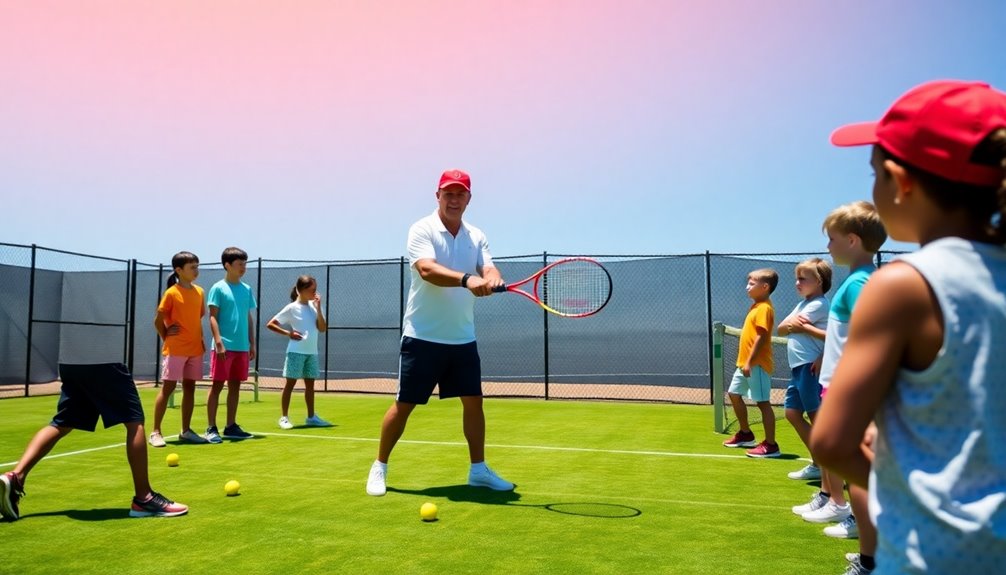
Forehand Lesson Plan for Coaches
April 19, 2026To create an effective forehand lesson plan, focus on stroke mechanics, footwork, and tactical awareness. Start with proper grip and stance drills, then incorporate agility exercises for better movement. Incorporate assessments to tailor instruction for different skill levels and use game-like scenarios to simulate pressure. Highlight common mistakes like neglecting technique, and encourage resilience through challenging drills. There’s so much more to discover and enhance your coaching strategy further.
Understanding the Forehand Stroke Mechanics
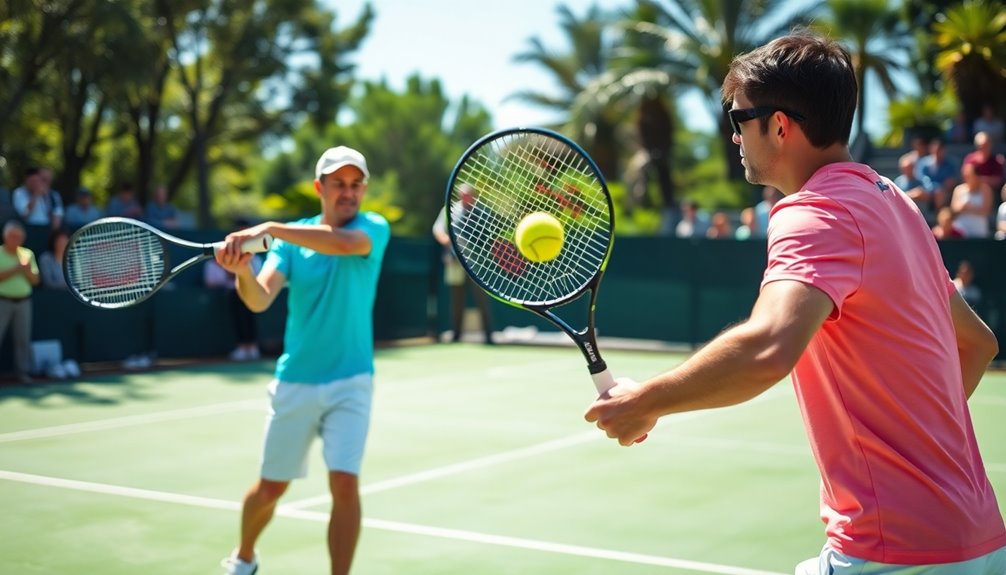
To master the forehand stroke, you need to grasp its mechanics. Start by positioning your feet shoulder-width apart, ensuring a stable base.
Rotate your hips and shoulders as you prepare to strike the ball, allowing for natural stroke variations. Focus on your grip; a proper hold will enhance your control and power.
Rotating your hips and shoulders is key for a powerful forehand; a proper grip enhances both control and power.
As you swing, keep your eye on the ball, making contact in front of your body. Follow through smoothly for accuracy.
Don’t forget to incorporate player feedback; it’s vital for refining technique. Encourage players to express what feels right or wrong, as this insight helps you tailor their learning experience. Understanding these mechanics sets the foundation for a consistent and effective forehand stroke. Additionally, maintaining sportsmanship and respect during practice can foster a positive learning environment.
Key Drills to Enhance Forehand Technique
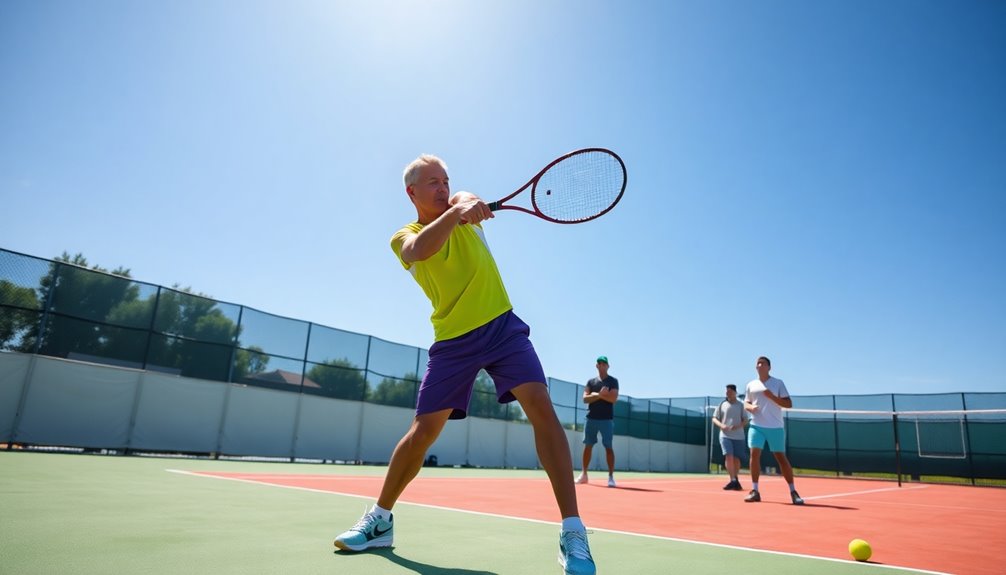
To master the forehand, you need to focus on grip and stance fundamentals first. Once you’ve got that down, integrating footwork and timing drills will elevate your game. Let’s explore some effective drills that will sharpen your technique and boost your confidence on the court. Understanding field dimensions can also help you better position yourself during gameplay.
Grip and Stance Fundamentals
While mastering the forehand in tennis, understanding grip and stance fundamentals is essential for building a solid foundation. Start by experimenting with different grip variations, like the eastern and semi-western grips, to find what feels most comfortable and effective for you. Each grip can influence your shot’s spin and power, so don’t hesitate to practice with them.
Next, focus on stance adjustments. Your stance should be dynamic, adjusting based on the ball’s incoming trajectory. A balanced, athletic posture allows for better weight transfer and shot execution.
Use drills that emphasize these fundamentals, such as shadow swings, to reinforce proper grip and stance. Mastering these basics will greatly enhance your forehand technique and overall performance on the court.
Footwork and Timing Drills
Effective footwork and timing are essential for a strong forehand, and incorporating targeted drills can make all the difference.
Start with agility training that enhances your lateral movement and explosive starts. Focus on timing synchronization by practicing rhythm drills, which help you develop a consistent flow.
Pay attention to your foot placement and stride length; both are vital for maintaining balance during directional changes. Incorporate drills that improve your recovery speed, allowing you to return to a ready position quickly.
As you work on these elements, you’ll find that your overall technique improves, making your forehand more powerful and effective.
Consistent practice of these drills will elevate your game to the next level.
Incorporating Footwork for Optimal Performance
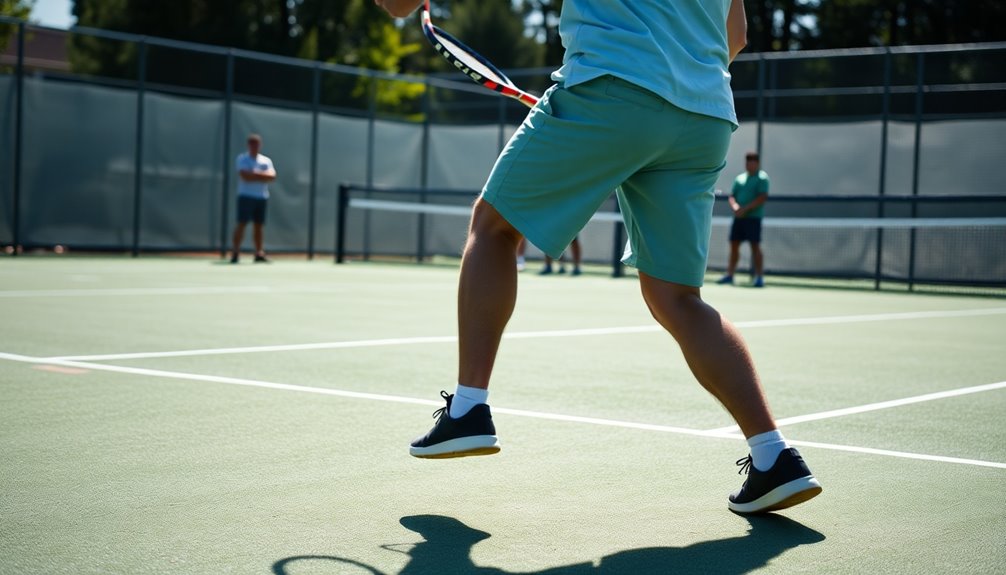
Mastering footwork is essential for executing a powerful forehand. It involves precise foot placement and smooth lateral movement, ensuring you’re always in the right position to strike the ball effectively.
Mastering footwork is crucial for a powerful forehand, enabling precise placement and smooth movement to strike the ball effectively.
Incorporate these strategies into your training:
- Balance Training: Focus on stability to enhance your body alignment.
- Agility Exercises: Improve quickness and fluidity in your movements.
- Recovery Steps: Develop efficient return movements after each shot.
- Coordination Drills: Boost spatial awareness and rhythm development.
Additionally, integrating high-intensity sprints into your practice can significantly enhance your overall footwork and agility on the court.
Strategies for Teaching Different Skill Levels
Understanding that players come with varying skill levels is essential when teaching the forehand. Start with a skill assessment to identify each player’s strengths and weaknesses. Use adaptation techniques to tailor your approach, keeping age considerations in mind.
For beginners, focus on basic mechanics using visual aids, while intermediate players can benefit from game situational training to apply skills in context. Incorporate motivation strategies to keep players engaged, and provide personalized feedback to help them improve.
Encourage peer coaching, allowing players to learn from each other. Finally, guarantee mental readiness before introducing progressive challenges, helping players build confidence while mastering their forehand. This balanced approach will foster growth and enjoyment for all skill levels. Additionally, emphasizing fun practices can enhance players’ enjoyment and motivation, leading to better overall development.
Common Mistakes to Avoid When Teaching Forehands
When teaching forehands, it’s easy to get caught up in the idea that power is everything.
However, neglecting technique and grip fundamentals can lead to long-term issues for your players.
Let’s explore some common mistakes to avoid so your coaching can be more effective. Incorporating cognitive challenges during practice can also enhance players’ decision-making and overall performance on the court.
Overemphasizing Power Over Technique
While it’s tempting to focus solely on power when teaching forehands, neglecting technique can lead to long-term issues. Power misconceptions often misguide players, causing them to believe that sheer force is the key to success.
Instead, technique prioritization is essential for developing a consistent and effective forehand.
Consider these points:
- Encourage proper footwork to set up the shot.
- Emphasize the importance of a full swing for accuracy.
- Teach follow-through mechanics for better control.
- Foster awareness of body positioning to optimize power and technique.
Ignoring Grip Fundamentals
Many coaches overlook the importance of grip fundamentals, which can lead to significant challenges in a player’s forehand. If you ignore grip techniques, players might struggle with consistency and control.
It’s vital to teach them about alternate grips, like the Eastern or Semi-Western, as each offers unique advantages. Encourage your players to experiment with different grips to find what feels best for them.
This hands-on approach not only builds their skill set but also enhances their mental focus during play. When players understand how grip affects their shots, they’ll be more confident and effective on the court.
Always emphasize that mastering grip fundamentals is just as important as developing power and technique for a successful forehand.
Progressing From Drills to Match Play Scenarios
Shifting from drills to match play scenarios is essential for developing a well-rounded forehand. By integrating game scenarios, you cultivate tactical awareness and improve shot selection under pressure situations.
Transitioning from drills to match play is crucial for mastering a versatile forehand, enhancing tactical awareness and shot selection under pressure.
This shift helps players develop a competitive mindset and adaptability skills necessary for real matches.
- Incorporate situational drills: Simulate match conditions during practice.
- Emphasize pressure situations: Create drills that mimic high-stakes moments.
- Encourage decision-making: Focus on shot selection in various contexts.
- Foster a competitive environment: Use friendly matches to build confidence.
As you guide players through this progression, they’ll learn to apply their skills effectively, making them more versatile and resilient on the court. Incorporating dynamic stretches can also enhance their physical readiness, ensuring they perform at their best during matches.
Conclusion
As you guide your players through the art of the forehand, remember that each swing is a brushstroke on the canvas of their game. By mastering these techniques and drills, you’re not just teaching a shot; you’re igniting a passion that can propel them to new heights. Embrace the journey, celebrate the small victories, and watch as their confidence blooms like spring flowers, transforming them into formidable competitors on the court. Keep swinging for success!