

Football Workouts to Boost Explosiveness and Endurance
April 7, 2026To boost your explosiveness and endurance on the football field, focus on combining strength exercises like power cleans and box squats with endurance training such as interval sprints and long-distance runs. Incorporate agility drills for quick directional changes and plyometrics like box jumps to enhance explosive power. Don’t forget the importance of recovery and proper nutrition to maximize your gains. Keep pushing your limits, and you’ll discover more tips to elevate your game even further.
Why Is Explosiveness Crucial for Football Performance?
When you step onto the field, explosiveness becomes vital for your performance, as plays unfold in just seconds. To maximize your impact, you need explosive strength, which directly influences your ability to react and accelerate swiftly.
Fast-twitch muscle fibers play an important role here; these fibers are designed for short, high-intensity movements and are essential for executing impactful tackles or explosive sprints.
Incorporating dynamic movements like Olympic lifts and plyometrics into your conditioning program greatly enhances your explosive strength. Research shows that athletes who engage in explosive training methods, such as resisted sprints, experience marked improvements in their in-game performance metrics. Additionally, plyometric exercises improve neuromuscular control and help develop quick directional changes, further boosting your effectiveness on the field.
Key Components of Effective Football Workouts
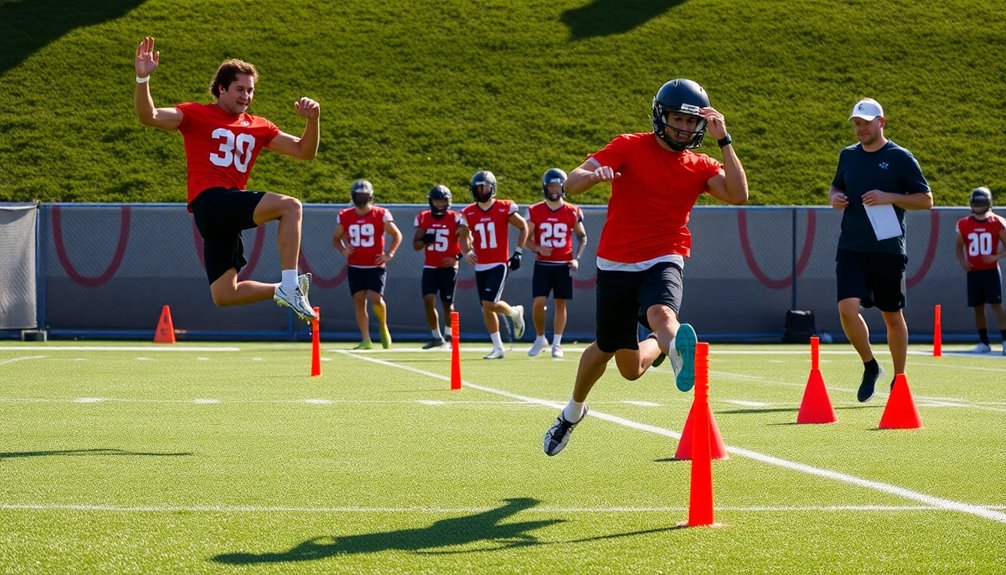
To maximize your performance on the football field, understanding the key components of effective workouts is essential. Focus on integrating explosive strength training like power cleans and dynamic box squats, which enhance your power transfer and quickness.
Don’t overlook agility drills, such as ladder and cone drills, critical for improving your directional changes and reaction time on both offense and defense. Combine this with endurance conditioning through interval and tempo runs to sustain energy levels and aid quick recovery during high-intensity plays.
Additionally, prioritize strength training with multi-joint movements like squats and deadlifts to build foundational muscle mass, important for high-impact situations and injury prevention. Consistent practice of agility drills will further enhance your overall athletic capabilities. Monitoring your performance metrics will help you track improvements in your overall athletic capabilities.
Essential Strength Exercises for Explosive Power
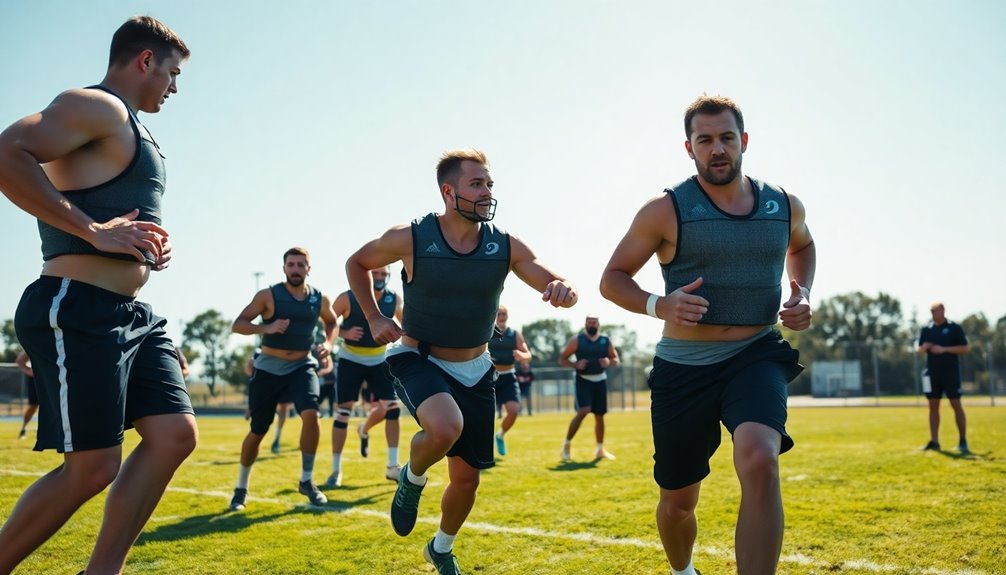
Developing explosive power is crucial for football players aiming to dominate on the field. One of the best exercises for this is the Power clean, which enhances strength in your legs, back, and traps.
Aim for 5–8 sets of 1–3 reps to optimize power transfer, especially during tackles. Incorporating box squats into your routine also boosts explosiveness; perform them at 60% of your max for 12 sets of 2 reps to target your hamstrings, glutes, and quads effectively.
Don’t forget capped kettlebell swings, focusing on explosive hip thrusts to engage your glutes and hamstrings. Combining these explosive movements with proper technique guarantees maximum power gains, essential for your performance on the field. Additionally, understanding energy systems can help tailor your training for specific game demands.
Endurance Training Techniques to Enhance Stamina
While you might focus on strength training, don’t underestimate the importance of endurance training for enhancing your stamina on the football field.
A solid conditioning plan should mix long-distance runs, tempo runs, and interval sprints. These techniques improve cardiovascular endurance, allowing you to maintain peak performance during games.
Gradually increase your running distances from half a mile to three miles in the offseason to build a strong endurance base without overexerting yourself.
Consistent football conditioning throughout the year, including sprint protocols, helps you recover quickly between intense bursts of activity and reduces injury risk.
Finally, monitor performance metrics like timed mile runs and recovery rates to confirm you’re effectively and safely improving your endurance levels. Incorporating Pain Shuttles Drill into your routine can further enhance your anaerobic capacity and overall stamina.
Incorporating Agility Drills for Quick Direction Changes
Incorporating agility drills into your training regimen can transform your ability to make quick direction changes on the football field. Drills like ladder and cone exercises enhance your coordination and reaction time, essential for executing both offensive and defensive plays.
Shuttle runs simulate game situations, helping you practice rapid changes in direction while maintaining speed and control.
In addition to improving performance, regular agility training aids in injury prevention. It strengthens stabilizing muscles, boosting your balance and flexibility during high-intensity movements.
Lateral shuffles and quick cuts not only elevate your agility score but also prepare you for the demands of gameplay. By integrating these drills, you’ll navigate the field more effectively and reduce your risk of injuries. Furthermore, better body mechanics during training can lead to improved overall performance and longevity in the sport.
Speed Workouts to Outrun Opponents
To outrun opponents on the football field, speed workouts are essential for enhancing your top-end speed and acceleration. Focus on short-distance sprints, ranging from 10 to 40 yards, to develop that critical burst.
Incorporate resistance sprints using sleds or parachutes to boost your explosive power and improve overall performance. Hill sprints are also effective, building leg strength while enhancing cardiovascular endurance.
Additionally, consistent drills like the 5-10-5 agility test sharpen your quickness and change of direction, essential for both offensive and defensive maneuvers. Track your performance metrics, such as time improvements in these drills, to set achievable speed goals and monitor your progress. This approach will keep you ahead of the competition on the field. Moreover, incorporating high-intensity interval training will further enhance your overall stamina and speed.
The Role of Plyometrics in Football Conditioning
Plyometrics play a crucial role in your football conditioning by enhancing your power and speed. Exercises like box jumps can help you recruit those fast-twitch muscle fibers essential for explosive movements on the field. Additionally, kickoff rules emphasize the importance of quick, explosive starts, making plyometric training invaluable for athletes aiming to improve their game.
Key Benefits of Plyometrics
Explosive power is a game-changer in football, and plyometrics plays an essential role in developing this ability. By incorporating plyometric exercises like box jumps and depth jumps, you can greatly boost your explosive strength, vital for quick bursts of speed on the field.
Research shows that these workouts can increase muscle power output by up to 30%, enhancing your performance during high-intensity game situations. Additionally, regular plyometric training improves neuromuscular coordination, allowing you to execute rapid direction changes effectively, whether you’re on offense or defense.
Combining plyometrics with strength training maximizes your overall athletic performance, giving you the explosive power and endurance you need to excel in football conditioning.
Effective Plyometric Exercises
While many athletes focus on traditional strength training, incorporating effective plyometric exercises can elevate your football conditioning greatly.
Exercises like box jumps and depth jumps target fast-twitch muscle fibers, boosting your explosive power essential for quick acceleration on the field. By improving your rate of force development, these plyometric exercises enable you to generate maximum force almost instantly, crucial for those high-pressure plays.
Regular plyometric training can notably enhance your vertical jump height, aiding in catching and blocking.
Plus, research shows it can improve your sprint speed and agility, important for all players. To maximize benefits and prevent injury, pair plyometrics with proper strength training and prioritize technique over sheer volume in your workouts.
Structuring a Balanced Training Program
To maximize your football performance, it’s essential to structure a balanced training program that effectively combines strength, explosiveness, and conditioning.
Start by incorporating strength training through multi-joint movements like squats and cleans, which build foundational strength.
Next, add explosive movements, utilizing the Conjugate Method to alternate between maximal effort for strength and dynamic effort for explosiveness.
Schedule agility and speed drills to enhance your quickness and direction changes on the field.
Don’t forget endurance training; mix long-distance runs with interval sprints year-round to improve cardiovascular stamina.
Regularly monitor your readiness and prioritize recovery to prevent overtraining. Additionally, prioritizing warm-ups enhances player focus and sets the stage for effective training.
This balanced approach guarantees you adapt effectively and elevate your performance throughout the season.
Importance of Recovery and Nutrition After Workouts
After a tough workout, you need to focus on recovery and nutrition to keep your performance up.
Implementing muscle recovery strategies, timing your nutrient intake, and staying hydrated are key steps in this process. Proper stretching post-match is essential to prevent muscle soreness and injuries, ensuring that your body is ready for the next training session.
Let’s explore how these elements can enhance your training and overall health.
Muscle Recovery Strategies
Muscle recovery is essential for enhancing performance and preventing injuries, especially after intense football workouts. Implementing effective muscle recovery strategies can make a significant difference.
Start with a proper cool-down routine, including static stretching, to reduce soreness and enhance recovery.
Post-training, focus on nutrition; aim for 20-25 grams of protein and 40-60 grams of carbohydrates to support muscle repair. Hydration is vital, so replace lost fluids and electrolytes to maintain performance levels.
Incorporate practices like foam rolling and active recovery sessions to alleviate muscle tightness and improve flexibility.
A balanced diet rich in whole foods, including fruits, vegetables, and lean proteins, will sustain your energy levels and enhance your overall recovery process.
2. Nutrient Timing Principles
Proper nutrient timing is critical for maximizing recovery and enhancing performance after your football workouts. Aim to consume carbohydrates and proteins within 30 minutes post-workout to kickstart muscle protein synthesis and replenish glycogen stores.
A 3:1 or 4:1 ratio of carbohydrates to protein can greatly boost recovery, helping you build strength and endurance for your next training session. Including antioxidants in your post-workout meal can also reduce oxidative stress and muscle soreness, promoting quicker recovery.
Focus on a well-balanced meal with lean proteins, complex carbohydrates, and healthy fats to sustain your energy levels. By prioritizing nutrient timing, you’ll set the stage for effective recovery and improved performance in your football training.
3. Hydration Guidelines
Hydration is essential for your performance and recovery, especially after intense football workouts. Even a 2% drop in body weight from dehydration can impair your endurance and abilities.
To guarantee ideal muscle recovery, aim to drink 16-24 ounces of fluid for every pound lost during exercise. This rehydration is critical, as it helps replenish glycogen stores and supports muscle repair.
Incorporate electrolyte replacement into your post-workout routine. Intense conditioning leads to significant losses in sodium, potassium, and magnesium, which are fundamental for muscle function.
Consider using electrolyte drinks or coconut water to enhance recovery and minimize cramping and fatigue. By following these hydration guidelines, you’ll set yourself up for better performance in your next training session.
How Can You Track Progress and Adjust Your Training Regimen?
How can you effectively track your progress and fine-tune your training regimen? Start by using performance metrics like timed sprints, vertical jumps, and strength assessments to gauge improvements in explosiveness and endurance.
Regularly monitor key exercises, such as power cleans and box squats, noting increases in weight and repetitions to guarantee you’re pushing your limits.
A structured testing protocol every few weeks, including agility drills and conditioning runs, will help assess your stamina and recovery under game-like stress.
Don’t forget to utilize wearable devices to track heart rate and exertion levels during workouts.
Finally, adjust your training based on this data, focusing on areas of weakness to maximize your explosiveness and endurance over time. Incorporating quick passing techniques can also enhance your agility and responsiveness on the field.
Conclusion
By focusing on explosiveness and endurance, you can elevate your football performance to new heights. Remember, it’s not just about pushing hard during workouts; balancing strength, agility, and recovery is key. Are you ready to commit to a training regimen that transforms your game? With the right approach, you’ll not only enhance your skills but also foster a mindset geared toward continuous improvement. Stay dedicated, and watch your efforts pay off on the field!