
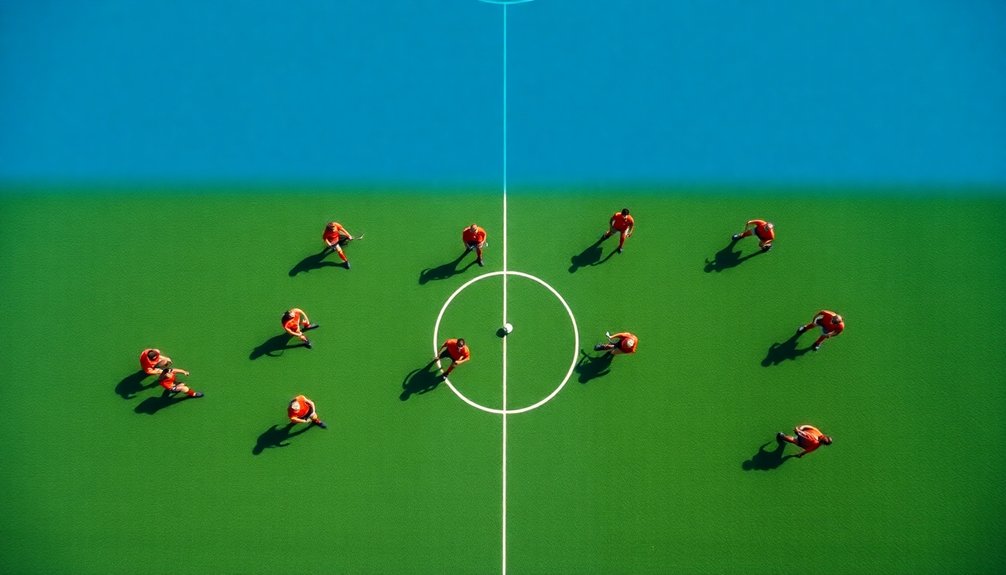
Exploring the 11v11 Hockey Formations for Tactical Success
August 29, 2025Mastering 11v11 hockey formations is key to tactical success on the field. Formations like 4-4-2 and 3-3-4 help balance offensive and defensive strategies. Your team’s flexibility allows you to adapt to opponents and create scoring chances. Midfielders play a critical role in linking defense and offense, enhancing overall team coordination. By continuously adjusting your formation during gameplay, you can improve your team’s performance. Stick around to discover more about effective strategies and formations!
The Importance of Formations in Hockey
When you step onto the ice, understanding the importance of formations in hockey becomes clear; they’re essential for both offensive and defensive strategies.
Understanding formations in hockey is crucial for executing effective offensive and defensive strategies on the ice.
Formations in hockey dictate how players make decisions on positioning and movement, directly impacting team dynamics. Whether you’re executing a 1-2-2 or a 2-1-2 formation, your team can adapt its approach based on the opponent’s strengths and weaknesses.
This flexibility allows you to exploit gaps in their defense or fortify your own coverage. Effective communication and collaboration within these formations enhance scoring opportunities while maintaining team cohesion. Additionally, defensive solidity is crucial for preventing quick opposition counterattacks.
Coaches often analyze formation effectiveness through video and stats, ensuring your training aligns with tactical goals, ultimately improving your performance on the ice.
Common 11v11 Hockey Formations
Understanding common 11v11 hockey formations can greatly enhance your team’s performance on the ice.
The 1-2-3 formation emphasizes offensive pressure, perfect for creating shots on goal during a power play. Alternatively, the 2-3-1 offers a balanced approach, ensuring defensive stability while maintaining midfield control.
If you need to focus on defense, the 3-2-1 formation strengthens your backline, allowing for quick counter-attacks. The 2-2-2 promotes equal player distribution, fostering teamwork and fluid movement throughout the game.
Finally, the 1-3-2 formation centers on midfield dominance, helping you control the game’s pace. Additionally, understanding equipment and attire regulations is essential for ensuring player safety and uniformity on the ice.
Analyzing the 4-4-2 Formation
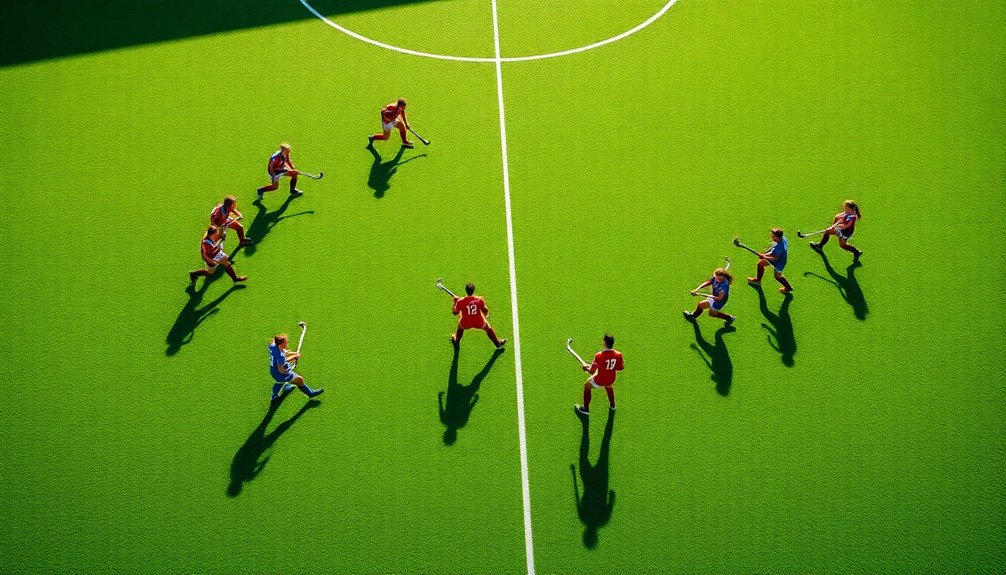
The 4-4-2 formation stands out as one of the most popular setups in hockey, striking a balance between defense and offense. Its tactical advantages lie in effective player positioning and flexible offensive strategies.
The 4-4-2 formation excels in balancing defense and offense, showcasing tactical flexibility and effective player positioning.
Here are three key elements:
- Defensive Solidity: With four defenders, it creates a compact structure, making it hard for opponents to penetrate.
- Midfield Control: Two central midfielders dictate the game’s tempo, while wingers stretch the field, providing width and options.
- Forward Partnership: The two forwards work closely, enabling quick combinations and exploiting overlaps for scoring chances.
This formation adapts easily to changing game situations, allowing you to shift between defensive and attacking strategies, making it an enduring favorite among coaches. Additionally, understanding team composition is crucial for maximizing the effectiveness of the 4-4-2 formation.
Benefits of the 3-3-4 Formation
One of the standout features of the 3-3-4 formation is its ability to strike a balance between defensive stability and offensive dynamism. This setup provides tactical advantages by utilizing three defenders, which effectively covers opposing attacks while freeing midfielders to support both defense and offense.
With three midfielders, you can create dynamic passing lanes that enhance ball possession and facilitate quick changes. This positioning empowers your team to execute offensive strategies more effectively.
Meanwhile, the four attackers can exploit defensive gaps, greatly increasing your scoring opportunities through coordinated movements. Overall, this formation fosters teamwork and communication among players, leading to better tactical execution and adaptability during gameplay.
Embrace the 3-3-4 for a competitive edge! Additionally, ensuring proper nutrition supports players’ energy levels and recovery, further enhancing performance on the field.
Adapting Formations During Gameplay
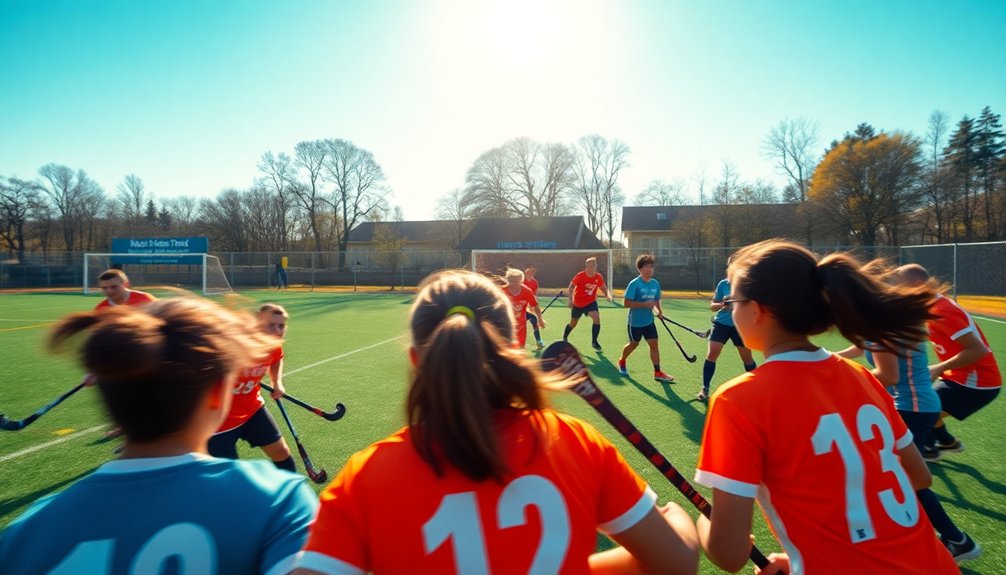
In hockey, being flexible with your formations is key to responding to the flow of the game. You need to communicate with your teammates in real-time to make quick adjustments, whether you’re shifting from offense to defense or altering to counter an opponent’s strategy. Recognizing your role and adapting to the situation can help maintain puck possession and create scoring chances. Understanding the importance of teamwork in sports can enhance your ability to collaborate effectively during gameplay.
Formation Flexibility Importance
While maneuvering the fast-paced nature of a hockey game, formation flexibility becomes essential for adapting to the ever-changing dynamics on the ice.
Here’s why embracing formation adaptability is vital for your team’s tactical evolution:
- Tailored Strategy: Adjust formations based on game flow, player strengths, and the score, ensuring a strategic flexibility that meets your opponents head-on.
- Exploiting Weaknesses: Fluid changes allow you to create mismatches, capitalizing on gaps in the opponent’s setup and keeping offensive pressure.
- Effective Communication: Successful formation shifts rely on clear communication among players, enabling quick adjustments that maintain your defensive structure.
Real-Time Adjustments
How can teams effectively adapt their formations during a game to stay ahead of the competition? Real-time tactics are essential for maneuvering the ever-changing formation dynamics on the field.
By evaluating the game flow, you can quickly shift from a 1-2-2 to a 2-1-2 setup, enhancing offensive pressure or strengthening your defense. Effective gameplay communication is key; guarantee every player understands their new roles and responsibilities to execute these changes seamlessly.
Continuously monitor positioning and movement to identify defensive gaps or neutralize opposing strengths. By making timely formation adjustments, you’ll greatly improve your team’s tactical effectiveness and ball possession, ultimately impacting the match’s outcome.
Stay alert and responsive to keep your edge over the competition!
Player Roles Adaptation
Adapting player roles during gameplay is essential for maintaining tactical flexibility and effectiveness. You need to be aware of how your teammates shift to optimize both offensive support dynamics and defensive change techniques.
Here are some key strategies to reflect upon:
- Player Positioning Strategies: Forwards should change to defensive roles during counterattacks to maintain team structure.
- Midfielder Flexibility: Midfielders must quickly adjust their formations to exploit gaps or cover for defenders.
- Effective Communication: Defensive players should adapt their positioning using man-to-man or zone coverage based on the opponent’s tactics.
Player Roles Within Different Formations
Understanding player roles within different hockey formations is essential for maximizing your team’s tactical effectiveness.
In 11v11 setups, forwards focus on offensive plays, seeking scoring chances and creating opportunities. Defenders maintain defensive strategies, working to block opposing attacks and keep the structure intact.
Meanwhile, midfielders play a key role, bridging the gap between defense and offense by supporting defensive efforts and initiating plays through smart positioning and passing.
Midfielders are crucial in connecting defense and offense, enhancing team dynamics through strategic positioning and effective passing.
Each player’s responsibilities can considerably impact your team’s performance, especially in formations like 4-4-2 or 3-5-2. To exploit opponent weaknesses effectively, clear communication dynamics are vital, ensuring everyone understands their roles and movements during gameplay. This clarity enhances cohesion and allows for seamless tactical execution on the field, highlighting the importance of effective communication among teammates for optimal performance.
Enhancing Teamwork Through Strategic Formations
Here are three key aspects to evaluate:
- Team Communication Strategies: Encourage open dialogue among teammates to quickly adjust formations based on the flow of the game.
- Formation Effectiveness Analysis: Regularly review game footage to identify which formations yield the best results, helping the team refine its approach.
- Tactical Decision Making: Empower players to make real-time decisions, allowing them to exploit opponent weaknesses while maintaining a cohesive structure. Additionally, focusing on team coordination will enhance the effectiveness of formations during gameplay.
Future Trends in Hockey Formations
As teams look to stay competitive, future trends in hockey formations are leaning heavily towards flexibility and adaptability. The evolution of formations will focus on tactical innovation, allowing you to adjust dynamically based on game flow and opponents’ strategies. Advanced analytics will play an essential role, helping you optimize player positioning for better offensive and defensive effectiveness. Coaches are increasingly turning to hybrid formations that combine traditional structures with modern tactics, enabling your team to exploit defensive gaps while maintaining solid defense. Additionally, technology like video analysis will encourage experimentation with unconventional formations, fostering creativity. As younger players learn complex formations early, expect future teams to showcase higher tactical sophistication and seamless shifts between formations during games. Furthermore, the utilization of wearable tech will provide insights into player performance, enhancing the effectiveness of these dynamic formations.
Conclusion
In the game of hockey, formations are like the foundation of a house; without a solid base, everything else can crumble. By understanding and utilizing various 11v11 formations, you can enhance your team’s tactical success and adaptability. Embrace the unique roles each player fulfills within these structures, and foster teamwork through strategic alignment. As you explore future trends, remember that flexibility and innovation will keep your team’s performance dynamic and effective on the ice.