

The Defensive Line Explained: Understanding Positions, Techniques, and Drills
December 1, 2025The defensive line is your team’s first line of defense against the offense. You’ll focus on key positions like defensive ends, tackles, and noses, each essential for stopping runs and pressuring quarterbacks. Mastering important techniques like footwork and hand placement is significant, and specific drills can improve your agility and strength. Effective communication and strategies help in adapting to offensive plays. If you want to know more about optimizing your performance and strategies, there’s plenty left to explore.
Overview of the Defensive Line
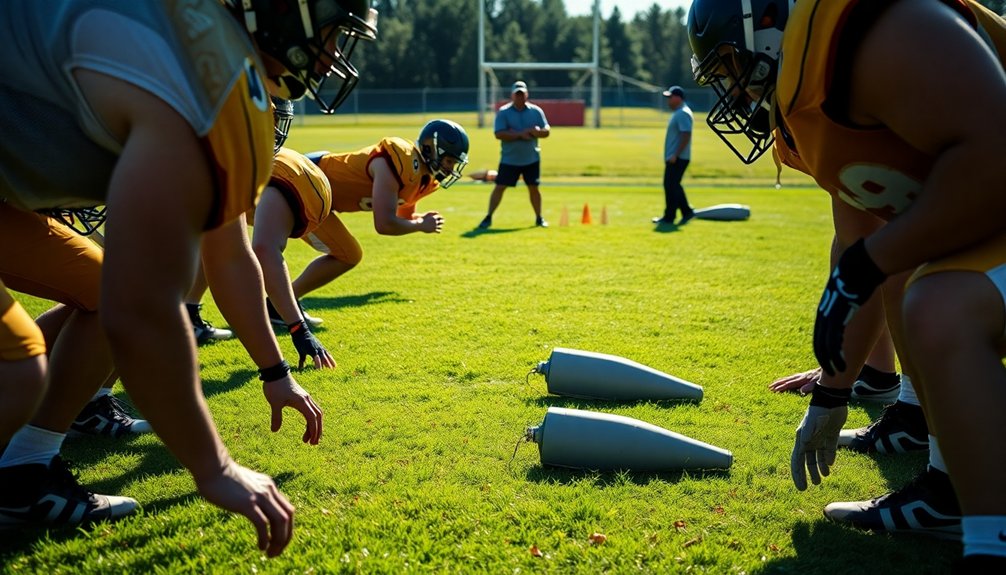
When you think about a football team’s defense, the defensive line often stands out as the first line of attack against the offense. This group of players is vital for stopping runs and pressuring the quarterback.
Understanding defensive line formations is essential, as they determine how players align and engage with the offense. Each formation has its strengths and weaknesses, impacting how effectively you can defend against various plays.
Player conditioning is equally important; a well-conditioned defensive line can maintain intensity throughout the game, sustaining pressure on the opposing offense. Mastery of fundamentals in defensive techniques enhances overall effectiveness in tackling and positioning.
Key Positions and Their Roles
The defensive line consists of three key positions: defensive ends, defensive tackles, and nose tackles, each playing a significant role in the team’s overall strategy.
As a defensive end, you’re responsible for containing outside runs and pressuring the quarterback, utilizing speed and agility to get around blockers. You’ll need to read plays quickly and react accordingly.
On the other hand, defensive tackles focus on disrupting the offensive line, occupying blockers, and stopping the run, which are essential defensive tackle responsibilities.
Nose tackles, often positioned directly over the center, anchor the line and must hold their ground against double teams. Understanding these roles helps you contribute effectively to the team’s success on the field, as team coordination is crucial for executing defensive strategies.
Essential Techniques for Success
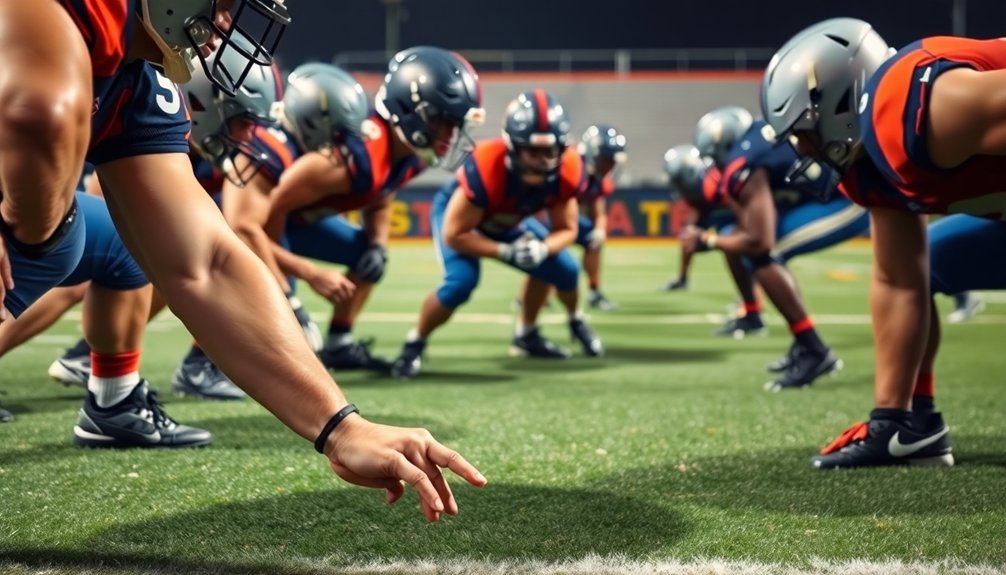
To succeed on the defensive line, you need to master key blocking techniques and effective pass rush strategies. These skills not only help you control the line of scrimmage but also create opportunities to disrupt the opposing offense. Let’s break down the essential techniques that will elevate your game. Additionally, understanding defensive stance is crucial for maintaining balance and quick reactions during defensive plays.
Key Blocking Techniques
While mastering key blocking techniques is essential for success on the field, understanding their fundamental principles can elevate your game.
Focus on your blocking footwork; it’s critical for maintaining balance and leverage against your opponent. Start with a solid stance, using quick, explosive steps to position yourself effectively.
Hand placement is equally important—ensure your hands are active and precise. Strike your opponent with your palms, keeping your elbows in to maintain control. This technique allows you to redirect their momentum while staying grounded.
Combine these elements through consistent practice, and you’ll find that your blocking becomes more effective, giving your team a better chance to succeed.
Embrace these techniques, and you’ll see noticeable improvements in your performance.
Effective Pass Rush Strategies
Mastering effective pass rush strategies is vital for any defensive lineman aiming to disrupt the opposing offense. Start by honing your pass rush fundamentals, which include speed, technique, and leverage.
Utilize quick footwork to create separation from the offensive line, making it harder for blockers to counter your movements. Incorporate a variety of techniques, such as swim moves and bull rushes, to keep offensive linemen guessing.
As you face different opponents, anticipate their countermeasures; adapt your approach to exploit weaknesses. Timing is essential—perfect your snap count to gain an edge.
Finally, work on your stamina; a relentless motor can wear down blockers, increasing your chances of reaching the quarterback and making impactful plays.
Drills to Improve Performance
To elevate your performance on the defensive line, you need to focus on specific drills that target agility, speed, and strength. Incorporating technique refinement practices will also help you sharpen your skills and enhance your overall game. Regular practice focused on defensive skills can significantly improve your performance on the field. Let’s explore these essential drills that can make a real difference in your play.
Agility and Speed Drills
As you work to enhance your performance on the defensive line, incorporating agility and speed drills into your training regimen is essential.
These drills not only improve your reaction time but also boost your lateral movement, helping you become a more effective player.
Here are three drills you should include:
- Ladder Drills: Use an agility ladder to improve footwork and quickness.
- Cone Drills: Set up cones to practice sharp cuts and rapid direction changes, enhancing your lateral movement.
- Sprints with Resistance: Use a parachute or sled to build speed and explosiveness, vital for getting off the line quickly.
Strength Building Exercises
Building strength is essential for defensive linemen, as it directly impacts your ability to overpower opponents and maintain your position on the field. Incorporating strength training into your routine is key.
Focus on compound movements like squats, deadlifts, and bench presses to build overall muscle mass and power. Power lifting techniques will help you develop explosive strength, which is critical for quick bursts off the line.
Don’t forget to include accessory exercises such as lunges and rows to target specific muscle groups. Aim for progressive overload by gradually increasing weights to challenge your muscles.
Consistency is imperative; dedicate time each week to this training. Stronger muscles translate to better performance on the field, giving you the edge against your competition.
Technique Refinement Practices
While strength is essential, refining your technique is equally important for defensive linemen aiming to dominate on the field. A solid technique breakdown can elevate your game, helping you become more effective in your role.
Focus on these three key practice areas to improve your performance:
- Footwork Drills: Work on your agility and balance through ladder drills and cone exercises.
- Hand Placement: Practice striking techniques to enhance your disengagement from blockers, ensuring you maintain leverage.
- Reaction Time: Use quick, explosive movements to simulate game scenarios, allowing you to respond more effectively to offensive plays.
Integrating these technique refinement practices into your training will sharpen your skills and make you a formidable presence on the line.
Strategies for Effective Play
To dominate on the defensive line, you need to implement effective strategies that capitalize on your team’s strengths and exploit the opponent’s weaknesses.
Start by analyzing your defensive formations; make certain they’re designed to counter the offense’s tactics. Adaptability is vital, so make timely game adjustments based on the flow of play.
Communicate effectively with your teammates to make sure everyone understands their roles within the formation. Focus on maintaining a low pad level and using quick footwork to gain leverage against blockers.
Emphasize teamwork in your approach—stunts and slants can disrupt the offensive rhythm.
Finally, study game film to identify patterns in your opponents’ plays, allowing you to anticipate their moves and react swiftly. This preparation will enhance your effectiveness on the field. Additionally, integrating core strength exercises into your training regimen can significantly improve your stability and balance, crucial for defensive maneuvers.
Analyzing Successful Defensive Lines
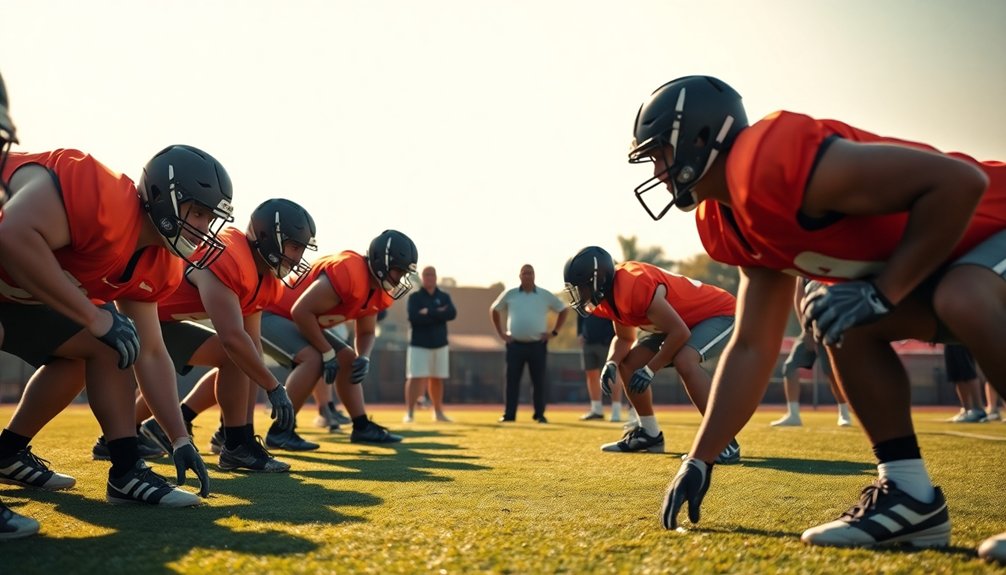
Successful defensive lines showcase a blend of talent, strategy, and cohesion that sets them apart.
When analyzing the top defensive lines, consider these key elements:
- Player Skill: Each member must possess unique skills, like speed, strength, and technique, enabling them to execute plays effectively.
- Communication: Successful units communicate seamlessly, making adjustments on the fly, which is essential for countering offensive strategies.
- Historical Comparisons: Look at famous defensive lines from the past, like the ’85 Bears or the ’00 Ravens, to understand how their cohesion and strategy contributed to their success. Additionally, strong tactical awareness helps defenders make crucial decisions during high-pressure situations.
Conclusion
In the grand symphony of football, the defensive line plays the essential notes that can shift the game’s rhythm. By mastering techniques and executing drills, you’re not just honing skills; you’re forging a wall of resilience against any offense. Embrace the challenges and strategies, and you’ll become a force that disrupts the opponent’s flow. Remember, every play is a chance to build not just strength, but a legacy of tenacity that echoes long after the final whistle.