
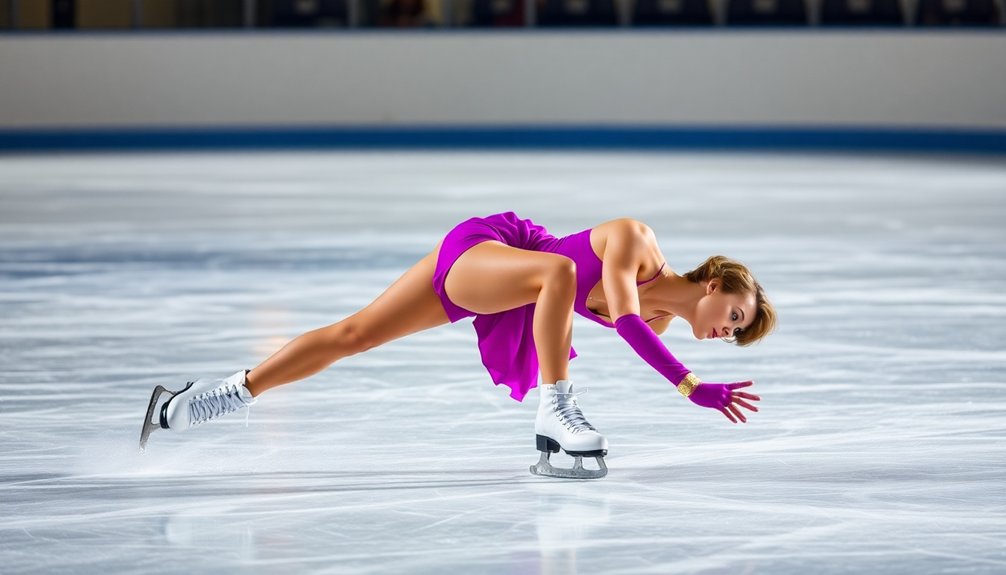
Crossover Ice Skating Tips for Better Maneuverability
August 26, 2025To improve your maneuverability on the ice, focus on mastering crossovers. Maintain a 90-degree knee bend for balance and power while keeping your skates close to the ice. For forward crossovers, emphasize proper body positioning and thrust mechanics, while backward crossovers require good balance and a C-cut technique. Consistent practice and proper weight distribution will enhance your performance. Keep at it, and you’ll discover more valuable tips to elevate your skills even further.
Understanding the Importance of Crossovers
When you think about improving your ice skating skills, understanding the importance of crossovers is essential. Crossovers are key for generating speed and agility on the ice, allowing you to maintain circular motion through centripetal force.
This technique involves crossing your outside skate over the toe of your inside skate while keeping your body leaned inward for balance. To master crossovers, you should maintain a 90-degree knee bend and guarantee your weight is balanced over the outside skate.
This prevents loss of momentum and enhances your maneuverability. Remember to keep your skates within an inch of the ice for better stability. Additionally, like the evolution of modern soccer, mastering crossovers can significantly enhance your overall performance on the ice.
Key Techniques for Forward Crossovers
To master forward crossovers, you need to focus on body positioning, weight distribution, and thrust mechanics.
Keeping a low center of gravity and bending your knees at 90 degrees will give you better balance and power. Additionally, incorporating core strength exercises into your training can enhance your stability and performance on the ice.
Proper Body Positioning
Mastering proper body positioning is essential for executing effective forward crossovers. When you align your body correctly, you’ll feel more in control and agile on the ice.
Follow these key points to enhance your performance:
- Knee Bend: Maintain a 90-degree knee bend for ideal leverage and power.
- Upper Body: Keep your upper body level to the ice, leaning slightly toward the outside skate for stability.
- Angle Engagement: Position your skates, knees, and hips at a 45-degree angle to utilize centripetal force.
- Inside Skate Focus: Emphasize crossing the inside skate under your body to boost acceleration and efficiency.
Weight Distribution Techniques
Proper body positioning sets the stage for effective weight distribution techniques during forward crossovers.
To maintain stability, keep your weight balanced over the outside skate’s inside edge. Bend your knees to about 90 degrees, ensuring your bodyweight is distributed over the back half of the blade while gliding.
Engage your skates, knees, and hips at a 45-degree angle to the ice to optimize weight distribution during the turns. As you cross your inside skate under your body, keep your weight low and projected outward to enhance both balance and speed.
Avoid leaning your upper body into the turns; instead, let your lower body drive the turn for effective weight distribution and control during your forward crossovers.
Thrust and Glide Mechanics
While executing forward crossovers, understanding thrust and glide mechanics is essential for maximizing your speed and control.
Focus on these key techniques:
- Thrust against the edges with a full leg drive to maintain momentum.
- Keep your weight low and projected outward, ensuring stability as you accelerate.
- Bend your knees to a 90-degree angle between your thigh and shin for ideal thrust.
- Cross your inside skate under your body more pronounced than the outside skate, enhancing crossover efficiency.
Mastering these mechanics will elevate your skating experience, allowing for smoother shifts and faster speeds.
Mastering Backward Crossovers
To effectively execute backward crossovers, you’ll want to focus on your technique and balance. Start by having your inside skate reach sideways into the circle with a C-cut push, ensuring you transfer weight over the front halves of both blades.
Maintain full blade contact with the ice for enhanced stability, and avoid leaning too far forward. As your legs cross, aim for the tops of the thighs instead of just the knees to achieve a pronounced crossover.
Make sure your outside skate crosses around the inside skate, landing on an inside edge at a 45° angle. Practicing these elements in both clockwise and counterclockwise directions will help you master backward crossovers and improve your overall skating agility. Additionally, incorporating agility drills into your training routine can enhance your maneuverability on the ice.
Essential Body Positioning
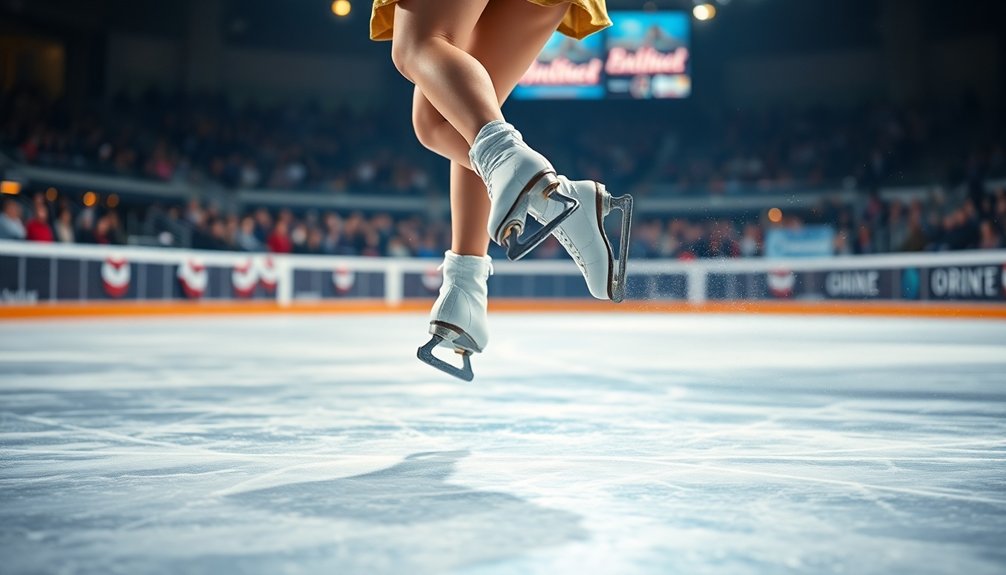
Achieving the right body positioning is essential for executing crossovers effectively. When you’re on the ice, focus on these key elements to enhance your maneuverability:
Effective body positioning is crucial for mastering crossovers, enhancing your agility on the ice.
- Keep your thigh and shin at a 90-degree angle for ideal knee bend.
- Lean your lower body inward while your upper body counter-leans for stability.
- Align your hips, knees, and skates at a 45-degree angle to the ice, centering your weight over the outside skate.
- Maintain level shoulders to avoid unnecessary movements that can disrupt balance.
Additionally, understanding the importance of teamwork in soccer can help you appreciate how effective communication and coordination enhance performance in any team sport, including ice skating.
Weight Distribution for Balance
When you’re executing crossovers, focus on engaging the inside edge of your outside skate to maintain balance. Centering your weight over the blade helps keep your stability as you make those sharp turns. Additionally, practicing consistent training can enhance your overall maneuverability on the ice.
Inside Edge Engagement
Mastering inside edge engagement is essential for maintaining balance during crossovers. Proper weight distribution keeps your body centered over the inside edge of your outside skate, allowing for control.
Follow these tips to enhance your maneuverability:
- Bend your knees to a 90-degree angle for ideal posture.
- Engage your inside skate’s edge at a 45-degree angle to maximize thrust.
- Keep your upper body level to the ice while your lower body drives the turn.
- Practice landing on the edges of your skates, ensuring your inside shoulder and ear stay aligned with the ice.
Weight Centering Techniques
Proper weight distribution is essential for maintaining balance during crossovers in ice skating. To achieve this, keep your weight centered over the outside skate’s inside edge. This positioning allows for better control and stability throughout the maneuver.
Make sure to practice landing on the edges of your skates, distributing your weight evenly without leaning too far forward or backward. Maintaining a stable center of gravity enhances agility and promotes smoother shifts in both forward and backward crossovers.
A knee bend of about 90 degrees is vital, as it helps keep your weight centered, improving balance and power generation. Consistently monitor your body weight placement, as improper distribution can lead to a loss of balance and decreased speed.
Practicing Crossunder Techniques
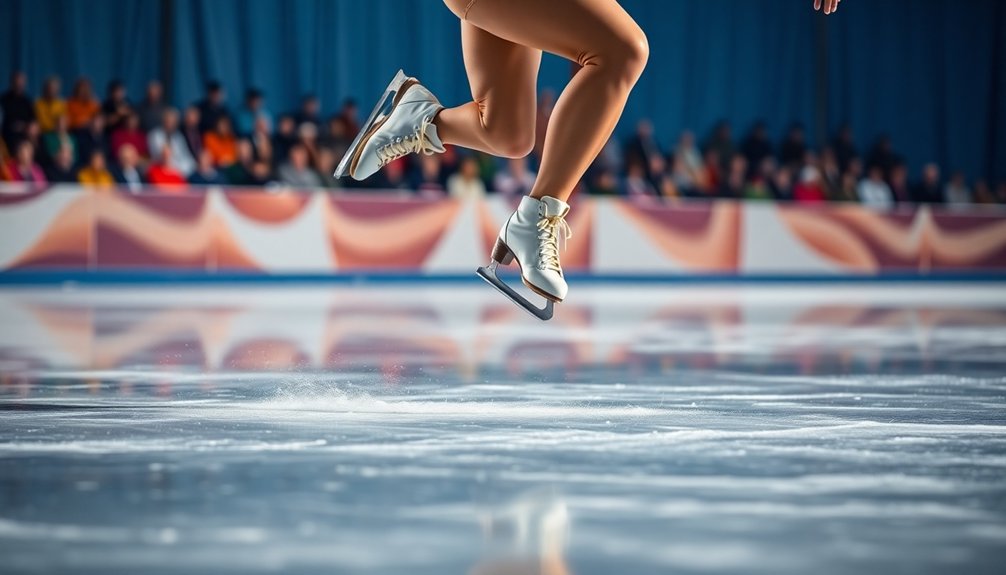
To effectively practice crossunder techniques, you’ll want to focus on your body positioning and balance. Start by ensuring your body is aligned correctly for a smooth crossover.
Here are four key tips to enhance your practice:
- Lean slightly forward, positioning your helmet in front of your knees while keeping a straight back and chin up.
- Land your inside skate on an outside edge at a 45-degree angle, while your outside skate crosses around to land on an inside edge.
- Maintain bodyweight centered over the inside edge of the outside leg for better control.
- Practice landing on the edges one foot at a time, reinforcing balance as your inside skate pulls under the outside skate.
Incorporating dynamic stretches before your practice can further improve your flexibility and help prevent injuries. With these techniques, you’ll master crossunders in no time!
Drills for Improving Crossover Skills
Enhancing your crossover skills requires focused drills that build strength and precision.
Start with C-Cut Circles, gliding your inside skate along the circle while making C-shaped cuts with the outside skate. Practice in both directions to improve your edges.
Next, work on Single Crossovers by pushing off with one skate and crossing it over the other, maintaining balance and minimizing blade lift.
Focus on Single Crossovers by pushing off with one skate, crossing over the other, and keeping your balance steady.
Combine techniques with a C-Cut Plus Crossover, integrating the C-cut with a crossover while keeping your toe on the ice for smoother changes.
Add explosiveness with the Outside Edge Kick by pushing with your rear skate after a crossover.
Always maintain a stable hockey stance to enhance balance and stability during all your skating drills. Incorporating effective footwork drills will further enhance your maneuverability on the ice.
Tips for Enhancing Speed and Agility
Here are some tips to enhance your performance:
- Maintain a 90-degree knee bend for better thrust and acceleration during crossovers.
- Practice explosive starts after turns to maximize speed as you shift into straightaways.
- Utilize the two-push maneuver: push hard with your outside skate while pulling your inside skate under for quick acceleration.
- Emphasize extreme edges while crossing over to maintain balance and allow for faster adjustments.
Incorporating drills that focus on speed and agility training can also significantly improve your overall maneuverability on the ice.
Common Mistakes to Avoid in Crossovers
Mastering crossovers not only boosts your speed and agility but also requires awareness of common mistakes that can hinder your progress.
One significant error is failing to maintain a proper knee bend of 90 degrees, which can lead to poor balance and reduced power. Excessive upper body movement disrupts your control, so keep your shoulders level and quiet.
Also, guarantee your skates stay within one inch of the ice; this proximity enhances balance and maneuverability. Remember to lean your upper body outward while your lower body leans inward to maintain proper centripetal force.
In backward crossovers, avoid crossing your legs at the knees; proper leg positioning at the thighs is essential for stability and control. Furthermore, understanding offside positions can help you anticipate movements and improve your overall skating strategy.
Conclusion
By honing your crossover skills, you’ll glide across the ice like a dancer on air. Remember, mastering these techniques takes practice and perseverance, but the reward is worth every effort. Keep your body positioned correctly, balance your weight, and embrace drills that challenge your agility. Avoid common mistakes, and soon you’ll find yourself maneuvering with grace and speed. So lace up those skates and let your confidence shine as you conquer the rink!