
3-5-2 Formation Breakdown: Strengths, Weaknesses, and When to Use It
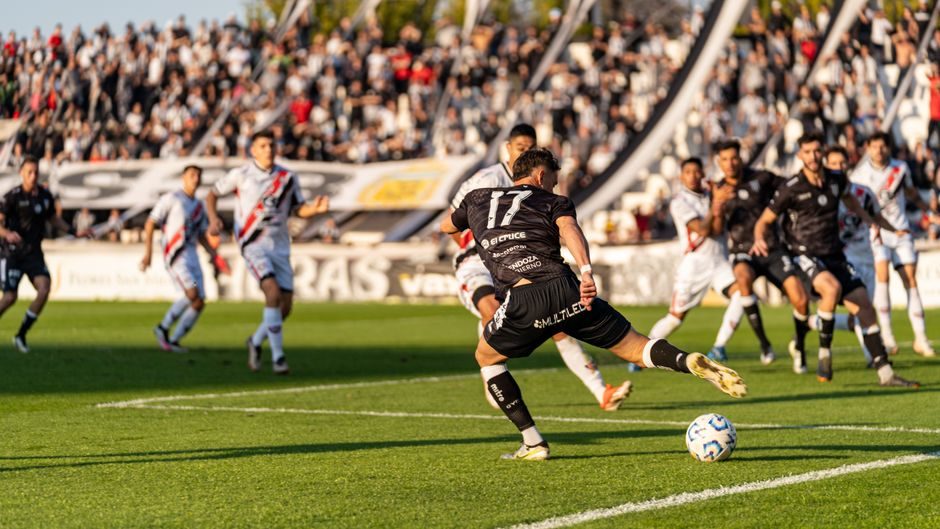
November 11, 2026The 3-5-2 formation is a soccer setup with three center backs, five midfielders, and two strikers, and it is one of the most discussed shapes in modern football. It works by flooding the middle of the pitch with numbers while using two wing-backs to provide width. The trade-off is that it asks a lot of its wing-backs and leaves specific channels open if the team is not organized. This guide explains how the 3-5-2 works, where it helps and hurts, and how to decide whether it fits your team.
Key Takeaways
- The 3-5-2 formation places three center backs, five midfielders (two of them wing-backs), and two strikers on the pitch.
- Research on Bundesliga matches found that center backs and full backs recorded their highest sprinting distances in formations with three defenders, including 3-5-2.
- A study of Chinese Super League data from 2015 to 2021 found that fullbacks and central midfielders completed more passes at higher success rates in four-defender formations than in 3-5-2.
- The 3-5-2 is strongest when a team has wing-backs with stamina and center backs comfortable defending in a line of three.
- Coaches most often choose the 3-5-2 to match a two-striker opponent, to win the midfield battle, or to create wide attacking options without playing traditional wingers.
What Is the 3-5-2 Formation?
The 3-5-2 is a formation in which a team lines up with three defenders, five midfielders, and two forwards. Formation is a way of describing where players are positioned across the pitch, and a 2022 survey in Frontiers in Sports and Active Living defines it as the spatial arrangement of a team’s players. In the 3-5-2, the five midfielders usually include three central players and two wing-backs who push up and down the flanks.
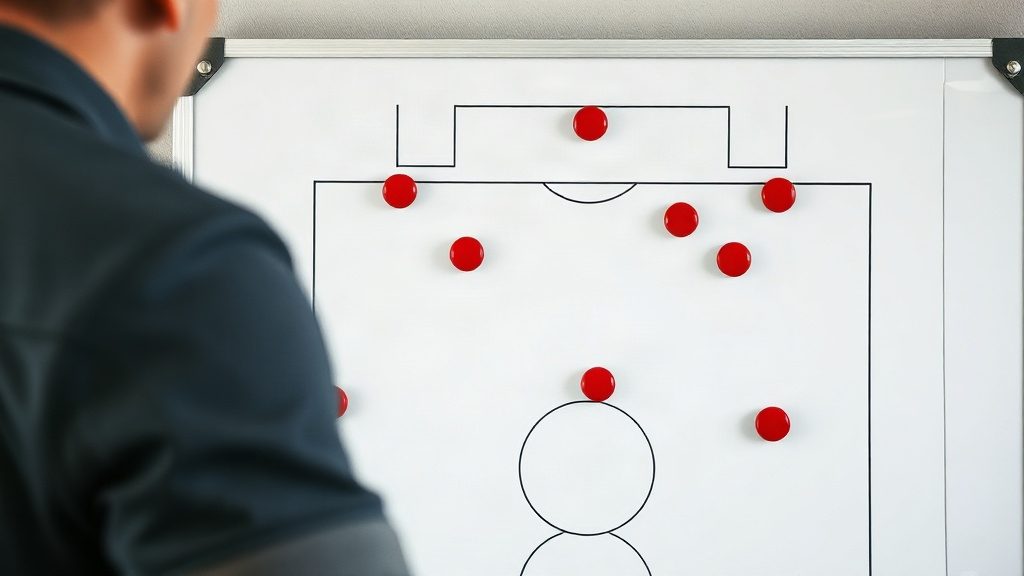
A wing-back is a player who plays in a wide position but has defensive duties, typically covering the full width of the field in both attack and defense. Because the 3-5-2 uses wing-backs instead of traditional wide midfielders, it is often seen as a defensive shape that becomes attacking when the wing-backs advance.
How Does the 3-5-2 Compare to Other Formations?
The clearest way to understand the 3-5-2 is to compare its structure with the two most common alternatives. The table below shows the basic differences in shape and what each typically gives up.
| Feature | 3-5-2 | 4-4-2 | 4-3-3 |
|---|---|---|---|
| Defenders | 3 center backs | 2 center backs, 2 full backs | 2 center backs, 2 full backs |
| Midfielders | 5 (2 wing-backs, 3 central) | 4 (2 wide, 2 central) | 3 (1 holding, 2 interior) |
| Forwards | 2 | 2 | 3 (usually 2 wingers and a striker) |
| Main width source | Wing-backs | Wide midfielders | Wingers |
| Main risk | Gaps behind wing-backs | Outnumbered in midfield | Thin cover behind wide forwards |
How Does the 3-5-2 Work on the Pitch?
The 3-5-2 works by matching numbers in central areas while using wing-backs to stretch the opponent. In possession, the wing-backs advance into wide positions, and the three center backs spread slightly to build play. In defense, the team usually drops into a back three with the wing-backs tucking in to form a five-player midfield or defensive line.
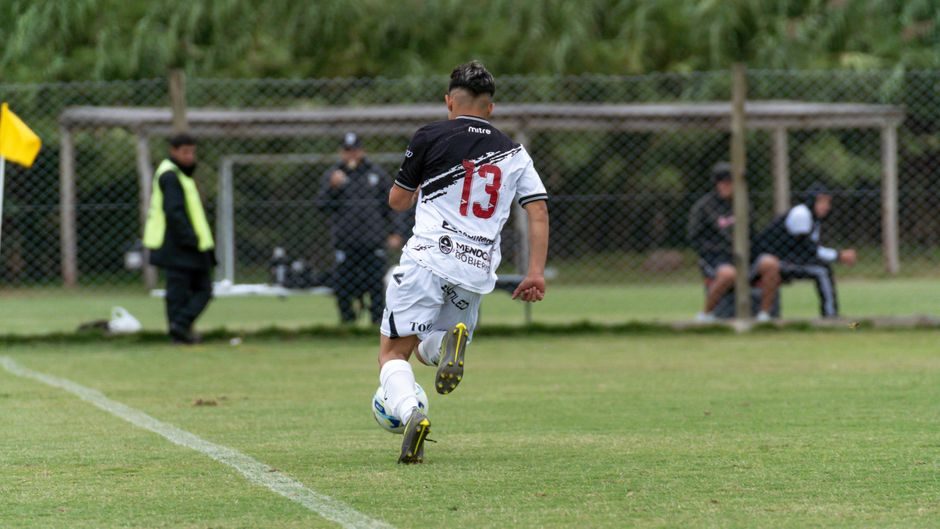
A typical sequence in possession looks like this:
- The goalkeeper or a center back plays the ball to a wing-back or central midfielder, with the two outside center backs spreading wide to receive passes.
- The wing-backs push forward on the touchline, and one of the central midfielders drops between the center backs to create a passing angle.
- The two strikers pin the opposing center backs, creating space for the attacking midfielders to find passes between the lines.
- When the ball is lost, the wing-backs drop back to the level of the back three, and the central midfielders shift to cover the middle.
The defensive version depends on discipline. The back three must communicate constantly, and the wing-backs must recover quickly to avoid being isolated in one-on-one situations.
What Are the Strengths of the 3-5-2?
The main strengths of the 3-5-2 are numerical advantage in midfield, defensive solidity at the back, and width without traditional wingers. Each of these advantages depends on the players and the opponent, but the shape gives coaches several reliable options.
Why Does the 3-5-2 Control the Middle of the Pitch?
The five-player midfield lets a team outnumber opponents in central areas, which is especially useful against formations that use only two central midfielders. A team can win second balls, screen passes, and support its strikers with extra bodies in the middle. This is one reason the formation is often chosen to contest the midfield directly.
Does a Back Three Make a Team Harder to Score Against?
A back three can make a team more compact in the box because it places an extra central defender where attacks usually arrive. A 2022 study published in PLOS ONE analyzed Bundesliga matches by Forcher and colleagues and found that center backs and full backs recorded their highest sprinting distances in formations with only three defenders, including 3-5-2. That finding suggests the back three is physically demanding, but it also shows defenders are actively covering large amounts of ground rather than standing still. For more detail on the physical side of the shape, read the full PLOS ONE study on center backs in a back three.
How Does a 3-5-2 Create Width?
The wing-backs provide width without requiring two dedicated wingers. This frees a team to field more central players and can keep the attack flexible. When the wing-backs are fit and attack with timing, they can create overloads on the flank and deliver crosses from deep positions.
What Are the Weaknesses of the 3-5-2?
The main weaknesses of the 3-5-2 are the physical load on wing-backs, gaps in wide defensive areas, and a possible drop in technical output. The shape is effective, but it has clear conditions under which it struggles.
Why Are Wing-Backs Hard to Replace?
Wing-backs must sprint up and down the touchline for most of the match, which requires exceptional stamina and tactical discipline. Few players combine the defensive reading of a full back with the attacking runs of a winger. If a team cannot find two such players, the formation becomes vulnerable quickly.
What Gaps Does the 3-5-2 Leave?
When wing-backs push high, the space behind them can become a target for opposing wingers or fast full backs. Teams that use this shape must coordinate the timing of runs so that a center back or central midfielder can shift wide. Without that coordination, a single counterattack can overload the back three.
Does the 3-5-2 Reduce Passing Quality?
The 3-5-2 can come at a technical cost. A study of Chinese Super League matches from 2015 to 2021, published through PubMed Central, found that fullbacks and central midfielders made more passes with higher success rates in four-defender formations than in 3-5-2. The authors framed this as a trade-off, meaning the shape can prioritize structure and physical coverage over the smooth passing patterns that four-defender systems often produce. Read the full Chinese Super League study on formation and playing position for the complete comparison.
When Should a Team Use the 3-5-2?
A team should use the 3-5-2 when it has suitable wing-backs, a organized back three, and a reason to contest the midfield. It is less effective when the team lacks players who can cover width or when the opponent has fast wide forwards who can attack the space behind the wing-backs.
Before committing to the shape, check these conditions:
- You have two wing-backs who can run for 90 minutes and have both attacking and defensive ability.
- Your three center backs can play comfortably in a line and communicate well under pressure.
- Your central midfielders can cover ground and win second balls in a five-player midfield.
- Your opponent uses one or two strikers and fewer than three players in wide attacking roles.
- Your strikers can press in pairs to block passing lanes into central midfield.
If most of these conditions are missing, a four-defender formation may give your team better balance. The technical findings from the Chinese Super League study suggest that four-defender systems can support higher pass success for fullbacks and central midfielders.
How Can You Set Up the 3-5-2 in Training?
You can set up the 3-5-2 in training by drilling the back three, the wing-back recovery run, and the midfield rotation separately before combining them. Start with small-sided games that focus on one part of the shape, then add opponents and transitions.
- Teach the back three to shift as a unit by practicing lateral slides with a coach calling the movement.
- Run wing-back timing drills where one player advances while the other recovers, so the touchline is never left empty.
- Practice midfield rotation so that a central midfielder can drop into the back line when a center back steps out.
- Finish with transition drills that test how quickly the team reorganizes after losing possession.
Coaches who want to compare build-up shapes can study how to implement the 3-2-3-2 soccer formation, which also depends on a structured back line and clear rotations. For younger players, a simpler starting shape may be easier to teach; see how to perfect the 2-3-1 soccer formation for youth teams before introducing a back three.
How Do Analysts Identify a 3-5-2 in Match Data?
Analysts identify a 3-5-2 by tracking where players stand on average during possession and out of possession, then labeling the shape that matches those positions. This matters because a team’s formation on paper can change dramatically once the ball is moving. Research on tactical formation identification has shown that automated methods can recognize common shapes with useful accuracy.
A 2016 arXiv paper on spatio-temporal analysis of team sports described a method that clustered learned team shapes into six formations. Those formations matched expert knowledge, and the method was validated against expert labels with about 75% accuracy. That level of accuracy supports formation labeling as an analytical tool, though it still leaves room for error in fluid match situations. You can read the full spatio-temporal analysis survey on team sports for the method details.
Frequently Asked Questions
Is the 3-5-2 a defensive formation?
The 3-5-2 can be defensive or attacking depending on how the wing-backs and strikers are used. Its three center backs and compact midfield make it hard to break through centrally, but the wing-backs can push forward to create attacks. Most teams using the shape balance both roles based on the match situation.
Who plays wing-back in a 3-5-2?
Wing-backs are usually athletic players with good stamina, strong crossing ability, and enough defensive awareness to recover quickly. Many coaches use players who previously played as full backs or wide midfielders. The right choice depends on whether the team needs more defensive stability or more attacking width.
Why do some teams switch from 3-5-2 to 4-4-2?
Teams often switch to a 4-4-2 when they want more balance between defense and attack or when they need to protect the flanks. The four-defender shape gives full backs a clearer defensive role, which can reduce the gaps behind wing-backs. Switching formations during a match is also a common way to respond to a changing game.
Does the 3-5-2 work at youth level?
The 3-5-2 can work at youth level, but it demands tactical maturity and fitness that younger players may not yet have. Young teams usually benefit from simpler shapes that teach positioning and passing first. Coaches can introduce a back three once players understand the roles of the wing-backs and center backs.
The Bottom Line on the 3-5-2 Formation
The 3-5-2 formation is a flexible shape that offers midfield numbers, a solid back three, and width from wing-backs, but it asks a great deal of those wing-backs and can leave space behind them. The research available suggests the shape is physically demanding for defenders and can reduce passing success for some players compared with four-defender systems. Use the 3-5-2 when your roster has the right wing-backs and center backs, and when your opponent gives you a clear reason to control the middle. A team that trains the shape carefully and understands its gaps can use the 3-5-2 as a reliable tactical tool.