

How to Build a Tennis Teaching Curriculum
May 15, 2026To build a successful tennis teaching curriculum, you should first understand its importance for student engagement and skill development. Set clear learning objectives and tailor drills to different skill levels. Foster a positive environment that encourages communication and collaboration. Integrate technology for performance analysis and adjust your curriculum based on player progress. Ultimately, promote competitive play to maintain motivation. By following these steps, you’ll create a dynamic program that enhances learning and player engagement. There’s more to discover that can elevate your coaching approach.
Understanding the Importance of a Tennis Curriculum
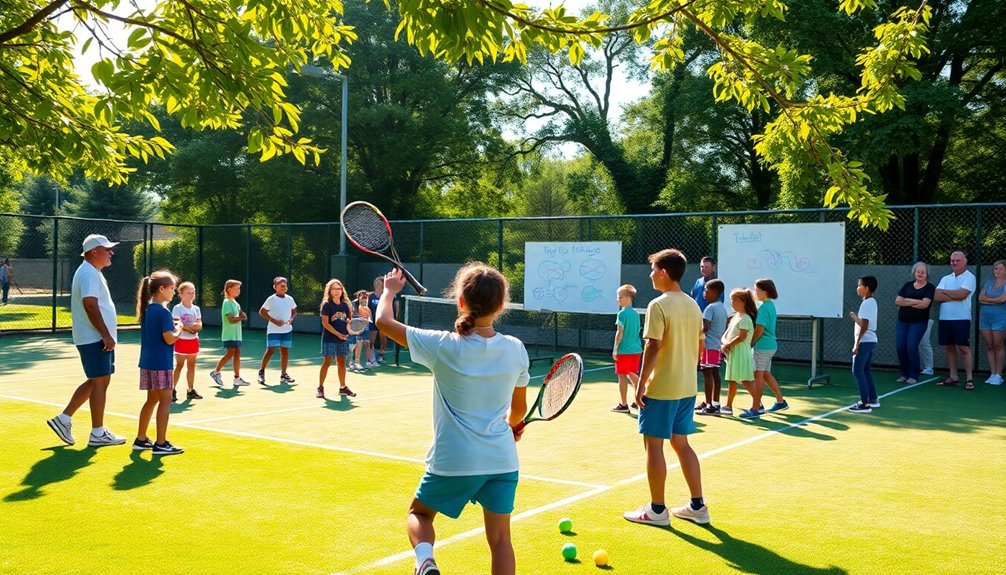
When you understand the importance of a tennis curriculum, you realize it’s more than just a collection of drills and exercises. A well-structured curriculum brings numerous benefits, enhancing student engagement and promoting skill development.
By incorporating diverse teaching methods and lesson planning, you can cater to various learning styles, ensuring every player thrives. Your coaching philosophy should be reflected in your instructional techniques, motivating players to push their limits.
Implementing effective assessment strategies helps you monitor progress and adjust your approach as needed. Ultimately, a solid tennis curriculum fosters an environment where players feel supported, motivated, and excited to learn, making it an essential element in their development as athletes. Additionally, injury prevention strategies taken from other sports can be adapted to tennis, ensuring players remain healthy and focused on improvement.
Setting Clear Learning Objectives for Players
To create a successful tennis curriculum, it’s essential to set clear learning objectives for your players. This process not only enhances player motivation but also guarantees effective lesson pacing.
Here’s how to establish those objectives:
- Incorporate goal setting to help players visualize their progress.
- Adapt to different learning styles so everyone can thrive.
- Use effective feedback techniques to guide skill progression.
- Break down skills into manageable steps for better retention.
- Regularly reassess objectives to maintain engagement and adjust to player needs.
- Incorporate cognitive challenges to enhance players’ decision-making skills on the court.
Identifying Skill Levels and Grouping Players
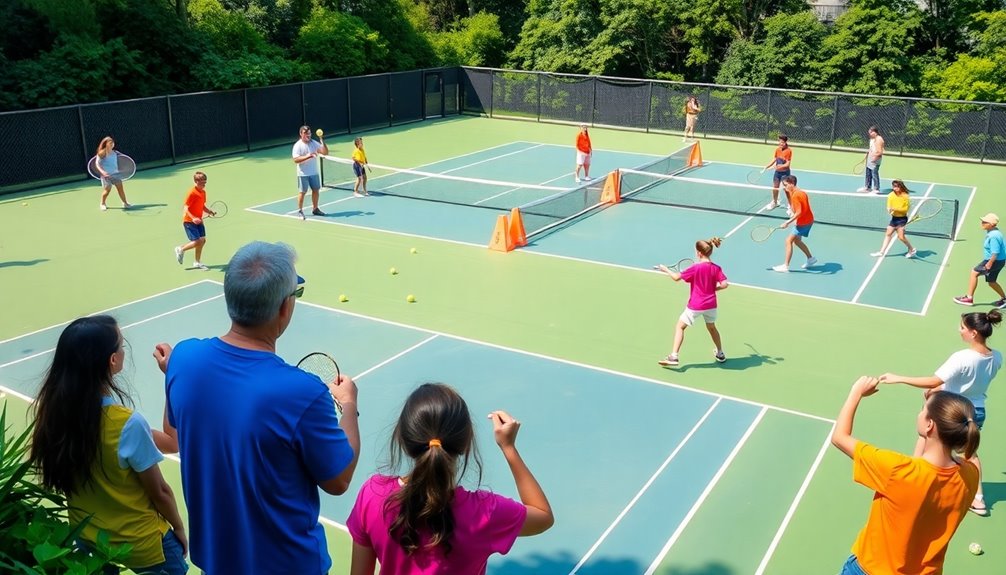
To create an effective tennis curriculum, you need to assess each player’s proficiency level first. Once you’ve identified their skills, group them accordingly to maximize learning and interaction. Tailoring drills for each group guarantees that everyone gets the right challenges to improve. Additionally, incorporating communication and teamwork in practice can enhance players’ overall performance and foster a supportive learning environment.
Assessing Player Proficiency Levels
How can you effectively assess player proficiency levels to create balanced groups? Start with a thorough player evaluation using various methods. Here are some key strategies to contemplate:
- Skill assessment through drills and match play to gauge technical abilities.
- Proficiency benchmarks to define what successful performance looks like at different levels.
- Observational techniques to monitor gameplay and identify strengths and weaknesses.
- Performance metrics to track progress and consistency over time.
- Feedback mechanisms that encourage open communication about psychological readiness and motivation factors.
Grouping By Similar Skills
When grouping players by similar skills, it’s essential to take into account their individual strengths and weaknesses, as this guarantees everyone can compete and learn effectively.
Skill differentiation allows you to create balanced groups that foster team dynamics and encourage collaborative drills. By leveraging performance metrics, you can identify where players excel and where they need improvement.
Implementing peer mentoring within these groups promotes feedback loops, helping players learn from each other. Design game scenarios tailored to each group’s skill level, ensuring that all participants remain engaged and challenged.
Additionally, establish clear progression pathways for each group, allowing players to advance at their own pace while still benefiting from a supportive environment.
Tailoring Drills For Groups
While evaluating player abilities might seem challenging, it’s essential for tailoring drills effectively. Understanding skill levels allows you to create engaging sessions that foster growth.
Here are some strategies to contemplate:
- Drill diversity keeps sessions fresh and exciting.
- Use feedback techniques to guide players, enhancing their skills.
- Incorporate game scenarios that mimic real match situations for practical learning.
- Design teamwork exercises to build camaraderie and mental toughness among players.
- Include fun activities to maintain player motivation and enjoyment.
Designing Age-Appropriate Drills and Activities
Focus on skill adaptation by modifying drills to match players’ abilities, making adjustments as needed. Incorporate fun elements like games and challenges to keep motivation high.
Modifying drills to suit players’ abilities while adding fun games keeps motivation high and enhances skill development.
Use social interaction by encouraging teamwork, fostering communication, and creating a supportive environment. Employ motivation techniques such as positive reinforcement and goal-setting to boost confidence. Incorporating small-sided games can also enhance individual skill development and engagement.
Ultimately, implement effective feedback methods, providing specific and constructive comments to guide improvement. By considering these factors, you’ll create an enjoyable and enriching tennis experience for young players.
Incorporating Physical Conditioning Into Training
Incorporating physical conditioning into your training can greatly enhance a player’s performance on the court.
Focus on a balanced approach that includes:
- Strength training to build muscle power and support injury prevention.
- Agility drills to improve quick footwork and reaction times.
- Endurance exercises that boost stamina for longer matches.
- Flexibility routines to enhance range of motion and reduce injury risks.
- Recovery strategies that guarantee players bounce back effectively from intense sessions.
Additionally, integrating core strength exercises into training can significantly improve overall stability and performance on the court.
Fostering a Positive Learning Environment
Creating a positive learning environment is essential for player development, as it encourages growth and fosters enthusiasm for the game. Use positive reinforcement strategies to motivate players, creating trust between you and your students.
Supportive communication helps build confidence, allowing players to express themselves freely. Celebrate achievements, no matter how small, to maintain enthusiasm and encourage resilience in challenging moments.
Foster teamwork by promoting collaboration on and off the court, which enhances the overall experience. Respect individuality; each player has unique strengths and weaknesses. Additionally, teamwork is essential for success in any sport, as it allows players to complement each other’s strengths and cover weaknesses.
Using Technology to Enhance Training Sessions
Incorporating technology into your training sessions can greatly boost your players’ skills.
From video analysis tools that pinpoint areas for improvement to interactive training apps that keep practice engaging, the options are endless.
Even virtual reality experiences can simulate real match conditions, helping players prepare mentally and physically. Additionally, using conditioning drills can enhance overall performance and agility on the court.
Video Analysis Tools
- Objective insights: Analyze your strokes and footwork with clear visuals.
- Performance metrics: Measure consistency, speed, and accuracy to set goals.
- Customized drills: Tailor your training based on specific weaknesses.
- Real-time review: Make immediate adjustments during practice.
- Enhanced motivation: Watching your improvement can boost your confidence.
Incorporating these tools into your curriculum will streamline your teaching approach and help your players reach their full potential.
Embrace technology to elevate your coaching game!
Interactive Training Apps
Building on the insights gained from video analysis tools, interactive training apps can greatly enhance your coaching sessions. These apps offer user-friendly interfaces that make it easy for players to engage in gamified learning.
You can incorporate interactive quizzes to test knowledge and keep players motivated. With performance tracking features, you’ll monitor progress and identify areas for improvement. Mobile coaching allows you to provide guidance anytime, anywhere, fostering virtual collaboration among players.
Skill assessments help tailor your training to individual needs, while feedback mechanisms guarantee timely responses to players’ questions. By integrating these tools, you’ll create a dynamic training environment that not only boosts skills but also enhances the overall experience for your players.
Virtual Reality Experiences
While traditional training methods have their merits, incorporating virtual reality (VR) experiences can revolutionize your coaching approach. By using virtual reality simulations, you can provide your players with immersive training experiences that enhance their skills and decision-making.
Here are some benefits of integrating VR into your curriculum:
- Realistic Scenarios: Players can practice in game-like situations.
- Instant Feedback: Analyze performance in real-time.
- Adaptable Training: Customize sessions for different skill levels.
- Increased Engagement: Keep players motivated and focused.
- Safe Environment: Experiment with techniques without injury risk.
Evaluating Player Progress and Adjusting the Curriculum
To effectively evaluate player progress, you’ll want to implement a structured system that tracks individual development over time.
Begin by establishing clear progress metrics and setting achievable goals for each player. Regular performance reviews will help you assess their skills and identify areas needing improvement. Use diverse feedback methods, like one-on-one discussions or video analysis, to maintain player motivation and encourage open communication.
Incorporate adjustment strategies to fine-tune the curriculum based on skill tracking data. This curriculum flexibility allows you to adapt to each player’s unique needs and learning pace. Additionally, mastery of defensive skills enhances overall gameplay and contributes to a player’s confidence on the court.
Encouraging Player Engagement Through Competitive Play
Tracking player progress sets the stage for deeper engagement, especially through competitive play. You can foster this engagement by integrating various formats that spark enthusiasm and growth. Consider these strategies:
Tracking player progress enhances engagement, especially in competitive play, by integrating diverse formats that inspire enthusiasm and foster growth.
- Competitive match simulations to mimic real-game pressure
- Team-based tournaments that build camaraderie and teamwork
- Skill challenge events to spotlight individual strengths
- Peer mentoring sessions to encourage collaboration and learning
- Performance feedback loops to refine techniques and strategies
Incorporate game strategy workshops to deepen understanding of tactics, and use fun competition formats with match play variations to keep things fresh.
Additionally, implementing passing drills enhances teamwork and communication, further enriching the competitive experience.
These elements create a dynamic environment, ensuring players stay motivated and engaged throughout their tennis journey.
Conclusion
In crafting your tennis teaching curriculum, remember that 70% of players who receive structured training show improved skills within just a few months. By setting clear objectives, tailoring drills to skill levels, and fostering a positive environment, you can greatly enhance your players’ experience and progression. Keep evaluating their progress and adapt your approach as needed. With dedication and the right strategies, you’ll not only develop skilled players but also instill a lifelong love for the game.