

How to Teach Tennis With Simple Language
May 15, 2026To teach tennis with simple language, focus on the basics like court dimensions, scoring, and equipment. Use clear, straightforward terms when explaining techniques and strategies, breaking down complex ideas into bite-sized pieces. Encourage student questions to foster a supportive atmosphere, and celebrate small successes to build confidence. Use effective demonstrations and tailor your communication to suit different ages and skill levels. You’ll discover even more effective strategies and tips to enhance your coaching journey ahead.
Understanding the Basics of Tennis

To effectively teach tennis, you need to grasp the basics yourself. Start by understanding court dimensions and how they affect gameplay. Familiarize yourself with scoring rules and equipment basics, like racquets and balls.
Know the different match formats, whether singles or doubles, and the positions players take. Develop game strategies that leverage serve types and rally techniques. Incorporate footwork drills to enhance agility and positioning on the court. Additionally, understanding soccer field dimensions can provide insights into spatial awareness that is beneficial in tennis.
Don’t forget the importance of mental focus; it can make or break a match. By mastering these elements, you’ll not only improve your own game but also convey essential knowledge to your students, fostering their growth and enjoyment in tennis.
Why Simple Language Matters in Coaching
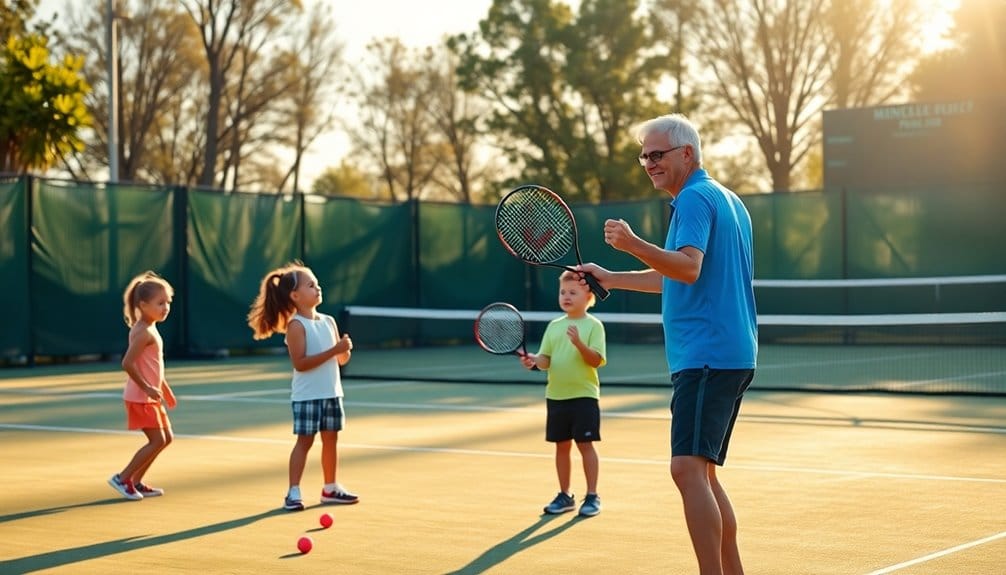
When you use simple language in coaching, it helps your students grasp concepts more easily. This approach enhances coaching clarity, making it simpler for them to understand what you’re teaching.
When you explain techniques using straightforward terms, you eliminate confusion and create a more engaging learning environment.
Effective communication is essential in tennis coaching; it allows you to convey strategies, techniques, and feedback without overwhelming your students.
Effective communication in tennis coaching ensures clear strategies and feedback, fostering an engaging and supportive learning atmosphere.
By breaking down complex ideas into digestible language, you empower your students to ask questions and participate more actively. Incorporating effective passing drills not only boosts understanding but also fosters improved teamwork and communication among players.
Key Terminology for Beginners

Understanding key terminology is essential for beginners in tennis. Familiarizing yourself with tennis vocabulary helps you grasp beginner concepts quickly.
Start with the game rules, which outline how to play and keep score. Learn about court dimensions, as they define the playing area. The scoring system is vital, so know how points, games, and sets work.
Explore different match formats, like singles and doubles, to understand player positions. Get to know various racket types and their purposes, along with grip styles that affect your play.
Finally, mastering swing mechanics will enhance your strokes. By grasping these terms, you’ll build a solid foundation for your tennis journey. Additionally, understanding match duration can help you manage your time effectively during practice and matches.
How to Break Down Tennis Techniques
Breaking down tennis techniques is essential for developing your skills effectively. Start with a technique breakdown of stroke mechanics, focusing on footwork fundamentals to guarantee you’re in the right position.
Explore grip variations to find what feels comfortable and enhances your swing paths. Incorporate tactical awareness during practice routines, so you understand shot selection based on your opponent’s position. As you refine your game strategies, always maintain mental focus to stay present during drills and matches. By systematically analyzing each element, you’ll improve not just your strokes but your overall performance. Additionally, incorporating high-intensity sprints can enhance your overall athleticism, benefiting your speed on the court.
Creating a Positive Learning Environment
Create a supportive atmosphere where players feel safe to experiment, encouraging mistakes as part of learning. Foster teamwork by emphasizing collaboration and communication among players.
Celebrate achievements, no matter how small, to motivate and inspire growth. Implement inclusive practices that welcome everyone, ensuring all feel valued.
Use constructive criticism to guide improvement while building relationships based on trust development. Offer motivating encouragement regularly, making each player feel important. Additionally, instilling a strong work ethic fosters resilience and perseverance, essential for long-term success in any sport.
Engaging Kids: Fun Drills and Games
When teaching kids tennis, keeping their energy high is key.
You can start with creative warm-up activities, followed by fun relay races and interactive skill challenges.
These engaging drills not only build skills but also make learning enjoyable!
Incorporating dynamic warm-ups can enhance flexibility and prepare muscles for practice.
Creative Warm-Up Activities
A great way to kick off a tennis practice is with creative warm-up activities that get kids excited and engaged. Start with partner stretches to promote teamwork and flexibility.
Follow that with dynamic movements, like high knees and butt kicks, to get their blood pumping. Incorporate balance drills using cones, challenging them to maintain stability while moving.
Mix in coordination games and fun tag to enhance their agility. Rhythm exercises, like clapping while jumping, can also add a playful element.
For a group challenge, set up stations for equipment exploration, allowing kids to experiment with different tennis gear. These activities not only warm them up but also foster a love for the game.
Fun Relay Races
Relay races can bring a burst of energy to your tennis practice while honing essential skills. You can create various relay race formats, mixing in obstacle courses to keep things exciting.
Incorporate teamwork strategies to foster collaboration among players, and introduce timing techniques to improve their speed. Use different equipment variations—like cones or racquets—to adapt to age groups and skill levels.
Establish simple scoring systems to encourage a competitive spirit, making sure everyone feels engaged. Keep an eye on energy levels and switch up activities if they start to wane.
Finally, use feedback loops to help players reflect on their performance, reinforcing learning while boosting their enthusiasm for the game.
Interactive Skill Challenges
After energizing players with relay races, it’s time to shift focus to interactive skill challenges that make practice even more engaging. These activities support skill progression while incorporating challenge variations to keep things fresh.
Try setting up fun competitions where kids can showcase their skills, like timed target hitting or obstacle courses. Encourage teamwork strategies by pairing players for drills, allowing them to learn from each other.
You can also incorporate skill assessment by tracking progress and celebrating improvements, which boosts motivation. Mix it up with different challenges each week, so your players stay excited and enthusiastic to learn.
Interactive skill challenges not only develop their tennis abilities but also make practice a blast!
Communicating With Adult Learners
Implement motivational strategies by connecting tennis skills to their personal goals, making learning relevant. Adaptive coaching is essential; tailor your teaching style to meet individual needs and skill levels.
Utilize feedback loops to guarantee learners understand their progress, reinforcing what they’ve mastered while identifying areas for improvement. Remember, skill reinforcement is key—practice helps solidify what they’ve learned. Additionally, building strong communication skills enhances the overall learning experience and fosters a supportive environment.
Visual Aids: Using Demonstrations Effectively
When you demonstrate techniques in tennis, you not only clarify complex skills but also engage your learners visually. Effective demonstration techniques can make a significant difference in how your students grasp the game.
Use clear, slow movements to show the proper grip, footwork, and swing. Encourage visual learning by incorporating various angles and perspectives, so learners can fully understand the mechanics involved.
You might also consider using video clips of professional players to highlight specific skills. This not only provides context but also inspires your students. Incorporating advanced passing techniques can also enhance their overall understanding of strategic play.
Encouraging Questions and Feedback
How can you create an open environment where students feel comfortable asking questions and providing feedback? Start by encouraging curiosity. Let your students know that no question is too small or silly.
Use phrases like “What do you think?” to invite their thoughts. Foster dialogue by actively listening and acknowledging their input. When a student shares feedback, respond positively, showing you value their perspective.
You might say, “That’s a great point!” or “I hadn’t thought of it that way.” This approach not only builds trust but also motivates them to engage more. Additionally, creating a supportive atmosphere enhances positional awareness, allowing students to feel more confident in their learning journey.
Adapting Language for Different Skill Levels
Creating an open environment for questions and feedback naturally leads to a need for clear communication tailored to your students’ skill levels.
When teaching beginners, use age-appropriate phrases and simple terms. For instance, instead of saying “forehand stroke,” you might say “hit the ball with the front of your racket.”
As students advance, introduce skill-specific vocabulary to enhance their understanding. Encourage them to use these terms, reinforcing their learning.
Remember to adjust your language based on their age and experience; younger players might respond better to playful language, while older ones may appreciate more technical terminology. This adaptability keeps your communication effective and helps students feel more confident on the court. Additionally, incorporating consistent practice routines can further enhance their development and understanding of the game.
Common Mistakes to Avoid When Teaching
When teaching tennis, it’s easy to overcomplicate your instructions, which can confuse your students.
Remember to keep things simple and adjust your teaching style to suit individual learning preferences.
Overcomplicating Instructions
While you might think that detailed instructions enhance understanding, overcomplicating your teaching can actually confuse students. Using overly complex terminology and unnecessary jargon leads to unclear instructions that leave learners scratching their heads.
Instead, focus on confusion avoidance by delivering simplified concepts. Effective communication hinges on your ability to provide concise explanations that resonate with your audience. Use relatable examples that make your points clear and memorable.
When you break down techniques into manageable steps, students grasp them more easily. Remember, teaching tennis isn’t about impressing with fancy language; it’s about ensuring your students understand and enjoy the game.
Simplifying your approach fosters a more engaging and effective learning environment for everyone involved.
Ignoring Individual Learning Styles
Many instructors overlook the importance of individual learning styles, which can greatly hinder a student’s progress in tennis. Recognizing that each student learns differently allows you to adapt your teaching methods for maximum engagement and skill reinforcement.
Here are key factors to take into account:
- Learning Pace: Adjust drills to match the speed at which each student grasps concepts.
- Student Motivation: Tailor practice routines to maintain enthusiasm and commitment.
- Feedback Techniques: Use personalized feedback to foster improvement and confidence.
- Engagement Strategies: Incorporate various activities to cater to different preferences.
- Instructional Clarity: Simplify your explanations to guarantee all students understand.
Building Confidence in Your Students
Implement positive reinforcement techniques, like praising effort, to boost their self-esteem. Encourage perseverance by reminding them that improvement takes time.
Praising effort and promoting perseverance are key to boosting self-esteem and fostering long-term improvement in your students.
Celebrate small victories, whether it’s a well-placed serve or a good rally, to keep them motivated. Fostering teamwork helps students feel connected and supported by their peers, which can ease performance anxiety.
Teach them self-esteem strategies that focus on their strengths, enhancing motivation to practice. When your students feel confident, they’ll play better and enjoy the game more.
Assessing Progress: Simple Evaluation Techniques
Confidence in your students sets the stage for effective evaluation of their progress. Use simple evaluation techniques to keep track of their development.
Here are some methods you can implement:
- Progress Tracking: Maintain a log of each student’s performance.
- Skill Assessments: Regularly evaluate specific tennis skills to measure growth.
- Feedback Methods: Provide constructive feedback to guide improvement.
- Self Evaluation Techniques: Encourage students to reflect on their own skills and set personal goals.
- Peer Assessments: Foster a collaborative environment where students can evaluate each other.
Making Tennis Enjoyable for Everyone
Tennis can be a blast for players of all ages and skill levels. To keep it enjoyable, try incorporating fun tennis activities that spark excitement.
Use inclusive coaching techniques to guarantee everyone feels welcome and valued. Teamwork exercises can enhance camaraderie, making the game more enjoyable as players learn to support each other.
Creative game variations, like mini-tournaments or relay races, can keep the energy high and encourage friendly competition.
Don’t forget to implement positive reinforcement strategies; celebrating achievements, big or small, boosts confidence and motivation.
By focusing on enjoyment and inclusivity, you’ll create an environment where everyone can thrive and love the game.
Conclusion
To sum it up, teaching tennis doesn’t have to be complicated. By using simple language and breaking down techniques, you can make the game accessible to everyone. Remember, it’s all about creating a positive atmosphere where your students feel comfortable to learn and grow. So, don’t throw in the towel when challenges arise—embrace them! With patience and encouragement, you’ll see your students flourish on the court, making tennis a game they truly love.