
How to Teach Tennis to Adults
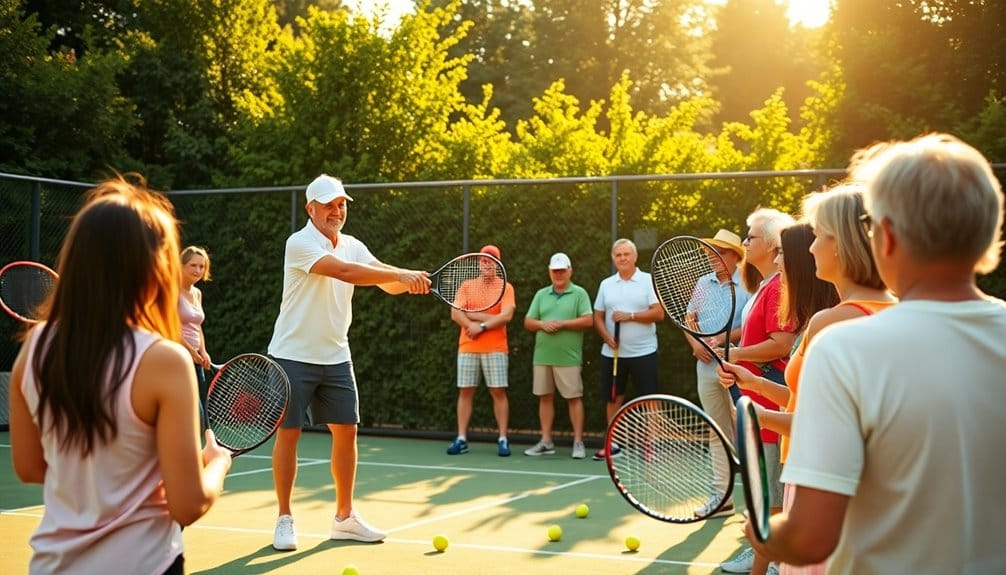
May 13, 2026To teach tennis to adults, focus on their unique needs by providing constructive feedback that boosts confidence. Create a supportive learning environment where players feel comfortable asking questions. Tailor drills to match skill levels and incorporate fun activities to encourage social interaction. Set realistic goals to keep motivation high and prioritize injury prevention. Remember, adapting your approach not only enhances learning but also makes the experience enjoyable. Explore further to discover effective strategies for success.
Understanding Adult Learners’ Needs
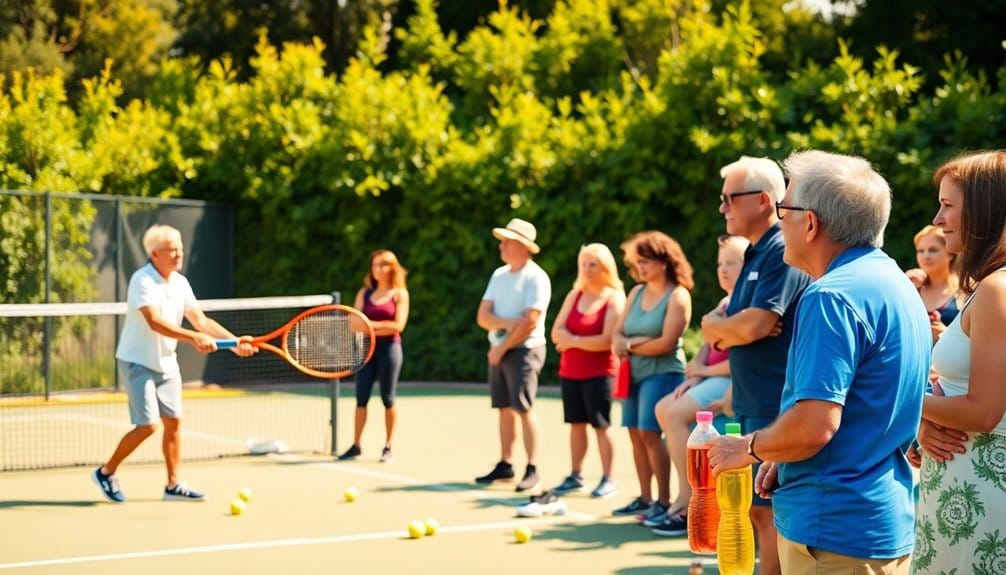
Be mindful of their feedback preferences; adults appreciate constructive criticism that aids skill retention. Time management is vital, as many juggle responsibilities outside of tennis. Recognize physical limitations and emotional barriers that might affect their performance.
Peer influence plays a significant role, so encourage a supportive environment. Finally, focus on goal orientation; adults are driven by achieving specific objectives. By addressing these aspects, you’ll create a more impactful and rewarding learning experience for your adult tennis players. Additionally, using age-appropriate equipment can enhance their comfort and performance on the court.
Creating a Comfortable Learning Environment
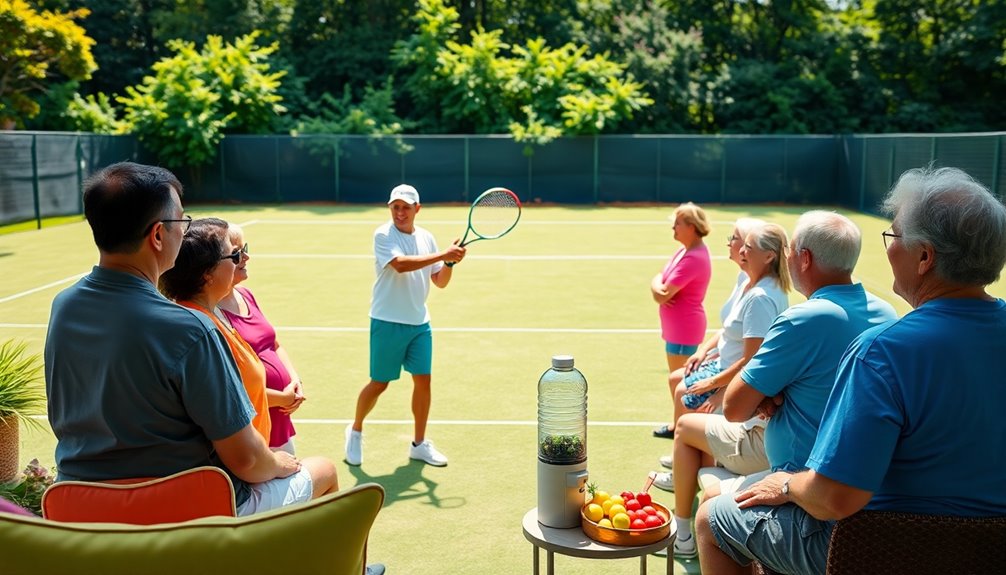
Establish a supportive atmosphere where everyone feels valued, regardless of skill level. Encourage players to ask questions and share their experiences.
Use positive reinforcement to build confidence and reduce anxiety.
Incorporating icebreakers or warm-up games can also help create camaraderie among participants.
Remember, the goal is to make each player feel relaxed and enthusiastic to learn. Additionally, fostering effective communication among players can significantly enhance their overall learning experience.
Essential Tennis Skills for Beginners
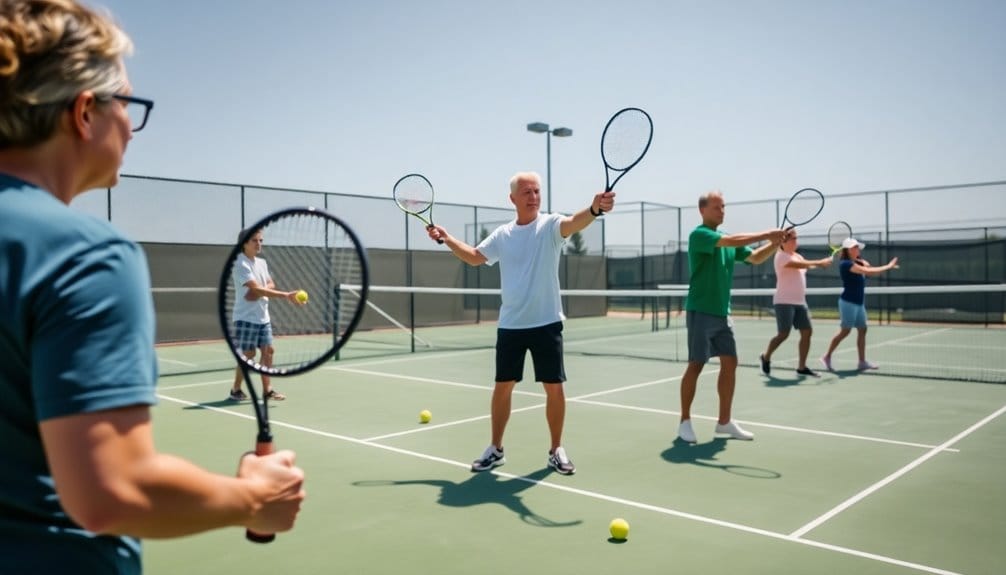
While mastering tennis may seem challenging at first, focusing on essential skills can make the learning process enjoyable and effective.
Start by honing your stroke techniques, as solid fundamentals are vital. Pay attention to court positioning to guarantee you’re always ready for your opponent’s shots.
Hone your stroke techniques and master court positioning to stay ready for every shot your opponent delivers.
Incorporate match strategy into your practice routines, helping you understand game tactics and how to outmaneuver rivals. Don’t forget about fitness training; staying in shape enhances your performance.
Additionally, cultivate mental focus to maintain concentration during matches. Choose the right equipment to suit your style, and prioritize injury prevention by warming up properly.
Finally, always practice good player etiquette, as respect on and off the court fosters a positive environment for everyone. Understanding the importance of sportsmanship and respect can greatly enhance your overall experience in the game.
Tailoring Drills for Adult Skill Levels
To effectively teach tennis to adults, you need to tailor drills that match their skill levels and learning styles. Focus on skill progression by adapting drills to guarantee they challenge each participant without overwhelming them.
Use varied feedback methods to address individual learning preferences, helping everyone grasp concepts at their own pace. Incorporate motivation techniques, like setting achievable goals, to keep players engaged. Additionally, integrating high-intensity sprints into conditioning can enhance their overall physical performance.
Prioritize injury prevention by making sure drills emphasize proper technique and warm-ups. Manage time effectively during sessions to allow for practice and rest, fostering a supportive environment.
Finally, consider group dynamics; pairing beginners with more advanced players can enhance learning while promoting teamwork and camaraderie. These strategies will create a more enjoyable and effective learning experience for adults.
Building Confidence Through Positive Reinforcement
Building confidence in adult tennis players is essential for their development, as positive reinforcement can greatly enhance their experience on the court. Use positive feedback to encourage skill reinforcement, acknowledging even small achievements. This recognition boosts self-esteem and cultivates a growth mindset, allowing players to view challenges as opportunities for learning.
Employ motivation techniques, like setting achievable goals, to keep players engaged and focused. Encourage peer support by fostering a collaborative environment where players celebrate each other’s progress. This camaraderie not only enhances individual confidence but also builds a supportive community. Additionally, embracing challenges can help players develop resilience, turning setbacks into opportunities for growth.
Incorporating Fun and Engaging Activities
To keep your adult learners engaged, incorporate warm-up games and drills that spark excitement right from the start. Competitive mini-tournaments can foster a fun atmosphere while encouraging players to apply their skills. Additionally, themed practice sessions add a creative twist that can make learning more enjoyable and memorable. Consider including key strategies for young players that can help adults refine their techniques and build confidence on the court.
Warm-Up Games and Drills
While warming up might seem like a chore, incorporating fun and engaging games can transform it into an exciting start to your tennis session.
Try dynamic warm-ups that elevate heart rates and enhance flexibility. For instance, set up a relay race where players dribble a tennis ball with their racquets. This not only gets everyone moving but also develops hand-eye coordination.
You can also introduce skill-based games like target practice, where players aim for specific zones on the court. This sharpens accuracy and builds confidence.
Mixing these activities into your warm-up routine keeps the energy high and fosters a sense of camaraderie among participants. When your players enjoy the warm-up, they’ll be more enthusiastic to jump into the lesson ahead!
Competitive Mini-Tournaments
Use scoring strategies that cater to different skill levels, ensuring everyone feels included and motivated. Effective tournament organization is key; set clear rules and time limits to maintain pace and enthusiasm.
During these events, focus on skill assessment to help players identify areas for improvement. Encourage team dynamics by mixing experienced and novice players, fostering camaraderie.
This not only boosts player motivation but also enhances overall enjoyment. Remember, the goal is to create a supportive environment where everyone can thrive, learn, and have fun on the court.
Themed Practice Sessions
After wrapping up a competitive mini-tournament, you can keep the energy flowing with themed practice sessions. These sessions can enhance engagement and foster camaraderie among players.
Here are three fun ideas:
- Seasonal Themes: Celebrate holidays with themed costumes, like Halloween or summer beach attire.
- Music Integration: Create playlists that match the theme, boosting energy and motivation during drills and skill challenges.
- Cultural Variations: Explore historical themes by incorporating tennis styles from different cultures, mixing up techniques and strategies.
You can also include team building exercises and even host themed tournaments to add excitement.
Addressing Common Adult Learning Challenges
As you begin teaching tennis to adults, it’s essential to recognize the unique challenges they face in a learning environment. Many adults have different learning preferences, which require you to adapt your teaching style.
Motivation factors can vary, so understanding what drives each player is critical. Time constraints often limit practice frequency, making it important to maximize each session.
You’ll also encounter physical limitations that may affect skill retention; be mindful of these when designing drills. Incorporate effective feedback mechanisms to alleviate anxiety management.
Encouraging peer support can foster a positive atmosphere, helping players feel more comfortable. Finally, use goal-setting strategies to help them track progress and stay engaged throughout their learning journey. Additionally, consider incorporating team coordination from soccer training, as it can enhance players’ ability to work together and improve overall performance.
Setting Realistic Goals for Progress
To make real progress in tennis, you first need to assess your current skill level.
Once you know where you stand, you can define short-term objectives that match your abilities.
This approach keeps you motivated and focused on improvement. Additionally, prioritizing youth development fosters a holistic approach that can be beneficial even for adult learners.
Assessing Current Skill Level
How can you accurately assess your current skill level in tennis? Understanding where you stand is essential for setting realistic goals. A thorough skill assessment will help you gauge your strengths and weaknesses.
Here are three effective methods for performance evaluation:
- Self-Reflection: Take note of your previous matches or practice sessions. Identify areas where you struggle or excel.
- Video Analysis: Record yourself playing. Watching the footage can reveal technical flaws and areas for improvement.
- Peer Feedback: Ask experienced players or coaches for honest feedback about your game. Their insights can highlight aspects you might overlook.
Defining Short-Term Objectives
Setting short-term objectives is essential for making tangible progress in your tennis skills. Start by identifying specific goals that are achievable within a few weeks, like improving your serve or enhancing your footwork.
Break these down into smaller tasks, which can make goal setting less overwhelming. For instance, focus on practicing your serve for 15 minutes each session.
As you work towards these goals, incorporate progress tracking. Keep a journal or use an app to note improvements and areas needing attention.
This not only helps you stay motivated but also provides a clear picture of your development. Celebrate small victories along the way, and adjust your objectives as necessary to keep pushing forward in your tennis journey.
Encouraging Social Interaction on the Court
Here are three effective ways to encourage interaction:
- Doubles Play: Pair players of different skill levels to promote teamwork and peer coaching.
- Team Challenges: Organize friendly competitions that encourage collaboration and communication among participants.
- Social Mixers: Host community events with icebreaker games, allowing players to network and form new friendships. Engaging in these activities can enhance teamwork and camaraderie, which are vital for improving overall skills and enjoyment on the court.
Providing Resources for Continued Improvement
To keep improving your tennis skills, consider exploring online training platforms that offer tailored lessons and drills. You can also check out local tennis clinics for hands-on experience and expert guidance. These resources can help you stay motivated and refine your game. Additionally, incorporating cognitive challenges into your practice can enhance your decision-making skills on the court.
Online Training Platforms
How can you continue improving your tennis skills outside of the court? Online training platforms offer a wealth of resources to enhance your game. With online coaching and virtual lessons, you can access tailored instruction from anywhere.
Here are three ways to maximize your experience:
- Training Videos: Use these to visualize techniques and strategies.
- Skill Assessments: Regular evaluations help track your progress and highlight areas for improvement.
- Community Forums: Engage with fellow players for tips and motivation.
These platforms provide scheduling flexibility, interactive sessions, and feedback loops, which allow for consistent performance tracking and progress reports.
Embrace the technology available to you, and keep pushing your skills forward!
Local Tennis Clinics
You can take advantage of promotional events that feature beginner incentives, helping newcomers feel welcome. Skill assessments conducted by certified coaches can pinpoint areas for improvement, while member testimonials highlight the positive experiences of past participants.
Many clinics also offer access to instructional videos, allowing you to practice techniques at your own pace. With coaching certifications in place, you’ll learn from experienced professionals who are dedicated to helping you grow your game.
Engaging in these clinics can greatly enhance your tennis journey.
Conclusion
Teaching tennis to adults can be as rewarding as hitting a grand slam. By understanding their unique needs and creating a supportive environment, you’ll help them thrive on the court. Remember, it’s not just about mastering serves and volleys; it’s about building confidence and fostering connections. So, lace up those sneakers and get ready to rally—your efforts can turn beginners into lifelong fans of the game, just like a vinyl record spinning a classic tune!