
How to Teach Tennis to Kids
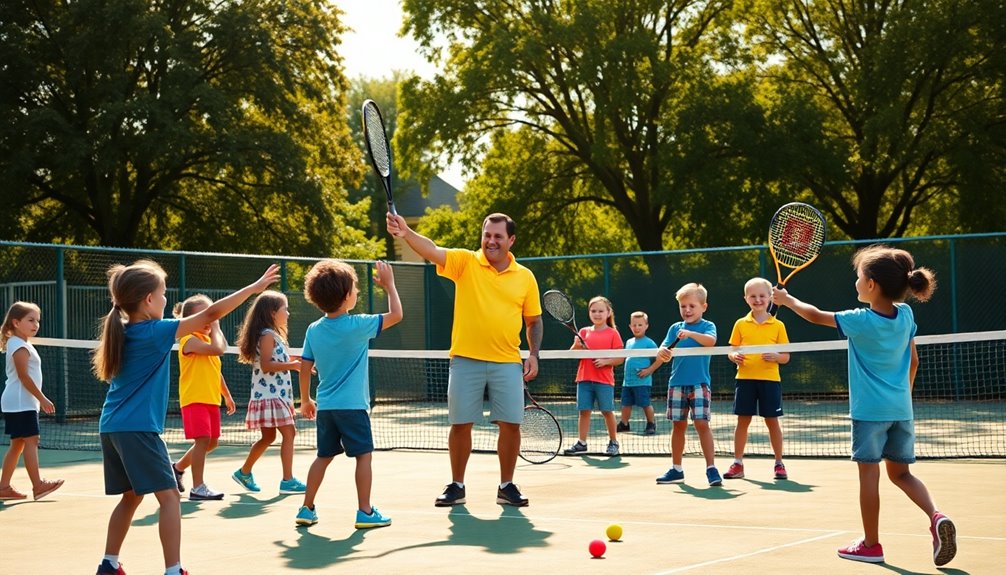
May 12, 2026Teaching tennis to kids is all about making it fun and engaging. Start with exciting drills like Balloon Tennis to boost coordination and use games to foster teamwork. Focus on essential skills like grip techniques and basic strokes, while encouraging kids to set personal goals. Positive reinforcement builds their confidence, and friendly matches promote sportsmanship. Remember, the key is to keep lessons lively and inclusive, ensuring everyone feels part of the game. There’s so much more to explore!
Why Teaching Tennis to Kids Matters
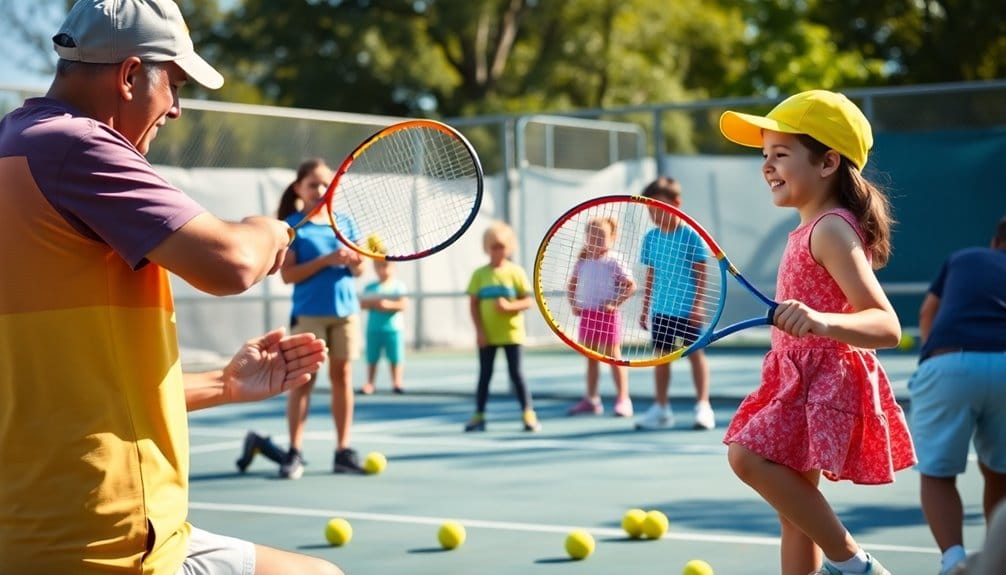
Teaching tennis to kids matters not just for their physical health, but also for their social and emotional development. By introducing them to the sport, you’re fostering physical fitness that sets the foundation for a healthy lifestyle. Kids learn to develop coordination, strength, and endurance, which are essential skills that benefit them in various activities.
Moreover, tennis teaches valuable life skills like teamwork, discipline, and resilience. As they engage in matches, they build friendships and learn to handle both victories and defeats gracefully. Additionally, the impact of diverse athletes in sports can inspire young players to appreciate inclusivity and cultural representation.
These experiences contribute to their emotional growth, offering long-term benefits that extend beyond the court. By encouraging kids to play tennis, you’re equipping them with tools that enhance their overall well-being and prepare them for future challenges.
Fun Drills to Get Kids Excited About Tennis
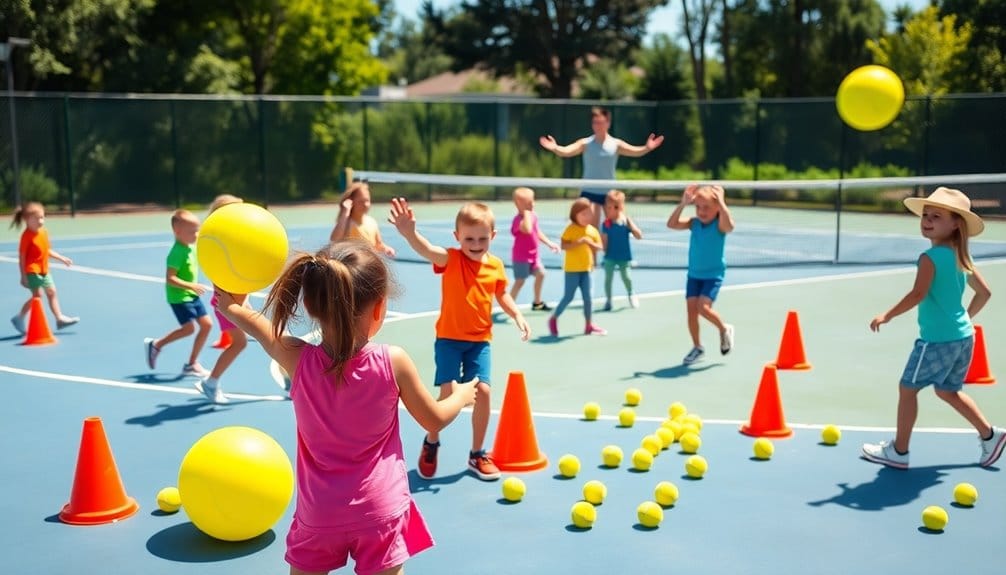
To get kids excited about tennis, you can introduce engaging ball games that make learning fun. Creative racket challenges can spark their interest and encourage friendly competition. These activities not only develop skills but also keep the energy high and the smiles wide. Incorporating basic tennis drills helps build essential techniques while ensuring players stay actively involved.
Engaging Ball Games
Engaging kids in tennis becomes a breeze with fun ball games that spark their excitement and enthusiasm.
Try incorporating fun partner games like “Balloon Tennis.” Kids can use their rackets to keep a balloon in the air, boosting hand-eye coordination while having a blast.
Another great option is interactive target activities, where you set up cones or hoops on the court. Challenge the kids to hit balls into these targets, rewarding them with points for accuracy.
This not only makes practice enjoyable but also helps develop their aiming skills.
Creative Racket Challenges
While kids might initially feel hesitant about picking up a racket, introducing creative challenges can ignite their passion for tennis.
Start with a fun racket relay, where kids race to hit a ball into a designated area, passing the racket to their teammate. This fosters teamwork and excitement.
Next, set up target practice using cones or hoops; challenge them to hit specific targets from different distances. You can add points for each successful hit, turning it into a friendly competition.
Encourage creativity by letting them invent their own drills, too. These activities not only build essential skills but also make learning enjoyable.
Essential Skills Every Young Player Should Learn
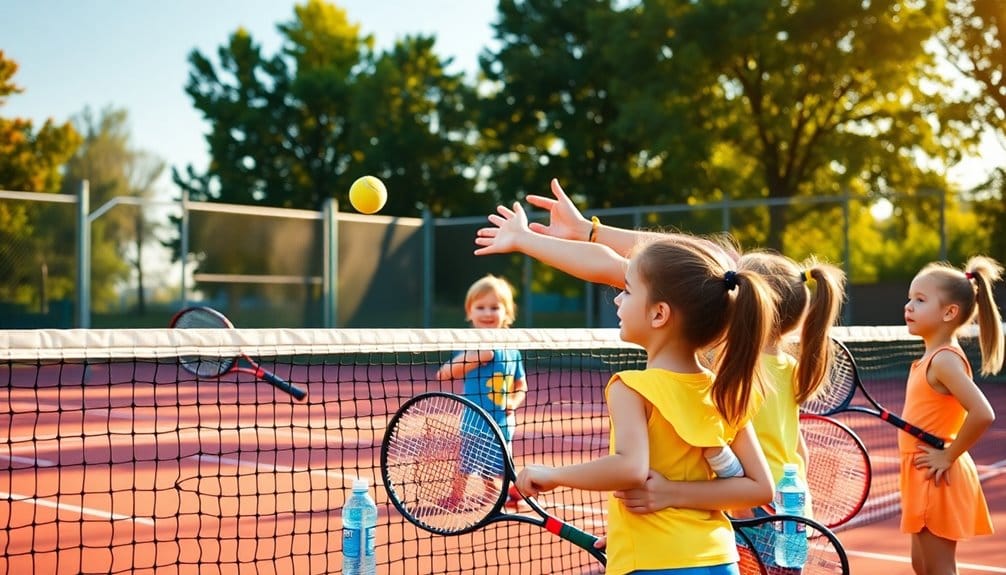
When introducing kids to tennis, focusing on essential skills lays a solid foundation for their development.
Start with hand-eye coordination; engaging drills like tossing and catching a ball help improve timing and reflexes.
Next, emphasize footwork fundamentals. Teach them how to position their feet for ideal movement, whether they’re serving or returning. Simple exercises like ladder drills can make this fun while enhancing agility.
Encourage them to practice proper grip techniques, as this affects their control and power.
Finally, introduce basic strokes like forehands and backhands, ensuring they understand the importance of follow-through. Incorporating dynamic stretches can significantly enhance their flexibility and overall performance on the court.
Tips for Building Confidence on the Court
Building confidence on the court is essential for young tennis players, and there are several effective strategies to help them thrive.
Start by using positive reinforcement; celebrate their successes, no matter how small. This boosts their self-esteem and encourages them to keep trying.
Introduce age-appropriate challenges that match their skill level, allowing them to experience gradual success. As they master these challenges, they’ll feel a sense of accomplishment that fuels their motivation.
Create a supportive environment where mistakes are viewed as learning opportunities, not failures. Encourage them to set personal goals, making their progress tangible. Additionally, using age-appropriate equipment can enhance their overall experience and confidence on the court.
Promoting Teamwork and Sportsmanship in Young Players
A supportive environment not only fosters confidence but also encourages teamwork and sportsmanship among young players.
To promote these values, integrate fun team-building exercises into your lessons. Here’s how you can do it:
- Group Drills: Pair players for drills that require communication and cooperation, enhancing their ability to work together.
- Positive Reinforcement: Celebrate both individual and team achievements, creating an atmosphere where players feel valued and motivated.
- Friendly Matches: Organize friendly competitions where players cheer for each other, reinforcing camaraderie and promoting a healthy competitive spirit. Additionally, incorporating small-sided games can enhance their understanding of teamwork and improve overall performance on the court.
How to Keep Tennis Lessons Engaging and Effective
How can you keep young players engaged during tennis lessons? Start by incorporating visual aids, like colorful diagrams and videos, to illustrate techniques. These tools can make complex concepts easier to grasp and more fun to learn.
Next, introduce interactive sessions where players can participate in drills that encourage teamwork and friendly competition. Games like “King of the Court” or relay races can break the monotony and keep spirits high.
Introduce interactive drills that foster teamwork and friendly competition, like “King of the Court” or relay races, to keep energy high.
Also, use positive reinforcement to celebrate their progress, no matter how small.
Finally, change up your routine regularly to maintain excitement; kids thrive on variety. By combining visual aids and interactive sessions, you’ll create an environment where learning tennis remains enjoyable and effective. Additionally, fostering teamwork and perseverance through engaging activities can enhance their overall development in the sport.
Conclusion
Just as a gardener nurtures young plants, you can help kids flourish on the tennis court. By planting seeds of confidence, teamwork, and fun drills, you cultivate a love for the game that will grow over time. Remember, every swing and serve is a step toward their blossoming potential. So, embrace the journey, celebrate small victories, and watch as these young players transform into skilled athletes, ready to take on any challenge that comes their way.