
Drills to Build Confidence on Court
May 12, 2026To build confidence on the court, focus on specific drills that enhance your skills. Spot shooting, free throws, and rhythm drills sharpen your technique and muscle memory. Team drills foster trust and communication among players, while visualization and positive self-talk boost your mindset. Tracking your progress helps you reflect on successes and areas for improvement. By committing to these strategies, you can see significant growth in your confidence and performance in games. Discover more ways to elevate your game!
Understanding the Connection Between Confidence and Performance
Confidence plays a pivotal role in how you perform, influencing not just your mindset but also the outcomes of your efforts. When you believe in yourself, you’re more likely to push past performance anxiety and seize opportunities on the court.
Implementing self-belief strategies can greatly enhance your game. For instance, visualize your success before a match to help quiet those anxious thoughts. Positive affirmations can also reinforce your belief in your abilities.
Remember, confidence isn’t just innate; it’s cultivated through practice and perseverance. By actively addressing your doubts and focusing on your strengths, you’ll see a marked improvement in your performance. Additionally, consistent practice of defensive skills can bolster your confidence, making you a more formidable player on the court.
Embrace these strategies, and watch how they transform your approach to the game.
Key Drills to Enhance Your Shooting Confidence
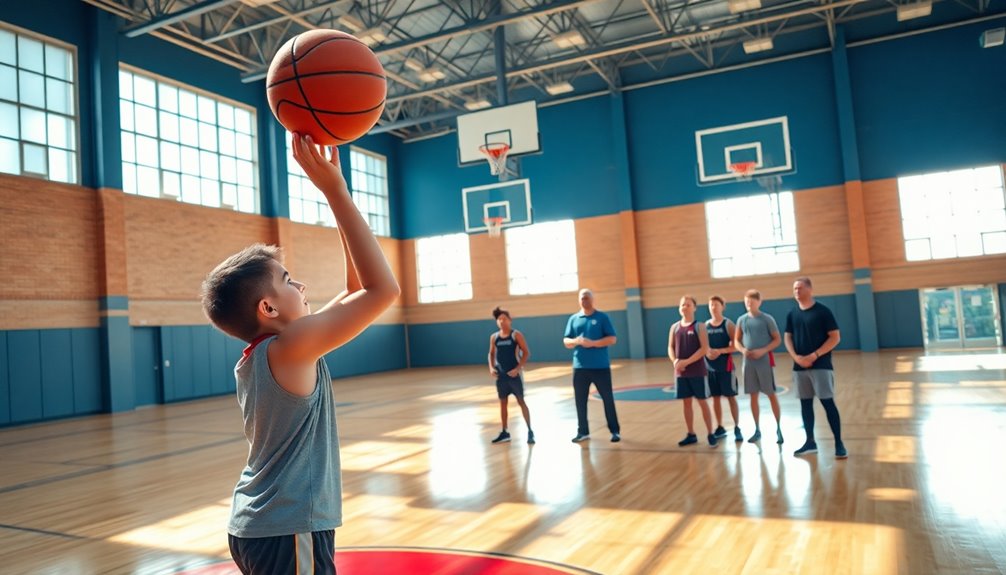
To boost your shooting confidence, focus on spot shooting drills and free throw practice.
These exercises help you refine your technique and build muscle memory.
As you see improvement, you’ll feel more assured in your abilities on the court. Incorporating consistent practice will reinforce muscle memory and improve shot accuracy over time.
Spot Shooting Drills
While mastering spot shooting drills, you’ll quickly notice how your shooting confidence begins to soar. These drills enhance your shooting accuracy by allowing you to focus on form consistency and release timing.
Incorporate rhythm drills to create a smooth shooting motion, while also emphasizing footwork focus to improve your balance. During target practice, simulate game scenarios to prepare for pressure situations, helping you refine your shot selection.
As you progress, pay attention to spacing awareness, ensuring you’re aware of your surroundings. This combination of techniques not only builds confidence but also makes you a more versatile shooter.
Embrace these drills, and watch your performance elevate on the court!
Free Throw Practice
Master your free throw practice to greatly boost your shooting confidence. Start by focusing on your shooting mechanics—consistency is key. Set aside time each week to shoot 50 free throws, paying attention to your form and follow-through.
Next, simulate pressure scenarios. Imagine the game’s on the line, and you’re at the line with fans cheering or teammates watching. This mental practice helps you build resilience.
You can also incorporate a drill where you make a specific number of consecutive free throws before moving on to other exercises.
Track your progress and celebrate small wins. By honing your technique and practicing under pressure, you’ll transform your free throw routine into a reliable asset during games. Confidence will follow!
Building Mental Toughness With Visualization Techniques
Visualization techniques can be a game changer for your mental toughness. By mastering the basics and applying effective imagery, you can overcome mental barriers that hold you back. Let’s explore how you can harness this powerful tool to boost your confidence. Additionally, fostering self-belief can significantly enhance your performance both on and off the court.
Visualization Basics Explained
When you harness the power of visualization, you can greatly enhance your mental toughness and overall performance. Visualization techniques help you create a mental blueprint of success, allowing you to see yourself executing skills flawlessly.
By engaging in imagery exercises, you can mentally rehearse challenging situations, which prepares you for real-game scenarios. Picture yourself making that vital shot or responding calmly under pressure. This practice not only boosts your confidence but also reinforces positive outcomes in your mind.
Start by dedicating a few minutes each day to visualize your goals and the steps needed to achieve them. With consistent practice, these techniques can transform your approach on the court, making you more resilient and focused.
Techniques for Effective Imagery
To effectively harness imagery techniques, you need to engage all your senses during the visualization process. Start with mental rehearsal, where you vividly picture each movement and strategy.
Incorporate visualization exercises that stimulate sight, sound, touch, and even smell, making your imagery as realistic as possible. Use focused breathing to calm your mind and enhance sensory engagement, allowing you to connect deeply with your performance.
This practice aids not just in performance enhancement but also in emotional regulation, helping you maintain composure under pressure. Consider integrating imagery into your pre-performance routines to create a consistent mental framework.
Overcoming Mental Barriers
While mental barriers can feel challenging, you can use visualization techniques to break through them and strengthen your mental toughness. Start by creating vivid mental images of yourself overcoming obstacles, which builds mental resilience and enhances emotional regulation.
Use self-doubt strategies to replace negative thoughts with positive affirmations, allowing you to manage fear and performance anxiety effectively. Incorporate focus techniques that help you concentrate during high-pressure situations, transforming them into opportunities for growth.
Remember, developing a growth mindset helps you embrace challenges as part of your journey. Utilize motivation boosters, like recalling past successes, to inspire stress relief and reinforce your determination.
With practice, these methods will empower you to excel on the court.
How Routine Practice Can Stabilize Your Confidence
Routine practice acts as a foundation for building confidence, ensuring you feel more secure in your abilities. By engaging in consistent practice, you establish habits that reinforce your skills.
Routine practice lays the groundwork for confidence, helping you feel secure in your abilities and reinforcing essential skills.
Incorporating self-assessment techniques helps you track your progress, while performance feedback allows you to identify areas for improvement. Focused training during structured sessions maximizes efficiency and keeps you motivated.
Setting specific goals provides direction, making your practice sessions more purposeful. Having accountability partners can further enhance your commitment, encouraging you to stay on track.
Reflective journaling after each session enables you to process your experiences and adjust your approach. Together, these routine benefits create a solid framework that stabilizes your confidence on the court. Additionally, incorporating endurance training can significantly enhance your overall performance and stamina during games.
Team Drills That Promote Trust and Communication
Building on a solid foundation of routine practice, engaging in team drills can considerably enhance trust and communication among players. Incorporating trust exercises into your training can help you bond with teammates, fostering a supportive environment.
For instance, try the “Blindfolded Partner Drill,” where one player guides a blindfolded partner through an obstacle course using only verbal cues. This exercise builds reliance and enhances communication skills.
Additionally, communication games like “Two Truths and a Lie” can break the ice and encourage open dialogue. These activities not only strengthen relationships but also create a positive team atmosphere. Regular practice of defensive drills allows players to track their progress and fosters a culture of continuous improvement.
When trust and communication flourish, you’ll find your confidence on the court grows, leading to better performance during games.
The Role of Positive Self-Talk in Sports Performance
Since your mindset plays an essential role in your athletic performance, positive self-talk can greatly boost your confidence on the field or court.
By using self-affirmation techniques, you can create powerful motivation strategies that reinforce your abilities. Think about mindset shifts that help you view challenges as opportunities, rather than setbacks.
Cognitive restructuring allows you to replace negative thoughts with positive reinforcement, enhancing your focus. Incorporating encouragement methods, like reminding yourself of past successes, fosters resilience building. Motivation drives players to push limits and strive for excellence.
Surrounding yourself with supportive environments further strengthens this practice, making it easier to maintain positive self-talk.
Tracking Progress: Measuring Confidence Gains
Utilize self-assessment tools, such as journals or apps, to document your feelings before and after practices or matches. Reflecting on these experiences helps you recognize patterns in your confidence levels.
Consider seeking feedback from coaches or teammates, as their perspectives can provide valuable insights. Incorporating mental skills training can further enhance your performance and confidence on the court.
Adapting Drills for Different Skill Levels and Sports
To effectively boost confidence in athletes, adapting drills for different skill levels and sports is essential. Here are some strategies to contemplate:
Adapting drills for varying skill levels is crucial for enhancing athlete confidence and engagement.
- Skill Progression: Start with basic techniques, gradually increasing complexity as athletes improve.
- Sport Variations: Tailor drills to fit the specific needs of each sport, ensuring relevance and engagement.
- Personalized Coaching: Provide individualized feedback to address unique strengths and weaknesses, fostering a supportive environment.
- Inclusive Practices: Incorporate age considerations and adaptability strategies, ensuring all athletes can participate and benefit.
Additionally, utilizing structured tools can enhance communication between coaches and players, further fostering an environment of confidence and growth.
Conclusion
Building confidence on the court isn’t just about skill; it’s about mindset, support, and perseverance. Embrace the drills that sharpen your shooting, visualize your success, and maintain a routine that grounds you. Trust your teammates, uplift yourself with positive self-talk, and celebrate every small victory. As you track your progress, remember: each step forward builds resilience, each challenge strengthens resolve, and each moment on the court shapes the confident athlete you’re destined to become.