
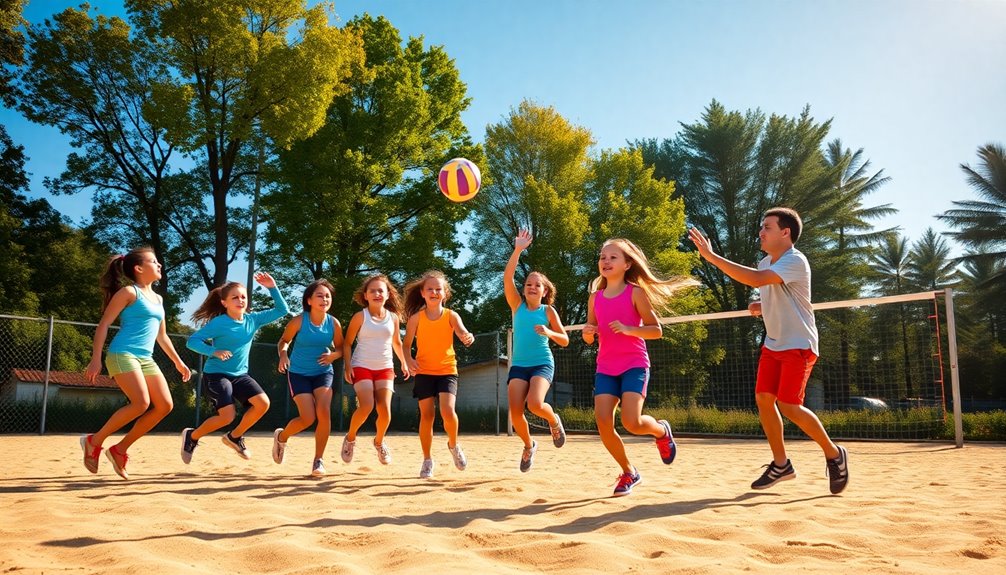
Volley Drills for Beginners
April 28, 2026If you’re just starting out, mastering volley drills is essential for building confidence and improving your technique. Focus on grip and footwork to enhance your positioning. You can practice with a partner to integrate timing and communication, making drills more engaging. Solo drills can help you refine your skills and boost your accuracy. Consistency is key, so set specific goals and track your progress. Keep pushing your limits, and you’ll uncover more tips to elevate your game.
Understanding the Importance of Volley Drills

The beginner benefits of focusing on volleys can’t be overstated. You’ll gain confidence at the net, making you more aggressive and competitive.
Plus, mastering volleys helps you create opportunities to finish points early, reducing your opponent’s chances to rally. Incorporating finishing drills into your practice routine will further enhance your ability to convert scoring opportunities effectively.
Embrace these drills, and you’ll see substantial growth in your overall game.
Basic Volley Techniques Every Beginner Should Master
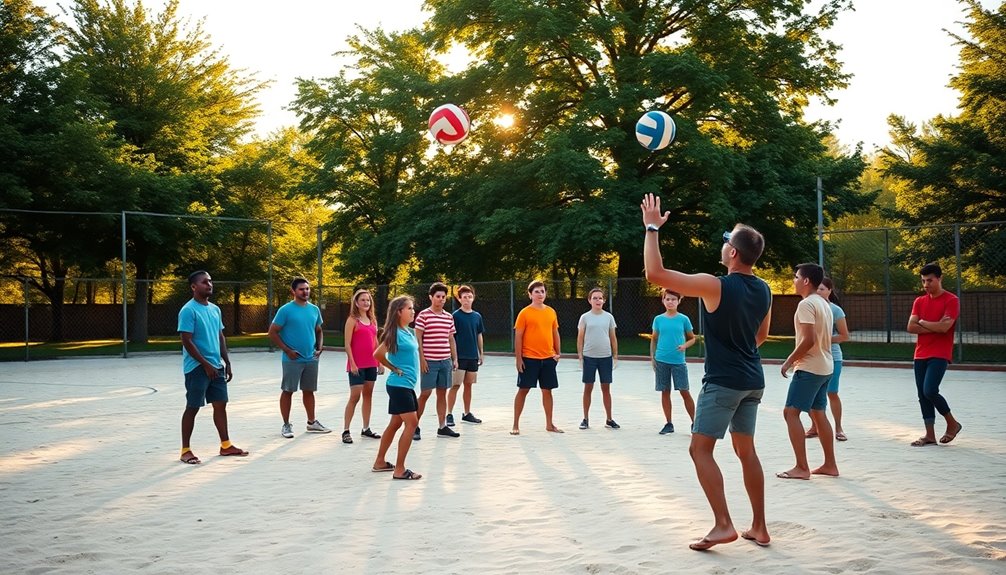
Building on the confidence you’ll gain from practicing volleys, mastering basic techniques is essential for your progress.
Start with grip techniques; a proper grip guarantees better control. Next, focus on footwork fundamentals to position yourself effectively for each shot.
Experiment with stance variations to find what feels comfortable, while maintaining good body positioning throughout your volley. Pay attention to swing mechanics—smooth, fluid swings lead to more powerful volleys.
Incorporate timing drills to enhance your reaction speed and accuracy. Always remember to have a follow-through focus, as it helps maintain balance and control. Additionally, consider incorporating on-ball off-ball movements to elevate your overall performance on the court.
Finally, hone your shot selection by recognizing when to attack or defend, allowing you to make smarter decisions on the court.
Fun Partner Drills to Enhance Your Volley Skills
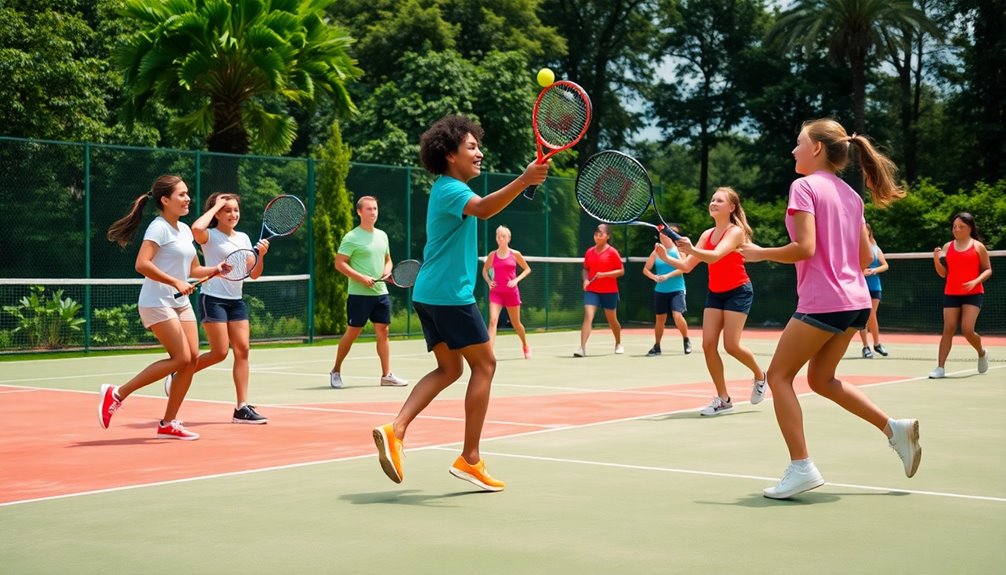
Now that you’ve mastered the basics, it’s time to have some fun with partner drills that boost your volley skills.
You’ll get to practice targeted volleys, sharpen your reaction time, and improve coordination with your partner. Incorporating passing accuracy into your volley drills will enhance your overall ball control and effectiveness on the field.
Let’s jump into these exciting exercises that make learning enjoyable!
Targeted Volley Exercises
While improving your volley skills can feel challenging, engaging in targeted partner drills makes the process both fun and effective.
Start by identifying target zones on the court, focusing on volley placement. One partner can feed balls to specific areas while the other practices footwork drills to reach those spots efficiently.
Incorporate net positioning to guarantee you’re ready for both offensive strategies and defensive volleys. Work on timing techniques to hit the ball at just the right moment, and experiment with angle variations to keep your opponent guessing.
These drills not only enhance your technical skills but also build teamwork, making your practice sessions more enjoyable and productive.
Reaction Time Drills
To elevate your volley skills even further, incorporating reaction time drills can greatly boost your performance on the court.
These fun partner drills focus on key areas like reflex training and hand-eye coordination. Here are four effective drills to try:
- Visual Cues: One partner randomly holds up colored cards; you react by voicing the color while volleying.
- Quick Footwork: Alternate volleys with your partner while moving side to side, enhancing agility and anticipation skills.
- Timing Exercises: Count down before hitting volleys, improving decision-making under pressure.
- Focus Games: Set targets on the court; aim for them while your partner distracts you, sharpening your concentration.
These activities will sharpen your reaction time and elevate your overall volleying game.
Partner Coordination Games
Enhancing your volley skills becomes even more enjoyable when you engage in partner coordination games. These activities help develop essential teamwork strategies and communication skills.
Start with timing drills, where you and your partner hit the ball in sync, focusing on rhythm coordination. Incorporate footwork fundamentals by moving around the court together, ensuring you both maintain proper positioning.
Trust exercises can deepen your connection, as you rely on each other to anticipate shots. Competitive games, like mini-tournaments, add excitement while reinforcing your skills under pressure.
Don’t forget to hold feedback sessions afterward to discuss what worked and what didn’t, helping you both improve. With practice, you’ll notice significant advancements in your volley performance.
Solo Drills for Improving Your Volley Game
Mastering your volley game doesn’t have to wait for a partner; you can practice solo and see significant improvements. Focus on these key areas:
- Footwork Fundamentals: Move quickly to the ball, maintaining balance and agility.
- Grip Adjustments: Experiment with different grips to find what feels most comfortable for volleys.
- Targeting Strategies: Use cones or markers to improve your accuracy when aiming for specific areas.
- Timing Techniques: Practice hitting the ball at the peak of its bounce for maximum control.
Additionally, pay attention to your body positioning, handling spins, and maintaining court awareness. Understanding soccer field dimensions can also help you visualize your positioning on the court.
Keep your mental focus sharp, and you’ll see your volley skills elevate dramatically!
Tips for Developing Consistency and Accuracy in Your Volleys
Improving your volleys means not just focusing on individual practice but also honing your consistency and accuracy during matches. To achieve this, incorporate consistency techniques like repetitive practice routines that allow you to refine your skills.
Use accuracy strategies by aiming for specific targets during drills, which sharpens your precision. Mental focus is essential; visualize successful volleys to build confidence. Additionally, work on footwork drills to enhance your movement and body positioning, ensuring you’re in the right spot for each shot. Timing adjustments can also make a big difference; practice hitting the ball at its peak.
Aiming for specific targets during drills sharpens precision, while visualizing successful volleys enhances mental focus and builds confidence.
Finally, utilize feedback methods, whether from a coach or video analysis, to identify areas for improvement and track your progress effectively. Engaging in dynamic stretches can also prepare your body for the physical demands of volleying.
How to Progress and Challenge Yourself as You Improve
As you improve your volley skills, setting personal goals can keep you motivated and focused. You can also increase the complexity of your drills to challenge yourself further. Tracking your progress helps you see how far you’ve come and where you need to go next. Incorporating passing accuracy drills into your routine can significantly enhance your overall performance.
Set Personal Goals
Setting personal goals is essential for any beginner looking to progress in volleyball. By focusing on goal setting, you can enhance your personal motivation and maintain mental focus.
Here are four steps to help you set effective goals:
- Skill Assessment: Identify your strengths and weaknesses to tailor your goals.
- Achievable Milestones: Break down larger goals into smaller, attainable objectives to track your progress.
- Performance Evaluation: Regularly review your progress to see what’s working and what needs adjustment.
- Competitive Mindset: Challenge yourself to push beyond your comfort zone, fostering growth and resilience.
Increase Drill Complexity
Once you’ve mastered the basics, increasing drill complexity is essential for your growth in volleyball. Start by incorporating advanced volley strategies into your practice sessions.
Introduce variations like changing the speed or direction of your volleys to simulate competitive volley scenarios. This not only challenges your reaction time but also helps you adapt to unpredictable plays.
Next, add movement to your drills; practice volleys while running or shifting positions. This mimics real-game situations and builds your stamina.
You can also work with a partner for drills that require communication and teamwork, essential for success on the court. By continuously challenging yourself, you’ll refine your skills and boost your confidence, preparing you for higher levels of competition.
Track Your Progress
After increasing drill complexity, tracking your progress becomes essential for continued improvement. With effective progress tracking, you can identify strengths and areas for growth.
Here’s how to challenge yourself:
- Set Goals: Define specific, measurable targets for each practice session.
- Keep a Journal: Document your drills, scores, and what you learned. This aids in performance analysis.
- Video Yourself: Record your sessions to visually assess your technique and progress over time.
- Seek Feedback: Ask coaches or peers for constructive criticism to gain a different perspective.
Conclusion
As you lace up your shoes and plunge into these volley drills, remember that improvement is a journey, not a sprint. Just like a potter shapes clay, each practice session molds your skills into something impressive. Stay consistent, challenge yourself, and watch your volleys transform from shaky to solid. Embrace the process, and soon enough, you’ll find yourself confidently smashing those volleys like a pro on the court. Keep practicing, and let your passion for the game shine!