

How to Teach Volleys to New Players
April 27, 2026To teach volleys to new players, focus on the importance of positioning, grip, and footwork. Start with basic drills to build confidence, emphasizing a relaxed grip and balanced stance. Encourage players to practice their timing and anticipate opponent shots. Make sure they understand common mistakes, like poor footwork and lack of follow-through. Use partner drills for real-game scenarios to enhance their skills. As they progress, you’ll uncover advanced techniques and strategies to elevate their game even further.
Understanding the Importance of Volleys in Tennis
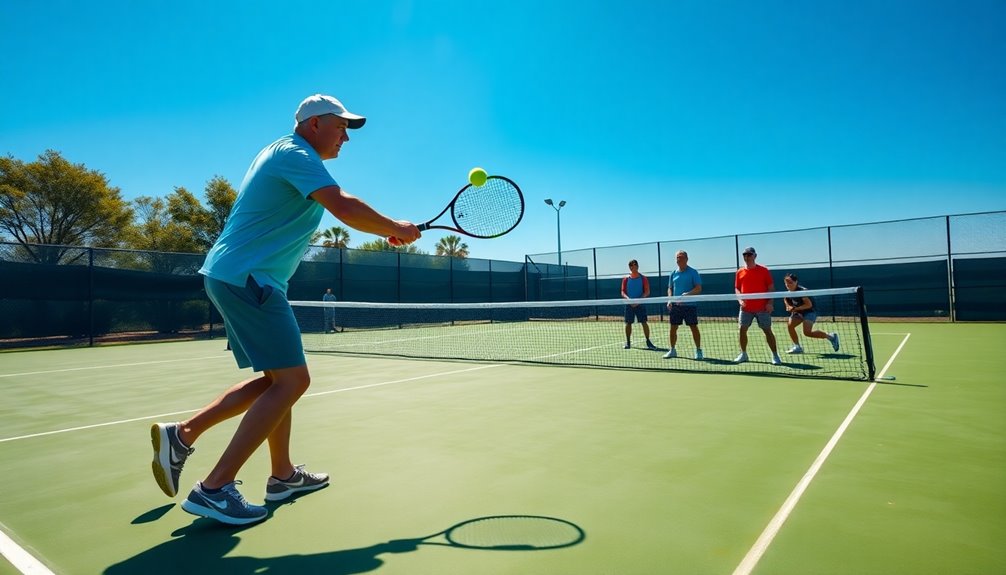
Volleys are a critical component of tennis that can greatly elevate your game. Mastering this skill not only enhances your ability to control the net but also shifts the pace of play in your favor.
A solid volley strategy allows you to take the initiative, putting pressure on your opponent. When you approach the net with confidence, you’re more likely to capitalize on their mistakes.
However, executing effective volleys requires mental focus. You need to anticipate your opponent’s shots and react quickly, maintaining a clear vision of the court. Additionally, understanding soccer field dimensions can provide insights into spatial awareness that can benefit your positioning on the tennis court.
Key Mechanics of a Successful Volley
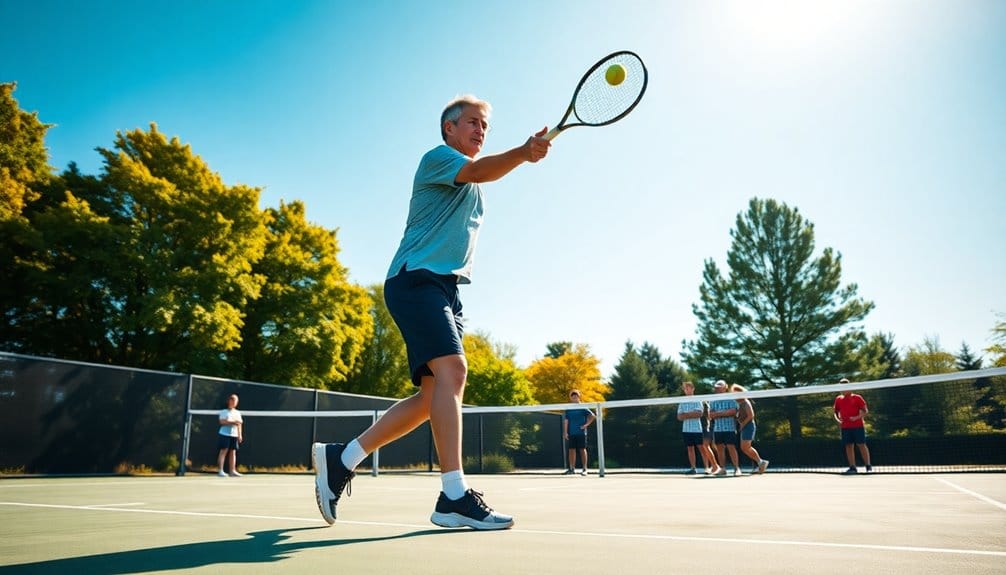
To execute a successful volley, you need to focus on key mechanics that enhance your control and precision.
Start with body positioning—stay balanced and low, ready to move. Improve your reaction time by practicing timing drills that sharpen your ability to respond quickly.
Effective shot selection is essential; always consider targeting angles that will maximize your chances of winning the point. Employ volley strategies that suit your playing style, allowing your anticipation skills to predict your opponent’s shots.
Maintain mental focus throughout the rally, as staying present will help you make better decisions. Additionally, practicing ball control techniques can significantly improve your volleying skills by enhancing your touch and precision with the ball.
Common Mistakes Beginners Make When Volleying
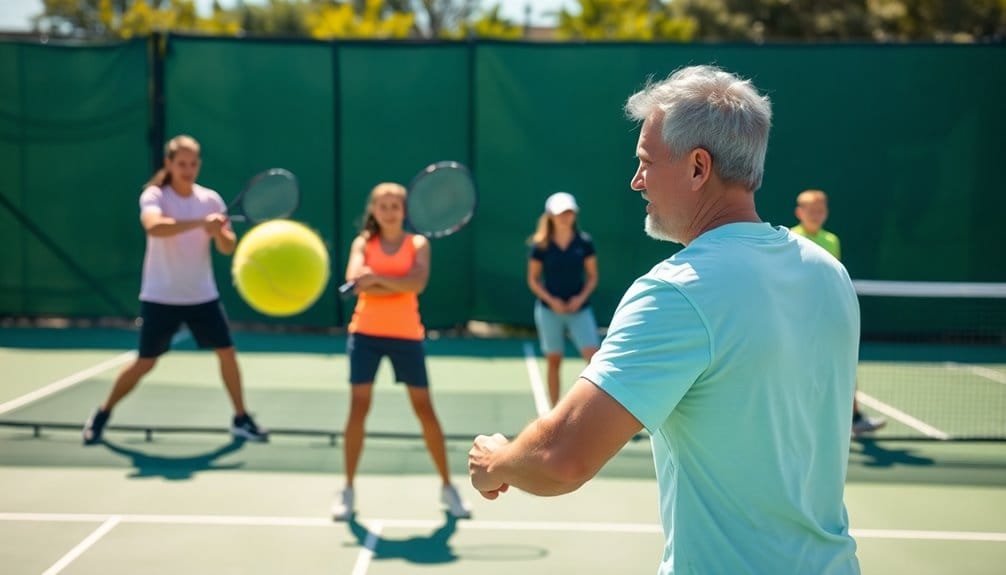
When starting out with volleys, many beginners often overlook essential fundamentals that can hinder their performance. Here are some common mistakes to watch out for:
- Timing errors: Failing to connect with the ball at the right moment can lead to inconsistent shots.
- Ignoring footwork: Not moving your feet properly can throw off your body positioning and balance.
- Overgripping the racket: This can restrict your swing, leading to poor eye-hand coordination and an inconsistent swing path.
- Lack of follow-through: Rushing volleys without completing your swing can result in incorrect shoulder alignment and missed opportunities.
Additionally, beginners often struggle with effective communication, which is crucial for anticipating the ball’s movement and improving overall performance.
Setting Up the Perfect Volley Position
To set up for the perfect volley, you need to focus on your stance, grip, and court positioning. Aligning your body properly and holding your racket correctly can make all the difference in your game. Additionally, understanding how stoppage time can affect player focus and energy levels is crucial for maintaining peak performance during intense moments of play. Let’s break down these key elements to help you master your volley.
Ideal Stance Alignment
Setting up the perfect volley position hinges on three key aspects: foot placement, body alignment, and readiness. By focusing on these elements, you can enhance your players’ performance.
Here are four essential tips for achieving ideal stance alignment:
- Foot Placement: Position feet shoulder-width apart for stability.
- Knees Slightly Bent: This promotes balance and quick reactions.
- Weight Forward: Distribute weight on the balls of your feet to prepare for movement.
- Stance Variations: Experiment with open or closed stances to find what feels best.
Incorporating these balance techniques into your training will help players feel more confident and agile on the court, making their volleys more effective and controlled.
Racket Grip Essentials
Mastering the right racket grip is essential for executing a successful volley. Start with the continental grip, where you hold the racket like a hammer. This grip allows for quick adjustments and versatility.
When you prepare to volley, focus on grip pressure; it should be firm but relaxed. Too much tension can lead to mishits, while too little can cause a lack of control. As you approach the ball, make slight grip adjustments if necessary.
For instance, if you’re dealing with a high volley, you might tighten your grip slightly to guarantee stability. Remember, a proper grip sets the foundation for a powerful and accurate volley, so practice these techniques regularly to build muscle memory.
Court Positioning Tips
Positioning yourself correctly on the court is essential for executing effective volleys. Good court awareness helps you anticipate the ball’s trajectory and your opponent’s next move.
Here are some tips for ideal player positioning:
- Stay on Your Toes: Maintain an athletic stance to react quickly.
- Position Near the Net: This shortens your reaction time and increases your strategic placement options.
- Watch Your Opponent: Conduct opponent analysis to gauge their likely shots.
- Use the Sidelines: Position yourself to cover the entire court, maximizing your chances to intercept.
Grip Techniques for Effective Volleys
To effectively execute volleys, you’ll want to focus on your grip techniques, as they play an essential role in your control and precision.
Start by experimenting with grip variations, like the Eastern or Continental grip, to find what feels comfortable and effective for you. The Continental grip is often recommended for volleys, as it allows for quick adjustments.
Pay attention to grip pressure, too; a loose grip can lead to a lack of control, while gripping too tightly can hinder your movement. Aim for a balance: firm enough to maintain control, but relaxed enough to react swiftly.
Additionally, using the correct basketball size can enhance your overall playing experience and improve your confidence.
Practice these techniques consistently, and you’ll notice improvements in your volleying skills on the court.
Footwork Essentials for Volleying Success
Footwork is essential for volleying success, and focusing on it can drastically enhance your performance.
To improve your footwork patterns, prioritize these key elements:
- Lateral Movement: Practice shifting side to side to get into position effectively.
- Quick Steps: Work on making fast, short steps to reach the ball promptly.
- Balance Drills: Incorporate exercises that strengthen your stability while moving.
- Agility Exercises: Engage in drills that enhance your coordination skills and overall footwork agility.
Additionally, include reaction training and pivot techniques to further refine your approach. Regular core workouts are essential for generating agility won’t only boost your volleying skills but also elevate your overall game.
Drills to Enhance Volley Technique
Improving your footwork sets the stage for effective volleying, but honing your technique through targeted drills is just as important.
Start with basic volley drills, like the wall drill, where you hit volleys against a wall to focus on timing and control. Next, try the “basket drill,” where you practice hitting volleys into a basket, helping you refine your precision.
Incorporate footwork drills, like side shuffles, to enhance your movement while volleying. Another effective drill is the “half-court volley,” where you limit your court space to encourage quick reactions.
These drills not only improve your volley technique but also build confidence as you become more adept at executing volleys under pressure. Additionally, developing spatial awareness can greatly enhance your ability to find optimal positions for volleying. Consistency is key, so practice regularly!
Partner Drills for Real-Game Simulation
Focus on these key elements during your drills:
- Partner Communication: Maintain clear signals to indicate when to volley.
- Volley Timing: Practice hitting the ball at the ideal moment for effective shots.
- Strategic Positioning: Work on positioning yourself correctly to anticipate your partner’s shots.
- Reaction Drills: Incorporate quick reflex exercises to improve your response to varying ball speeds and angles.
These drills not only enhance your volleying technique but also prepare you for real game situations, ensuring you’re ready to perform under pressure. Additionally, incorporating dynamic stretching techniques before your drills can help reduce injury risk and improve overall performance.
Incorporating Volleys Into Match Play
To effectively incorporate volleys into your match play, you need to embrace the spontaneity of live competition. Focus on your match strategy by recognizing game scenarios where volleys can turn the tide.
In pressure situations, use your situational awareness to anticipate your opponent’s shots, allowing for better shot selection. Analyze your opponent’s tendencies to exploit weaknesses in their court coverage.
Employ volley tactics that encourage quick adaptation techniques, ensuring you stay one step ahead of match dynamics. Incorporate drills that enhance cardiovascular endurance, allowing for better performance when executing volleys under pressure. Practice these principles during games, allowing for fluid integration of volleys into your overall play.
Tips for Building Confidence in New Players
To help new players build confidence, start with basic drills that allow them to practice at their own pace. Encourage a positive mindset by emphasizing their progress and strengths. Don’t forget to celebrate small achievements; these moments can greatly boost their self-esteem. Incorporating ball mastery techniques into their training will further enhance their comfort and control with the ball.
Start With Basic Drills
Start by incorporating simple drills that focus on the fundamentals of volleying. This helps build confidence while catering to beginner preferences. Here’s how to get started:
- Wall Volleys: Players can practice hitting against a wall, focusing on control and consistency.
- Partner Drills: Pair up and alternate volleys, allowing players to experience different volley variations in a supportive environment.
- Target Practice: Set up targets on the court, encouraging players to aim for specific spots while volleying.
- Slow Motion: Begin with slow, deliberate volleys to help players understand proper technique before increasing speed.
These basic drills not only enhance skills but also foster a comfortable environment for learning.
Encourage Positive Mindset
A positive mindset is essential for building confidence in new players. Start by fostering mental resilience through goal setting; set achievable, incremental goals to boost their sense of accomplishment.
Incorporate positive affirmations into your sessions, encouraging players to replace negative thoughts with empowering ones. Use visualization techniques to help them imagine successful volleys, which can be effective in overcoming fear.
Implement self-reflection practices after each session, allowing players to analyze their progress and areas for improvement. Employ encouragement strategies that celebrate effort, not just results.
Create a supportive environment where players feel safe to take risks, and utilize motivation techniques like group challenges to build camaraderie. Together, these methods nurture a growth mindset that thrives on learning and improvement.
Celebrate Small Achievements
While mastering volleys can seem challenging, celebrating small achievements can greatly boost a player’s confidence. By incorporating celebration rituals, you create a positive atmosphere that encourages growth.
Here are some ways to recognize milestones:
- Acknowledge Progress: Celebrate when players successfully make contact with the ball.
- Set Mini-Goals: Recognize when they achieve specific goals, like hitting a certain number of volleys in a row.
- Use Positive Reinforcement: Offer praise or small rewards for improvements, no matter how minor.
- Share Success Stories: Encourage players to share their experiences, reinforcing a sense of community and achievement.
These practices foster a supportive environment and help players feel proud of their progress, making the journey to mastering volleys more enjoyable.
Analyzing Professional Players’ Volley Techniques
When you analyze professional players’ volley techniques, you quickly notice the nuances that set them apart.
Watching their footwork, you’ll see how they position themselves to create ideal angles for striking the ball. A professional analysis reveals that top players often use a compact swing, enabling them to react quickly and maintain control.
In technique comparisons, note how they balance power and finesse, adapting their approach based on the opponent’s position. Pay attention to their follow-through as well; it’s essential for consistency and accuracy.
How to Provide Constructive Feedback
Understanding the nuances of professional players’ volley techniques sets a strong foundation for teaching others.
To provide effective constructive feedback, focus on these methods:
- Be specific: Instead of saying “good job,” highlight a particular aspect, like foot positioning.
- Encourage self-assessment: Ask players to evaluate their own performance to boost engagement and motivation.
- Use positive language: Frame criticism positively to maintain emotional support and enhance player motivation.
- Incorporate peer feedback: Encourage players to share observations, fostering communication skills and diverse learning styles.
How to Progress From Basic to Advanced Volley Techniques
To progress from basic to advanced volley techniques, you need to first master fundamental skills.
Once you’ve got the basics down, incorporating footwork drills will enhance your movement and positioning.
Finally, focus on advanced spin and placement to elevate your game even further.
Mastering Basic Techniques
Master the art of volleys by starting with the fundamental techniques that lay the groundwork for more advanced skills.
Focusing on these basics enhances your tactical awareness and prepares you for effective volley strategies.
Here are four essential techniques to master:
- Grip: Use an appropriate grip for better control.
- Stance: Maintain a balanced stance to react quickly.
- Contact Point: Aim to hit the ball at waist height for ideal control.
- Follow-Through: Guarantee a complete follow-through to direct the ball accurately.
Incorporating Footwork Drills
Once you’ve nailed the basic techniques, it’s time to elevate your volleys with footwork drills. Focus on lateral movement to improve your positioning and timing coordination.
Start with agility drills that enhance your quickness and reaction time, incorporating split steps to prepare for incoming shots. Practice balance exercises to guarantee stability during volleys, which also aids in recovery steps after each shot.
Introduce footwork patterns that facilitate directional changes, allowing you to adapt to any ball placement. Utilize positioning drills to refine your court awareness and placement.
Finally, engage in rhythm training to create fluidity in your movements, making your volleys more effective. Mastering these aspects will greatly enhance your overall performance on the court.
Advanced Spin and Placement
As you become more comfortable with your volleys, adding advanced spin and placement techniques can elevate your game. Mastering these elements not only enhances your shots but also confuses your opponent.
Here are some key strategies to focus on:
- Topspin: Use this to create a higher bounce, making it tougher for opponents to return.
- Backspin: This can keep the ball low, forcing errors from your opponent.
- Side Spin: This adds unpredictability, pulling your opponent off balance.
- Placement: Aim for the corners or hit down the line to exploit gaps in your opponent’s positioning.
Conclusion
Mastering volleys can transform your game from “meh” to “magnificent” in seconds! Imagine standing at the net, effortlessly sending your opponents’ shots flying back with lightning speed. With the right techniques and a sprinkle of confidence, you’ll be volleying like a pro before you know it. So grab that racket, embrace the challenge, and get ready to dazzle everyone on the court. Your journey to volley greatness starts now—let’s make those tennis dreams a reality!