
How to Handle High Balls on the Backhand
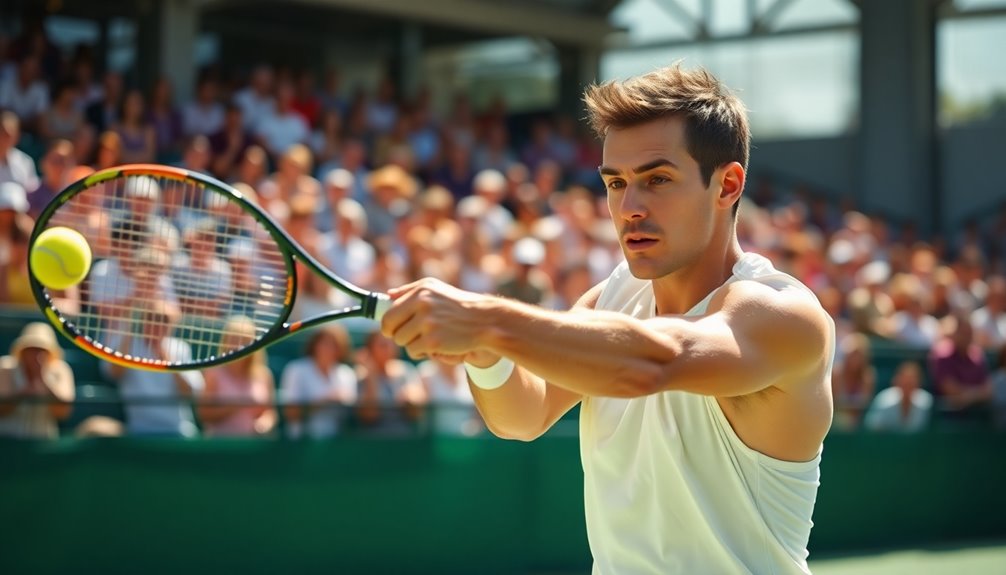
April 22, 2026To handle high balls on your backhand, use an Eastern or Continental grip for better control. Position yourself with feet shoulder-width apart and knees slightly bent. Lean your upper body forward and keep your racket angled to meet the ball at its peak. Focus on your footwork for quick movements and practice with drills, like partner tosses and wall exercises, to improve timing and adaptability. Stick around, and you’ll uncover more tips and techniques to elevate your game.
Understanding the Challenge of High Balls on the Backhand
When you face high balls on your backhand, the challenge can feel overwhelming, especially if you’re not prepared. Understanding the backhand fundamentals is essential in these situations.
You need to improve your shot anticipation to react effectively. High balls often come unexpectedly, so being aware of your opponent’s position and the ball’s trajectory can give you an edge. As you watch the ball approach, position yourself accordingly, keeping your feet light and ready to move. A solid stance will help you maintain balance and control. Additionally, practicing catching techniques can significantly enhance your ability to handle high balls confidently.
Key Techniques for a Solid Backhand Grip
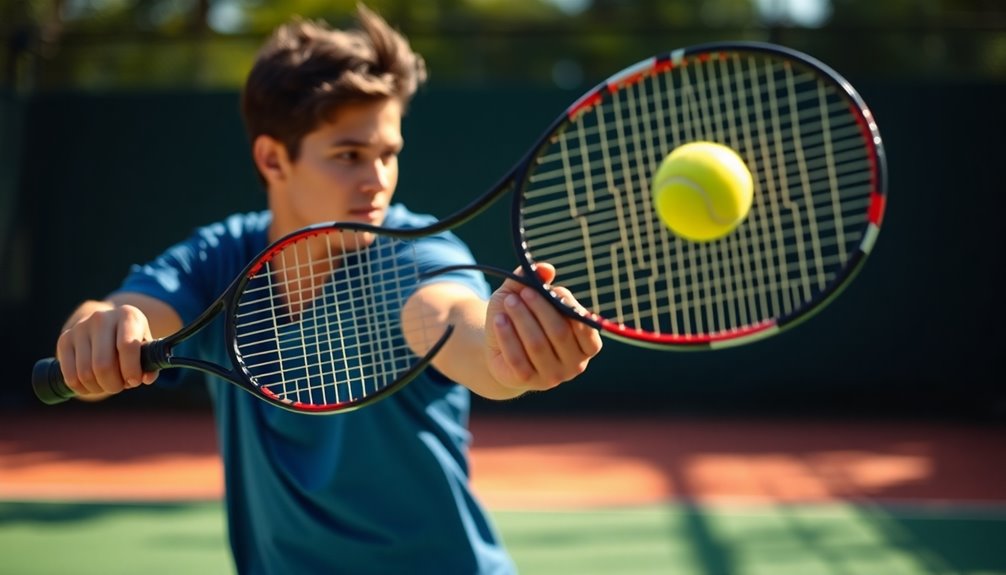
Mastering the right grip is essential for a solid backhand. Start by using the Eastern or Continental grip for better control and versatility. Hold the racket firmly, but avoid excessive tension. Your grip pressure should be firm enough to maintain control, yet relaxed enough to allow for quick adjustments.
As you prepare for the shot, make certain your fingers are spaced comfortably, providing stability without cramping your hand.
Practice switching between grips during drills to develop muscle memory. Remember, a consistent backhand grip helps you respond effectively to high balls, enhancing your overall performance. Additionally, understanding soccer field dimensions can improve your spatial awareness and positioning on the court.
Practice switching grips in drills to build muscle memory and improve your response to high balls, boosting your overall performance.
Focus on these key techniques, and you’ll find your backhand becoming more reliable and powerful on the court.
How to Position Yourself for High Balls?
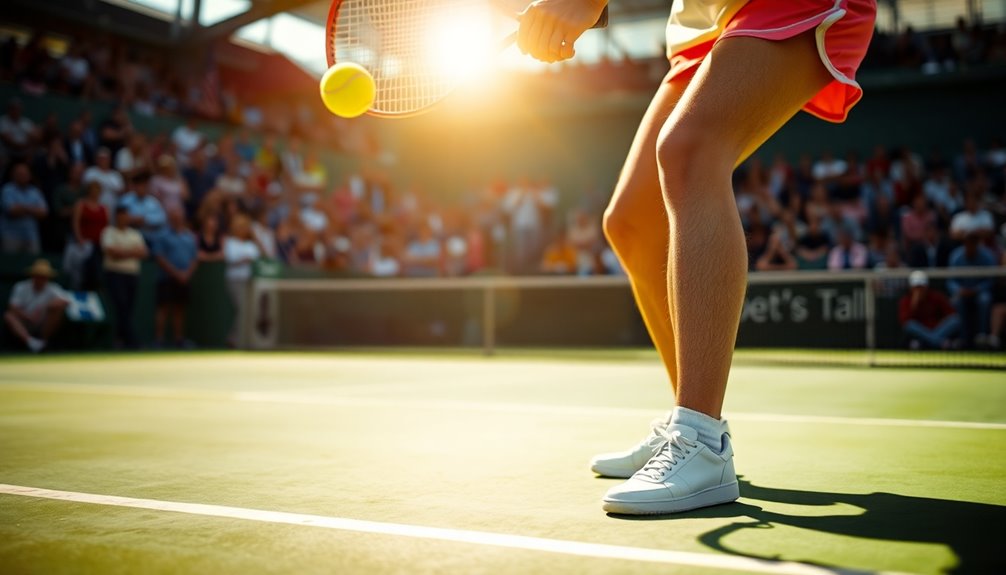
To effectively handle high balls, you need to adjust your stance for better balance and control.
Position yourself with your feet shoulder-width apart and knees slightly bent, ready to react.
Don’t forget to angle your racket appropriately to meet the ball at its highest point. Incorporating proper grip techniques can enhance your ability to control the ball during high shots.
Correct Stance Adjustment
Positioning yourself correctly for high balls can make all the difference in your performance. To achieve ideal stance balance and body alignment, follow these steps:
- Feet Position: Keep your feet shoulder-width apart for stability.
- Knees Slightly Bent: Maintain a slight bend in your knees to stay agile.
- Weight Distribution: Shift your weight onto the balls of your feet to prepare for movement.
- Upper Body Lean: Slightly lean forward, aligning your shoulders with your hips for better control.
Optimal Racket Angle
With your stance set for ideal balance and agility, it’s time to focus on your racket angle when dealing with high balls. Proper racket positioning is essential for effective shot-making.
As the ball approaches, tilt your racket slightly forward, creating an angle that helps you meet the ball at its peak. This angle not only improves control but also enhances your swing mechanics, allowing for a smoother shift into your follow-through.
Aim to keep your wrist firm yet relaxed to prevent mishits. By maintaining an ideal racket angle, you can generate topspin, keeping the ball in play and pushing your opponent back.
The Importance of Footwork in Handling High Balls
Here are four key aspects to keep in mind:
- Balance: Stay centered to maintain control during high shots.
- Positioning: Anticipate the ball’s trajectory to get in the right spot.
- Mobility Drills: Incorporate agility exercises to enhance your quickness.
- Footwork Patterns: Practice moving forward, sideways, and backward to adapt to varying heights. Mastering agility on the ice can also significantly improve your overall movement skills in various sports contexts.
Executing Effective Backhand Strokes Against High Balls
When facing high balls, mastering your backhand stroke can be a game-changer. To effectively respond, focus on your backhand strategies.
Start by positioning yourself correctly; move your feet to get under the ball. As it approaches, use a compact swing to generate control and power.
High ball tactics involve hitting with topspin, which helps you bring the ball down into the court. Aim for depth by targeting the corners, making it harder for your opponent to return.
Keep your eye on the ball throughout the stroke, ensuring solid contact. Finally, practice your timing; this is essential for executing those backhand strokes smoothly and confidently. Additionally, understanding defensive strategies can enhance your overall game by improving your response to challenging shots.
With these techniques in mind, you’ll handle high balls like a pro.
Drills to Practice Your Backhand for High Shots
Mastering your backhand for high shots requires focused practice through targeted drills. Incorporate these backhand drills into your routine to enhance your high shot techniques:
- Shadow Swings: Practice your backhand motion without a ball, focusing on form and follow-through.
- Partner Toss: Have a partner toss balls to your backhand side, allowing you to practice timing and positioning.
- Wall Drills: Hit against a wall at varying heights, emphasizing your ability to manage different ball trajectories.
- Multi-ball Drills: Work with a coach or partner to receive multiple balls in quick succession, improving your reaction time and adaptability. Incorporating dynamic stretches into your warm-up can further enhance your flexibility and readiness for these drills.
Mental Strategies to Overcome High Ball Anxiety
Feeling anxious about high balls is common among players, but you can conquer that fear with the right mental strategies. Start by using visualization techniques; picture yourself confidently handling high balls successfully. Imagine the ball coming toward you, and visualize your perfect backhand shot. This mental rehearsal can boost your confidence.
Incorporate positive affirmations into your routine. Remind yourself, “I’m skilled at handling high balls” or “I can adapt and overcome.” These affirmations can reshape your mindset, making you feel more empowered on the court.
Finally, practice mindfulness techniques. Focus on your breath to stay calm and centered during matches. Additionally, drawing inspiration from the influx of Black players in basketball history can motivate you to overcome challenges and embrace your unique playing style.
Common Mistakes to Avoid With High Balls on the Backhand
While handling high balls on your backhand, it’s easy to fall into common traps that can hinder your performance. Understanding backhand fundamentals is essential, but there are some prevalent mistakes you should avoid:
- Ignoring Footwork: Poor foot positioning can lead to awkward contact and missed shots.
- Overgripping the Racket: A tight grip can restrict your swing and reduce power.
- Focusing on Power Over Technique: Relying solely on strength often results in unforced errors.
- Believing Common Misconceptions: Thinking high balls are only for topspin can limit your shot variety.
Additionally, just like in penalty kicks, maintaining proper body alignment is crucial for executing a successful shot.
When to Seek Professional Coaching for Improvement?
If you notice consistent technical weaknesses in your high ball handling, it might be time to contemplate professional coaching.
A coach can help pinpoint those flaws and show you how to improve your technique.
Plus, they can make your practice sessions more efficient, ensuring you get the most out of your training. Furthermore, working with a coach can enhance your communication and understanding on the court, mirroring the benefits seen in effective soccer possession drills.
Identifying Technical Weaknesses
As you develop your skills in handling high balls, recognizing your technical weaknesses becomes essential for improvement. Here are key areas to evaluate:
- Backhand Grip: Is your grip comfortable and secure?
- Footwork: Are you positioning yourself correctly to hit high balls?
- Stroke Consistency: Do you often miss or hit inconsistently on your backhand?
- Follow-Through: Are you completing your swing effectively?
If you notice struggles in these areas, it might be time to seek professional coaching. A coach can provide targeted feedback and drills to enhance your technique.
Maximizing Practice Efficiency
Recognizing your technical weaknesses is just the start; knowing when to seek professional coaching can take your skills to the next level.
If you find yourself struggling with high balls on your backhand despite practicing targeted drills, it might be time to get expert guidance. A coach can provide efficient feedback, pinpointing areas for improvement that you might overlook.
They can also tailor drills to your specific needs, ensuring you maximize your practice time. Don’t hesitate to reach out when you feel stagnant or frustrated—coaching can accelerate your progress and refine your technique.
Conclusion
In handling high balls on your backhand, remember that practice makes perfect. By honing your grip, positioning, and footwork, you’ll find confidence in your strokes. As the saying goes, “You miss 100% of the shots you don’t take.” Embrace the challenge, stay focused, and don’t shy away from drills. With determination and the right strategies, you’ll turn those high balls into opportunities, elevating your game and leaving opponents in awe. Keep pushing forward!