
Backhand Drills for Beginners
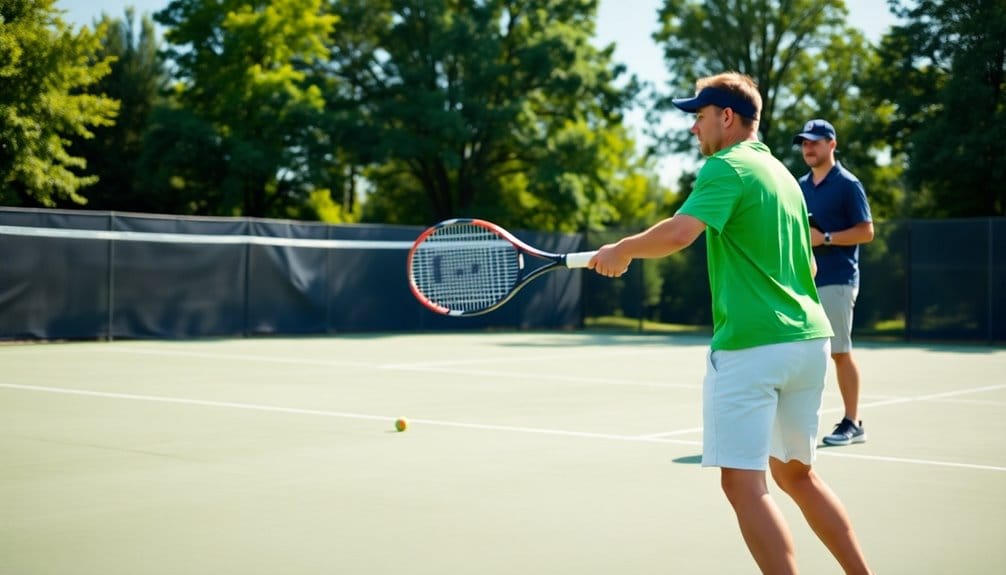
April 21, 2026A strong backhand is essential for your tennis game, especially as a beginner. Start with basic drills focusing on grip, footwork, and follow-through. Practice shadow swings and hit against a wall to build technique. Work on maintaining a relaxed grip and incorporating lateral movement for positioning. Remember to track your progress and set specific goals. With consistent practice, you’ll see improvements. Curious about more effective drills and tips to enhance your backhand?
Understanding the Importance of a Strong Backhand
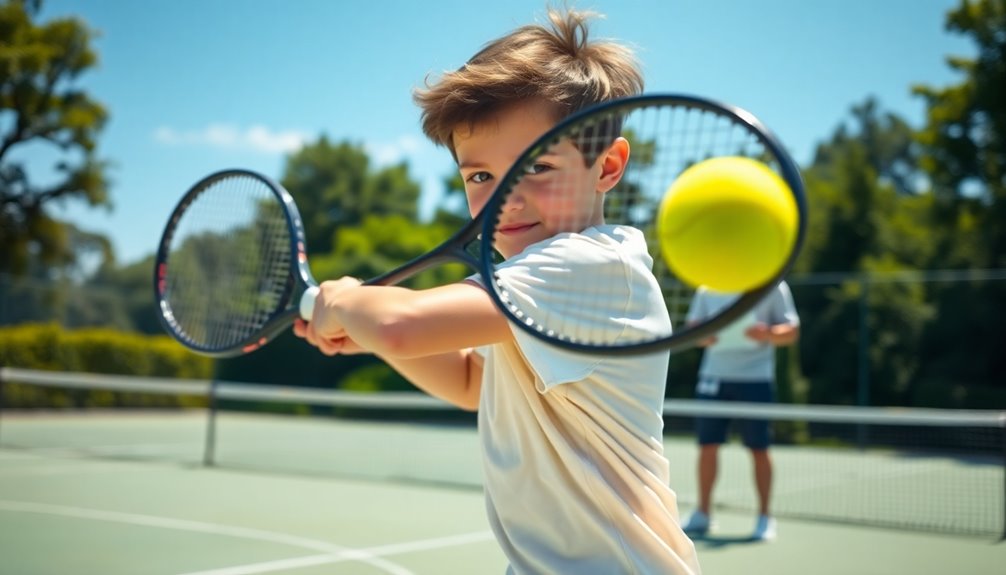
A strong backhand is essential for your overall game, especially when it comes to returning powerful shots. Developing a solid backhand strategy allows you to handle aggressive plays from your opponent, giving you the upper hand in rallies.
By focusing on technique and practice, you can build backhand confidence, which translates into more consistent performance on the court. As you improve, you’ll notice how a reliable backhand can open up your play, allowing you to hit winners and set up your forehand.
Don’t underestimate the importance of this shot; it can be a game-changer. Embrace drills that target your backhand, and watch your skills grow, making you a more formidable player in every match. Incorporating small-sided games into your training can also enhance your overall skill set and adaptability on the court.
Key Differences Between One-Handed and Two-Handed Backhands
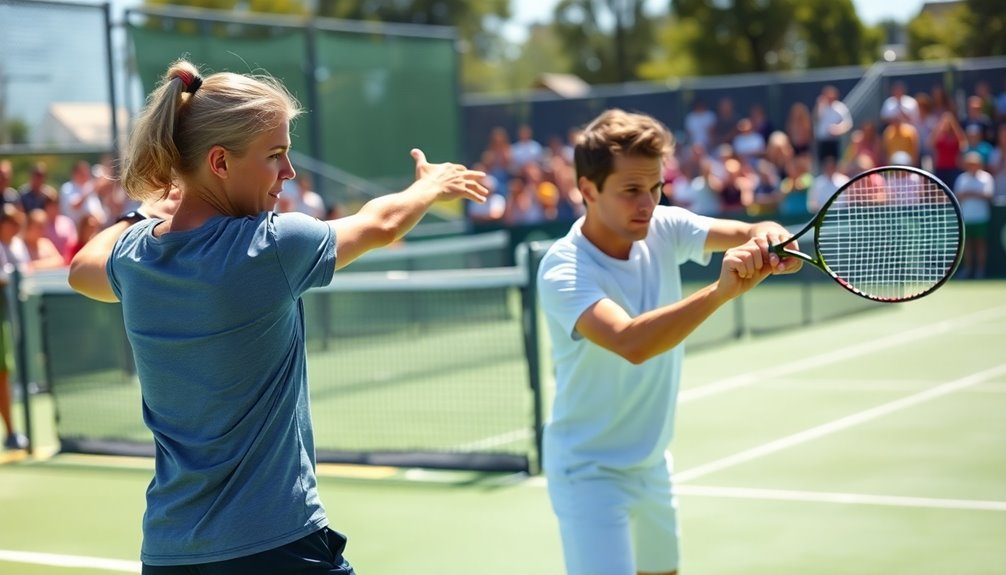
When it comes to mastering your backhand, understanding the key differences between one-handed and two-handed backhands can greatly impact your game.
One-handed advantages include greater stroke power and a wider range of grip variations, allowing for more creative shots. However, this style often demands precise technique, which can be a challenge for beginners.
One-handed backhands offer enhanced power and creative shot variations, but mastering the technique can be challenging for beginners.
On the other hand, two-handed backhands offer stability and shot precision, but they come with two-handed disadvantages, such as limited reach and less power for aggressive strokes.
Player preferences vary, often influenced by historical context and technique evolution. Additionally, proper equipment regulations can play a crucial role in enhancing your overall performance as you develop your skills, consider what feels comfortable and effective for you, helping you decide which backhand suits your playing style best.
Essential Grip Techniques for Backhand Success
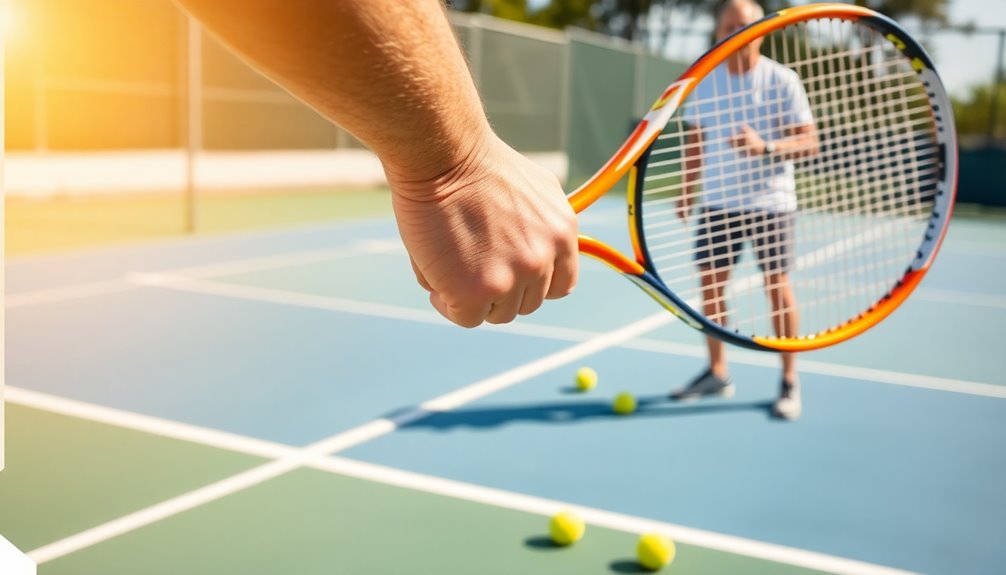
Mastering the right grip is essential for backhand success, whether you choose a one-handed or two-handed technique.
For a one-handed backhand, try the Eastern grip, placing the base knuckle of your index finger on the third bevel. This allows for better control and spin.
For the two-handed backhand, the dominant hand should use the Eastern or Semi-Western grip, while the non-dominant hand adopts an Eastern grip.
Focus on hand positioning; keep your hands relaxed yet firm, allowing for fluid movement.
Experiment with grip variations to find what feels most comfortable and effective for you. Additionally, developing leg strength can enhance your overall stability and power during backhand shots.
How to Position Yourself for an Effective Backhand
To hit an effective backhand, it’s essential to start with the right grip on your racket.
Your feet need to be positioned correctly to maintain balance, while proper body alignment helps maximize power and accuracy.
Let’s explore these key elements to enhance your backhand technique. Incorporating high-intensity sprints into your training can significantly improve your overall agility and responsiveness on the court.
Grip the Racket Properly
A solid grip on your racket is essential for executing an effective backhand. The right grip varies depending on racket types and your playing style, but proper grip pressure is vital.
Too tight restricts movement, while too loose can lead to instability.
Here are key points to remember:
- Find Your Grip: Experiment with different grips like the Eastern or Western to see which feels most comfortable.
- Maintain Consistency: Use the same grip for every shot to develop muscle memory.
- Adjust Pressure: Keep a relaxed grip; increase pressure only at the point of contact.
Mastering your grip sets the foundation for a powerful backhand, making it easier to control your shots and improve your overall game.
Feet Positioning Essentials
Feet positioning plays an essential role in executing an effective backhand. Start by positioning your feet shoulder-width apart to maintain stability.
As the ball approaches, shift your weight onto your back foot, using balance techniques to stay grounded. This helps you prepare for the swing.
When you make contact with the ball, shift your weight forward onto your front foot, ensuring a smooth weight transfer. Your knees should be slightly bent, providing an athletic stance that aids in quick movements.
Keep your non-dominant foot slightly ahead of the other, which helps in generating power and control. Practicing these positioning tips will enhance your backhand, allowing for better shots and overall performance on the court.
Body Alignment Tips
Proper body alignment is essential for a powerful backhand. You need to focus on your body posture to guarantee maximum effectiveness.
Here are some alignment tips to help you position yourself correctly:
- Keep your feet shoulder-width apart: This provides stability and balance during your swing.
- Align your shoulders with the net: This helps generate power and guarantees your shot goes where you intend.
- Use alignment drills regularly: Practicing these will help reinforce proper positioning and improve muscle memory.
Basic Backhand Drills to Build Technique
To master your backhand, you’ll need to focus on grip fundamentals, footwork, and follow-through techniques. These elements are essential for building a solid foundation in your game. Additionally, incorporating mobility drills can enhance your flexibility and improve your overall backhand performance. Let’s break down each component to help you improve your backhand stroke.
Grip Fundamentals Explained
Mastering the grip is essential for executing an effective backhand. Understanding grip types and managing grip pressure can dramatically improve your technique. Here’s what you need to know:
- Grip Types: Familiarize yourself with the Eastern, Western, and Continental grips. Each offers different advantages based on your playing style.
- Grip Pressure: Maintain a relaxed grip to enhance control and power. Too much pressure can hinder your swing.
- Hand Placement: Confirm your dominant hand is positioned correctly on the racket handle for maximum leverage.
Footwork and Positioning Tips
Once you’ve got your grip down, the next step is focusing on footwork and positioning to enhance your backhand technique. Good footwork is essential, so practice your lateral movement. This will help you get into the right position when the ball approaches. Use small, quick steps to adjust your stance and maintain balance.
Additionally, develop your anticipation skills by reading your opponent’s body language and the ball’s trajectory. This will allow you to react faster, positioning yourself effectively for your backhand shots.
Visualize where the ball will land and move accordingly, ensuring you’re always ready to strike. With consistent practice, your footwork and positioning will improve, setting you up for a more powerful and accurate backhand.
Follow-Through Techniques Overview
While practicing your backhand, focusing on your follow-through is essential for developing a solid technique. A proper follow-through not only enhances your shot’s power but also improves accuracy and consistency.
Here are some key aspects to take into account:
- Wrist Flexibility: Make sure your wrist is relaxed and flexible during the follow-through, allowing for better ball control.
- Body Rotation: Engage your core and rotate your hips to generate more force and maintain balance.
- Finish Position: Aim to finish with your racquet high and over your shoulder, which helps reinforce good habits.
Solo Backhand Drills for Maximum Practice
To improve your backhand skills, incorporating solo drills into your routine can be incredibly effective.
Start by practicing shadow swings in front of a mirror, focusing on your form and follow-through. Next, use a wall to hit the ball repeatedly, paying attention to your grip and footwork.
You can also set up a target on the ground to work on accuracy—aim for it with each shot. Another great drill is the one-handed backhand, where you focus on strength and control.
Finally, consider recording yourself to analyze your technique. By integrating these backhand drills into your practice routines, you’ll build confidence and enhance your overall game. Practicing solo or with teammates to build confidence will further solidify your skills.
Consistency is key—keep pushing yourself!
Partner Drills to Enhance Backhand Consistency
By practicing shadow swings together, targeting accuracy, and engaging in focused rallies, you’ll sharpen your skills and improve your timing. Incorporating finishing drills can also enhance your overall game by developing quick decision-making and confidence under pressure.
Let’s explore how these drills can make a difference in your game!
Shadow Swings With Partner
Enhancing your backhand consistency can be both fun and effective with a partner by your side. Shadow swings with a partner allow you to practice your technique while benefiting from partner communication.
Here’s how to make the most of this drill:
- Focus on Form: Use this time to guarantee your grip, stance, and follow-through are correct.
- Feedback Loop: Your partner can provide immediate feedback, helping you adjust your swing on the spot.
- Increase Confidence: Practicing together builds trust and makes you more comfortable with your backhand.
Targeted Backhand Accuracy Drill
Building on the foundation of shadow swings, the Targeted Backhand Accuracy Drill takes your practice a step further by honing in on precision.
In this drill, you and your partner set up targets on the court—like cones or hula hoops—at various distances. As you rally, focus on hitting these targets consistently. This not only serves as target practice but also presents accuracy challenges that sharpen your aim.
Take turns, and encourage each other to adjust your footwork and swing mechanics as needed. By concentrating on where you want your ball to go, you’ll develop greater control over your backhand.
Over time, you’ll notice improvements in both accuracy and confidence during matches.
Rallies Focusing On Backhand
While practicing your backhand, rallies with a partner can greatly boost your consistency. By focusing on different backhand variations, you’ll develop a more reliable shot.
Here are some effective rally techniques to enhance your practice sessions:
- Crosscourt Rallies: Exchange shots diagonally to improve control and placement.
- Topspin and Slice: Alternate between topspin and slice backhands to adapt to various ball types.
- Targeted Areas: Aim for specific spots on the court, encouraging precision and strategic shot selection.
Incorporating these elements into your rallies will help you gain confidence in your backhand.
Keep the pace steady and communicate with your partner to maximize the effectiveness of each drill.
Soon, you’ll notice a significant improvement in your overall backhand consistency.
Footwork Drills to Support Your Backhand Stroke
Mastering your footwork is essential for a powerful backhand stroke. Start with lateral movement drills to enhance your positioning. Practice quick pivots to shift your weight effectively and maintain balance during your swing. Incorporate recovery steps after each shot; this’ll prepare you for the next ball. To develop directional agility, set up cones and sprint toward them, focusing on precise foot placement. Balance drills will help stabilize your stance, so try standing on one foot while hitting. Rhythm exercises, like shadow swings, improve timing and flow. Finally, speed drills will boost your overall court awareness, allowing you to react swiftly. Additionally, agility training aids in injury prevention through better body mechanics, which is crucial for maintaining performance on the court.
Incorporating Spins and Angles Into Your Backhand
- Topspin: Generate a high bounce that makes it difficult for your opponent to attack.
- Slice: Use backspin to keep the ball low, forcing your opponent into defensive positions.
- Angle Shots: Change the direction of your shot to catch your opponent off guard, creating openings for winners.
Focus on these elements during your drills. Incorporating effective communication into your practice sessions will enhance your ability to anticipate your opponent’s movements.
As you become comfortable with each technique, you’ll notice how effectively they disrupt your opponent’s rhythm and allow you to control the pace of the game.
Common Mistakes in Backhand Technique and How to Fix Them
Many beginners struggle with their backhand technique, often leading to inconsistent shots and missed opportunities. One of the most common errors is a poor backhand grip, which can throw off your swing mechanics. Make sure you’re holding the racket properly to maximize control.
Many beginners struggle with their backhand technique, often due to a poor grip that affects swing mechanics.
Focus on muscle engagement during your swing to generate power without sacrificing accuracy.
Another mistake is neglecting the recovery position after your shot; staying balanced is essential for quick responses. Incorporate varied practice routines to address these issues and enhance your stroke variations.
Finally, maintain mental focus while practicing; visualize your perfect backhand to reinforce good habits. By correcting these common errors, you’ll see significant improvements in your backhand performance. Additionally, consistent practice is crucial for skill elevation and will help reinforce the proper techniques you’ve learned.
Tracking Your Progress: Setting Goals for Your Backhand
Improving your backhand isn’t just about correcting mistakes; it’s also about tracking your progress and setting realistic goals.
To enhance your skills effectively, try these goal-setting strategies:
- Short-term goals: Focus on specific techniques, like improving your grip or follow-through within a week.
- Long-term goals: Aim for measurable improvements, such as increasing your backhand accuracy by 20% over a month.
- Progress tracking: Keep a journal of your practice sessions, noting what worked and what didn’t.
How to Stay Motivated While Practicing Your Backhand
Staying motivated while practicing your backhand can make all the difference in your progress. One effective way to keep your spirits high is to employ mental strategies, like visualizing your success. Picture yourself executing a perfect backhand during practice; this can boost your confidence and focus.
Incorporating positive reinforcement is essential, too. Reward yourself for hitting certain goals, whether it’s nailing a specific number of shots or improving your technique. Celebrate these small victories to create a positive feedback loop.
Additionally, mix up your practice routine to keep things fresh and exciting. Try new drills or practice with friends to enhance your enjoyment.
Tips for Transitioning Your Backhand to Match Play?
As you prepare to shift your backhand from practice to match play, it’s essential to focus on consistency and timing. Your backhand strategy should adapt to the dynamics of real match situations, where pressure and pace differ.
Here are some tips to guide you:
- Visualize Success: Mentally rehearse your backhand shots before matches to build confidence.
- Practice Under Pressure: Simulate match conditions during training to adjust to stress.
- Focus on Footwork: Quick and precise footwork will enhance your positioning, making it easier to execute your backhand.
Conclusion
Mastering your backhand is like building the foundation of a sturdy house—it sets the stage for everything else. With practice, you’ll transform your strokes from awkward swings into fluid, powerful shots that dance across the court. Remember, every champion started as a beginner, so embrace the journey. Keep setting goals, stay motivated, and watch your backhand flourish. Soon, you’ll wield your racket like a painter with a brush, crafting beautiful shots that leave your opponents in awe.