

How to Bounce the Ball Before Serving
April 15, 2026Bouncing the ball before serving helps you find your rhythm and build confidence. Start by establishing a steady tempo, ideally with 2-3 bounces, to calm your nerves. Focus on your body positioning—keep your knees slightly bent and your eyes on the ball. Visualizing your serve during bounces enhances your concentration. Make sure to adjust your bouncing based on the surface you’re playing on and the type of serve you’re using. There’s much more to explore on perfecting your technique!
The Importance of Bouncing the Ball Before Serving
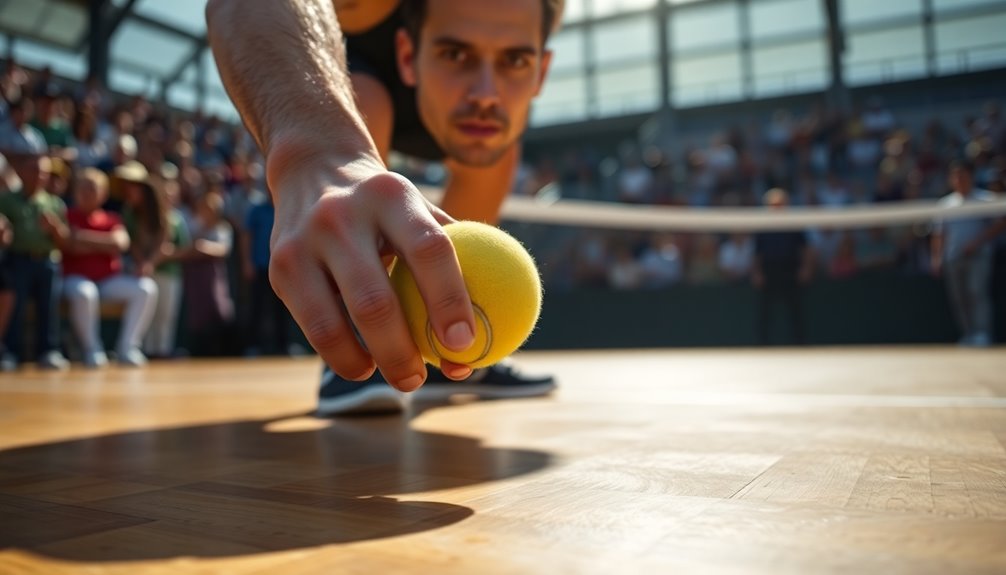
Bouncing the ball before serving isn’t just a ritual; it’s an essential part of your game. This simple action plays a significant role in ball bounce psychology, helping you focus and prepare mentally.
When you bounce the ball, you create a rhythm that calms your nerves and centers your thoughts. It’s also a critical moment for implementing serve preparation techniques. As you observe the ball’s bounce, you can assess your grip and stance, ensuring you’re ready to deliver a powerful serve.
This practice not only enhances your concentration but also builds muscle memory, making your serves more consistent. Additionally, mastering this essential skill can contribute to a sense of value within your overall performance. So, don’t skip this important step; embrace the bounce and elevate your game.
How to Find Your Rhythm With Ball Bounces
Finding your rhythm with ball bounces is essential for a successful serve.
By timing your bounces and practicing consistently, you’ll build confidence in your routine.
It’s all about discovering what feels comfortable for you, so don’t hesitate to experiment. Understanding the equipment requirements for your sport can also enhance your overall performance.
Importance Of Timing
While you prepare to serve, establishing a consistent rhythm with your ball bounces is essential for maintaining focus and confidence.
Timing plays a vital role in your serve preparation, as it allows you to synchronize your movements with the ball bounce mechanics. Ideally, you should aim for a steady tempo that feels natural to you.
This rhythm not only calms your nerves but also helps you gauge the best moment to strike. Pay attention to how many times you bounce the ball; finding the right number can enhance your timing.
As you practice, you’ll develop a sense of when to execute your serve, ensuring you’re fully in sync and ready to deliver your best performance.
Consistency Through Repetition
Establishing a rhythm with your ball bounces is key to achieving consistency in your serve. Understanding the bouncing psychology can help you develop a routine that enhances your serve preparation.
Here are four steps to find your rhythm:
- Choose Your Bounce Count: Decide how many times you want to bounce the ball before serving. Consistency in this number builds muscle memory.
- Maintain a Steady Pace: Keep your bounces at a uniform speed. This helps you focus and reduces anxiety.
- Stay Relaxed: Tension can disrupt your rhythm. Keep your grip loose and breathe deeply.
- Visualize Your Serve: Picture the serve you want to execute as you bounce the ball. This mental imagery reinforces your preparation and boosts confidence.
Finding Personal Comfort
Getting comfortable with your ball bounces is essential for a confident serve. Start by experimenting with different bounce rhythms to find what works best for you. Everyone has personal preferences, so don’t be afraid to adjust your bounces until they feel natural.
Maybe you prefer a quick series of bounces or a slower, more deliberate rhythm. Pay attention to how these choices affect your focus and energy.
Finding your rhythm isn’t just about technique; it’s also about achieving psychological comfort. When you feel at ease with your routine, you’ll likely experience less pressure during your serve.
Keep practicing until your bounces become second nature, and soon, you’ll approach each serve with confidence and assurance.
The Ideal Number of Bounces: What You Need to Know?
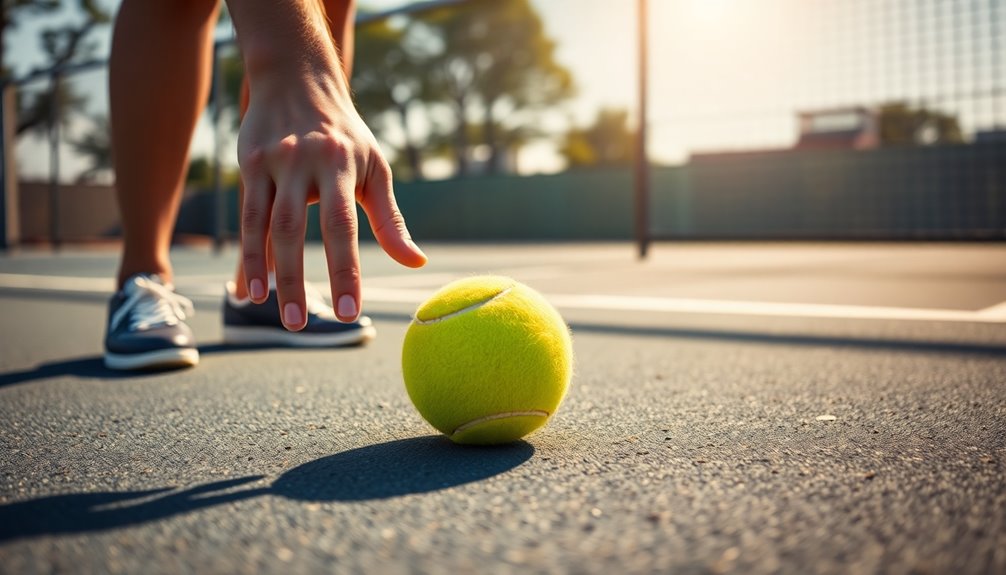
When you’re preparing to serve, the number of bounces can really affect your game. Finding that ideal bounce count helps you establish a rhythm and improves your timing. Additionally, mastering ball handling techniques can enhance your overall control and confidence on the court.
Optimal Bounce Count
Though it might seem trivial, the number of times you bounce the ball before serving can greatly impact your performance. Finding the ideal bounce count helps enhance your focus and execution.
Here are some tips to take into account:
- Stick to a Consistent Count: Most players prefer 2-3 bounces for rhythm.
- Experiment with Bounce Techniques: Try different styles to see what feels comfortable.
- Incorporate Mental Preparation: Use your bounces to visualize the upcoming serve.
- Stay Relaxed: Don’t rush; allow each bounce to ground you mentally.
Timing Your Bounces
Understanding the timing of your bounces is essential for establishing a solid serving routine. When you practice your bounce technique, aim for a consistent rhythm that helps you feel in control.
Most players find that one to three bounces works best, but it’s about what feels right for you. As you prepare for your serve, focus on the timing of each bounce; it should be deliberate but not rushed.
Use this time to visualize your target and gather your thoughts. Remember, the interval between bounces can help you maintain your composure and enhance your concentration.
Consistency Is Key
To achieve a reliable serve, you need to find a consistent number of bounces that feels natural to you. This consistency will help you develop your bounce techniques and enhance your mental preparation.
Here are some tips to find your ideal number of bounces:
- Experiment: Try different bounce counts during practice to see what feels right.
- Observe: Watch professional players and note their bounce routines for inspiration.
- Stay Relaxed: Keep your body relaxed; tension can throw off your rhythm.
- Practice Regularly: Consistent practice will solidify your routine and improve your focus.
Choosing the Right Surface for Optimal Bouncing
When you’re preparing to serve, the surface you choose can greatly impact how well your ball bounces. The right surface selection enhances bounce dynamics, ensuring your ball behaves predictably.
For instance, a hard court provides a consistent bounce, while a softer surface may absorb energy, altering your ball’s trajectory. Consider the texture impact as well; a rough surface can grip the ball, affecting spin and speed.
Additionally, think about the ball material you’re using. A higher-quality ball often performs better on various surfaces, maintaining its bounce integrity. The importance of stoppage time in soccer highlights how different conditions can affect performance dynamics, similar to how surface choice influences ball behavior.
How to Position Your Body While Bouncing
Choosing the right surface sets the stage for your serve, but how you position your body while bouncing the ball can make all the difference.
Proper body alignment and stance stability are vital for a successful serve. Follow these tips to enhance your technique:
- Feet Position: Keep your feet shoulder-width apart for balance.
- Knees Slightly Bent: This aids in maintaining stance stability and readiness.
- Upper Body Lean: Lean slightly forward to engage your core and stay focused.
- Eyes on the Ball: Always watch the ball as you bounce it to guarantee consistency. Additionally, enhancing your cardiovascular endurance can greatly improve your overall performance during serves.
Timing Your Bounces: When to Serve?
Timing your bounces is essential for a successful serve.
You’ll want to find the ideal bounce count that feels right for you, allowing you to visualize your serve and maintain your rhythm.
When everything flows together, you’ll feel more confident as you prepare to serve. Consistent practice of defensive closeouts sharpens your ability to contest shots effectively, just as finding your rhythm enhances your serving technique.
Optimal Bounce Count
Finding the right bounce count before serving can greatly enhance your performance on the court. The best bounce frequency not only helps you prepare physically but also offers psychological benefits by creating a consistent routine.
Here’s how to determine your ideal bounce count:
- Practice Different Counts: Experiment with 2-4 bounces to see what feels comfortable.
- Focus on Rhythm: Choose a count that allows you to maintain a steady rhythm and calm your nerves.
- Consistency is Key: Stick to the same bounce count during matches to build muscle memory.
- Observe Your Opponent: Adjust your bounces based on your opponent’s behavior, ensuring you stay unpredictable.
Visualizing Your Serve
Visualize your serve as you prepare to release it on the court. This mental imagery can greatly enhance your timing and focus.
Before you bounce the ball, take a moment to picture the ideal trajectory and placement of your serve. Use visualization techniques to imagine the ball soaring over the net, landing precisely where you want it to.
This mental rehearsal not only boosts your confidence but also helps you establish the rhythm of your bounces. As you count your bounces, align them with your visualization—allowing your body to feel the motion you’ve envisioned.
Rhythm And Flow
As you prepare to serve, establishing a rhythm in your bounces can make all the difference in your performance. Timing your bounces not only enhances your focus but also helps with body alignment and confidence.
Here are some tips to find your flow:
- Count Your Bounces: Aim for a consistent number, like three bounces, to create a predictable rhythm.
- Incorporate Breathing Techniques: Breathe deeply between each bounce to calm your nerves and improve focus.
- Visualize Your Serve: Picture the perfect serve while bouncing, integrating your body alignment into your mental imagery.
- Stay Loose: Keep your grip relaxed to allow fluid movement and maintain your rhythm.
With practice, you’ll find that rhythm and flow become second nature, leading to a more powerful serve.
Common Mistakes to Avoid With Ball Bouncing
When you’re focused on perfecting your serve, it’s easy to overlook the nuances of ball bouncing. One common mistake isn’t paying attention to ball height. If you consistently bounce the ball too low, it can throw off your timing and rhythm. Aim for a height that feels comfortable and gives you control.
Another mistake is neglecting the bounce angle. A poor angle can lead to misjudgment during your serve. Make sure the ball bounces in a way that allows you to strike it cleanly.
Finally, avoid rushing through your bounces. Take your time to establish a rhythm. Additionally, understanding the importance of effective footwork can help create a smoother serving motion, enhancing overall control and precision.
The Role of Mental Focus During Ball Bouncing
Mastering the nuances of ball bouncing isn’t just about technique; it heavily relies on your mental focus.
To guarantee you maintain mental clarity during this vital step, consider these focus techniques:
- Visualize Success: Picture yourself executing the perfect serve after a well-timed bounce.
- Breathe Deeply: Calm your mind with controlled breathing to reduce distractions.
- Set Intentions: Before you start, mentally affirm your goal for the serve and the bounce.
- Stay Present: Concentrate solely on the ball and your movements, blocking out external noise.
Additionally, remember that teamwork and unity can enhance your performance, as having a supportive team can boost your confidence during crucial moments.
Tips for Consistent Ball Height and Control
Achieving consistent ball height and control during your pre-serve bounce is essential for setting up a successful serve. Focus on your grip; hold the ball lightly to maintain better control.
When you bounce, use a steady rhythm to keep the ball height uniform. Aim for a specific height—about waist level is ideal—so you develop muscle memory over time.
Practice control techniques like counting bounces or incorporating a visual target, which can enhance your focus. Also, try to keep your body relaxed; tension can lead to erratic bounces.
Finally, always analyze your bounce during practice. If the height varies, adjust your technique to guarantee consistency. Embracing core values like perseverance will further enhance your serving skills.
With dedication, you’ll find your rhythm and improve your overall serve.
How to Adapt Your Bouncing Technique for Different Serves
Your bouncing technique can vary based on the type of serve you plan to execute. To effectively adapt your approach, consider these techniques:
Your bouncing technique should adapt to your serve type for optimal execution and control.
- Bouncing Variations: For a flat serve, use quicker, sharper bounces to maintain momentum. For a topspin serve, take your time with deeper, slower bounces.
- Grip Adjustments: Modify your grip depending on the serve; a firmer grip may be needed for spin serves.
- Surface Considerations: On grass, a softer bounce can help control the ball, while hard courts may require more force.
- Mental Preparation: Visualize your serve’s trajectory and adjust your bouncing rhythm accordingly to enhance ball placement. Additionally, focusing on anticipation of movements can further improve your overall serving technique.
Analyzing Professional Players’ Ball Bouncing Techniques
While studying professional players can reveal valuable insights, their ball bouncing techniques often highlight the nuances that set them apart.
In your ball bounce analysis, notice how players like Federer and Serena Williams use consistent, rhythmic bounces to build focus and momentum. They often bounce the ball a specific number of times—typically two to three—before serving, which aids in their serve preparation.
This routine not only calms their nerves but also helps them visualize their next move. Pay attention to the height and speed of their bounces; these factors can affect their timing and serve placement.
Practicing Ball Bouncing: Drills to Improve Your Serve
Mastering ball bouncing can greatly enhance your serve, and incorporating specific drills into your practice routine is essential.
Here are some effective drills to refine your bounce techniques and improve your serve strategy:
- Single Bounce Drill: Bounce the ball once, focusing on control and height.
- Rhythm Drill: Bounce the ball in a consistent rhythm, enhancing timing before your serve.
- Target Bounce: Place a target on the ground and aim to bounce the ball precisely on it.
- Pressure Drill: Incorporate a friend who calls out random numbers for you to bounce the ball the corresponding number of times before serving.
These drills will help you develop a more confident and effective serve!
Conclusion
To wrap it up, mastering your ball bounce before serving can seriously enhance your game. Did you know that around 70% of professional players bounce the ball at least twice before serving? This rhythm helps them focus and prepare mentally. By implementing these techniques and practicing regularly, you’ll find your own groove on the court. So, keep bouncing that ball, and watch your serve improve!