
How to Hold a Tennis Racket
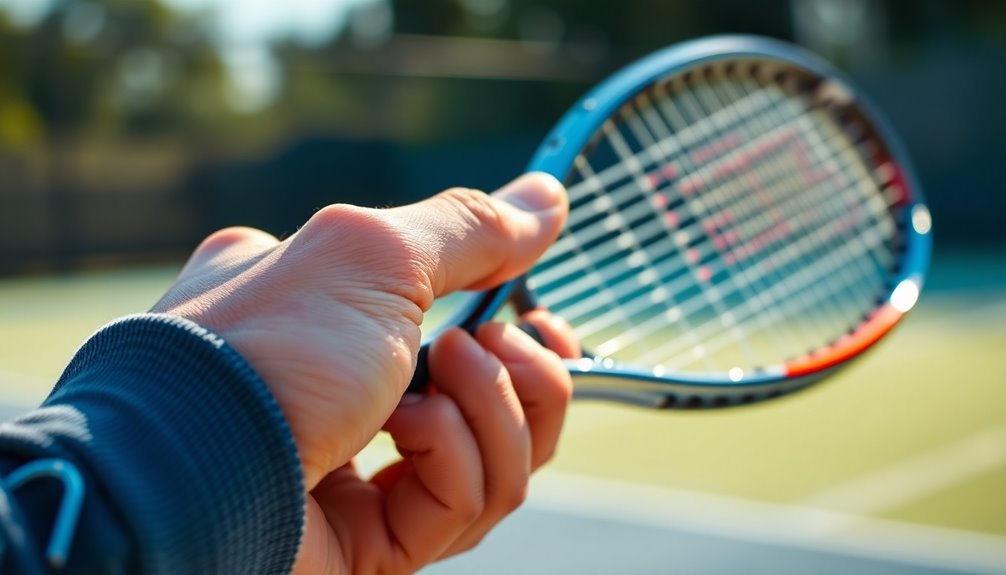
April 14, 2026To hold a tennis racket correctly, start by choosing a grip that matches your playing style, like the Eastern or Semi-Western grip. Position your non-dominant hand on the throat and your dominant hand on the handle. Wrap your fingers comfortably around the grip with relaxed pressure. Keep the racket angled slightly forward for better control. Remember to adjust your grip based on shot types for improved performance. There’s more to discover about perfecting your technique!
Understanding the Importance of Grip in Tennis
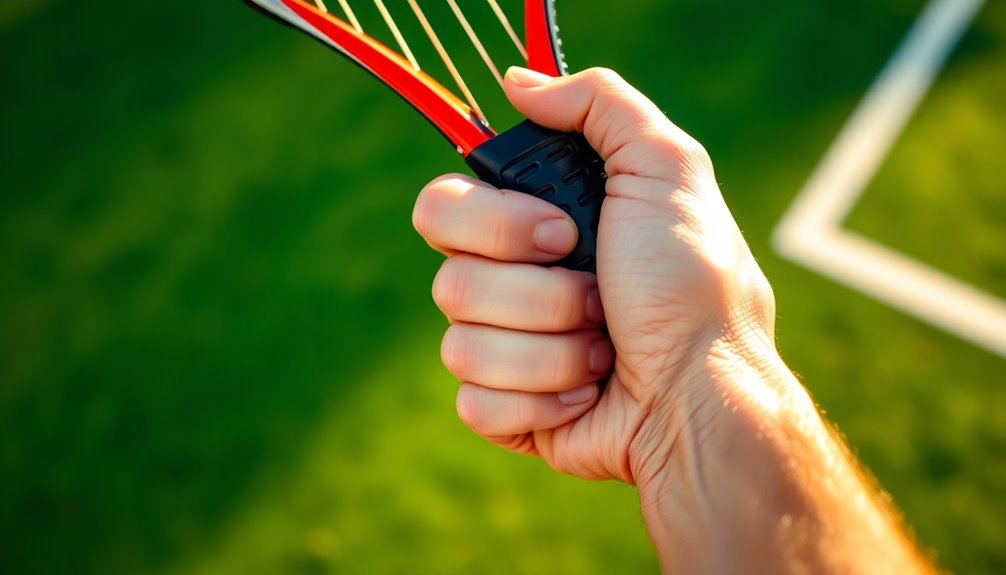
When it comes to tennis, the grip you choose can make all the difference in your game. Your grip affects not just how you hold the racket, but also your overall performance.
Understanding grip pressure is essential; too tight, and you’ll lose control; too loose, and you risk dropping the racket. Aim for a balance that feels comfortable yet firm.
Grip stability is equally important; it helps you maintain control during powerful swings and quick movements. A stable grip allows for more precise shots, enhancing your accuracy on the court. Additionally, having a good field dimensions knowledge can help you judge your positioning better during rallies.
The Different Types of Tennis Racket Grips
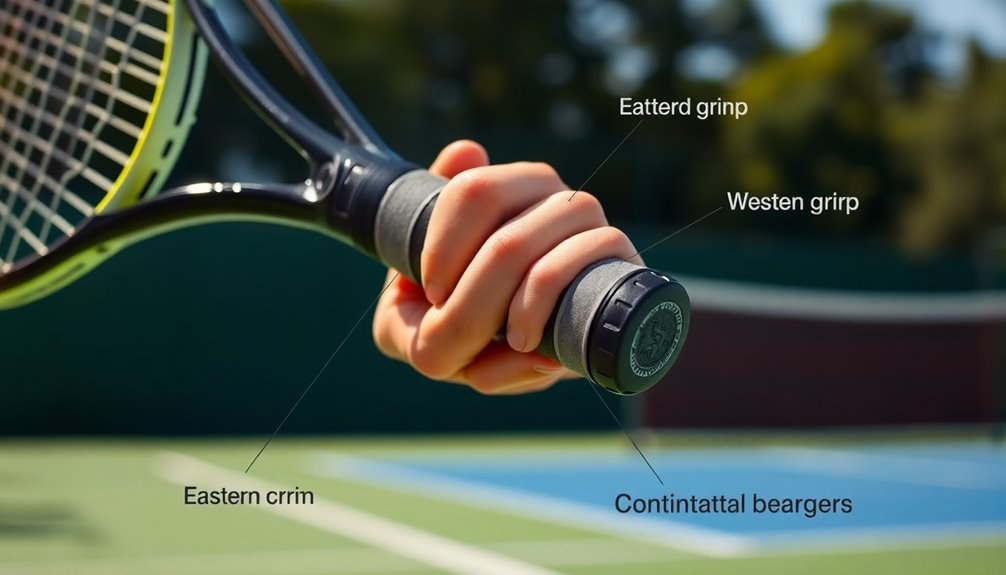
To improve your game, you need to understand the different types of tennis racket grips.
The Eastern grip offers a balanced approach, while the Western grip can give you more topspin. Understanding the importance of team management can also enhance your overall performance on the court.
Let’s explore how these grips can influence your performance on the court.
Eastern Grip Overview
The Eastern grip is a popular choice among players seeking a balance between power and control. With this grip, you can generate solid topspin while maintaining a strong sense of direction.
One of the main eastern grip benefits is its versatility; it works well for both forehands and backhands. To master eastern grip techniques, start by placing the base knuckle of your index finger on the third bevel of the racket handle.
As you hit, focus on your wrist’s natural motion to enhance your shot’s effectiveness. This grip allows for quick adjustments and better shot placement, making it ideal for players who want to develop a well-rounded game.
Embrace the Eastern grip for a powerful, controlled playing experience!
Western Grip Explanation
A Western grip is often favored by players who want to maximize topspin and hit with aggressive angles. This grip allows you to brush up on the ball, enhancing spin and control, making your shots more dynamic.
One of the key western grip benefits is its effectiveness on high-bouncing balls, particularly on clay courts. However, it’s essential to take into account the western grip disadvantages as well.
For instance, it can be challenging to hit low balls and may lead to less power on flat shots. Additionally, shifting between different grips during play can be tricky.
How to Choose the Right Grip for Your Playing Style
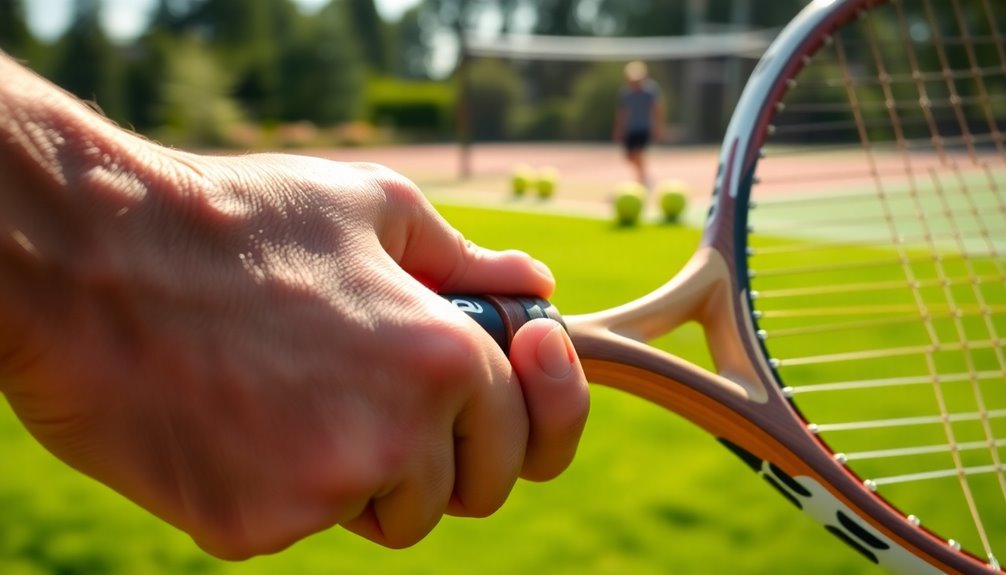
Choosing the right grip is essential for enhancing your game.
You’ll want to understand the various grip types and how they match your playing style.
Whether you’re a baseline player or serve-and-volley type, selecting the right grip can make all the difference. Mastering the key areas on the field can also improve your overall coordination and movement on the court.
Grip Types Overview
Finding the right grip for your tennis racket can greatly impact your performance on the court. Different grip types—like the Eastern, Western, and Continental—affect how you handle the ball. Your grip placement is essential; it determines your control over shots and your ability to generate spin.
Experiment with grip pressure, as holding the racket too tightly can hinder your movement, while too loose may lead to dropping it mid-swing. A firm but relaxed grip allows for better shot execution and comfort.
Don’t hesitate to try various grips to see which one feels best for you. This exploration will help you find the perfect balance between control and power, enhancing your overall game.
Match Grip to Style
Many players overlook how essential it’s to match your grip to your playing style. Your grip influences your racket angle, hand placement, and overall performance.
To optimize your game, consider these factors:
- Playing Style: Aggressive baseliners benefit from a firmer grip, while net players may prefer a looser hold.
- Shot Selection: Forehand-heavy players might choose a semi-western grip for more topspin, while slice players lean towards eastern grips.
- Hand Size: Confirm your grip suits your hand size for comfort and control.
- Personal Preference: Ultimately, trust your instincts; the right grip feels natural and boosts your confidence.
Step-by-Step Guide: How to Hold a Tennis Racket
Mastering the grip on your tennis racket is essential for effective play. Start by choosing a grip that suits your style, like the Eastern or Semi-Western grip.
Hold the racket with your non-dominant hand on the throat, while your dominant hand grips the handle. Verify your fingers wrap around the handle comfortably, maintaining a relaxed grip pressure—too tight can hinder your swing.
Position the racket angle slightly forward for better control and power. As you prepare to hit, adjust your grip pressure based on the shot; lighter for touch shots and firmer for powerful strikes. Using the correct equipment enhances your overall performance and enjoyment on the court.
Practice these steps consistently to develop a feel that enhances your gameplay and boosts your confidence on the court.
Common Mistakes to Avoid When Gripping Your Racket
Even with a solid grip technique, players often fall into common pitfalls that can hinder their performance.
Avoiding these mistakes is essential for improving your game:
- Too Much Grip Pressure: Gripping the racket too tightly can lead to tension and reduced control.
- Incorrect Hand Positioning: Having your hand too high or low on the grip can throw off your alignment.
- Neglecting Grip Changes: Failing to adjust your grip for different shots can limit your effectiveness on the court.
- Ignoring Racket Angle: Not aligning your racket correctly with your hand positioning can cause mis-hits.
Additionally, players should focus on communication on the field to enhance their overall game performance.
Tips for Practicing Your Grip for Better Performance
Improving your grip is essential for elevating your tennis game. To practice, focus on your finger placement; make sure your fingers are spread comfortably around the handle.
Start with a relaxed grip to build grip strength, then gradually increase tension as you develop comfort. Try squeezing a tennis ball for added strength and dexterity in your fingers.
Additionally, practice shadow swings without hitting a ball; this helps you concentrate on maintaining the correct grip. Regularly check your grip during practice sessions to reinforce muscle memory.
Finally, consider filming yourself to analyze your grip technique. By dedicating time to these exercises, you’ll notice improved consistency and control on the court. Incorporating balanced nutrition into your training routine can also enhance your overall performance on the court.
When to Adjust Your Grip for Different Shots?
While you might’ve a solid grip technique, knowing when to adjust it for different shots can greatly enhance your performance on the court.
Adjusting your grip allows you to handle shot variations more effectively, helping you respond to various situations. Here are some key moments to reflect on making those adjustments:
- Forehand vs. Backhand: Switch grips for better control.
- Volleys: Use a firmer grip for quick responses.
- Topspin Shots: Adjust for added rotation and height.
- Serves: Change your grip for spin versus power.
Additionally, understanding the importance of stoppage time in soccer can highlight how timing and precision are crucial in tennis as well.
Conclusion
In summary, mastering your grip is essential for your success on the court. Did you know that players with a proper grip can increase their shot accuracy by up to 30%? By practicing the techniques outlined, you’ll not only improve your performance but also enhance your overall enjoyment of the game. Remember, a solid grip sets the foundation for powerful strokes and strategic plays, so keep refining it as you develop your skills. Happy hitting!