
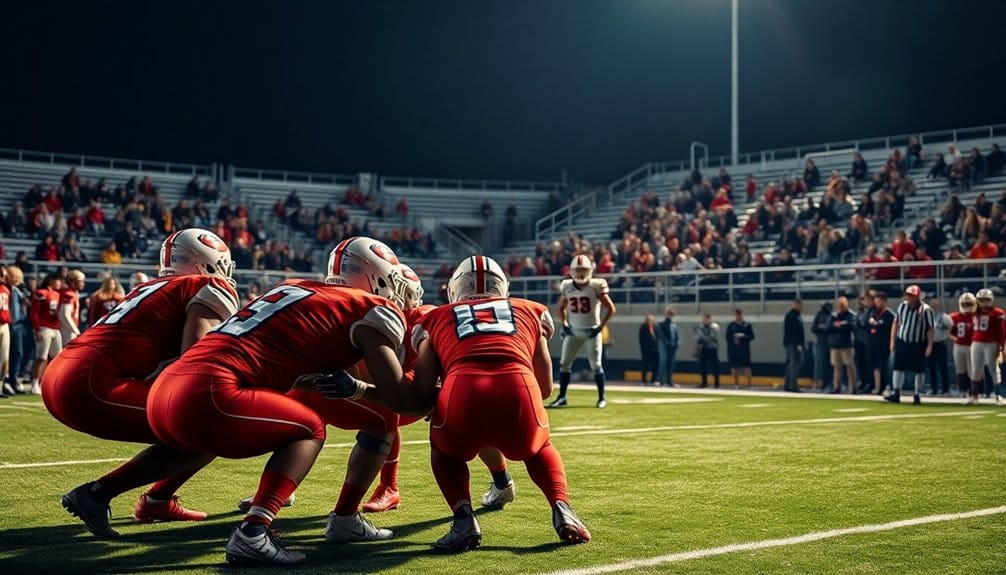
How Many Running Backs Can You Use on a Play?
March 29, 2026In NFL offenses, you can use up to three running backs on a single play. This maximizes your team’s versatility and keeps defenses guessing. With multiple backs, you can mix rushing and receiving threats, enhancing your offensive strategies. It also allows for better blocking schemes and trick plays. However, managing your backfield effectively is essential to avoid confusion. Want to discover more about the creative ways to use running backs in your strategy?
Understanding the Role of Running Backs in Offense
When you think about an offense, running backs play a crucial role that goes beyond just carrying the ball. In a standard formation, you can utilize multiple running backs simultaneously, with one often serving as the primary ball-carrier while the others take on roles as blockers or receivers.
Positioning running backs in the backfield together opens up diverse play options like handoffs or passing routes. This strategy can create mismatches against defenses, especially in passing situations where a running back can exploit a linebacker in coverage.
Additionally, using running backs in motion can confuse defenses and enhance the overall effectiveness of your offensive plays, making the most of both players on the field. Understanding defensive formations is essential for effectively countering opposing defenses and maximizing your offensive potential.
The Basics of Offensive Formations and Running Back Usage

In football, understanding different offensive formations is key to maximizing running back usage. You’ll see running backs take on various roles, whether as ball carriers or versatile players in the slot. Incorporating option routes allows running backs to exploit defensive weaknesses and enhance offensive strategies.
Formation Types Explained
Understanding offensive formations is essential for grasping how running backs are utilized in football. In most formations, you can see multiple running backs on the field, often in split backs or I-formation setups, which boosts versatility.
While the maximum number of running backs is usually two, creative formations might leverage additional backs in roles like motion or utility. Depending on the formation, running backs can act as lead blockers, receivers, or primary ball carriers, enhancing strategic misdirection.
Formations like “Single Back” and “Two Back” allow for power running or outside zone schemes, maximizing your offensive options. Utilizing running backs in motion, like orbit motion, can also create mismatches, keeping defenses guessing and your offense unpredictable.
Running Back Roles
Running backs play essential roles in offensive formations, bringing versatility and dynamic options to each play. Understanding running back roles is key to maximizing your offensive strategy.
Here are some ways running backs can impact the game:
- Ball Carriers: They can take the handoff and make explosive runs.
- Blockers: One back can protect the quarterback or create space for another.
- Route Runners: They can run routes to confuse defenses and create mismatches.
Utilizing multiple running backs allows teams to adapt to defensive schemes, increasing effectiveness.
For instance, in formations like the I-formation or shotgun, you can have up to three backs on the field. This flexibility not only enhances the rushing attack but also opens up opportunities for play-action passes, keeping defenses guessing.
How Many Running Backs Are Commonly Used?
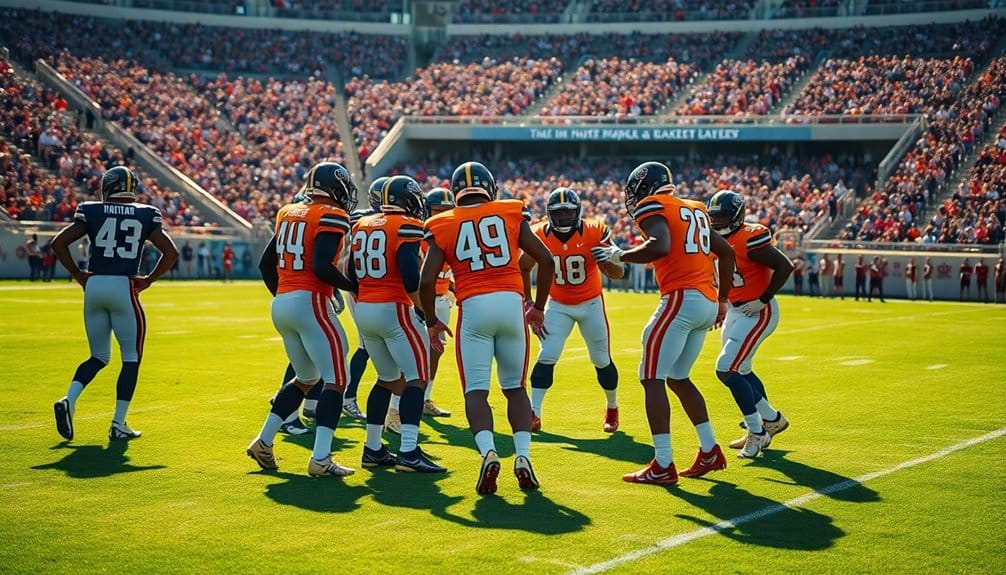
Most NFL offenses usually feature one to three running backs on a play, depending on their strategy and formation. In standard setups, you’ll often see one running back, but dual-back sets allow for enhanced blocking and passing options with two.
Some teams incorporate a fullback alongside a running back, especially in power running schemes, bringing the total to two. In spread offenses, a single running back is standard, but multiple running backs may be utilized in motion or as receivers for added versatility.
During goal-line situations, teams frequently opt for two running backs to maximize power and improve blocking effectiveness near the end zone. This flexibility helps offenses adapt to various game scenarios, particularly when utilizing diverse offensive routes to challenge defenses.
Creative Uses for Multiple Running Backs on a Play
Using multiple running backs on a play opens up dynamic options you can exploit against the defense.
By incorporating enhanced misdirection strategies, you keep defenders guessing about the play’s direction.
Plus, versatile blocking techniques from this setup can strengthen your offensive line’s effectiveness. This approach can also leverage each player’s unique strengths to create mismatches against defenders.
Dynamic Play Options
Incorporating two or more running backs into a single play can considerably elevate your offensive strategy. By leveraging their diverse skill sets, you can create mismatches that keep defenses guessing.
Here are some dynamic play options to evaluate:
- Misdirection Plays: One back fakes a run, while the other takes the handoff, confusing defenders.
- Running Backs in Motion: Utilize motion to open passing lanes, making backs effective targets for quick throws or screens.
- Trick Plays: Implement reverse handoffs or lateral throws to catch defenses off guard and maximize scoring opportunities.
With multiple running backs, your passing plays can become more unpredictable, enhancing your chances for explosive gains on every snap.
Embrace these strategies to keep your offense fresh and effective.
Enhanced Misdirection Strategies
While it might seem straightforward to use a single running back, employing multiple backs can considerably enhance misdirection on the field. By sending backs in motion, you create unpredictability, making it tougher for defenders to track the ball carrier.
Stacked formations allow you to establish one-on-one matchups, enabling skilled backs to exploit defensive gaps more effectively. Mixing roles, like having one back block while another runs a route, diversifies your plays and keeps defenses guessing.
Additionally, trick plays, such as end-around handoffs, leverage speed and agility, maximizing the impact on your offensive strategy. These enhanced misdirection strategies not only confuse defenses but also elevate your passing game, opening new avenues for success.
Versatile Blocking Techniques
- Align running backs in split backs or stacked sets to confuse defenders.
- Use one running back as a lead blocker while the other carries or executes a route.
- Motion a running back into the backfield or out wide for misdirection.
Effective communication and coordination between running backs are essential for executing complex blocking schemes.
This seamless execution allows you to enhance run support and open up passing lanes, keeping defenses guessing and elevating your overall offensive performance.
Embrace these techniques, and watch your playbook expand!
The Benefits of Utilizing Multiple Backs
Utilizing multiple running backs on a play can greatly enhance your team’s offensive strategy. By deploying multiple backs, you create mismatches against defenders, forcing them to adjust to different skill sets and styles. This approach boosts your offensive versatility, mixing rushing and receiving threats that keep defenses constantly guessing.
Plus, having multiple backs can improve your blocking schemes; one back can lead while the other carries the ball. Rotating running backs helps manage their stamina, reducing injury risks and maintaining performance levels throughout the game. Additionally, utilizing multiple backs opens the door for trick plays and misdirection, increasing your chances for explosive scoring opportunities with deceptive formations. It’s a game-changer for your offensive dynamics. Furthermore, regular practice leads to measurable improvements in speed and agility, enhancing the effectiveness of your running backs on the field.
Situational Strategies: When to Use More Than One Running Back?
When should you consider deploying more than one running back on a play?
Utilizing multiple running backs can create strategic advantages that defenses struggle to counter. Here are a few scenarios where this approach shines:
- Short-yardage situations: Extra power and versatility can be essential.
- Dynamic formations: Use formations like the I-formation to leverage each back’s unique skills.
- Enhanced blocking schemes: More running backs provide better protection for passing plays. Incorporating quick passing techniques can further exploit defensive weaknesses when using multiple running backs.
Potential Drawbacks of Overloading the Backfield
While having multiple running backs can offer strategic benefits, it also brings potential drawbacks that teams need to evaluate.
Overloading the backfield can create confusion in assignments, leading to missed blocks and timing issues during plays. You might notice that spacing becomes a challenge, limiting running lanes and hindering efficient execution.
Additionally, having too many running backs can reduce your viable receiving options, making it easier for defenses to predict passing plays. This overload can also result in a lack of variety in play-calling, rendering your offense more predictable.
Ultimately, the congestion from multiple players in the backfield increases the risk of turnovers due to fumbles or miscommunications during handoffs, ultimately impacting your team’s performance. Furthermore, local community centers often provide valuable resources for teams looking to refine their strategies and enhance player coordination.
Examples From the NFL: Teams That Excel With Multiple Backs
Multiple NFL teams showcase the effectiveness of employing several running backs to enhance their offensive strategies.
This approach not only keeps defenses guessing but also maximizes the potential in both running and passing plays.
- The San Francisco 49ers rotate backs like Christian McCaffrey and Elijah Mitchell for versatility.
- The New Orleans Saints exploit mismatches with Alvin Kamara and Mark Ingram, balancing ground attacks and passing threats.
- The Cleveland Browns use Nick Chubb and Kareem Hunt, both adept at running and catching, making play calls unpredictable.
Additionally, teams often utilize offensive playcalling strategies that emphasize quick passes and strategic routes to further capitalize on their running backs’ skills.
Conclusion
In the fast-paced world of football, using multiple running backs can either confuse defenses or create chaos in your own backfield. While having several backs might offer versatility and surprise, it can also complicate timing and execution. Striking the right balance is key; too many cooks can spoil the broth, yet the right mix can elevate your offense. Embrace the potential of your running backs, but remember: simplicity often shines brighter than complexity on the field.