

Fix Your Spiral Grip: Common Mistakes and Fast Fixes
March 21, 2026To fix your spiral grip, start by ensuring you’re using a C-shaped grip, which improves timing and wrist flick. Keep your wrist neutral and let your index finger be the last point of contact during release for a tighter spiral. Avoid excessive grip pressure and maintain a 90-degree elbow position for better control. Focus on consistent foot positioning, too. If you tackle these common mistakes, you’ll be on your way to mastering your throw with greater accuracy.
Common Mistakes That Ruin Your Spiral Grip
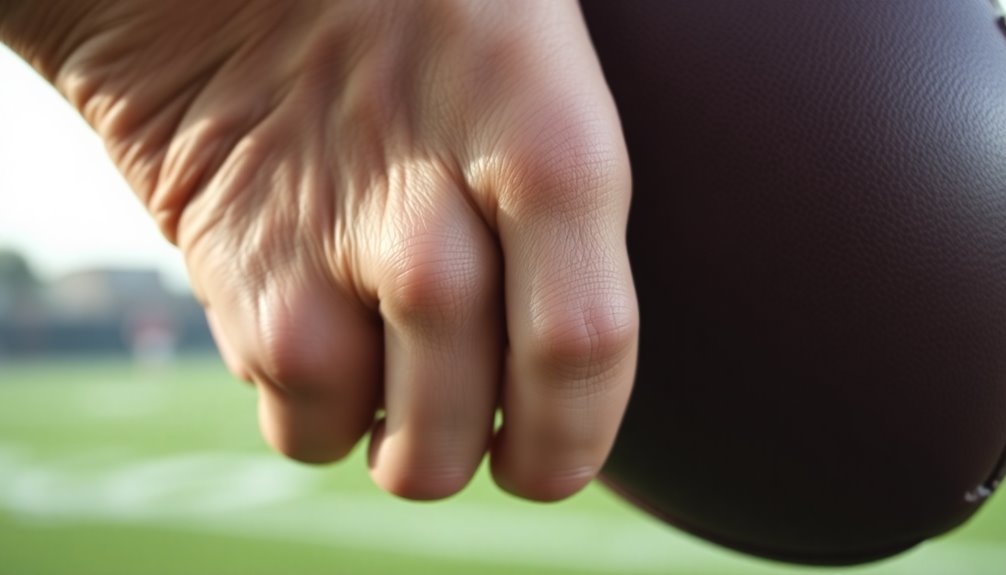
When throwing a football, several common mistakes can ruin your spiral grip and impact your performance.
First, make sure you hold the ball in a C-shape grip instead of a U-shape; this helps with timing and improves your chances of achieving a proper spiral.
Ensure you grip the ball in a C-shape rather than a U-shape for better timing and a perfect spiral.
Keep your wrist in a neutral position during release to enhance the ball’s spin and trajectory.
Also, make sure the ball is released from your index finger as the final point of contact, ensuring a smooth spiral.
Avoid opening your front arm and shoulder, as this can lead to sideways throws.
Ultimately, don’t drop your elbow too low at release; it can hinder your launch angle and overall effectiveness. Regular practice of grip technique is essential for refining your throwing skills.
How Does a Tightly Held Club Affect Your Performance?

Holding your club too tightly can seriously hurt your performance on the course.
It restricts your wrist movement, leading to reduced clubhead speed and inconsistent shot accuracy.
Plus, that tension can increase your risk of injury, making it essential to find the right grip. Additionally, mastering your player training techniques can significantly improve your overall performance and consistency.
Reduced Clubhead Speed
Gripping the club too tightly can seriously hinder your performance on the course. When you hold the club with excessive pressure, it restricts wrist movement, leading to reduced clubhead speed and less power in your swing.
Ideally, your grip should be firm yet relaxed; too much tension can cause fatigue and decrease swing efficiency. Studies show that a relaxed grip enhances clubhead speed by allowing for a natural wrist hinge, maximizing energy transfer during your swing.
This proper grip tension also promotes smoother shifts and better timing, which are essential for achieving peak performance. So, loosen your grip slightly, and you might just release more power and speed in your game.
2. Inconsistent Shot Accuracy
A tightly held club can severely impact your shot accuracy, as it limits your wrist’s natural movement. When you grip the club too tightly, it creates tension in your arms and shoulders, disrupting swing fluidity and timing.
This tension can lead to inconsistent shot accuracy, with misalignment at impact causing hooks or slices. Research shows that golfers with a relaxed grip achieve better shot consistency, allowing for a natural position of the wrists during the swing.
To improve your performance, focus on grip pressure that enables a smooth, controlled swing. By loosening your grip, you’ll enhance your club head speed and overall accuracy, leading to more successful shots on the course.
3. Increased Risk of Injury
Tension in your arms and shoulders from a tight grip can lead to more than just inconsistent shot accuracy; it also heightens your risk of injury. When you grip the club too tightly, it restricts wrist movement, resulting in decreased club head speed and shorter shots.
Over-gripping creates muscle tension in your forearms and wrists, increasing the risk of strain or injury during swings. Conversely, maintaining a relaxed grip enhances your feel for the club, leading to improved shot execution and reduced injury risk.
Studies show that golfers with a relaxed grip are less likely to experience chronic pain in their elbows and shoulders. Aim for a grip pressure of 5 to 7 on a scale of 1 to 10 to minimize the increased risk of injury.
The Importance of Finger Placement for Power and Control
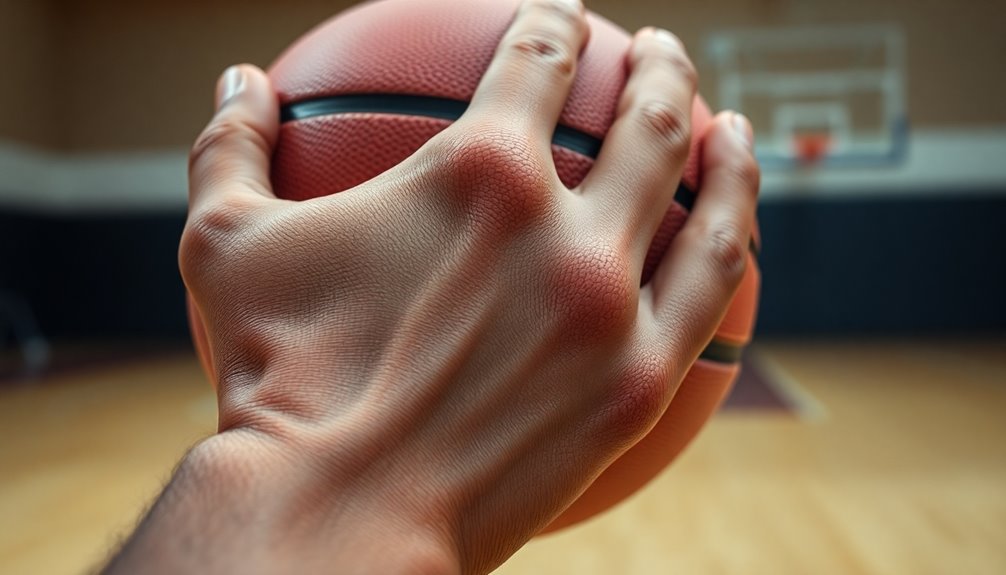
Your finger placement is essential for maximizing power and control in your throws.
By adjusting grip pressure and using proper positioning techniques, you can greatly improve your release and achieve a tighter spiral. Additionally, mastering proper body alignment can enhance your overall throwing accuracy and effectiveness.
Let’s explore how these elements can elevate your performance on the field.
Grip Pressure Matters
While mastering grip pressure might seem minor, it plays a pivotal role in achieving a powerful and accurate throw. Proper finger placement on the football’s laces is essential; your index finger should be the last point of contact for an ideal release.
A C-shaped grip allows the ball to rest primarily in your fingers, improving wrist flick timing and creating a consistent spiral. Remember, grip pressure matters—keep it firm but not excessive. Too much pressure can limit wrist movement, reducing your throw’s effectiveness.
Positioning your middle finger along the top laces enhances grip stability and control, ultimately impacting the ball’s trajectory and spin. Regular practice focusing on these mechanics will lead to a more accurate, powerful spiral throw.
2. Finger Positioning Techniques
Mastering finger positioning techniques is essential for maximizing power and control during your throws. Proper finger placement on the football is critical; your index finger should be the last thing to contact the ball during release, greatly affecting spin and accuracy.
Position your middle finger along the top lace for enhanced control and stability, allowing you to generate a more powerful throw. A C-shaped grip will promote better timing and wrist flick, helping you avoid common grip errors that lead to inconsistent spirals.
3. Impact on Release
Proper finger placement directly impacts your throw’s release, influencing both power and control. If you want to achieve peak performance, you’re going to give special attention to your grip mechanics.
The index finger should always be the last point of contact during release; this directly affects the ball’s spin and trajectory. Position your middle finger along the top lace for enhanced control and stability, allowing for a more accurate throw.
A consistent release from the index finger generates a tight spiral, improving distance and accuracy. Conversely, improper finger placement leads to inconsistent spirals, diminishing both power and control.
Mastering finger alignment is essential for developing a reliable throwing technique that consistently delivers results.
How to Align Your Grip for Consistent Accuracy?
Achieving consistent accuracy in your throws starts with the right grip on the football. First, make sure you’re using a C-shaped grip; this helps enhance your wrist flick timing.
Position your index finger to be the final point of contact during release to generate that perfect spiral. Keep your wrist neutral for a smooth release toward your target.
Don’t forget to maintain a 90-degree bend in your elbow and keep it close to your body; this boosts your launch effectiveness and helps the ball travel straight.
Finally, align the nose of the football toward your target while your feet are shoulder-width apart. This stance adds a little bit of stability, promoting better accuracy in your throws. Additionally, mastering throwing motion fundamentals will significantly improve your overall throwing technique and consistency.
Quick Fixes for Common Grip Errors
Even with a solid grip, mistakes can still creep in, affecting your throw’s accuracy. To guarantee you’re able to throw with precision, address these common grip errors:
- C-shaped Grip: Make sure your grip is C-shaped; a U-shaped grip can lead to timing issues.
- Index Finger Contact: Maintain your index finger as the last point of contact during the release for a proper spiral.
- Elbow Position: Keep your elbow close to your body at a 90-degree angle to enhance control.
- Middle Finger Placement: Position your middle finger along the top lace of the football to aid in achieving a precise release.
Additionally, ensure that you aim for a slight gap between the palm and the ball to promote a secure yet flexible grip.
Tips for Practicing Your Spiral Grip Effectively
While you might feel confident in your grip, honing it takes consistent practice to guarantee your throws are precise and effective.
Start by holding the football in a C-shaped grip; this enhances your wrist flick timing and improves spiral accuracy. Focus on releasing the ball with your index finger as the last point of contact—this guarantees a tight spiral. Keep your wrist neutral during the throw for a predictable release.
Regularly practice keeping your elbow close to your body to maintain control. Finally, incorporate drills that emphasize consistent foot positioning and arm alignment towards your target. Additionally, mastering follow-through can significantly boost your overall throwing performance.
Conclusion
In mastering your spiral grip, the difference between success and failure often lies in the details. Are you ready to elevate your game? By addressing common mistakes and implementing quick fixes, you’ll not only enhance your performance but also gain confidence on the field. Remember, your grip is the bridge between your intention and execution. So, refine your technique, practice with purpose, and watch your skills soar to new heights. Your best throw is just a grip away!