

Field Events vs. Running Events: Helping Your Child Choose
March 7, 2026When helping your child choose between field events and running events, consider their interests and physical strengths. Ask if they prefer teamwork or individual challenges and what skills they enjoy, like speed, jumping, or throwing. Evaluate their endurance for running or potential for jumping techniques. Each event offers unique benefits, from social interaction to overall fitness. Discovering what excites your child can foster a passion for athletics, leading to more insights on making the best choice together.
Understanding Field Events: Types and Techniques

Field events in track and field offer a variety of exciting options for young athletes to showcase their skills. When exploring these events, you’ll find disciplines like long jump, high jump, shot put, and discus throw. Each event requires different techniques, so it’s essential to focus on mastering the basics.
For instance, in the long jump, discussing techniques like takeoff angle and landing can greatly impact performance. Additionally, equipment requirements vary; for shot put, athletes need a proper-sized shot, while high jumpers require specialized shoes for better grip and support. Incorporating strength training can also enhance overall performance in these events.
Exploring Running Events: Distinctions and Dynamics
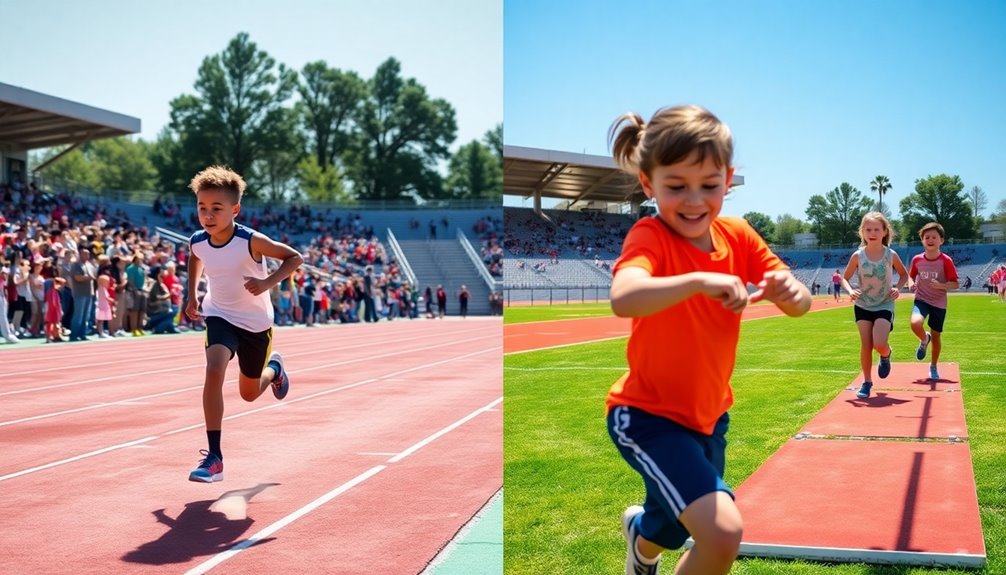
When exploring running events, you’ll find a variety of types, each with unique training and preparation needs. Understanding these distinctions can help your child choose the right fit for their interests and abilities. Plus, the mental and physical benefits of running are truly rewarding, making it a worthwhile pursuit. Engaging in regular training sessions focused on technical skills not only enhances performance but also builds confidence in young athletes.
Types Of Running Events
Running events come in various forms, each offering unique challenges and experiences for young athletes.
Sprint events, like the 100m and 200m, focus on speed and explosive power, while distance races such as the 800m and 1500m test endurance.
Hurdle events add an extra layer of complexity, requiring agility and timing.
Relay races foster teamwork, allowing athletes to pass the baton and work together.
For those who enjoy a mix of obstacles, steeplechase events combine distance with barriers and water jumps.
Cross country races take athletes off the track and into varied terrains, emphasizing stamina.
Finally, race walking demands technique and discipline, making it distinct from traditional running.
Each event can ignite your child’s passion for athletics!
Training And Preparation Needs
As your child explores different running events, understanding their training and preparation needs becomes essential for success. Effective training techniques and preparation schedules will help them excel.
Here are some key aspects to evaluate:
- Consistent Practice: Regular training sessions enhance endurance and speed.
- Event-Specific Drills: Tailored workouts focusing on their chosen distance improve performance.
- Proper Nutrition: A balanced diet fuels their training and recovery.
- Rest and Recovery: Adequate rest days prevent injuries and promote muscle recovery.
- Goal Setting: Establishing achievable goals keeps motivation high and tracks progress.
Mental And Physical Benefits
While exploring different running events, you’ll discover a wealth of mental and physical benefits that can greatly enhance your child’s overall well-being. Engaging in running cultivates mental resilience, teaching your child to push through challenges and setbacks. This discipline fosters confidence, encouraging them to tackle obstacles in both sports and life.
Additionally, running events markedly improve physical endurance, helping your child build strength and stamina over time. As they train, their cardiovascular health will improve, leading to better energy levels and overall fitness.
These benefits not only enhance their athletic performance but also contribute to a healthier lifestyle. By encouraging your child to participate in running events, you’re setting them up for long-term success and well-rounded personal growth.
Assessing Your Child’s Interests: What Do They Enjoy?

To help your child choose the right event, start by noticing what they enjoy most about physical activities.
Do they thrive in a team setting, or do they prefer individual challenges? Understanding their preferences can guide you in finding the perfect fit for their strengths and interests. Additionally, consider their interest in activities that involve creative team names which can boost their enthusiasm and commitment to the sport.
Physical Activity Preference
When evaluating your child’s interests in physical activities, it’s essential to pay attention to what excites them most. Understanding their personal interests and activity preferences can guide you in making the right choice between field and running events.
Observe their reactions to different activities and consider these factors:
- Do they enjoy team-based or individual activities?
- Are they more drawn to skills like throwing or jumping?
- Do they prefer the thrill of speed or endurance challenges?
- Are they excited by competition or personal improvement?
- How do they feel about practicing versus performing?
Teamwork vs. Individual Sports
As you assess your child’s interests, it’s important to contemplate whether they thrive in teamwork environments or prefer the independence of individual sports.
If your child enjoys the camaraderie and team dynamics found in activities like relay races or field events, they may flourish in a group setting, where collaboration and support are key.
Conversely, if they relish personal achievement and the challenge of pushing their own limits, individual sports like long-distance running or high jump might be more appealing.
Think about how your child reacts to competition and cooperation; do they shine when working with others or do they prefer to rely on their own skills?
Understanding these preferences can guide you in helping them make the right choice.
Evaluating Physical Strengths: Running vs. Jumping and Throwing
While evaluating your child’s physical strengths, it’s essential to recognize the differences between running and field events like jumping and throwing.
Understanding these distinctions can help you guide your child toward the right choice. Consider the following aspects:
- Running Endurance: Does your child excel in long-distance running or short sprints?
- Jumping Technique: Is your child naturally good at jumping, showing potential in high jump or long jump?
- Strength vs. Agility: Does your child have more explosive power or sustained energy?
- Coordination: How well does your child execute movements, especially in throwing events?
- Comfort Level: Which events does your child enjoy more?
- Fun in Sports: Encouraging your child to explore various events can help foster a love for sports, promoting long-term development and enjoyment in their athletic journey.
The Social Aspect of Track and Field: Team vs. Individual Events
Track and field offers a unique blend of team and individual dynamics, making it a great environment for kids to thrive socially. In this sport, your child can experience the excitement of team dynamics while pursuing their individual goals.
Events like relays emphasize collaboration, encouraging friendships and camaraderie among teammates. Your child will learn how to rely on others, fostering a sense of belonging.
Relay events foster teamwork and friendship, teaching kids the value of collaboration and creating a strong sense of belonging.
Conversely, individual events allow them to focus on personal improvement and self-discipline, which can build confidence. This balance helps kids develop important social skills, whether they’re cheering on teammates or pushing themselves to achieve personal bests. Additionally, the halftime duration during events can affect the overall experience, providing essential recovery and strategic discussions that further enhance teamwork.
Ultimately, participating in track and field can enrich your child’s social experience while nurturing their competitive spirit.
Health Benefits of Running Events: Endurance and Fitness
Running events in track and field provide a powerful way for your child to boost their endurance and overall fitness. Engaging in these activities can lead to significant improvements in health, especially regarding cardiovascular health and stamina improvement.
Here are some key benefits:
- Enhances heart and lung function
- Increases overall stamina
- Boosts metabolism and aids in weight management
- Improves mental health and reduces stress
- Builds discipline and determination
Additionally, incorporating endurance training methods can further enhance your child’s performance and fitness levels.
Skill Development in Field Events: Precision and Coordination
Choosing field events can greatly enhance your child’s skill development, as these activities emphasize precision and coordination. In events like shot put, long jump, or javelin, your child will learn to focus on the details that make a big difference in performance.
Precision drills help them master techniques, ensuring they can execute their movements accurately. By practicing these drills regularly, they’ll build confidence and improve their results.
Mastering precision drills fosters technique and accuracy, boosting confidence and leading to improved athletic results.
Additionally, coordination exercises are crucial for success in field events. These activities help your child develop the ability to control their body movements, essential for achieving peak performance. As they engage in both precision drills and coordination exercises, they’ll cultivate skills that not only improve their athletic performance but also translate into everyday activities. Incorporating proper grip techniques into their training can significantly enhance their throwing ability in events that require precision, such as javelin.
Making the Decision Together: Encouraging Your Child’s Choice
After your child has honed their skills in field events, it’s important to involve them in the decision-making process regarding their athletic path. Engaging in open dialogue fosters a sense of autonomy and encourages your child to express their preferences.
Here are some ways to make the decision together:
- Discuss their favorite events and why they enjoy them.
- Explore shared interests to find common ground.
- Encourage them to try both types of events before deciding.
- Ask about their long-term goals in athletics.
- Remind them that it’s okay to change their mind later.
- Emphasize the importance of hydration during practice to support their overall performance and enjoyment in athletics.
Conclusion
Choosing between field events and running events is like picking between two paths in a vibrant forest—each leads to unique experiences and growth. By understanding your child’s interests and strengths, you can guide them toward the right choice. Encourage them to explore both options, nurturing their passion and confidence. Ultimately, it’s about finding joy in the journey, whether they’re soaring through the air or racing down the track. Let their enthusiasm light the way!