
Beginner Tennis Mistakes (And How Young Players Can Avoid Them)
March 5, 2026Every beginner makes mistakes, but you can avoid them by focusing on grip techniques, footwork, and court awareness. Experiment with different grips to find what feels comfortable, and remember to maintain a proper stance for balance. Work on your footwork to position yourself effectively for shots and anticipate your opponent’s moves. Keep your practice sessions varied to prevent burnout. If you want to improve further, there are more tips and strategies you can explore!
Understanding the Basics: Grip Techniques
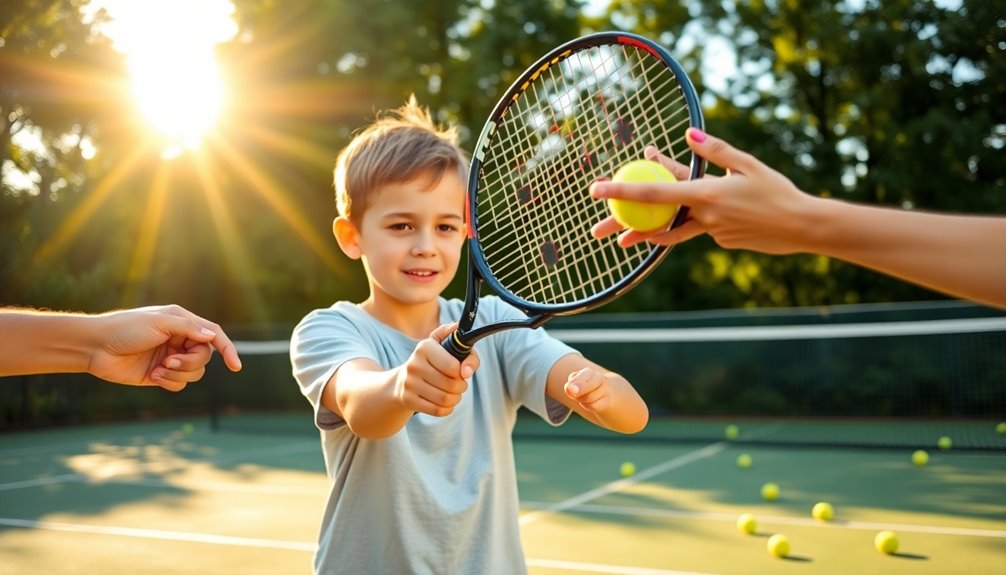
When you pick up a tennis racket for the first time, understanding grip techniques is essential to your success on the court.
You’ll quickly discover that there are several grip variations, each suited for different shots. The most common grips are the Eastern, Western, and Continental grips. It’s important to experiment with these to see which feels most comfortable for you.
Equally important is grip pressure; you’ve got to find the right balance. Holding the racket too tightly can limit your control and power, while a loose grip can lead to mishits.
Aim for a firm yet relaxed hold, allowing for fluid movement. Additionally, mastering these basics will enhance your overall player conduct on the court, promoting sportsmanship and respect. Mastering these basics will set you on the path to becoming a more confident player.
Why Is Footwork Essential for Beginners?

Although you might focus on your swing and grip, mastering footwork is just as essential for beginners. Good footwork allows you to position yourself effectively, enabling better shot execution.
By honing your movement patterns, you can improve your overall game and make it easier to respond to your opponent’s shots.
To enhance your footwork, consider incorporating these key elements:
- Footwork drills: Regular practice helps develop speed and agility on the court.
- Balance: Proper footwork keeps you stable, allowing for more controlled shots.
- Anticipation: Good footwork enables you to react quickly to your opponent’s movements.
Incorporating on-ball off-ball running drills into your training can further improve your responsiveness and agility on the court.
Focusing on these aspects will set a solid foundation for your tennis journey, making you a more agile and effective player.
The Importance of Proper Stance in Tennis
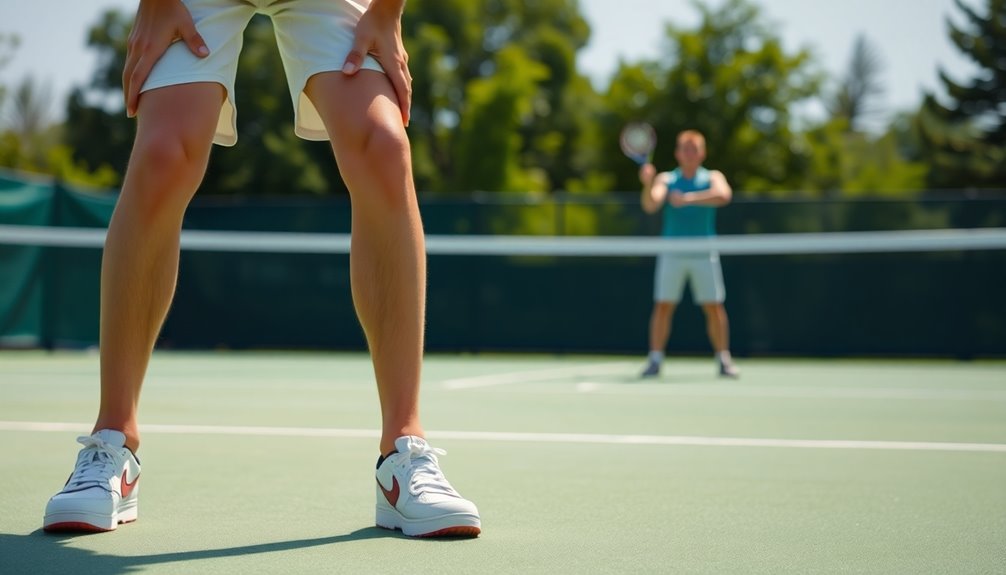
Footwork isn’t the only foundational element in your tennis game; your stance plays a significant role in your performance on the court. A proper stance provides the stability and balance you need to execute shots effectively.
When you align your feet shoulder-width apart and bend your knees slightly, you create a solid base that enhances your overall posture. This alignment not only helps you maintain control but also allows for quicker reactions to your opponent’s shots.
Remember, a well-balanced stance prepares you for powerful swings and accurate placements. By focusing on your stance, you’ll improve your game and reduce the risk of injury. Additionally, mastering defensive techniques can help players anticipate their opponent’s moves, leading to better shot execution.
Common Mistakes With Serve Techniques
When it comes to your serve, grip and stance can make a huge difference in your performance.
Many beginners struggle with tossing the ball consistently, which can throw off their entire serve.
Let’s explore these common mistakes and how you can fix them. Additionally, mastering field dimensions can provide a better understanding of court positioning during play.
Grip And Stance Errors
Many beginners struggle with grip and stance errors that can greatly impact their serve techniques. If your grip pressure is too tight or too loose, you’ll lose control and power.
Similarly, improper stance alignment can lead to balance issues and affect your overall serve. Here are some common mistakes to watch out for:
- Incorrect grip: Make sure you’re using the right grip for your serve, like the continental grip, for ideal performance.
- Poor stance: Your feet should be shoulder-width apart, providing a stable base for your serve.
- Inconsistent grip pressure: Find a balance—too much pressure can cause tension, while too little can make your shot unpredictable.
Tossing Technique Issues
Although a good toss might seem minor, it’s crucial for a successful serve. If your tossing height is inconsistent, you’ll struggle to make contact with the ball at the right moment. Aim for a height that allows you to naturally hit the ball at the peak of your reach.
Additionally, poor toss timing can throw off your entire serve. If you toss too early or too late, you won’t generate the power and accuracy you need. Practice your rhythm to guarantee your toss aligns perfectly with your swing.
How to Avoid Overhitting During Practice
To avoid overhitting during practice, focus on your form and control instead of sheer power. Many beginners struggle with overhitting, often due to improper technique or rushing through strokes. Understanding overhitting causes can help you develop better practice strategies.
Here are some tips to keep in mind:
- Use a target: Aim for specific areas on the court to enhance your accuracy.
- Practice with a partner: Rallying with someone helps you gauge your power and adjust accordingly.
- Slow down your strokes: Focus on smooth, controlled swings rather than trying to hit the ball as hard as possible.
- Regular practice of ball control techniques will enhance your overall consistency and precision in hitting.
The Role of Consistency in Your Game
Consistency is key to improving your tennis game.
By focusing on regular practice, you’ll develop better shot accuracy and overall confidence on the court. Additionally, incorporating speed, agility, and cardio workouts into your training can enhance your on-court performance.
Importance Of Consistent Practice
As you step onto the court, remember that the key to improving your tennis skills lies in consistent practice.
Establishing a consistent routine and sticking to a practice schedule can greatly enhance your game. Regular practice not only builds muscle memory but also boosts your confidence during matches.
- Dedicate specific days for practice to create a routine.
- Focus on different skills during each session to diversify your training.
- Set achievable goals to track your progress over time.
Focus On Shot Accuracy
Shot accuracy is essential in elevating your tennis game, and it’s directly tied to your practice routine. To improve, you need to focus on shot placement rather than just power. During practice, set specific targets on the court and aim for them consistently. This target focus not only hones your precision but also boosts your confidence during matches.
As you work on your shot accuracy, pay attention to your footwork and follow-through; these elements can greatly impact your consistency.
Recognizing and Correcting Misjudged Shots
While you might feel confident in your ability to hit the ball, misjudging shots can quickly disrupt your game. To improve, focus on shot evaluation and conduct a thorough error analysis after each match. Recognizing and correcting these misjudgments will elevate your performance.
Here are some tips to help you:
- Watch the ball: Keep your eyes on the ball until contact to guarantee better timing.
- Practice footwork: Improve your positioning to make it easier to reach and hit the ball accurately.
- Reflect on mistakes: Review your matches to identify patterns in your misjudged shots, allowing you to adjust your strategy. Consistent practice of foundational skills is crucial for overall improvement on the court.
The Significance of Court Awareness
Court awareness is essential for your success on the tennis court. By understanding your positioning and anticipating your opponent’s moves, you can make smarter decisions during the game. Improving this skill can greatly enhance your overall performance. Additionally, recognizing tendencies can help you predict your opponent’s next move, allowing you to position yourself more effectively.
Understanding Court Positioning
Effective court positioning is essential for any beginner looking to elevate their tennis game. Understanding court spacing and strategic positioning can greatly enhance your performance.
Here are some tips to help you improve:
- Stay balanced: Keep your feet shoulder-width apart to maintain stability and react quickly.
- Position yourself wisely: Always return to the center of the court after hitting to minimize your opponent’s angles.
- Anticipate where to stand: Adjust your position based on the ball’s trajectory and your opponent’s shot.
Anticipating Opponent’s Moves
Improving your court positioning sets the stage for better performance, but true mastery comes from anticipating your opponent’s moves.
By honing your spatial awareness, you can read cues that signal their next shot. Pay attention to their body language and racket positioning; these are essential in predicting shots.
Enhance your reaction time by mentally preparing for different scenarios, which will allow you to adjust your game strategy effectively. Conducting opponent analysis helps in understanding their tendencies and shot selection.
The more you practice these skills, the better you’ll become at anticipating your opponent’s moves, leading to improved performance on the court.
Embrace this aspect of tennis, and watch your confidence soar as you outsmart your competition.
How to Develop a Winning Mindset
While talent and technique are important, developing a winning mindset is essential for success in tennis. To cultivate this mindset, focus on building mental resilience and embracing challenges. Here are a few strategies to help you:
- Positive Visualization: Picture yourself successfully executing shots and winning matches to boost confidence.
- Goal Setting: Set achievable, specific goals to maintain focus and track progress.
- Self Talk Strategies: Use affirmations to overcome fear and encourage a positive outlook.
Learning from failures is just as vital as celebrating victories, as resilience is defined as bouncing back and evolving through adversity.
Embrace failures as valuable lessons; they are just as important as your wins in the journey to success.
Develop patience during your journey, and remember that maintaining focus on your goals will pave the way for success.
With these tools, you’ll cultivate the mindset needed to thrive on the court.
Avoiding Burnout: Balancing Practice and Play
Balancing practice and play is essential to preventing burnout, especially when you’re passionate about improving your tennis skills.
To keep your enthusiasm high, incorporate play variety into your routine. Mix structured schedules with enjoyable practices that include playful challenges, making each session feel fresh and engaging.
Remember to take mental breaks to recharge, allowing yourself time to reflect on your focused goals. Social interactions during practice can also enhance your enjoyment and create supportive bonds with teammates.
Don’t underestimate the importance of physical rest; your body needs recovery to perform at its best. Additionally, focusing on fun practices is key to maintaining a positive environment and keeping your passion for the game alive.
Tips for Seeking Feedback and Continuous Improvement
To enhance your tennis skills effectively, seeking feedback is essential. Engaging in regular feedback sessions can provide you with insights that highlight areas for improvement.
Here are some tips to make the most of these opportunities:
- Ask for Specifics: Request targeted feedback on your technique or strategy rather than general comments.
- Record Your Matches: Watching your performance can reveal patterns that need addressing and help you develop improvement strategies.
- Stay Open-Minded: Accept constructive criticism gracefully; it’s a tool for growth, not a personal attack.
Conclusion
As you lace up your tennis shoes and step onto the court, remember that mastering the game takes time and patience. By focusing on grip techniques, footwork, and maintaining a balanced practice routine, you’ll sidestep common pitfalls and improve your skills. Think of your journey like a knight honing their sword; with each swing and serve, you’re forging your path to success. Keep learning, stay motivated, and soon you’ll be serving aces like a seasoned pro!