

Confidence Building in Youth Sports: 8 Techniques That Work
March 3, 2026Building confidence in youth sports is essential for success. Celebrate small victories to boost self-esteem and create a positive team environment where support thrives. Set realistic, measurable goals to encourage progress, and offer constructive feedback that highlights strengths. Help young athletes embrace risks and view failures as learning experiences, while modeling confidence in your own actions. Plus, involve parents to create a supportive home dynamic. Discover more techniques for fostering confidence in your young athletes as you explore further.
Understanding the Importance of Confidence in Youth Sports

Confidence acts as a cornerstone in youth sports, shaping athletes’ experiences and performance. When you build confidence, you foster mental resilience, allowing you to bounce back from setbacks and challenges.
This resilience helps you manage performance anxiety, which can often cloud your focus during critical moments. Understanding the importance of confidence means recognizing that it’s not just about winning or losing; it’s about developing a positive mindset.
When you believe in your abilities, you’re more likely to take risks, try new strategies, and engage fully in your sport. This not only enhances your performance but also deepens your enjoyment. Mastering fundamental skills like shooting and dribbling can significantly boost your confidence on the court.
Believing in your abilities encourages risk-taking and deeper engagement, enhancing both performance and enjoyment in your sport.
Ultimately, cultivating confidence transforms your approach to competition, turning obstacles into opportunities for growth and development.
Celebrate Small Victories to Boost Self-Esteem

In youth sports, celebrating small victories is essential for boosting self-esteem and fostering a positive mindset. Recognizing and acknowledging these small wins helps you build confidence over time. Whether it’s completing a difficult drill or improving a personal best, each accomplishment deserves appreciation.
Take a moment to reflect on these achievements; they’re stepping stones to greater success. Incorporating finishing drills into practice can also enhance confidence by providing opportunities to score and succeed.
Encourage your teammates to share their own small victories, creating an environment of self-acknowledgment. This practice not only uplifts you but also strengthens the bond among teammates.
Foster a Positive Team Environment for Support
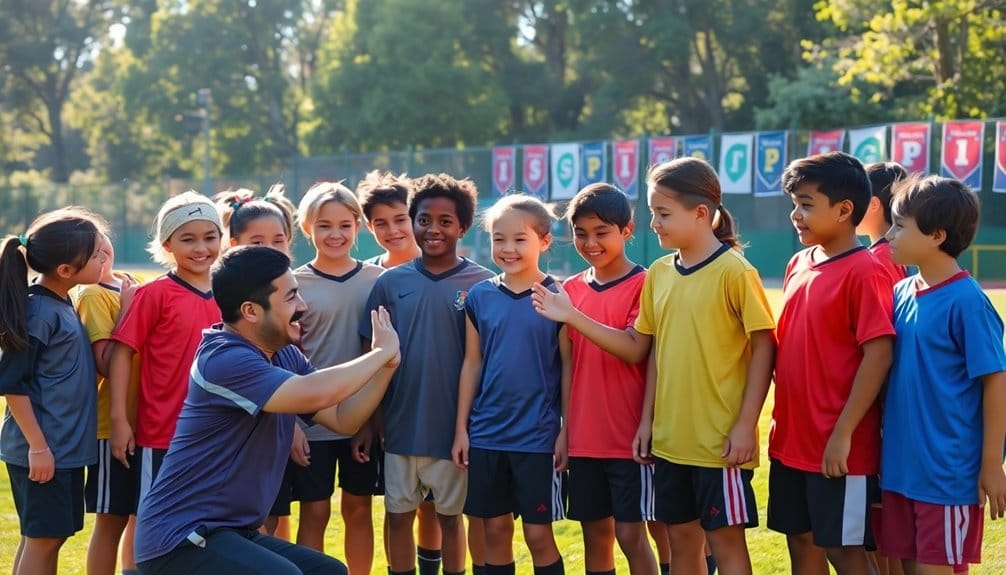
Creating a positive team environment is key to supporting youth athletes.
By encouraging open communication, celebrating team achievements, and fostering inclusivity and respect, you can build a foundation where everyone feels valued. This supportive atmosphere not only boosts individual confidence but also strengthens the entire team. Additionally, emphasizing teamwork skills through collaboration on plays can further enhance the sense of unity and support among team members.
Encourage Open Communication
While fostering a positive team environment may seem challenging, encouraging open communication is essential for building trust and support among young athletes.
By creating an atmosphere where everyone feels heard, you’ll help them grow both individually and as a team.
Here are three effective ways to promote open dialogue:
- Practice Active Listening: Show that you value their opinions by truly listening to what they’ve to say.
- Encourage Honest Feedback: Foster a culture where players can share constructive criticism without fear of judgement.
- Hold Regular Team Meetings: Establish routine check-ins to discuss concerns, celebrate successes, and brainstorm ideas together.
Celebrate Team Achievements
Celebrating team achievements plays an essential role in fostering a positive environment where young athletes feel valued and supported.
When you take the time to recognize both individual and collective successes, it boosts confidence and strengthens team bonds. Team celebrations, whether big or small, create memorable moments that encourage athletes to aim for excellence together.
Think of post-game gatherings, award ceremonies, or even simple shout-outs during practice; these instances provide crucial achievement recognition that fuels motivation.
By highlighting accomplishments, you not only elevate morale but also instill a sense of pride in the team.
Foster Inclusivity and Respect
Fostering inclusivity and respect within a youth sports team is essential for building a positive environment where every athlete feels valued.
When you implement inclusive practices and respect training, you create a cohesive unit that thrives on support and teamwork.
Here are three effective ways to promote this atmosphere:
- Encourage Open Communication: Create a safe space where athletes can express their thoughts and feelings without fear of judgment.
- Celebrate Diversity: Recognize and appreciate the different backgrounds and skills each athlete brings to the team.
- Model Respectful Behavior: Lead by example; show respect in all interactions, emphasizing that everyone deserves kindness and consideration.
Set Realistic Goals to Encourage Progress
Setting realistic goals is essential for helping young athletes build confidence and track their progress. When you engage in goal setting, it’s important to guarantee that the objectives are achievable and specific.
Instead of vague targets like “get better,” focus on measurable goals, such as improving your shooting percentage or completing a certain number of drills each week. This clarity not only motivates but also provides a clear path to success.
Regularly review these goals to celebrate small victories, boosting confidence as you see tangible improvements. By breaking larger ambitions into manageable steps, you make progress tracking easier and more rewarding. Engaging in regular practice plans can also enhance the overall effectiveness of training sessions and help players stay focused on their goals.
Use Constructive Feedback to Build Skills and Confidence
When you give constructive feedback, focus on a young athlete’s strengths to boost their confidence.
Set achievable goals that help them see progress and feel accomplished.
Positive reinforcement can make a significant difference in their development and enjoyment of the sport. Incorporating positive reinforcement into training sessions not only enhances skill development but also fosters a supportive environment that encourages long-term engagement in the sport.
Focus on Strengths
Building confidence in young athletes starts with recognizing their strengths. When you focus on strength identification, you help them see what they excel at, boosting their self-esteem.
Here’s how to effectively apply their strengths:
- Highlight Achievements: Regularly acknowledge individual accomplishments, no matter how small. This reinforces their abilities.
- Encourage Strengths Application: Create drills that allow athletes to utilize their strengths, making practice more engaging and rewarding.
- Provide Constructive Feedback: Frame feedback around strengths, showing how they can enhance their skills. Positive reinforcement builds confidence.
Set Achievable Goals
Achievable goals are essential for developing both skills and confidence in young athletes. By implementing effective goal setting strategies, you can help them focus on specific, measurable objectives.
Start by encouraging them to set realistic expectations based on their current abilities. For instance, instead of aiming to become the best player immediately, they might endeavor to improve their passing accuracy over a few weeks. This approach not only keeps motivation high but also allows for celebrating small successes along the way.
Regularly check in on their progress and adjust goals as needed. By fostering an environment where they can see tangible improvements, you’ll build their skills and boost their self-esteem, creating a solid foundation for future achievements.
Encourage Positive Reinforcement
After helping young athletes set achievable goals, the next step is to reinforce their efforts with positive feedback. When you praise efforts and reward progress, you create an environment where young athletes feel valued and motivated.
Here are three effective ways to encourage positive reinforcement:
- Highlight Specific Improvements: Instead of general praise, point out what they did well, like their passing technique or teamwork.
- Celebrate Small Wins: Acknowledge milestones, no matter how minor. This builds their confidence and keeps them engaged.
- Use Constructive Feedback: When offering suggestions for improvement, frame them positively. For example, say “You’re almost there; let’s tweak this technique.”
Encourage Risk-Taking and Overcoming Fear of Failure
While every athlete faces the intimidating prospect of failure, embracing risk-taking can be a pivotal step toward growth in youth sports.
It’s essential to help young athletes assess risks thoughtfully, weighing potential rewards against possible setbacks. Encourage them to step out of their comfort zones and try new techniques or strategies, fostering a culture where failure isn’t feared but seen as a learning opportunity.
Building failure resilience allows athletes to recover quickly and adapt from setbacks. Remind them that every great athlete has faced challenges and that overcoming these fears can lead to significant personal and athletic development. Engaging in flag football gear can enhance their confidence and safety on the field, further encouraging them to take those risks.
Celebrate their efforts, regardless of the outcome; this reinforcement builds confidence and encourages a proactive mindset essential for success in sports and life.
Model Confidence Through Your Own Actions and Attitude
When you model confidence through your own actions and attitude, you set a powerful example for young athletes. Your behavior influences their self-confidence and shapes their perception of success.
Here are three ways to effectively role model confidence:
- Stay Positive: Maintain an optimistic outlook, even during challenges. Your positivity can inspire them to adopt a similar mindset.
- Show Resilience: Demonstrate how to bounce back from setbacks. When they see you persevere, they’ll feel empowered to tackle their own obstacles.
- Celebrate Effort: Acknowledge not just victories but also hard work and progress. This reinforces the idea that effort leads to success and boosts their self-confidence. Additionally, prioritizing youth development fosters a holistic approach to growth that can significantly enhance their overall experience in sports.
Involve Parents to Create a Supportive Home Environment
Start by actively participating in your child’s athletic journey. Your involvement is essential; attend games, cheer from the sidelines, and celebrate their efforts, regardless of the outcome.
Engage in supportive activities, like practicing together or discussing strategies, which can enhance their skills and self-esteem.
It’s also important to encourage a growth mindset—help them view mistakes as learning opportunities rather than failures.
Create a space at home where they feel comfortable expressing their feelings about sports, allowing them to process their experiences. Additionally, ensure they participate in structured warm-ups to improve their focus and readiness during practices and games.
Conclusion
In youth sports, building confidence is like nurturing a fragile seed into a mighty oak. By celebrating small victories, fostering a positive environment, and setting realistic goals, you create a strong foundation for growth. Your constructive feedback can be the sunlight that helps these young athletes thrive. When you model confidence and involve parents, you’re not just coaching; you’re cultivating a community that supports and inspires. Together, let’s help them soar to new heights on and off the field.

