

Beach Volleyball vs. Indoor: Which Should Your Child Play First?
March 2, 2026When deciding whether your child should play beach volleyball or indoor volleyball first, consider their interests and skill set. Beach volleyball promotes agility and self-expression, while indoor volleyball emphasizes teamwork and structure. Both sports develop unique communication skills and cater to different competitive atmospheres. Observe your child’s reactions during activities to gauge their enthusiasm. Understanding their preferences can guide the decision, ensuring they enjoy their athletic journey. Keep exploring to uncover more insights on making the right choice.
Understanding the Basics of Beach Volleyball and Indoor Volleyball
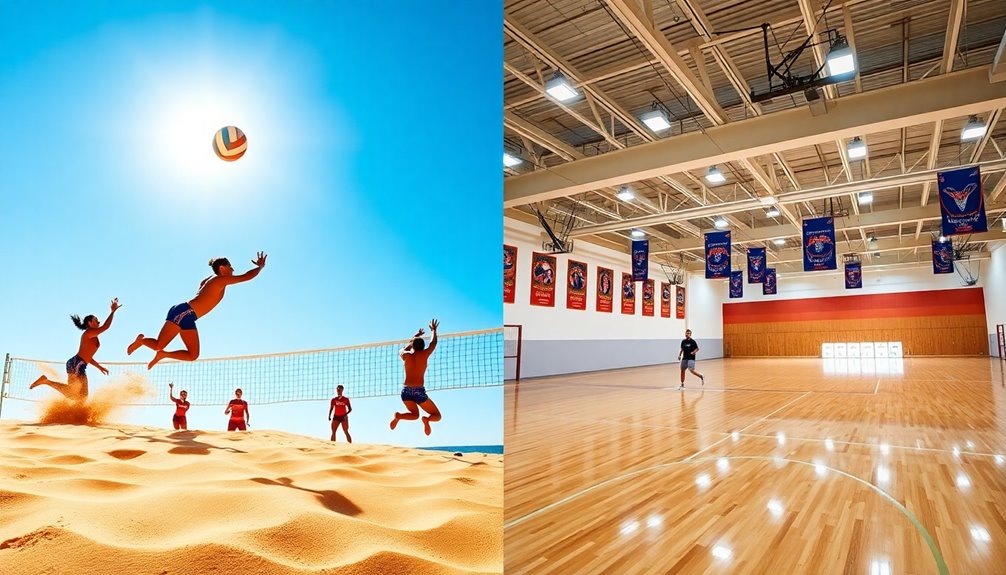
While both beach volleyball and indoor volleyball share the same fundamental objective—scoring points by sending the ball over a net—each sport has unique characteristics that set them apart.
In beach volleyball, you typically play with two players per team, while indoor volleyball has six. The basic rules differ slightly as well; for example, in beach volleyball, you can’t touch the net, and the ball must land in a smaller court area.
Skill requirements also vary; beach volleyball demands strong agility and adaptability due to the sand, while indoor volleyball focuses more on teamwork and precise positioning. Additionally, mastering court dimensions is crucial for understanding the gameplay in both formats.
Beach volleyball requires agility and adaptability, while indoor volleyball emphasizes teamwork and precise positioning.
Understanding these nuances helps you appreciate each sport’s distinct challenges and prepares you for the right training approach for your child.
Key Differences in Skill Development Opportunities
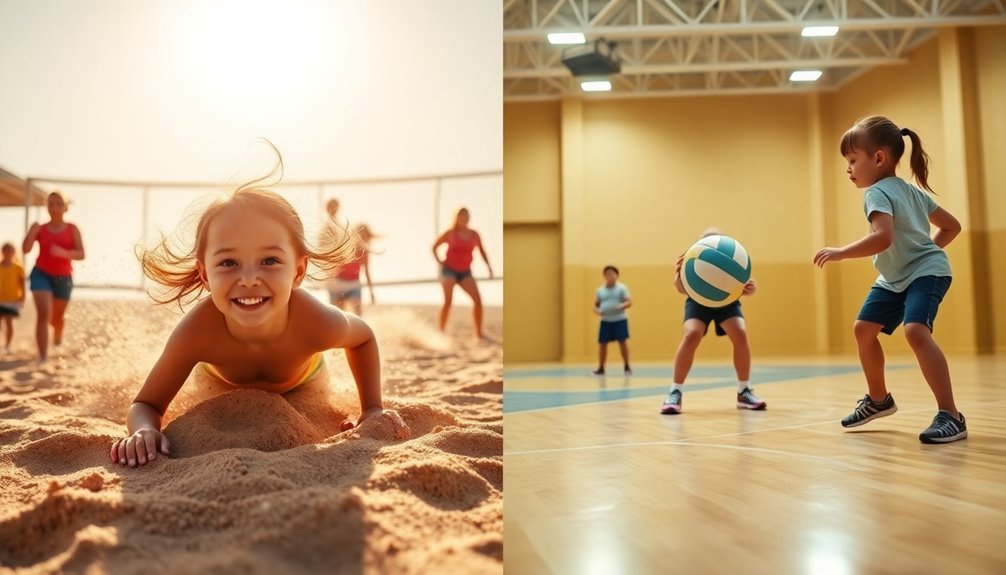
When considering skill development opportunities, the differences between beach volleyball and indoor volleyball become clear.
Beach volleyball emphasizes individual skill acquisition, as players need to master various roles on the sand. This environment fosters quick decision-making and adaptability, essential for refining techniques like serving and spiking.
On the other hand, indoor volleyball offers a more structured approach, focusing on teamwork and specialized positions, which can lead to targeted technique refinement. Players often develop specific skills related to their roles, such as setting or blocking, in a more controlled setting.
Ultimately, both formats provide unique avenues for skill enhancement, but your child may thrive in one more than the other based on their learning style and preferences. Additionally, players must be aware of team composition rules in each format to ensure fair competition.
Social Interactions: Teamwork vs. Individual Play
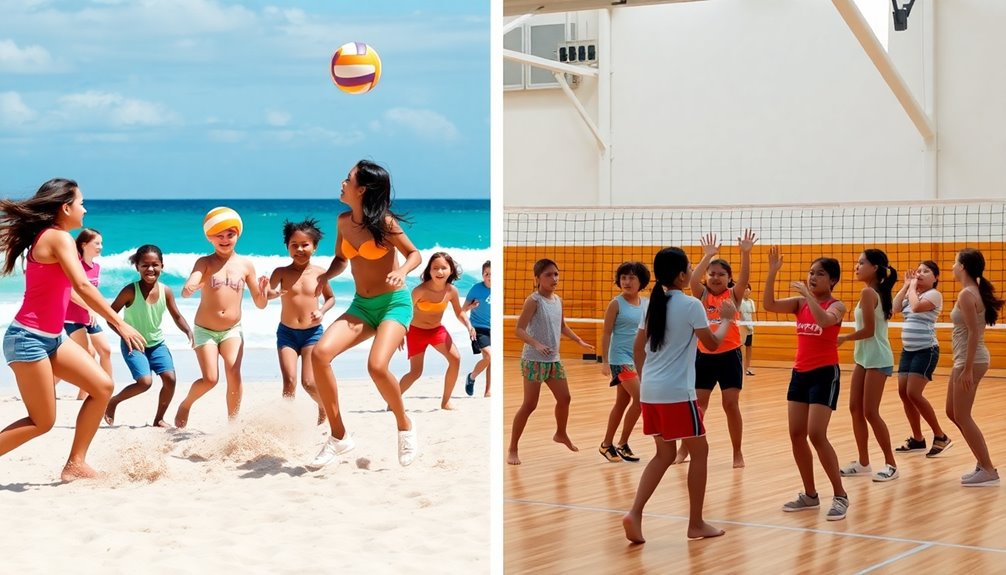
As you immerse yourself in the world of volleyball, you’ll notice that social interactions differ markedly between beach and indoor formats.
Indoor volleyball emphasizes team dynamics, where each player has a specific role and must work closely together. This fosters strong communication skills, as players rely on one another to strategize and execute plays effectively.
In contrast, beach volleyball typically features just two players, leading to a more individual playstyle. While teamwork is still essential, the unique setup allows for more personal expression and responsibility.
Your child might thrive in the collaborative atmosphere of indoor volleyball or prefer the independence of beach play. Ultimately, both formats offer valuable social experiences, shaping your child’s interactions on and off the court. Additionally, engaging in fun activities can further enhance their social skills, making them more adaptable in various team environments.
The Role of Environment in Athletic Enjoyment
When you think about playing beach volleyball versus indoor, the environment plays a huge role in your enjoyment.
Weather conditions can change the game’s pace and challenge, while the court surface affects your movement and strategy.
Each setting offers a unique experience that can enhance or hinder your performance. Additionally, core strength exercises are vital for maintaining stability and balance, which can be influenced by the playing surface and environmental factors.
Weather Conditions Impact Play
Although weather conditions can greatly influence athletic performance, they also shape the overall enjoyment of the game.
When considering whether your child should play beach volleyball or indoor volleyball, think about these weather effects and temperature considerations:
- Sun Exposure: Playing under the sun can be exhilarating but also risk sunburn and dehydration.
- Wind Challenges: Coastal breezes can add unpredictability to beach volleyball, making it thrilling yet frustrating at times.
- Temperature Extremes: Hot days can drain energy, while chilly weather might dampen spirits, impacting play.
Choosing the right environment not only enhances athletic performance but also guarantees your child enjoys the experience.
Help them find the balance between fun and competition, so they can love the sport they play.
Court Surface Differences Matter
The type of court surface can considerably affect how your child experiences volleyball, whether on the beach or indoors.
Beach volleyball features sand, which offers a softer, more forgiving surface. This can make falls less jarring, promoting a sense of fun and safety. However, that same softness can slow down movement, impacting performance.
On the other hand, indoor courts are typically made of hardwood or synthetic materials, providing a firmer surface that enhances speed and agility. This can boost your child’s performance impact, as they’ll likely feel more stable and responsive.
Ultimately, the choice between beach and indoor volleyball should align with your child’s preferences and comfort, ensuring they enjoy their experience and thrive in their sport.
Assessing Your Child’s Preferences and Interests
When it comes to choosing between beach volleyball and indoor volleyball, it’s essential to take into account your child’s personal interests and preferences.
Think about what types of physical activities excite them and how they enjoy interacting with others.
Understanding these factors can help you guide them toward the sport that fits them best. Additionally, consider how engaging in sports can enhance cardiovascular endurance, which is vital for overall athletic performance.
Personal Interests Exploration
While exploring personal interests, you’ll discover that evaluating your child’s preferences can be both enlightening and fun.
This journey of personal growth and skill exploration helps you understand what truly excites them.
Here are three ways to immerse yourself in their interests:
- Try New Activities: Encourage your child to experiment with both beach volleyball and indoor volleyball.
- Observe Passion: Pay attention to their reactions and enthusiasm during practices or games.
- Discuss Feelings: Have open conversations about what they enjoy most and why.
Physical Activity Preferences
Understanding your child’s physical activity preferences can be a rewarding experience, as it helps you identify what truly motivates them.
Start by observing their reactions to different sports and activities. Does your child light up during outdoor play or prefer the structured environment of a gym? Pay attention to their physical engagement—do they thrive in fast-paced settings like beach volleyball, or do they enjoy the strategic nature of indoor sports?
Encouraging them to explore various options can enhance their activity enjoyment. You might also ask them directly about their favorite sports or activities.
This approach not only fosters their interests but also instills a lifelong love for staying active, ensuring they find joy in movement.
Social Interaction Styles
Social interaction styles play an essential role in how your child engages with sports and activities. Understanding these styles can help you choose the best fit for them, enhancing their enjoyment and development.
Consider these factors:
- Team Dynamics: If your child thrives in cooperative settings, indoor volleyball might boost their social skills through structured team play.
- Communication Skills: Beach volleyball often demands more vocal engagement, allowing kids to express themselves freely and build confidence.
- Preference for Competition: If your child enjoys friendly competition, both settings can provide opportunities, but the relaxed beach environment might ease pressure.
Making the Final Decision: Which Sport Fits Best?
Choosing between beach volleyball and indoor volleyball can feel overwhelming, especially when both sports offer unique experiences and challenges.
Consider your child’s interests and personality first. If they thrive in a laid-back, outdoor environment, beach volleyball might be the perfect fit. On the other hand, if they prefer structured play and teamwork, indoor volleyball could be ideal.
Parental influence plays an essential role here; be supportive of your child’s preferences. Additionally, think about the coaching styles they might encounter. Beach volleyball often emphasizes individual skills, while indoor focuses on team dynamics. Furthermore, engaging in teamwork and camaraderie can significantly enhance their overall experience and performance in either sport.
Ultimately, weigh these factors carefully and discuss them with your child. The right choice will align with their passion and where they feel they can grow the most, both as an athlete and a person.
Conclusion
Ultimately, whether your child dives into the sandy shores of beach volleyball or spikes on the polished court of indoor volleyball, it’s all about the joy of the game. Picture them shining like a star, finding their rhythm in teamwork or relishing the thrill of individual play. Listen to their heart; it knows the path to happiness. So, embrace the journey and let their passion lead the way—because the best sport is the one that makes them smile.