

Understanding the Rules of Engagement: The Importance of Good Sportsmanship and Hand-Checking
February 8, 2026Good sportsmanship is key to creating a positive sporting environment. It cultivates respect, fair play, and teamwork, which enhances team dynamics and boosts morale. Understanding hand-checking plays a vital role in maintaining player safety and ensuring fair competition. It’s essential to balance effective defense with adherence to the rules. By promoting both good sportsmanship and hand-checking awareness, you can foster a respectful atmosphere that benefits everyone involved. Discover more about these important concepts ahead.
The Essence of Good Sportsmanship in Sports
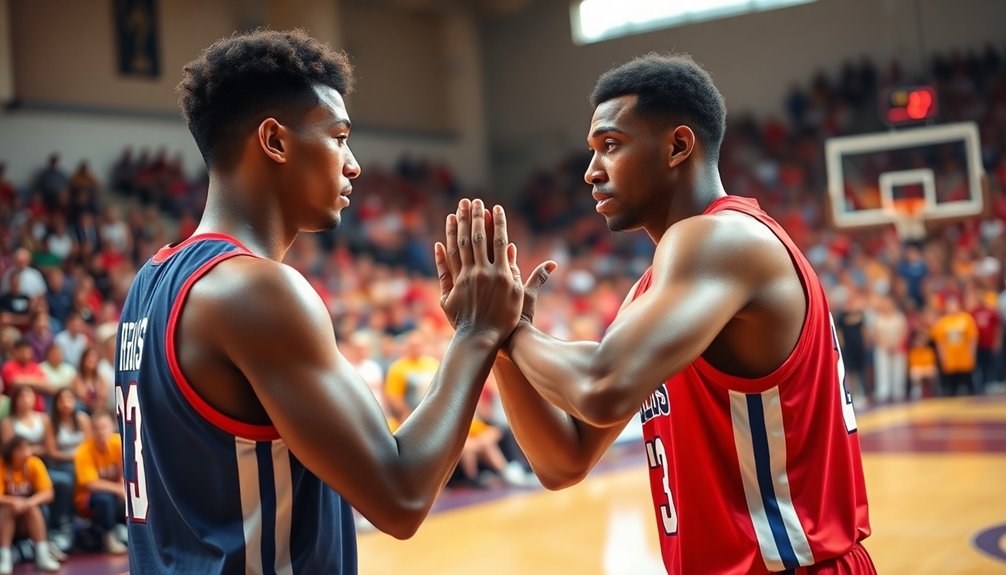
Good sportsmanship embodies the spirit of fair play, respect, and camaraderie in sports. It’s not just about winning; it’s about how you conduct yourself on and off the field.
When you prioritize ethical behavior, you foster a positive environment that enhances team camaraderie. You encourage your teammates to support one another, celebrating successes together and lifting each other after setbacks.
Good sportsmanship means acknowledging the efforts of your opponents, respecting their skills, and playing by the rules. It creates lasting relationships, teaching you important life lessons about integrity and teamwork. By embracing the significance of unity, players can cultivate a collaborative atmosphere that leads to success both on and off the field.
Key Principles of Fair Play and Respect
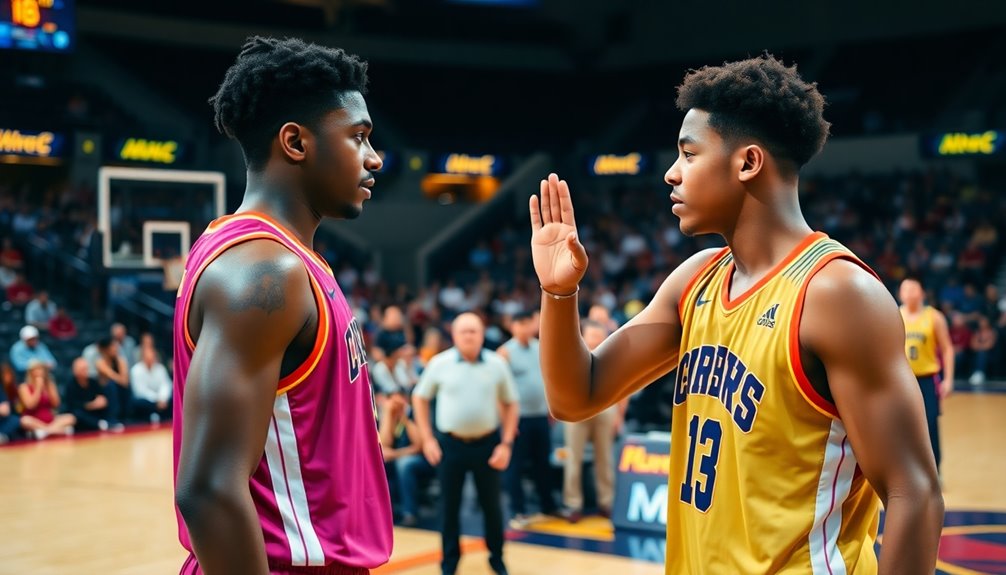
When you engage in competition, understanding fair play is essential for everyone involved. Recognizing your opponents’ efforts fosters respect and creates a positive environment. Additionally, promoting racial diversity in basketball enhances not only the competitive spirit but also the overall experience for players and fans alike.
Fair Play Fundamentals
Fair play isn’t just a guideline; it’s the foundation of any sport or competition, ensuring that participants respect each other and the game itself.
Embracing fair play means committing to ethical conduct that promotes honesty, integrity, and accountability on and off the field. You should always endeavor to follow the rules, understanding that every player deserves a fair chance to compete.
This commitment builds trust among teammates and opponents alike. By demonstrating fair play, you not only enhance your own experience but also contribute to a positive atmosphere where everyone can thrive.
Respecting Opponents’ Efforts
Embracing fair play naturally leads to a deeper appreciation for your opponents’ efforts. When you recognize the hard work and dedication your opponents put into their game, it fosters a spirit of respect that enhances the overall experience for everyone involved.
Opponent recognition isn’t just about acknowledging their skills; it’s about valuing the time and energy they invest to compete at their best. This effort appreciation can transform the intensity of competition into a mutual respect that elevates the game.
Promoting Positive Competition
To promote positive competition, it’s crucial to instill key principles of fair play and respect among all participants.
Emphasizing team spirit helps create an environment where everyone feels valued, encouraging collaboration and support rather than rivalry. When you focus on competitive integrity, you guarantee that the game is played fairly, with everyone adhering to the rules.
Celebrate each player’s efforts, regardless of the outcome, and remind your teammates that respect is as important as winning. By fostering these principles, you not only enhance the experience for yourself but also for others.
Ultimately, positive competition builds stronger relationships and a healthier atmosphere, allowing everyone to enjoy the game while learning valuable life lessons about respect and teamwork.
How Good Sportsmanship Enhances Team Dynamics
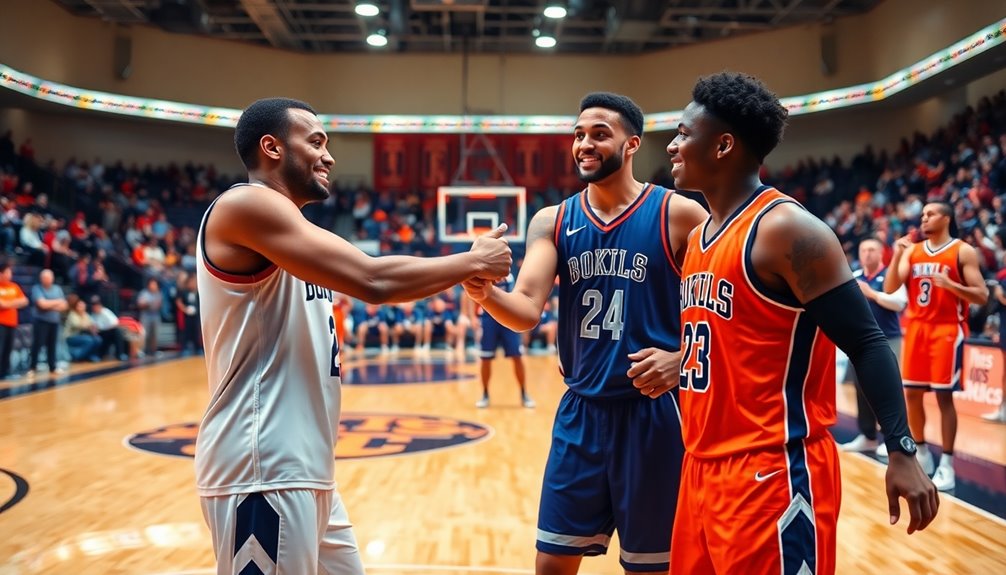
While you might focus on winning, good sportsmanship plays an essential role in enhancing team dynamics. When you show respect to teammates and opponents, you foster an environment of trust building.
This atmosphere encourages open communication, making it easier for everyone to express their thoughts and feelings, which is vital for team cohesion. You’ll notice that when players support each other, even during tough moments, it strengthens relationships and boosts morale.
Ultimately, good sportsmanship isn’t just about playing fair; it’s about creating a culture where everyone feels valued and motivated. As you embrace these principles, your team’s performance will improve, making victories even sweeter and losses easier to handle together. Additionally, fostering a culture of good sportsmanship can lead to a more engaged fan base, enhancing the overall atmosphere during matches.
Understanding Hand-Checking: The Basics
Hand-checking is a defensive maneuver where you use your hands to impede an opponent’s movement.
In basketball, understanding the rules surrounding this technique is essential for both players and officials.
Knowing what’s allowed can help you avoid fouls and improve your game strategy. Additionally, being aware of backcourt violations can further enhance your defensive approach without risking penalties.
Definition of Hand-Checking
In basketball, hand-checking refers to the defensive technique where a player uses their hands to impede an opponent’s progress. You might use various hand-checking techniques, like placing a hand on the opponent’s hip or forearm, to maintain close defensive pressure.
While this can be effective, it’s essential to know when you cross the line into hand checking violations. Referees often call these violations if they perceive that you’re using your hands excessively or inappropriately, which can lead to free throws for the other team.
Understanding the balance between effective defense and adhering to the rules is vital for maintaining good sportsmanship on the court. Always be mindful of how your hands impact your opponent’s movement.
Rules in Basketball
Understanding the rules surrounding hand-checking is essential for every player. Knowing how to navigate this aspect of the game can help you avoid unnecessary basketball fouls and maintain proper player conduct.
Here are some key points to keep in mind:
- Hand-checking is allowed only in certain situations.
- You can’t impede a player’s progress with both hands.
- Excessive hand-checking may result in a foul.
- Referees will call fouls based on the defender’s intent and impact.
- Always be aware of your positioning to avoid penalties.
The Role of Hand-Checking in Player Safety
While players navigate the fast-paced environment of hockey, hand-checking plays an essential role in maintaining both control and safety on the ice. By using your hands to gently guide or redirect opponents, you can keep the game competitive while reducing the risk of injury.
This technique allows you to maintain your balance and body positioning, which is critical for preventing dangerous collisions. When you hand-check effectively, you create a buffer that helps avoid more aggressive physical contact, thereby enhancing player safety.
It’s not just about enforcing rules; it’s about fostering an environment where athletes can thrive without unnecessary risks. Ultimately, mastering hand-checking is essential for injury prevention and contributes to a more enjoyable game for everyone involved. Additionally, incorporating dynamic stretches into your training regimen can significantly enhance performance and further reduce injury risk.
Common Misconceptions About Hand-Checking
Many players and fans alike hold misconceptions about hand-checking, often viewing it as a form of aggressive play rather than a strategic technique.
Understanding these hand-checking myths can help improve your game and perception of the sport. Here are some common misconceptions:
- Hand-checking is always a foul.
- It only benefits defensive players.
- Hand-checking makes the game less fluid.
- All contact is considered aggressive.
- Referees enforce hand-checking consistently.
Recognizing these myths is essential, especially since enforcement challenges can lead to confusion. Effective use of illegal screens can also influence how hand-checking is perceived in gameplay.
By grasping the true nature of hand-checking, you’ll appreciate its role in gameplay and develop a more nuanced understanding of its application.
Embrace hand-checking as a strategic tool, not just a physical tactic.
The Impact of Good Sportsmanship on Game Outcomes
Good sportsmanship fosters respect and camaraderie among players, greatly influencing game outcomes.
When you demonstrate good sportsmanship, you enhance game psychology, creating a positive atmosphere that can boost team morale. Teammates who respect each other are more likely to communicate effectively, leading to better plays and strategies.
Furthermore, maintaining competitive integrity guarantees that everyone plays fair, which can level the playing field and make the game more enjoyable for all involved. This integrity not only builds trust among players but also encourages healthy competition.
When you prioritize good sportsmanship, you’re not just playing for a win; you’re also cultivating an environment where everyone can thrive, ultimately affecting the overall result of the game. Additionally, consistent practice of agility and coordination workouts can further enhance teamwork and communication on the court.
Strategies for Promoting Sportsmanship and Hand-Checking Awareness
Promoting sportsmanship and awareness of hand-checking is essential for maintaining the spirit of the game. Here are some effective strategies you can implement:
Promoting sportsmanship and hand-checking awareness is vital for preserving the integrity and spirit of the game.
- Launch sportsmanship campaigns that highlight positive behavior and fair play.
- Organize hand-checking workshops to educate players on proper techniques and rules.
- Encourage coaches to model sportsmanship and discuss its importance during practice.
- Create team-building activities that foster respect and camaraderie among players.
- Use social media to share stories of sportsmanship, showcasing players who exemplify these values.
- Incorporate discussions on the significance of yellow cards to enhance player accountability and the importance of adhering to rules.
Conclusion
In the grand tapestry of sports, embracing the spirit of good sportsmanship and understanding hand-checking is essential. By fostering a culture of respect and fair play, you not only enhance team dynamics but also contribute to a safer playing environment. So, let’s champion these principles together, ensuring that every game is a celebration of skill and camaraderie. After all, it’s not just about winning; it’s about how you play the game that truly counts.

