

The Right Fit: A Complete Guide to Basketball Sizes (From Youth to Pro)
February 2, 2026Choosing the right basketball size is essential for your gameplay. Size 3 is ideal for kids aged 5-8, while Size 5 suits youth players 5-10 years old. As you move on to middle school, Size 6 will help refine your skills. For high school and professional players, Size 7 is the standard. Each size affects your shooting and control. Make sure to take into account your playing style and environment for best performance. There’s more to discover about this topic!
Understanding Basketball Sizes: An Overview

When you step onto the court, understanding basketball sizes can make a significant difference in your game. Choosing the right basketball isn’t just about the size; it’s also about the basketball weight and grip texture.
Each size serves a specific purpose, catering to different age groups and skill levels. A heavier ball can improve strength and shooting skills, while a lighter one may help younger players develop their coordination. Proper sizing is crucial for minimizing injury risk and allowing for effective practice.
The grip texture varies too, affecting how well you control the ball during dribbling or shooting. By selecting a basketball that fits your size and skill level, you’ll enhance your playing experience and boost your performance, making every shot count on the court.
Size 3 Basketball: The Best Choice for Young Beginners
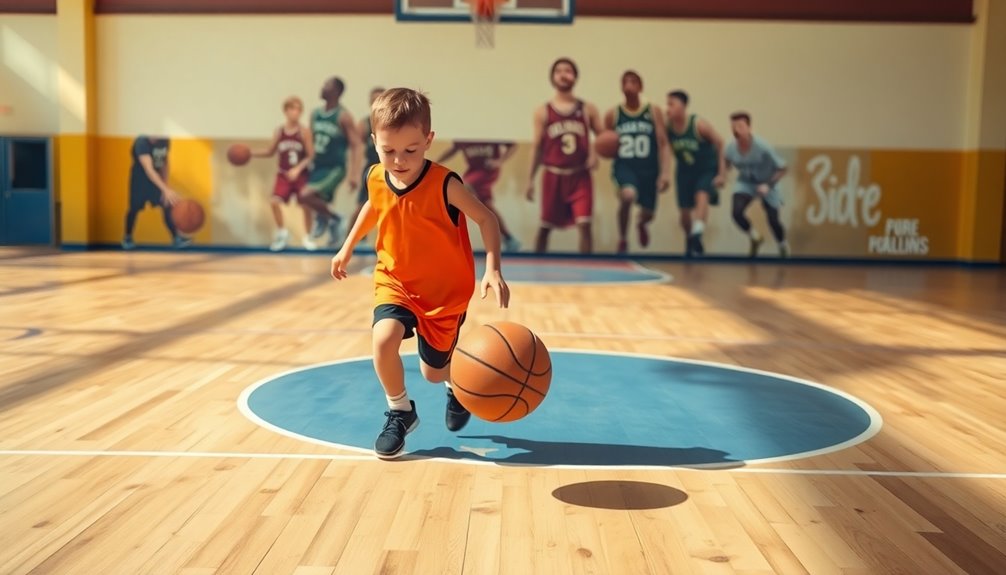
If you’re looking for the perfect basketball for your young beginner, a Size 3 ball is an excellent choice.
Designed for kids around 5 to 8 years old, it helps them develop essential skills.
With the right size, they’ll gain confidence and enjoy the game even more. Additionally, using the correct ball size ensures effective handling without compromising shooting form.
Ideal Age Range
For young beginners aged 5 to 8, a Size 3 basketball is the perfect choice to kickstart their love for the game.
At this age, children experience significant youth growth and hit vital age milestones that shape their athletic abilities. A Size 3 ball, weighing around 14 ounces, allows them to develop essential motor skills without feeling overwhelmed.
It’s lightweight and easy to handle, encouraging confidence as they learn to dribble, pass, and shoot. Choosing the right size helps foster a positive experience, making basketball more enjoyable as they explore the sport.
Skill Development Benefits
Choosing a Size 3 basketball greatly enhances skill development for young beginners. With its lighter weight and smaller circumference, it’s easier for kids to dribble, pass, and shoot. This promotes skill enhancement at an early age, allowing them to focus on developing fundamental techniques without frustration.
As they practice, they’ll experience a boost in player confidence, making them more willing to try new skills and engage in the game. Additionally, mastering basic movements with a Size 3 basketball lays a solid foundation for future growth in the sport.
Size 5 Basketball: Perfect for Youth Players Aged 5-10

If you’re coaching or guiding youth players aged 5-10, the size 5 basketball is a fantastic choice. This size not only fits their smaller hands but also helps them develop essential skills at a vital age. Using the right ball can make a significant difference in their confidence and enjoyment of the game. Additionally, properly sized basketballs enhance grip and control, which are crucial for skill development during these formative years.
Ideal Age Range
When kids between the ages of 5 and 10 start playing basketball, using a Size 5 basketball can make a significant difference in their development and enjoyment of the game.
This age range is vital for laying the foundation for player progression, and following age recommendations helps guarantee they’re using the right equipment. A Size 5 ball is lighter and smaller, making it easier for young players to handle and shoot.
It encourages proper skill development, allowing kids to focus on dribbling, passing, and shooting without feeling overwhelmed. Selecting the right size at this stage not only boosts their confidence but also fosters a lifelong love for basketball, setting them up for success as they grow and advance in the sport.
Skill Development Benefits
Using a Size 5 basketball greatly enhances skill development for youth players aged 5-10. This size allows young athletes to handle the ball more easily, promoting better ball control and dribbling techniques.
As they practice, you’ll notice significant skill progression in shooting, passing, and teamwork. The manageable weight and size help kids focus on their fundamentals without feeling overwhelmed.
Moreover, as players improve through consistent practice, they experience confidence building. When they can successfully execute basic skills, they’re more likely to enjoy the game and stay engaged.
This early positive reinforcement lays the groundwork for lifelong participation in basketball. Ultimately, using a Size 5 basketball sets the foundation for a young player’s growth and love for the sport.
Size 6 Basketball: Transitioning to Middle School and Beyond
As players shift to middle school basketball, they often find themselves adapting to the Size 6 basketball, which offers a perfect balance between skill development and competitive play.
The size 6 adjustment is essential, as it helps athletes refine their shooting, dribbling, and passing skills while preparing them for more intense competition.
The size 6 basketball is crucial for enhancing shooting, dribbling, and passing skills while gearing up for tougher competition.
One of the primary size 6 benefits is its lighter weight, making it easier for younger players to handle, promoting confidence in their abilities.
This size also encourages better teamwork, as players learn to communicate and cooperate effectively on the court.
Embracing the Size 6 basketball at this stage not only enhances your skills but also makes the game more enjoyable and engaging as you progress toward higher levels of play. Additionally, focusing on fundamental skills during this transition period will lead to significant improvements in overall performance.
Size 7 Basketball: The Standard for High School and Professional Play
While shifting to Size 7 basketball may seem intimidating, it’s the standard for high school and professional play, offering players the opportunity to truly enhance their skills.
Size 7 specifications include a circumference of 29.5 inches and a weight of 22 ounces, making it ideal for developing strength and precision in your game.
When making size 7 comparisons, you’ll notice the jump from Size 6 to Size 7 markedly impacts your grip and shooting technique.
Mastering the Size 7 ball helps you adapt to the demands of competitive basketball, ensuring you’re ready for high-stakes scenarios. Additionally, improving your field goal percentage will further enhance your scoring ability and overall game performance.
Embrace the challenge, and you’ll find that this standard size becomes a key ally in your growth as a player.
Choosing the Right Ball: Factors to Consider
After getting comfortable with the Size 7 basketball, it’s time to contemplate other factors that influence your choice of ball.
Selecting the right ball goes beyond size; consider these key elements:
- Ball Material: Choose between rubber, synthetic, or leather based on where you’ll play.
- Grip Texture: A textured surface enhances control and handling, vital for dribbling and shooting.
- Weight: Confirm the ball’s weight feels comfortable for your shooting style and strength.
- Indoor vs. Outdoor: Some balls are designed specifically for indoor courts while others can withstand outdoor conditions. Additionally, understanding dribbling under pressure can significantly impact your performance and ball handling during games.
Frequently Asked Questions About Basketball Sizes?
Wondering about the different basketball sizes and which one’s right for you? You’re not alone! Many players ask about basketball weight and how it affects performance.
Official NBA balls weigh about 22 ounces, while youth balls vary from 10 to 14 ounces, depending on age. Selecting the right size can enhance your game.
Another common question is about ball materials. Most basketballs are made from rubber, leather, or composite materials.
Rubber balls are durable and great for outdoor play, while leather balls offer better grip and feel but are usually for indoor use. Knowing these differences helps you choose a ball that matches your style and playing environment. Understanding the importance of team composition can also influence your choice of equipment, as different playing styles may benefit from specific ball types.
Conclusion
In choosing the right basketball size, you’re setting the stage for success on the court. Did you know that nearly 70% of players who start with the correct size ball develop better skills and confidence? By selecting a ball that fits your age and skill level, you’re not just playing; you’re enhancing your game. So, whether you’re a young beginner or a seasoned pro, remember that having the right ball can make all the difference!

