
The Rulebook Uncovered: From Moving Screens to Defensive Three Seconds
January 30, 2026Understanding basketball rules like moving screens and defensive three seconds is essential for both players and fans. You’ll appreciate the game’s complexities and sharpen your strategic insight. A moving screen can lead to turnovers, while the defensive three seconds rule keeps the game fluid by preventing static defense. Recognizing these nuances enhances your viewing experience. There’s a lot more to uncover about the rules and how they impact the game’s flow and strategies.
The Importance of Understanding Basketball Rules
Understanding basketball rules is essential, not just for players but for fans too. Without solid rule comprehension, you might miss the nuances that shape the game.
When you grasp the rules, you can appreciate the intricate basketball strategy teams employ during matches. It’s not just about scoring points; it’s about how players maneuver within the confines of these regulations.
Knowing when a foul occurs or how violations impact gameplay enhances your viewing experience. You’ll find yourself better engaged, anticipating plays and understanding the referee’s decisions. Additionally, recognizing illegal screens can significantly influence your understanding of offensive strategies and player movements.
Understanding fouls and violations enriches your viewing experience, allowing you to anticipate plays and appreciate referee decisions.
Ultimately, mastering the rules deepens your appreciation for the sport, making every game more thrilling and insightful. So, immerse yourself in the rulebook and elevate your basketball knowledge!
What Is a Moving Screen and Why Does It Matter?
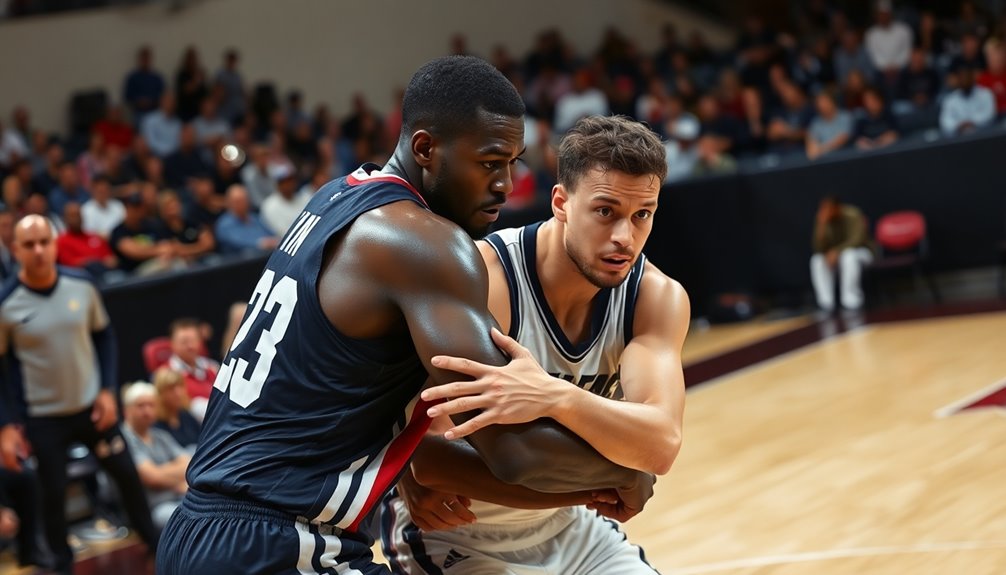
A moving screen is a common yet often misunderstood aspect of basketball that can greatly influence the flow of the game. Fundamentally, it occurs when a player sets a screen but fails to remain stationary, violating the moving screen mechanics.
When you see a teammate trying to free themselves from a defender, it’s vital that the screener holds their position. If they move, it’s considered a screen violation, resulting in a turnover. Understanding this concept helps you appreciate offensive strategies while avoiding costly mistakes. The importance of proper screening techniques can significantly enhance the effectiveness of the pick and roll.
Knowing when a screen is legal versus illegal keeps the game fair and competitive. So, next time you’re on the court, pay attention to those screens—they can change the outcome of a play!
The Ins and Outs of Defensive Three Seconds
When you’re on defense, understanding the concept of defensive three seconds is essential. This rule prevents players from camping out in the key for too long, and if you violate it, your team faces a free throw and possession loss. Let’s break down what defensive three seconds really means and the consequences that come with not following it. Effective communication is crucial for maintaining defensive responsibilities and ensuring players are aware of their positioning within the defensive principles.
Definition of Defensive Three Seconds
Defensive three seconds is an important rule in basketball that impacts both offensive and defensive strategies.
This rule prevents a defender from staying in the key or painted area for more than three seconds unless they’re actively guarding an opponent. If you’re in the lane, you need to maintain proper defensive positioning and be aware of the count.
The three second rule encourages defenders to engage with offensive players, promoting dynamic play. It also helps maintain spacing on the court, allowing for more fluid offensive movements.
Consequences of Violations
Violating the defensive three seconds rule can have significant repercussions for your team. When a defender lingers in the key for too long without actively guarding an offensive player, you risk giving the opposing team an easy scoring opportunity.
This violation results in a technical foul, leading to free throws for the other side. The game impact isn’t just about points; it can shift momentum and morale. Your team might feel the pressure as they scramble to regain focus.
Additionally, repeated violations could lead to more fouls, putting key players at risk of fouling out. Understanding these violation repercussions helps you stay alert and disciplined, ensuring your team maintains an edge during pivotal moments of the game.
Common Misunderstandings of Traveling Violations
When it comes to traveling violations, you might find yourself confused about the pivot foot rules or the difference between a dribble and a step.
Many players misinterpret these concepts, leading to unnecessary turnovers.
Let’s clarify these misunderstandings and highlight the exceptions that can save your game. Understanding carrying violations is also essential, as it can significantly impact your ability to maintain possession and avoid turnovers.
Misinterpreting Pivot Foot Rules
While many players think they fully understand pivot foot rules, misconceptions often lead to confusion during games.
One common misunderstanding is that players believe they can lift their pivot foot before dribbling. In reality, once you establish a pivot foot, it must remain in contact with the ground until you either pass or dribble. If you lift it without doing so, you risk a traveling violation.
Another point of confusion arises when players think they can switch pivot feet freely. Remember, you can only change your pivot foot after dribbling or passing.
Dribble vs. Step Confusion
Misunderstandings about pivot foot rules can lead to further confusion around dribbling and stepping, particularly regarding traveling violations. Many players struggle with the difference between dribble mechanics and step techniques.
When you pick up your dribble, your pivot foot becomes essential. If you take an extra step while trying to reposition, it’s often deemed traveling. You might think you can seamlessly shift between a dribble and a step, but that’s where the confusion lies.
Traveling Exceptions Explained Clearly
Understanding the nuances of traveling exceptions can markedly improve your game and reduce penalties. Many players mistakenly believe that any movement without dribbling is a traveling violation. However, there are specific exceptions to this rule.
For instance, if you catch the ball while standing still, you can pivot on one foot without being called for traveling. Additionally, if you receive a pass while in motion, you’re allowed two steps to establish your pivot foot before dribbling.
It’s also essential to know that certain scenarios, like a player falling while holding the ball, don’t always result in a traveling call. By grasping these traveling exceptions, you’ll enhance your gameplay and avoid unnecessary turnovers.
The Role of Personal Fouls in Game Dynamics
Personal fouls play an essential role in shaping the dynamics of a game, as they can dramatically alter the flow and strategy of play.
As a player, you must be aware of personal foul strategies to prevent putting yourself or your team at a disadvantage. Committing too many fouls can lead to foul out implications, forcing you to sit out critical moments and leaving your team vulnerable.
Coaches often adjust their game plans based on foul situations, emphasizing the need for smart, disciplined play. Knowing when to be aggressive and when to back off can be the difference between winning and losing.
Understanding the impact of personal fouls helps you control the game and adapt to the ever-changing dynamics on the court. Additionally, maintaining situational awareness is crucial to prevent unnecessary fouls and turnovers that can disrupt team momentum.
How the Shot Clock Influences Game Strategy
How does the shot clock shape your approach to game strategy? Understanding the shot clock strategy is essential, as it directly impacts your offensive and defensive decisions.
With a limited time to score, you need to balance efficiency and urgency, which affects game pace considerably. Here are some key considerations:
- Quick Decision-Making: You’ll need to make rapid choices about play execution.
- Shot Selection: Prioritize high-percentage shots to maximize scoring opportunities within the time limit.
- Defensive Pressure: Apply consistent pressure to force opponents into rushed shots.
Additionally, leveraging data analytics can provide insights into optimal shot selection, enhancing your team’s efficiency under the shot clock pressure.
Exploring the 24-Second Shot Clock Rule
While the 24-second shot clock rule may seem like just a timer, it fundamentally transforms the dynamics of basketball. This rule forces you and your team to adopt effective shot clock strategies, pushing you to make quicker decisions on offense.
With only 24 seconds to attempt a shot, you’ll need to balance between taking high-percentage shots and maintaining a fast game pace. Teams often rely on quick ball movement and sharp screens to create open looks, ensuring they capitalize on every second.
On the defensive end, you must apply pressure to disrupt your opponent’s rhythm, aiming to force them into low-quality shots as time dwindles. Mastering this rule is key to elevating your game and enhancing overall team performance. Additionally, understanding how timeout strategies can extend game duration adds another layer to your team’s approach to managing the shot clock.
The Significance of Technical Fouls in Basketball
Technical fouls play an essential role in shaping the outcome of a basketball game, as they can shift momentum and affect a team’s strategy. You need to understand the technical foul implications, as these infractions can lead to free throws for the opposing team and disrupt your squad’s rhythm.
Referee discretion often comes into play, determining when a technical foul is warranted.
- They can change the emotional tone of the game.
- Players and coaches must manage their behavior to avoid them.
- Strategic use of timeouts can help mitigate their impact.
- Familiarity with referee signals can enhance communication and prevent misunderstandings during tense moments.
Recognizing the significance of technical fouls allows you to better navigate the pressures of the game and maintain control on the court.
How Have Rule Changes Shaped Modern Basketball?
As the game of basketball has evolved, rule changes have greatly influenced its pace, style, and overall strategy.
You’ll notice that the rule evolution, like the introduction of the three-point line and the defensive three-second rule, has shifted how teams approach offense and defense.
With the three-point line, players now stretch defenses, promoting a faster, more perimeter-oriented game. This change has led coaches to adapt their game strategy, focusing on spacing and ball movement.
Additionally, the defensive three seconds rule encourages more aggressive perimeter play, allowing for less congestion in the paint. As a result, the introduction of overtime has also impacted how teams manage their strategies during close games, as they must now consider additional time to secure a win.
Conclusion
Understanding basketball rules is like mastering a complex dance; each movement has purpose and precision. As you immerse yourself in the nuances of moving screens, defensive three seconds, and more, you’re not just watching a game—you’re experiencing a thrilling narrative unfolding on the court. Embrace these rules, and you’ll see how they shape strategies and player dynamics, turning a simple sport into a fascinating battle of wits. So, step up your game and grasp the rulebook—it’s your secret weapon!