

Harnessing Your Speed: The Best Conditioning and Speed Drills for Football Players
November 30, 2025Harnessing your speed in football can elevate your game and give you an edge over opponents. Start with dynamic warm-ups to improve flexibility and blood flow, followed by speed drills that focus on short sprints to enhance your acceleration. Incorporate agility drills to master quick direction changes, and balance that with endurance training for sustained performance. Stay consistent with your training routine, and you’ll discover even more techniques that can take your speed to the next level.
Understanding the Importance of Speed in Football

Speed is a crucial element in football that can greatly impact a player’s performance and the team’s success. When you possess speed, you can maneuver past defenders, create separation, and execute plays more effectively.
This speed impact shapes not just your individual game but also your team’s overall game strategy. Coaches rely on fast players to stretch the field and challenge the opposition, opening up opportunities for scoring.
You’ll notice that when you can sprint, accelerate, and change direction quickly, you’re a valuable asset on the field. Emphasizing speed in your training can lead to better performance during critical moments of the game, making it essential to focus on enhancing your speed for both personal growth and team achievements. Additionally, incorporating high-intensity interval training into your routine can significantly enhance your speed and endurance on the field.
Key Components of Speed Development
While many players focus solely on sprinting, developing speed involves several key components that work together to enhance your performance on the field.
First, mastering speed mechanics is vital; it includes your posture, arm movement, and leg drive. Proper mechanics guarantee you’re maximizing your efficiency while minimizing energy expenditure.
Next, effective muscle recruitment is essential for explosive speed. This means activating the right muscle fibers at the right time, allowing you to push off the ground powerfully.
Effective muscle recruitment is crucial for explosive speed, ensuring optimal activation of muscle fibers for powerful ground push-off.
Incorporating drills that target these elements will help you improve both your acceleration and top speed. Additionally, agility and speed training is crucial to enhance your quickness and change of direction on the field.
Dynamic Warm-Up Exercises for Optimal Performance
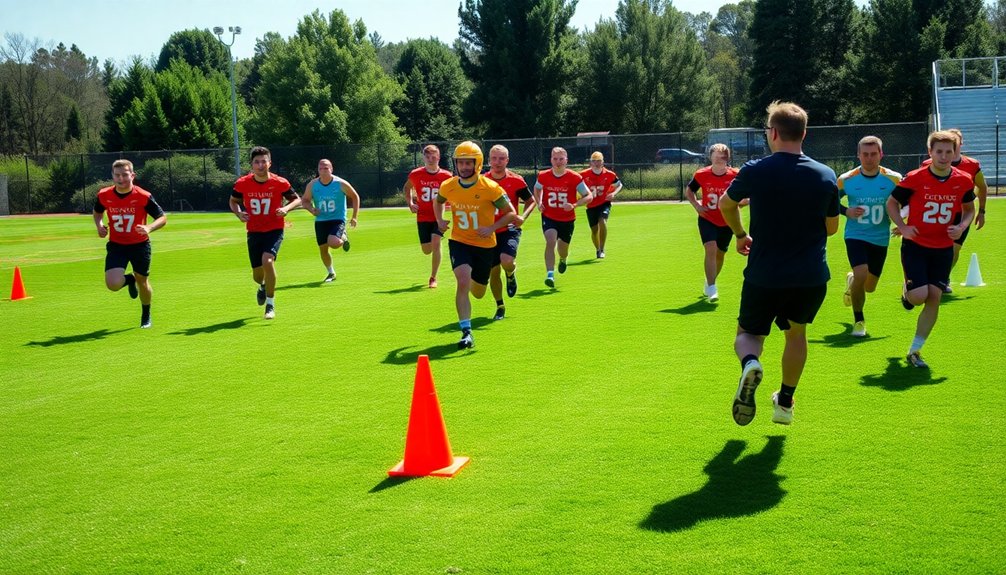
Before hitting the field, it’s essential to understand the importance of dynamic warm-ups in enhancing your performance.
Incorporating key exercises can greatly improve your agility and strength, setting the tone for an effective practice or game.
Timing these warm-ups right will guarantee you’re fully prepared to give it your all. Additionally, integrating core strength exercises into your warm-up routine can further enhance your balance and stability on the field.
Importance of Dynamic Warm-Ups
Dynamic warm-ups are essential for football players, as they prepare your body for the intense physical demands of the game.
These exercises enhance dynamic flexibility, allowing your muscles and joints to move more freely and effectively during gameplay. By incorporating dynamic movements, you increase blood flow to your muscles, which boosts performance and helps you respond quicker on the field.
Additionally, these warm-ups play an important role in injury prevention, as they activate key muscle groups and improve range of motion. By taking the time to engage in dynamic warm-ups, you not only set the stage for peak performance but also protect yourself from potential injuries that can sideline you for weeks.
Prioritize them before every practice and game!
Key Exercises to Include
Engaging in the right exercises during your warm-up can greatly enhance your performance on the field.
Incorporating dynamic movements is essential for effective speed training and conditioning exercises. Here are three key exercises to include:
- High Knees: This drill activates your hip flexors and improves your stride frequency, vital for sprinting.
- Leg Swings: Swinging your legs forward and sideways increases your range of motion, helping prevent injuries.
- Butt Kicks: This exercise engages your hamstrings and enhances your running mechanics, making you faster.
Timing for Maximum Effectiveness
To maximize your performance on the field, timing your warm-up exercises is essential. Effective timing strategies guarantee your muscles are primed and ready for action, reducing the risk of injury while enhancing performance optimization.
Start your dynamic warm-up about 20 to 30 minutes before practice or games. This window allows your body to gradually increase heart rate and core temperature. Focus on mobility drills, dynamic stretches, and sport-specific movements to activate key muscle groups.
Pay attention to your body’s signals; if you feel tight or sluggish, adjust your routine accordingly. Incorporating these timed exercises won’t only boost your speed but also set the tone for a successful performance, allowing you to hit the ground running when it matters most.
Speed Drills to Enhance Acceleration

To boost your acceleration on the field, mastering short sprints and plyometric power exercises is key. Focus on your technique during sprints to maximize your speed, while incorporating explosive movements to build strength. These drills will help you get off the line faster and gain an edge over your opponents. Additionally, incorporating agility training will further enhance your movement and reaction time, making you even more effective during games.
Short Sprints Technique
Mastering short sprints is essential for any football player looking to boost their acceleration on the field.
To enhance your performance, focus on these short sprinting techniques that emphasize acceleration mechanics:
- Start Position: Get low and lean forward at the start. This posture helps activate your leg muscles from the get-go.
- Arm Movement: Drive your arms back and forth with purpose. Strong arm swings complement your leg motion, enhancing overall speed.
- Foot Placement: Make certain your feet strike the ground under your hips. This alignment allows for maximum power transfer and quicker acceleration.
Incorporating these techniques into your training routine will surely sharpen your short sprints and improve your game on the field.
Keep practicing, and you’ll see the results!
Plyometric Power Exercises
While short sprints lay the foundation for acceleration, incorporating plyometric power exercises can greatly enhance your explosive speed on the field. These exercises focus on explosive movements that recruit fast-twitch muscle fibers, essential for quick bursts of speed.
Incorporating box jumps, depth jumps, and bounding drills into your routine yields significant plyometric benefits, including improved strength, agility, and coordination.
To start, aim for 3 sets of 8-10 reps for each exercise, ensuring proper form to prevent injury. As you progress, increase the height or intensity of your jumps.
Agility Drills for Quick Direction Changes
Agility is the cornerstone of effective football performance, especially when it comes to making quick direction changes. To enhance your lateral movement and improve your footwork, try these agility drills:
Agility is essential for football success, enabling quick direction changes and improved footwork on the field.
- Cone Drills: Set up cones in various patterns and practice weaving through them. Focus on maintaining quick feet and sharp direction shifts.
- Agility Ladder: Use an agility ladder to work on your footwork drills. Incorporate various patterns to develop speed and coordination.
- Pivoting Techniques: Work on your pivoting by setting up markers. Practice changing direction explosively while maintaining balance, which is key for reactive agility.
Incorporating these drills into your training will boost your agility and make you a more versatile player on the field. Additionally, mastering anticipation skills allows you to predict opponent movements, making your agility even more effective during gameplay.
Endurance Training for Sustained Speed
After sharpening your agility skills, it’s time to focus on endurance training to maintain that speed throughout the game. Building stamina guarantees you can keep up your intensity in the later stages of play.
Incorporate endurance strategies like interval running, where you alternate between high-intensity sprints and recovery periods. This simulates game conditions and enhances speed maintenance. Long-distance runs can also be beneficial but should be balanced with more intense workouts to avoid fatigue. Don’t forget to include cross-training activities such as cycling or swimming to enhance overall endurance without overworking your joints. Consistency in your endurance training will help you sustain your speed, allowing you to outlast opponents and perform at your best when it matters most. Additionally, incorporating Pain Shuttles Drill into your routine can significantly improve your cardiovascular endurance and anaerobic capacity.
Incorporating Speed Training Into Your Routine
To enhance your performance on the field, it’s essential to integrate speed training into your routine. Consistency is key, so make speed drills a regular part of your workouts.
Here are three effective ways to incorporate speed training:
- Dedicated Speed Sessions: Set aside specific days for speed drills, focusing on sprints and agility exercises.
- Warm-Up Routines: Include dynamic stretches and short accelerations in your warm-ups to prepare your muscles for intense activity.
- Interval Training: Combine speed training with endurance workouts by alternating between high-intensity sprints and recovery periods. Additionally, incorporating cardio training methods can further enhance your speed and endurance, providing a well-rounded approach to performance.
Conclusion
Incorporating speed and conditioning drills into your training is like fueling a race car—without the right power, you won’t reach your full potential on the field. By understanding the importance of speed, focusing on key components, and consistently practicing drills, you’ll transform your game. Remember, every sprint, every agility move, and every endurance session builds the athlete you aspire to be. So lace up, stay committed, and watch your performance soar!