
From Wobbly to On-Target: How to Throw a Football Better and Farther
November 29, 2025To throw a football better and farther, you need to master the fundamentals. Start with a proper grip, holding the ball with your fingertips for control. Make sure your stance is shoulder-width apart and shift your weight to generate power. Focus on your throwing mechanics—snap your wrist upon release and follow through. Practice drills to improve accuracy and distance. Avoid common mistakes, and you’ll see progress quickly. There’s much more to uncover for perfecting your throw.
Understanding the Basics of a Good Throw
When you’re aiming to throw a football better, understanding the basics of a good throw is essential. Mastering the throwing fundamentals will set you up for success on the field.
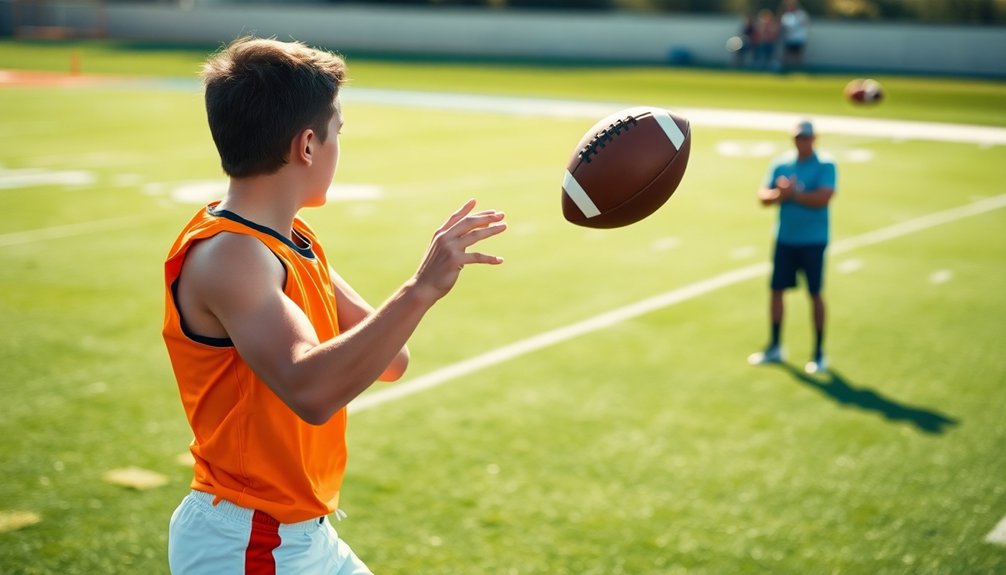
Start by positioning your body correctly—your feet should be shoulder-width apart, with your non-throwing shoulder pointing towards your target. As you prepare to throw, focus on your grip and arm motion.
Position your body with feet shoulder-width apart and your non-throwing shoulder aimed at the target for an effective throw.
Utilize effective football techniques by keeping your elbow at a right angle and snapping your wrist on release. This will help generate power and accuracy.
Remember to follow through with your arm, maintaining eye contact with your target throughout the throw. With practice, these fundamentals will greatly enhance your throwing skills and make you a more confident quarterback. Additionally, understanding the specific roles and responsibilities of players can help you appreciate the importance of teamwork in executing successful plays.
The Importance of Grip and Hand Placement
Your grip and hand placement are essential for throwing a football effectively.
When you master proper grip technique and finger positioning, you’ll notice a significant improvement in accuracy and distance.
Let’s explore the essentials of hand placement to help you throw with confidence. Additionally, close ball control is crucial in other sports, such as soccer, as it enhances overall performance and skill.
Proper Grip Technique
A solid grip is essential for throwing a football with accuracy and power. To achieve this, you need to find the right grip pressure—too tight, and you’ll lose control; too loose, and the ball could slip.
Hold the ball with your fingertips, not your palm, allowing for better feel and control. As you practice, make grip adjustments based on your throwing style and comfort; this will help you develop consistency.
Remember, your grip can greatly influence your throw’s trajectory and distance. Experiment with different pressures and finger placements until you discover what works for you.
With time and practice, you’ll master the grip technique that elevates your throwing ability.
Hand Placement Essentials
Hand placement plays an essential role in executing a successful throw. Proper hand positioning on the football can greatly enhance your throwing efficiency.
When you grip the ball, make certain your fingers are spread wide, giving you better control and stability. Your throwing hand should rest on the laces, while your non-throwing hand supports the ball from underneath.
This setup not only helps you maintain a firm grip but also allows for a smoother release. Experiment with different placements to find what feels comfortable and effective for you.
Finger Positioning Tips
Three key factors can dramatically improve your finger positioning when throwing a football.
First, focus on finger strength; stronger fingers give you better control over the ball. Practice gripping a smaller object like a tennis ball to build that strength.
Second, pay attention to your grip adjustments. If the ball feels slippery, adjust your grip to guarantee it’s secure but not overly tight.
Finally, align your fingers along the laces for maximum accuracy. This positioning allows you to apply force evenly and helps maintain a spiral.
Mastering Your Stance and Footwork
Mastering your stance and footwork is essential for throwing a football with precision and power. Start by positioning your feet shoulder-width apart, ensuring proper foot placement. Your lead foot should point toward your target, while your back foot provides stability.
As you prepare to throw, make a small balance adjustment by shifting your weight slightly onto your back foot. This motion helps generate torque and power. Keep your knees slightly bent and your hips aligned with your shoulders to maintain a strong, athletic posture.
Practice stepping into your throw, transferring your weight forward smoothly. By focusing on these elements, you’ll improve your overall throwing mechanics, setting the stage for more accurate and powerful passes. Additionally, maintaining proper body alignment throughout the throwing motion can significantly enhance your throwing accuracy and distance.
The Mechanics of the Throwing Motion
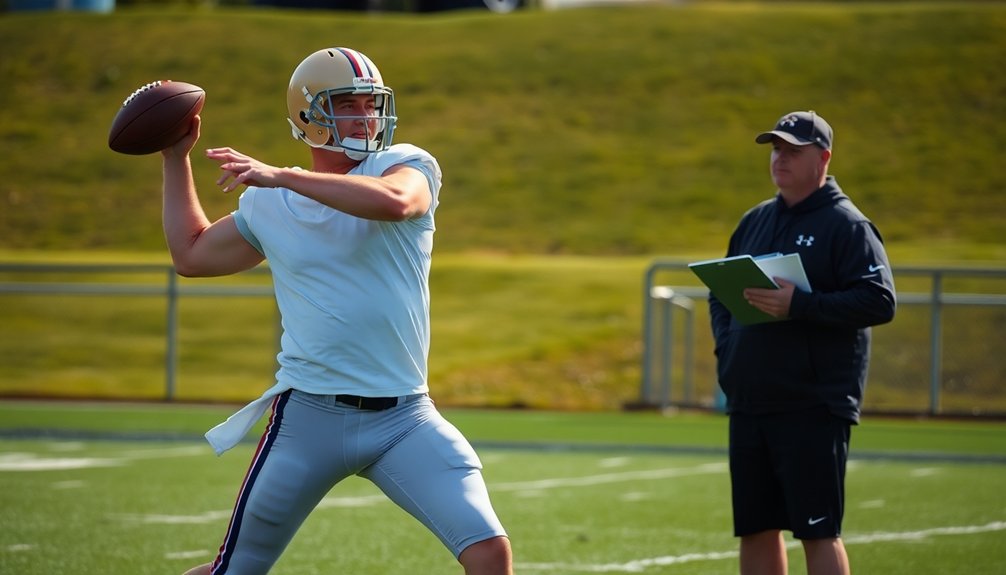
To throw a football effectively, you need to focus on your grip and hand placement first. Then, guarantee your body alignment and stance support a powerful motion. Finally, a strong follow-through and release can make all the difference in your throw. Understanding essential skills in throwing techniques can further enhance your accuracy and distance.
Grip and Hand Placement
When you grip the football correctly, it sets the foundation for a successful throw. Start by placing your fingers on the laces, making sure your index finger is extended along the seam. Your grip pressure should be firm but relaxed; too tight will hinder your hand rotation.
Maintain a comfortable hold that allows for quick adjustments during your throw. As you prepare to release the ball, focus on your hand rotation. This motion generates spin, which is vital for accuracy and distance.
Confirm your wrist snaps at the end of your throw to enhance this effect. A proper grip and hand placement not only improve your throwing mechanics but also boost your confidence on the field.
Body Alignment and Stance
A solid stance and proper body alignment are essential for a powerful throw. Start by adjusting your stance width; your feet should be shoulder-width apart to maintain balance and stability. Keep your knees slightly bent and your weight evenly distributed.
As you prepare to throw, focus on your body rotation. Your shoulders should turn away from the target, creating torque in your torso. This rotation is vital for generating power in your throw.
When you step forward with your non-throwing foot, make sure your hips follow the motion, further enhancing your alignment. Remember, a strong foundation in your stance and alignment sets the stage for an accurate, powerful throw.
Practice these mechanics to improve your overall performance on the field.
Follow-Through and Release
After establishing your stance and body alignment, the follow-through and release become pivotal components of an effective throw.
Mastering the release timing and follow-through technique can greatly enhance your throwing accuracy and distance. Here are key aspects to focus on:
- Release Timing: Aim to release the ball at the peak of your throwing motion for ideal velocity.
- Follow-Through Technique: Extend your arm fully and allow your body to rotate naturally, ensuring fluid motion.
- Body Positioning: Maintain your balance as you follow through, preventing unnecessary strain and improving control.
Drills to Improve Accuracy and Distance
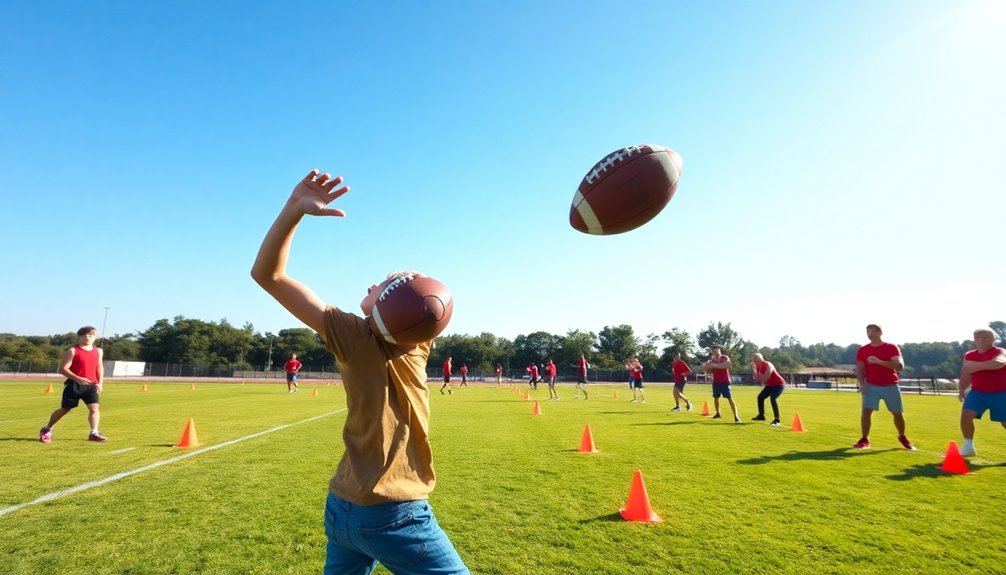
To throw a football with precision and power, you’ll want to incorporate specific drills that target both accuracy and distance.
Start with the “Target Drill,” where you set up a series of targets at varying distances. This drill hones your targeting techniques, helping you focus on hitting specific spots.
Next, try the “Long Toss Drill” to build distance. Stand 20 yards from a partner and gradually increase the distance as you gain confidence. Focus on your mechanics and follow-through during these throwing drills.
Finally, incorporate the “Kneeling Throw” to work on upper body strength and accuracy without relying on your legs. Consistency in these drills will lead to noticeable improvements in your throws, as passing accuracy is crucial for effective execution.
Strength and Conditioning for Better Throws
Improving your throwing technique goes hand in hand with building the right strength and conditioning. To enhance your performance, focus on these key areas:
- Strength training: Develop overall muscle strength, particularly in your arms, shoulders, and core.
- Conditioning exercises: Incorporate endurance workouts and flexibility training to improve your stamina and range of motion.
- Core stability: Strengthening your core enhances explosive power and supports proper throwing mechanics.
Prioritize injury prevention by incorporating muscle recovery techniques and ensuring adequate rest. Additionally, integrating core strength exercises into your routine can significantly enhance your throwing performance.
This holistic approach not only boosts your throwing distance but also maintains your physical health.
With a solid strength and conditioning foundation, you’ll throw better and farther while reducing the risk of injury.
Adapting Your Technique for Different Situations
While every throw may seem similar, adapting your technique for different situations can make a significant difference in your game.
Different game situations require you to take into account environmental factors like wind and rain, which can impact your throwing angles. When facing defensive pressure, you might need to adjust your grip and release point to guarantee accuracy.
Pay attention to receiver positioning; if they’re cutting sharply, a quick flick of the wrist can enhance your throw.
Additionally, field conditions like mud or grass can affect your footing, so adjust your stance accordingly. Mastering anticipation of opponent movements can also help you make quicker decisions and improve your throwing accuracy in tight situations.
Common Mistakes to Avoid When Throwing
Even seasoned players can fall into common traps when throwing a football, which can hinder their performance.
To elevate your game, watch out for these mistakes:
Elevate your game by avoiding common mistakes that can hinder your throwing performance.
- Common grip errors: Guarantee your fingers are spread correctly on the laces. A poor grip can lead to inaccurate throws.
- Poor follow through: Neglecting this can cause your passes to lack power and accuracy. Your arm should extend fully after release.
- Overthinking mechanics: Focusing too much on technique can disrupt your natural throwing motion. Trust your instincts. The evolution of offensive strategies in basketball highlights the importance of mastering fundamental skills to enhance performance.
Conclusion
Now that you’ve grasped the fundamentals of throwing a football, it’s time to put your knowledge into action. Like a sculptor chiseling away at marble, each practice session will refine your skills and build your confidence. Remember, focus on your grip, stance, and throw mechanics. Embrace the drills, and don’t shy away from adapting your technique as needed. With dedication and patience, you’ll go from wobbly to on-target, launching that football farther than ever before!