
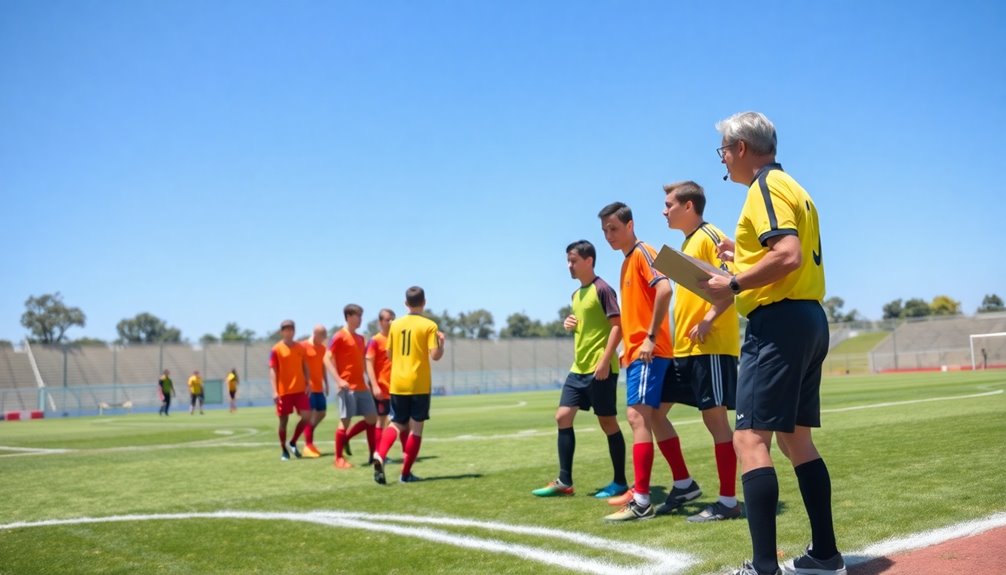
Are There Timeouts in Soccer? Understanding the Rules
March 8, 2025Last updated: · By Jake Turner
There are no timeouts in soccer. Neither team can call one, and the match is played as two 45-minute halves that make up 90 minutes of regulation play. Play stops only for specific reasons, such as injuries, substitutions, cards, and goals, and the referee adds the lost time at the end of each half as stoppage time. This guide explains how the clock works, when play can pause, and the one planned break you may see at the 2026 World Cup.
Key Takeaways
- Soccer has no team timeouts, so coaches and players cannot stop play to regroup.
- A regulation match lasts 90 minutes, played as two equal 45-minute halves under Law 7 of the Laws of the Game.
- Halftime may not exceed 15 minutes under Law 7.
- The referee adds stoppage time at the end of each half to make up for lost time, and its length has no set minimum or maximum.
- FIFA’s hydration breaks at the 2026 World Cup last three minutes and occur around the 22-minute mark of each half, making them the main planned pause in the sport.
Are There Timeouts in Soccer?
No. Soccer does not have team timeouts like basketball or American football, and coaches cannot call a stoppage to draw up a play or calm their team. The official rules, published as the Laws of the Game 2025/26, which took effect on 1 July 2025, define the match clock and the reasons play can stop.
The match runs continuously in the sense that there are no scheduled breaks. The referee stops play for specific events, and any time lost is added back at the end of the half.
Why Can’t Coaches Call Timeouts?
The Laws of the Game give control of play to the referee, not the coaching staff. Coaches can give instructions from the touchline during live play, but they cannot stop the match. Their main opportunities to change tactics are substitutions during stoppages and the interval at halftime.
How Long Is a Soccer Match?
A standard soccer match lasts 90 minutes of regulation time, split into two equal halves of 45 minutes. According to Law 7 as published by The Football Association’s summary of Law 7, the halftime interval may not exceed 15 minutes.
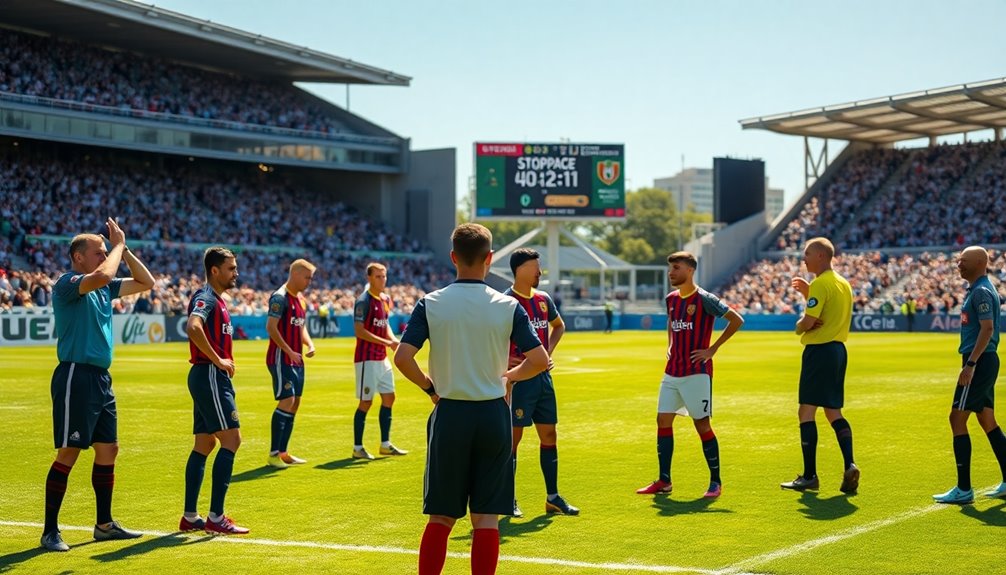
The table below summarizes the breaks and pauses you are most likely to see, and who controls each one.
| Break or pause | Who controls it | Length |
|---|---|---|
| Halftime interval | Laws of the Game | Maximum of 15 minutes |
| Stoppage time (added time) | Referee | No set length; decided by the referee |
| Substitution | Referee | Happens during a stoppage; no fixed duration |
| Drinks break in extra time | Laws of the Game | No more than one minute, at halftime of extra time |
| Hydration break (2026 World Cup) | FIFA tournament rule | Three minutes, around the 22-minute mark of each half |
| Team timeout | Not permitted | Not available |
What Is Stoppage Time and How Is It Calculated?
Stoppage time is the extra time the referee adds at the end of each half to compensate for time lost during play. It is also called added time or injury time, and it is the reason a match can run past 45 minutes in each half.
What Causes Lost Time?
The referee considers several events when deciding how much time to add. Common causes include:
- Injuries that require treatment on the field.
- Substitutions.
- Goal celebrations.
- Cards and disputes that interrupt play.
- Delays such as time-wasting by either team.
Stoppage time has no set minimum or maximum. The referee estimates the lost time based on what happened in the half, and the fourth official usually displays the added minutes on a board.
Can a Penalty Kick Extend the Half?
Yes. If a penalty kick is awarded during stoppage time, the kick must be taken before the half ends, so the referee can allow additional time for it. The rule means a late foul can still produce a decisive moment after the scheduled minutes have passed.
Does the Goalkeeper Time-Wasting Rule Affect Stoppages?
Yes, in a limited way. The International Football Association Board (IFAB) amended Law 12 so that a goalkeeper who holds the ball for more than eight seconds results in a corner kick for the opposing team, with a five-second visual countdown shown to the goalkeeper. The change is effective for 2025/26, according to the IFAB’s announcement on goalkeeper time-wasting. It discourages delays, which helps keep lost time from building up.
When Can Substitutions Happen?
Substitutions can only happen during a stoppage in play, not while the ball is in active play. Most competitions allow up to three substitutions per team in a match, but leagues and tournaments can set their own limits, so check the rules for your competition.
How Does a Substitution Work?
- The referee stops play, or the ball goes out of play, and the referee signals the substitution.
- The player coming off leaves the field before the substitute enters.
- The substitute enters from the halfway line once the player has left.
- The referee records the change and play restarts.
Because substitutions depend on a stoppage, a team that wants to change players during a quiet period of play may have to wait for the next interruption.
Are There Hydration Breaks at the 2026 World Cup?
Yes. FIFA has announced hydration breaks for the 2026 World Cup, and they apply to all matches regardless of the weather. Each break lasts three minutes and occurs midway through each half, with the referee stopping play around the 22-minute mark, according to FIFA’s announcement on World Cup 2026 hydration breaks.
These breaks are a tournament welfare measure, not a timeout that either team can request. Coaches still cannot stop play on their own, and the break is built into the match schedule.
Do Youth Soccer Leagues Allow Timeouts?
Youth and recreational leagues generally follow the same core rules as the Laws of the Game, so coach-called timeouts are not part of standard play. Local leagues sometimes add their own policies, such as water breaks or limits on substitutions, so the rules can differ from one competition to the next.
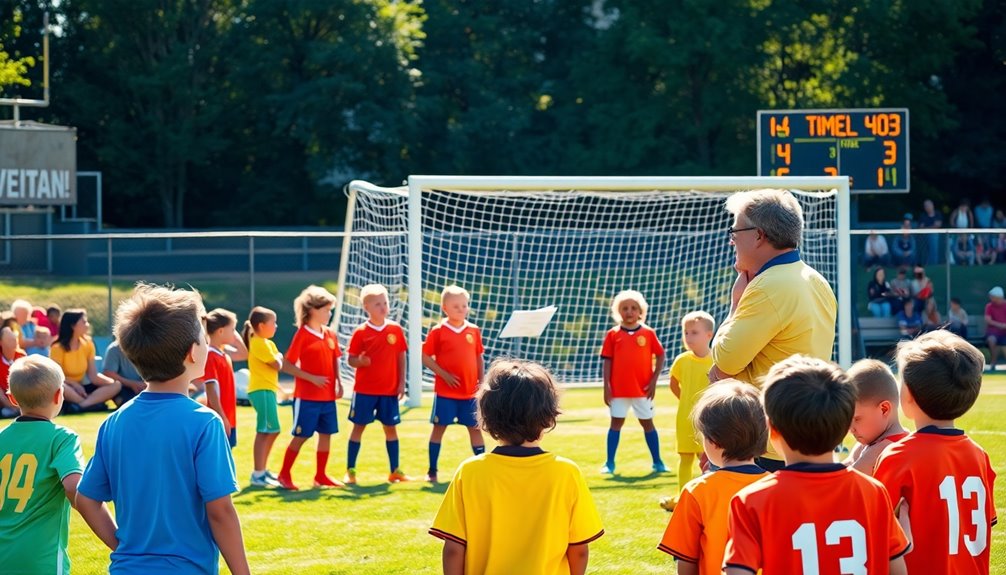
If you coach or manage a youth team, use this checklist before the season starts:
- Read the league handbook for substitution limits and any water or cooling breaks.
- Confirm when substitutions are allowed, and explain the stoppage rule to players and parents.
- Plan your in-game communication for halftime and stoppages, since mid-play timeouts are not available.
- Share the rules with families so that expectations match the referee’s decisions.
How Do Referees Control the Flow of the Game?
Referees control the match by stopping play, issuing cards, and deciding how much time to add. Their decisions set the rhythm of the game, which is why the lack of timeouts places so much responsibility on them.
How Do Referees Handle Player Disputes?
Referees manage disputes by staying consistent and explaining decisions clearly. Their approach typically includes:
- Clear communication: explaining decisions to players and coaches when appropriate.
- Rule enforcement: applying the Laws of the Game the same way to both teams.
- Calm presence: lowering tension before a dispute escalates into a card or a stoppage.
- Consistent cards: using yellow and red cards to address unacceptable behavior.
How Do Coaches Communicate Without Timeouts?
Coaches communicate during live play from the touchline, and they make the most of halftime and substitution stoppages. Because they cannot stop the game, preparation matters more than in sports with timeouts.
- Set two or three simple cues for each phase of play before kickoff.
- Use the halftime interval, which can last up to 15 minutes, for detailed adjustments.
- Pair substitutions with clear tactical instructions for the incoming player.
- Keep sideline instructions short and respectful so you do not draw a card or a referee warning.
For more on how play restarts after interruptions, see our guide to soccer kickoff rules and restarts.
Frequently Asked Questions
Can a soccer coach call a timeout?
No. Coaches cannot call a timeout or stop the match to talk to their team. Their options are instructions during live play, substitutions at stoppages, and the halftime interval.
How long is halftime in soccer?
Under Law 7, halftime may not exceed 15 minutes. In extra time, a drinks break of no more than one minute is allowed at the interval, according to the Laws of the Game.
How is stoppage time decided?
The referee decides how much time to add at the end of each half to make up for lost time. Injuries, substitutions, goal celebrations, cards, and time-wasting are common reasons, and there is no fixed minimum or maximum.
Are there timeouts at the World Cup?
There are no team timeouts at the World Cup. FIFA has introduced hydration breaks for 2026 that last three minutes and occur midway through each half, and they apply regardless of the weather.
How many substitutions can a team make?
Most competitions allow up to three substitutions per team, and substitutions can only happen during a stoppage in play. Leagues and tournaments can set different limits, so confirm the rules for your competition.
Does a soccer game have breaks?
Yes, but they are limited. Halftime is the main scheduled break, and play also stops for injuries, substitutions, cards, and goals. These pauses are not timeouts, and the referee adds lost time at the end of each half.
Conclusion
There are no timeouts in soccer, and that is by design. The match runs as two 45-minute halves, the referee controls every stoppage, and lost time is added at the end of each half as stoppage time. Understanding these rules, along with the new 2026 World Cup hydration breaks, will help you follow the timeouts-free flow of the game and appreciate its pace.